11. Lipid Classification: Types and Biological Roles of Lipids
Welcome to biochemistry, future doctors and scientists! Have you ever wondered why water and oil violently reject one another, or how your microscopic cells manage to keep their delicate internal machinery from spilling out into the surrounding fluids? The answer to these questions lies in the incredibly fascinating world of biological fats. The core purpose of this entire slide deck is to completely demystify Lipid Classification, guiding you step-by-step from foundational molecular structures to their massive physiological impacts. By the time we finish, you will view these molecules not merely as dietary calories, but as the intricate architecture of life itself.
Slide 1: The Foundation of Lipid Classification: Unlocking the Architecture of Life
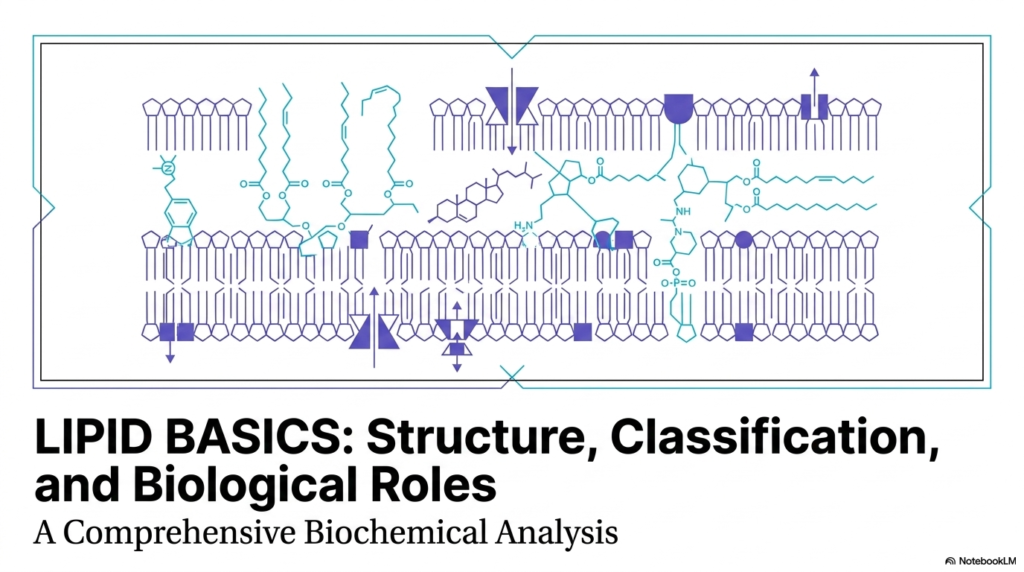
When we look at this introductory slide, we are greeted with a beautifully complex biological diagram of a cellular membrane. This detailed image represents the ultimate physiological end-goal of understanding Lipid Classification. Notice the intricate sea of molecules dynamically working together: you can see the classic bilayer formed by distinct molecules with hydrophilic heads interacting with water, while their long hydrophobic tails hide safely inside. Interspersed within this protective biological barrier are massive membrane proteins acting as channels and gates, alongside rigid, multi-ringed molecules like cholesterol that act as structural buffers to maintain the precise fluidity of the barrier.
To truly master the biological roles of these compounds in medical school, you must understand that Lipid Classification isn’t just about memorizing archaic chemical names on a flashcard; it is about recognizing the elegant structure-function relationship governed by nature. A simple biochemical tweak in a carbon chain, or the addition of a single charged phosphate group, completely dictates how a lipid will behave inside the human body. As we progress through this comprehensive deck, we are going to break down these dense, intricate mechanisms. Grab your notes, get comfortable, and let’s dive into the microscopic world that keeps you alive and functioning!
Slide 2: Methodology of Lipid Classification: Extracting the Biochemical Truth
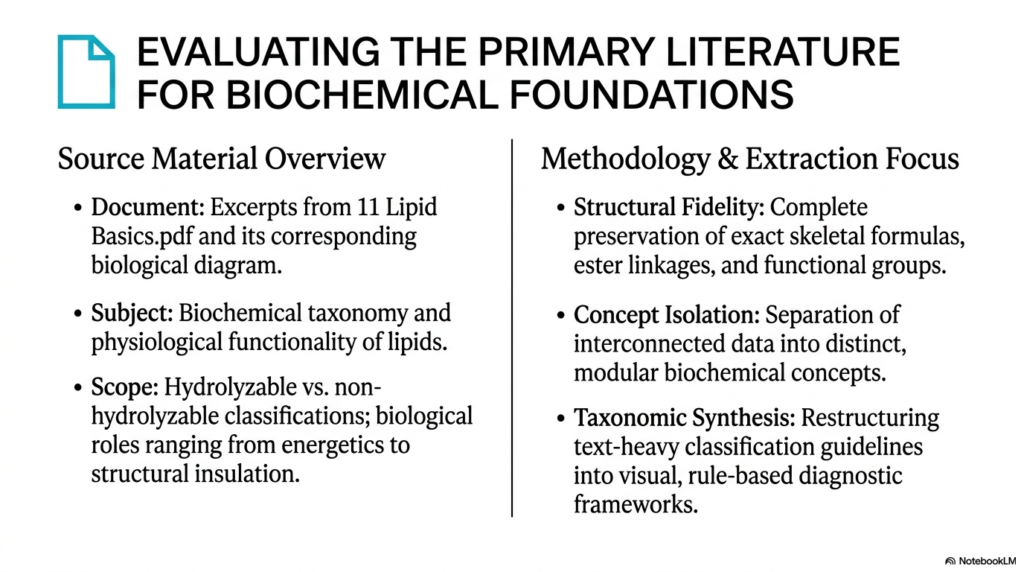
Let’s be honest for a moment: reading primary scientific literature can sometimes feel like trying to drink from a fire hose, especially when you are tackling dense biochemical taxonomy. Have you ever stared at a textbook page filled with massive, sprawling metabolic pathways and felt completely overwhelmed? The core purpose of this specific slide is to pull back the curtain and show you exactly how we process heavy scientific data into an accessible, logical framework for proper Lipid Classification. We are establishing the ground rules for how we evaluate and extract biochemical knowledge.
When scientists and educators approach Lipid Classification, we must use strict methodology to ensure accuracy. The first pillar shown here is Structural Fidelity. In biochemistry, the exact drawing of a skeletal formula, the precise angle of an ester linkage, and the specific location of functional groups matter immensely. We cannot cut corners when mapping these molecules, because a single double bond can alter a lipid’s melting point and its behavior in the bloodstream. By maintaining structural fidelity, we guarantee that the visual models you study exactly match the reality happening inside your cells right now.
Furthermore, mastering Lipid Classification requires what we call Concept Isolation and Taxonomic Synthesis. Interconnected physiological data can be incredibly messy. By isolating complex ideas into modular biochemical concepts, we prevent cognitive overload. We take text-heavy classification guidelines—like the intricate rules governing hydrolyzable versus non-hydrolyzable lipids—and restructure them into highly visual, rule-based diagnostic frameworks. This means you aren’t just memorizing lists; you are learning an active diagnostic algorithm. Once you understand this rigorous methodology, everything else in biochemistry begins to snap logically into place.
Slide 3: The Golden Rule of Lipid Classification: Solubility is Everything
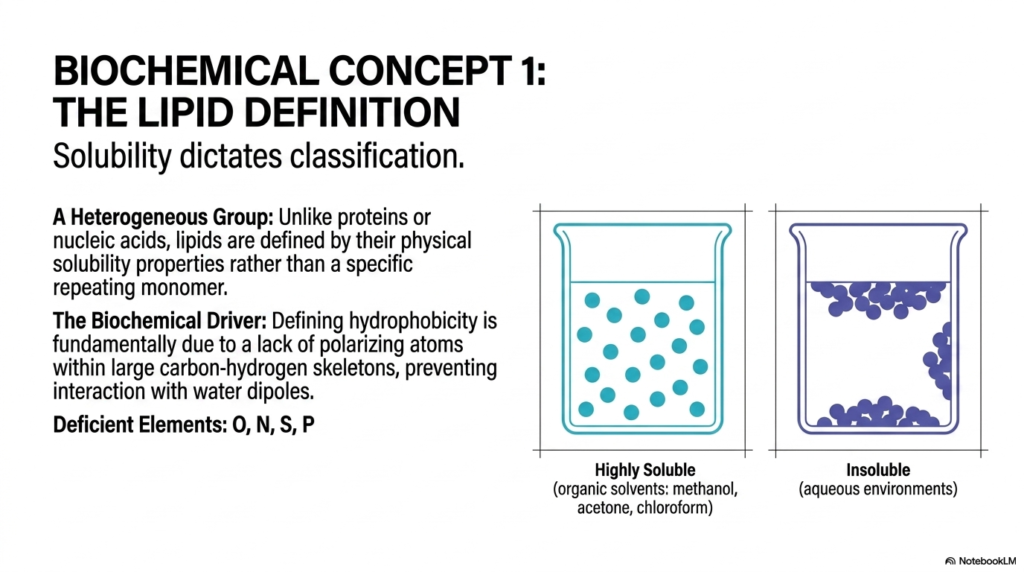
Think back to the last time you shook up a bottle of Italian salad dressing and watched the oil immediately separate from the vinegar. That simple kitchen phenomenon is actually the most foundational principle of biochemistry. Unlike proteins or nucleic acids, which are defined by their specific repeating monomers like amino acids or nucleotides, lipids operate by a completely different set of rules. The core purpose of this slide is to teach you that in the realm of Lipid Classification, physical solubility—not modular structure—is the ultimate dictating factor.
Let’s break down the biochemical driver behind this phenomenon. Why exactly do lipids hate water? Water is a highly polar solvent; its molecules act like tiny magnets that desperately want to interact with other charged or polar substances. Lipids, however, are largely made up of massive carbon-hydrogen skeletons. Because carbon and hydrogen share their electrons quite evenly, there are essentially no partial charges for the water molecules to grab onto. Defining this hydrophobicity is central to Lipid Classification, as these molecules famously lack highly polarizing atoms like Oxygen, Nitrogen, Sulfur, and Phosphorus in their main structural tails.
Because they lack these polarizing elements, lipids cannot interact with water dipoles, causing them to group together tightly to avoid the aqueous environment—a process known as the hydrophobic effect. In any rigorous Lipid Classification system, this extreme insolubility in water, coupled with their high solubility in organic solvents like methanol or chloroform, is the defining benchmark. Understanding this heterogeneous grouping is vital for medical students, because when a patient has an issue with fat malabsorption in their digestive tract, it is precisely this stubborn hydrophobic nature that is causing the clinical pathology.
Slide 4: The Master Blueprint of Lipid Classification: To Hydrolyze or Not to Hydrolyze
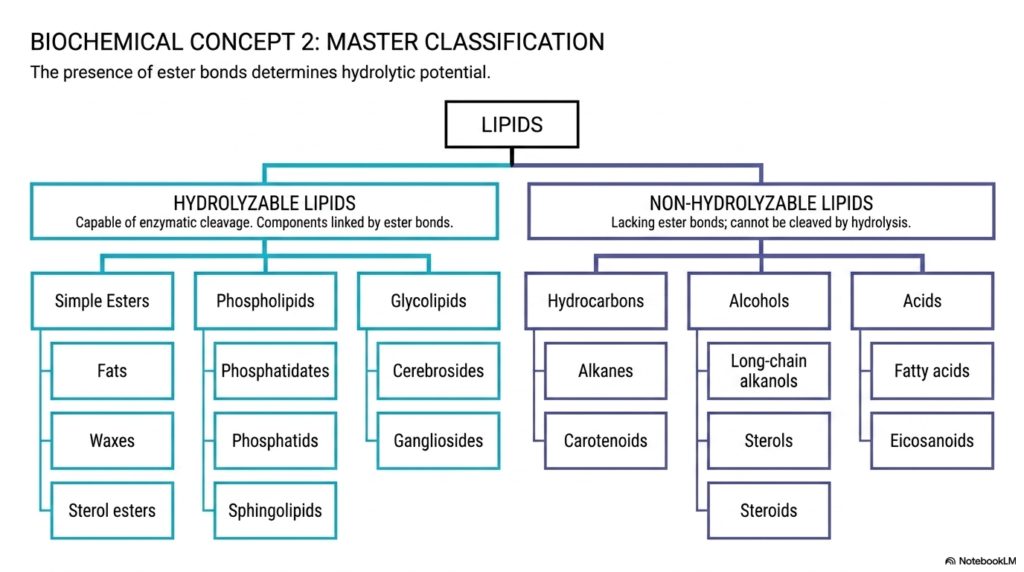
Imagine you are standing at the grand sorting hat of biochemistry, where every fatty molecule must be assigned to its correct functional family. How do we divide such a massive, diverse group of molecules? The answer lies in a single chemical connection. The core purpose of this slide is to introduce you to the master blueprint of Lipid Classification, focusing entirely on the presence or absence of a specific cleavable bond known as the ester linkage. This is the single most critical dividing line you must memorize.
When you look at the master diagnostic tree for Lipid Classification, you immediately see two massive overarching branches: Hydrolyzable Lipids and Non-Hydrolyzable Lipids. Hydrolyzable lipids are those that possess ester bonds. An ester bond is essentially a chemical bridge that connects different parts of the molecule together. In the presence of water and specific enzymes—like the lipases secreted by your pancreas—these ester bonds can be effectively cleaved or broken apart. This process, known as hydrolysis, allows the body to break down complex dietary fats into smaller, usable parts for energy or cellular reconstruction.
Conversely, the right side of our Lipid Classification tree features the non-hydrolyzable lipids. These resilient molecules completely lack ester bonds. Because they do not have these specific cleavable linkages, they cannot be broken down by standard hydrolysis. This group includes incredibly important physiological players like sterols, long-chain alcohols, and free fatty acids. By looking at a molecule’s structure and asking, “Can this be enzymatically cleaved?”, you immediately know where it belongs in the biochemical hierarchy. This structural nuance is not just trivia; it dictates exactly how your body digests, transports, and utilizes every milligram of fat you consume.
Slide 5: Simple Esters in Lipid Classification: The Energy Vaults
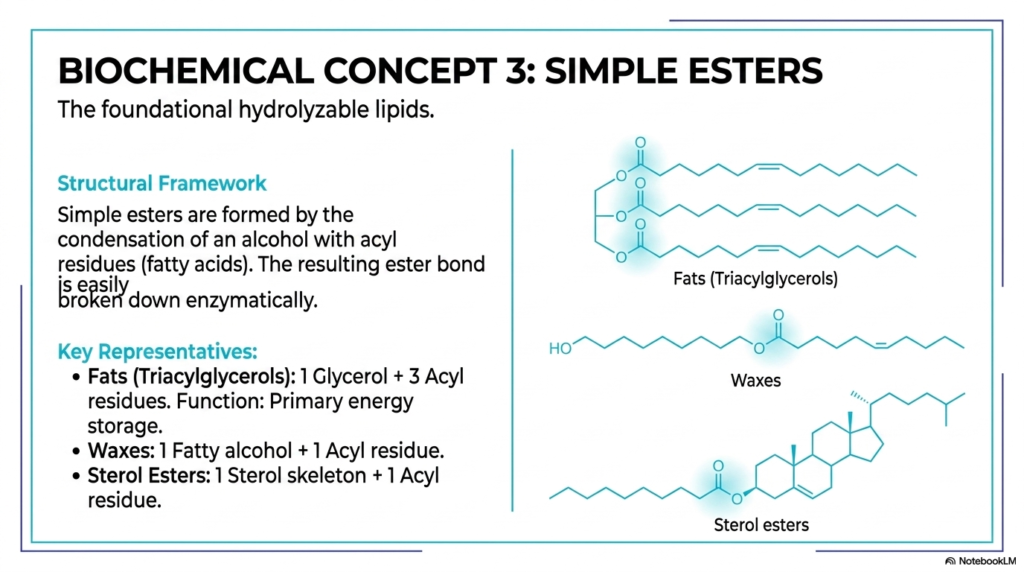
When a bear goes into hibernation for the harsh, freezing winter, how does it survive for months without taking a single bite of food? It relies entirely on the chemical energy locked away inside specific biological vaults. The purpose of this slide is to explore the foundational hydrolyzable lipids: the simple esters. When we talk about standard fat storage within our Lipid Classification framework, this is exactly the group of molecules we are analyzing. They are structurally simple, but biologically indispensable.
Within the rules of Lipid Classification, simple esters are created through a chemical process called condensation, where an alcohol bonds with fatty acids (acyl residues), releasing water and forming that highly important, cleavable ester bond. The most famous representatives of this group are the triacylglycerols, commonly known simply as fats. Structurally, these consist of a single glycerol backbone holding onto three distinct fatty acid tails. Because they are incredibly dense and completely hydrophobic, they pack tightly together in our adipocytes (fat cells), acting as the primary, long-term energy storage reserves for the human body.
But energy storage isn’t the only function found here. As we expand our view of Lipid Classification, we also encounter waxes and sterol esters. Waxes are formed from one long-chain fatty alcohol bonded to a single acyl residue. Instead of being burned for massive energy, waxes are deployed by nature as highly protective, water-repellent coatings on plant leaves, animal fur, and even inside the human ear canal. By examining simple esters, we clearly see how nature utilizes the easily broken ester bond to create molecules perfectly designed for both rapid energy mobilization and resilient environmental protection.
Slide 6: Phospholipids in Lipid Classification: The Bipolar Membrane Builders
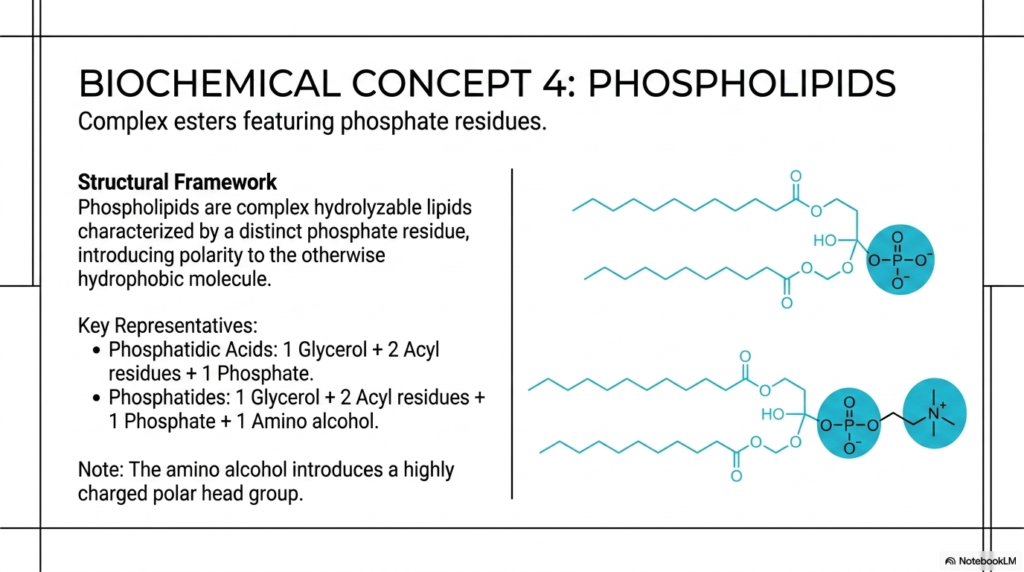
Imagine trying to build a sturdy house, but your only building materials are heavily repelled by the air itself. How do cells build a stable barrier in a completely water-based universe when fats hate water? Enter the chemical compounds with a brilliant split personality! The core purpose of this slide is to introduce you to phospholipids, the absolute true architects of cellular life. Without this highly unique category in our Lipid Classification system, biological membranes simply could not exist, and life as we know it would instantly dissolve.
In the structural framework of Lipid Classification, phospholipids are considered complex hydrolyzable lipids. What makes them so special is the addition of a distinct phosphate residue. While the long carbon-hydrogen tails remain fiercely hydrophobic (water-fearing), the attached phosphate group is highly charged and incredibly polar, making that specific end of the molecule hydrophilic (water-loving). This creates an amphipathic molecule—a chemical with two opposing desires. One end desperately wants to interact with the watery environment of the bloodstream, while the other end desperately wants to hide from it.
There are two key representatives we study in this Lipid Classification category: phosphatidic acids and phosphatides. Phosphatidic acids consist of a glycerol backbone, two fatty acid tails, and one phosphate group. Phosphatides take this a step further by attaching an amino alcohol to the phosphate, creating an even larger, highly charged polar head group. When you drop these complex molecules into a biological fluid, their chemical nature forces them to spontaneously self-assemble. The hydrophobic tails tuck inward, away from the fluid, while the polar heads face outward, instantly creating the foundational microscopic walls that surround every single cell in your body.
Slide 7: Sphingolipids and Glycolipids in Lipid Classification: Cellular ID Cards
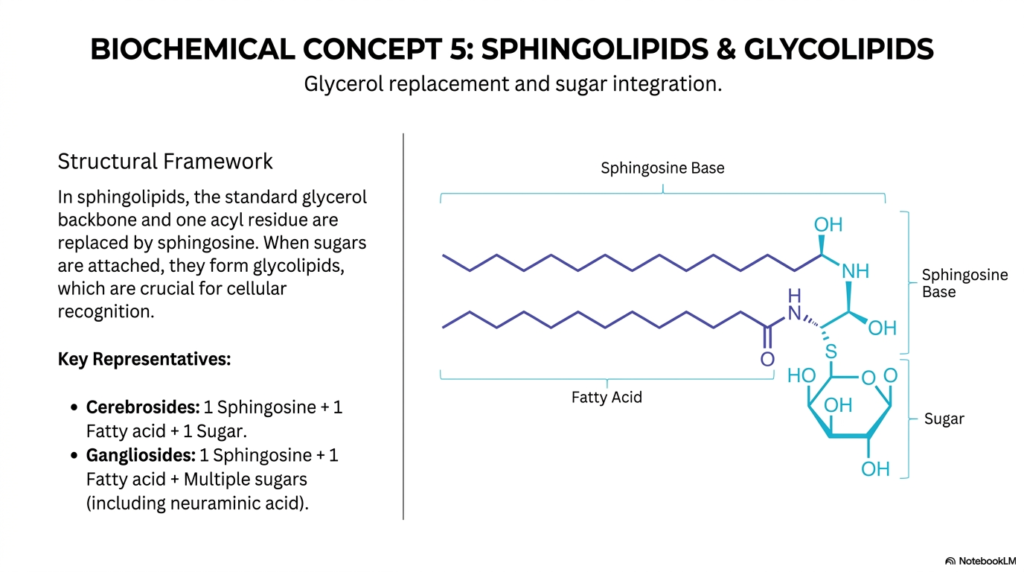
How exactly does a circulating white blood cell know that it’s bumping into one of your own healthy tissues rather than an invading bacterial pathogen? Your cells don’t have eyes, so they rely entirely on microscopic molecular ID cards plastered on their outer surfaces. The purpose of this slide is to dive into sphingolipids and glycolipids, revealing how the cellular surface acts as a complex biological communication hub. This area of Lipid Classification shifts our focus away from simple energy storage and directly into the fascinating world of cellular recognition and neurology.
If we look at the structural framework of this Lipid Classification group, we notice a massive architectural change. Up until now, our hydrolyzable lipids relied on a glycerol backbone. But in sphingolipids, that standard glycerol is completely replaced by a complex molecule called a sphingosine base. This robust base securely holds onto a fatty acid, forming the foundation of structures heavily utilized in the central nervous system. But the real magic happens when sugar molecules are structurally integrated into this lipid base, forming what we call glycolipids.
A critical component of advanced Lipid Classification involves understanding representatives like cerebrosides and gangliosides. Cerebrosides attach a single simple sugar to the sphingosine base, while gangliosides feature highly complex, branching chains of multiple sugars, including charged residues like neuraminic acid. These elaborate sugar-lipid complexes thrust out from the cell membrane into the extracellular space, acting as highly specific cellular recognition sites. Medical students must pay close attention to this branch of Lipid Classification, because genetic defects in breaking down these precise glycolipids lead to severe, often fatal, lysosomal storage disorders like Tay-Sachs and Gaucher’s disease.
Slide 8: Hydrocarbons and Alcohols in Lipid Classification: Rings, Chains, and Messengers
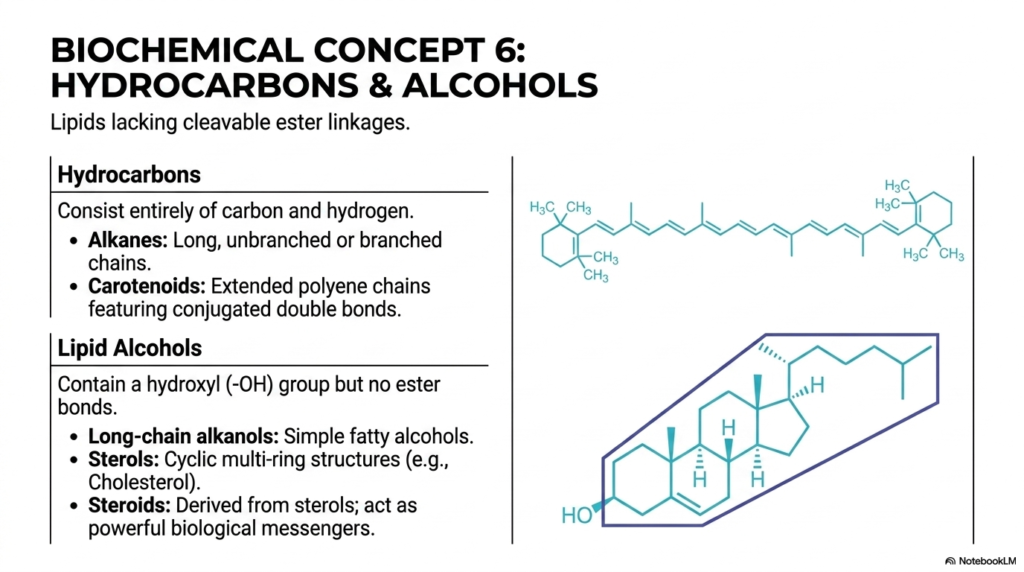
Not all molecules in biochemistry are built to be broken apart for fuel; some are built to be rigid structural anchors or powerful physiological messengers that travel across the entire body. We are now crossing a major border in our study. The core purpose of this slide is to explore the lipids that entirely lack cleavable ester linkages. By shifting our focus to hydrocarbons and lipid alcohols, this branch of Lipid Classification introduces us to some of the most famous—and arguably most misunderstood—molecules in all of human biology.
Let’s first look at the pure hydrocarbons within this Lipid Classification category. These molecules consist entirely of carbon and hydrogen, completely devoid of any oxygen. Alkanes form long, unbranched chains, while carotenoids feature beautifully extended polyene chains with conjugated double bonds, which allow them to absorb light and create vibrant biological pigments. Because they have absolutely no ester bonds, they are highly stable and completely non-hydrolyzable under normal enzymatic conditions. They serve specific, specialized roles rather than acting as a metabolic fuel source.
The most clinically relevant part of this Lipid Classification group, however, belongs to the lipid alcohols, which contain a hydroxyl (-OH) group. Here we find the sterols, characterized by their iconic, rigid, multi-ring cyclic structures. The most famous sterol is cholesterol. While the general public often fears cholesterol, any expert in Lipid Classification knows it is a biological hero, required to maintain cell membrane fluidity and vital for human life. Furthermore, cholesterol is the direct chemical precursor to steroids. Steroids, derived directly from these cyclic rings, act as massively powerful biological messengers—hormones like testosterone and cortisol—that command tissues across the entire organism to adapt and react.
Slide 9: Lipid Acids in Lipid Classification: The Signaling Mavericks
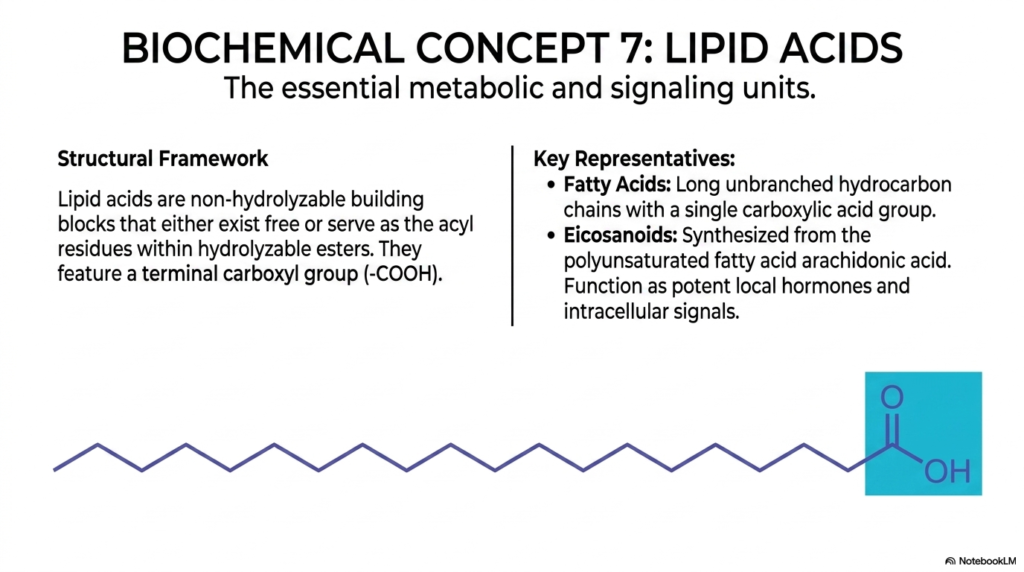
If you accidentally slam your finger in a car door, your finger instantly swells, turns red, and throbs with intense pain. Have you ever wondered what exactly is ringing the chemical alarm bells at the site of the injury? The answer lies in a highly reactive, incredibly potent group of molecules. The core purpose of this slide is to introduce you to lipid acids, the essential metabolic units that pull double duty as both foundational structural building blocks and rapid-response signaling mavericks. This specific area of Lipid Classification bridges the gap between molecular structure and dynamic pharmacology.
Within the rules of Lipid Classification, lipid acids are technically non-hydrolyzable building blocks. They feature a long, unbranched hydrocarbon chain ending in a highly reactive terminal carboxyl group (-COOH). They can exist entirely free in the blood—often bound to carrier proteins like albumin—or they can serve as the acyl residues waiting to be packed into hydrolyzable esters like the fats we discussed earlier. While standard saturated fatty acids are excellent for generating massive amounts of cellular ATP, the true excitement in this group lies in the highly unsaturated varieties.
A major focus of medical Lipid Classification involves the eicosanoids. These are potent, localized hormones synthesized directly from a specific 20-carbon polyunsaturated lipid known as arachidonic acid. When a cell is damaged, arachidonic acid is rapidly sheared off the membrane and converted into eicosanoids, such as prostaglandins. These molecules are the direct biological mediators of fever, inflammation, and pain. In fact, when you swallow an over-the-counter NSAID like ibuprofen, you are chemically blocking the specific enzymatic pathways of this exact Lipid Classification group, proving just how deeply these molecules impact our daily lives and medical treatments.
Slide 10: Energy Storage in Lipid Classification: Your Body’s Ultimate Battery
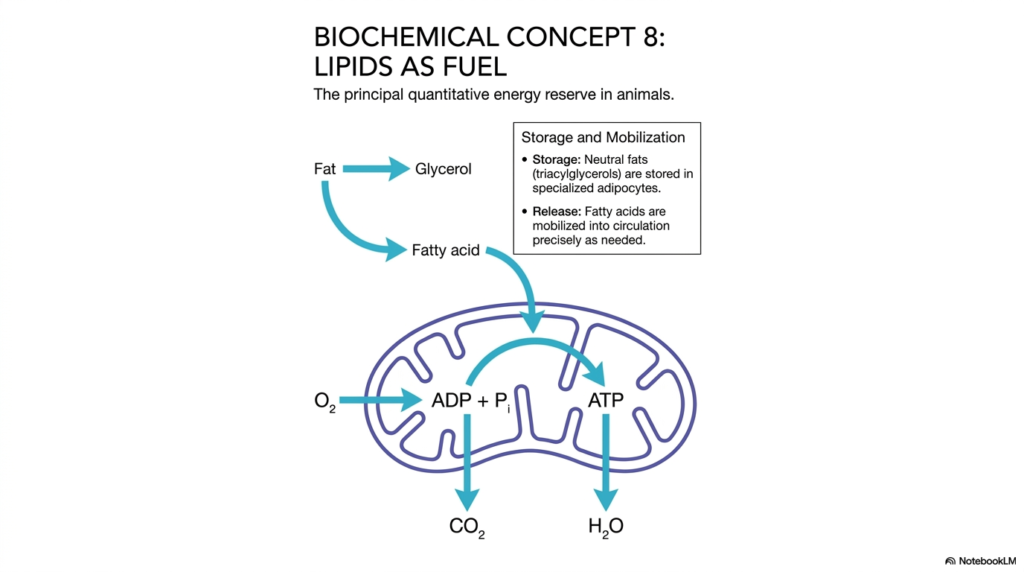
Why is it that marathon runners can run continuously for 26 miles, seemingly defying the limits of human endurance, while a sprinter might collapse from exhaustion after only a few hundred meters? The secret lies in which biological battery the body decides to tap into. The core purpose of this slide is to deeply analyze how lipids act as the principal quantitative energy reserve in animals. By understanding this aspect of Lipid Classification, you will realize why human beings evolved to store energy in chemical fat rather than bulky carbohydrates.
When we examine the storage and mobilization pathways within our Lipid Classification framework, we see an elegantly efficient system. Neutral fats, specifically triacylglycerols, are stored in highly specialized cells called adipocytes. Unlike glycogen (stored carbohydrates), which binds massive amounts of heavy water, lipids are hydrophobic and store completely dry. This means they pack an astonishing amount of densely concentrated energy into a very small, lightweight space. When the body detects a drop in blood sugar, hormones signal these adipocytes to mobilize their reserves, breaking the fat down into a glycerol backbone and free fatty acids.
Once these fatty acids are released into the circulation, the true power of this Lipid Classification category is unleashed. The fatty acids travel directly into the microscopic powerhouses of your cells: the mitochondria. Through a complex biochemical process, they are oxidized in the presence of oxygen, driving the conversion of ADP into vast amounts of ATP—the ultimate cellular currency—while releasing carbon dioxide and water as byproducts. Mastering this quantitative energetic perspective is a massive cornerstone of Lipid Classification, explaining everything from human evolutionary survival during famines to modern metabolic conditions like diabetic ketoacidosis.
Slide 11: Membrane Architecture in Lipid Classification: Building the Cellular Fortress
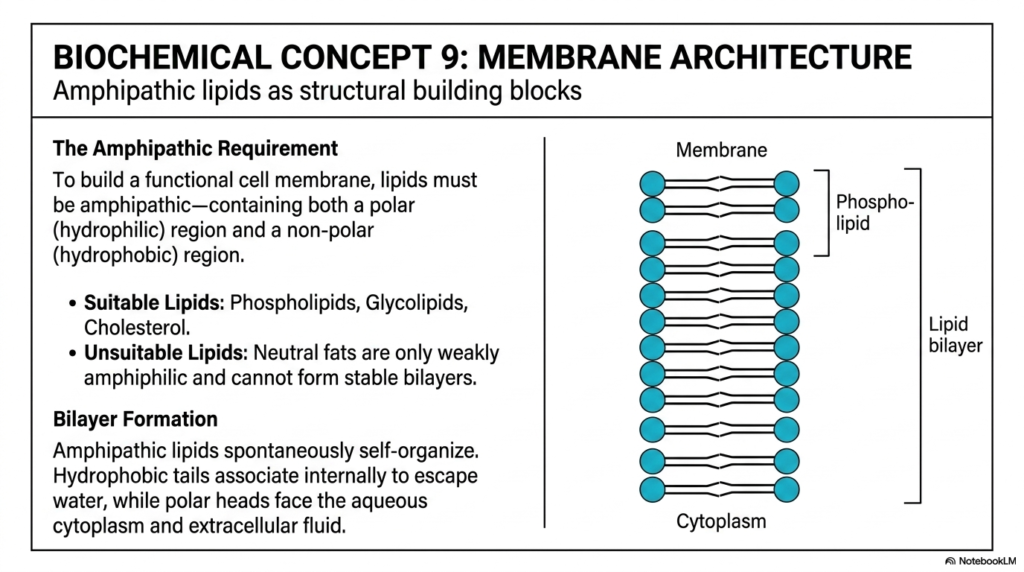
If you were tasked with building an impenetrable fortress around a city, you wouldn’t just throw a pile of loose bricks on the ground; you would need materials that stack together with perfect, predictable geometry. The same is true for human biology. The core purpose of this slide is to detail exactly how biological membranes are constructed. In this chapter of our Lipid Classification journey, we explore how specific molecules obey the laws of physics to spontaneously assemble the walls that make complex cellular life possible.
To build a functional, stable cell membrane, a molecule must meet strict amphipathic requirements. As we learned earlier in our Lipid Classification rules, an amphipathic molecule must contain both a highly polar, water-loving region and a bulky, non-polar, water-hating region. When evaluating suitable candidates for membrane construction, we look to phospholipids, glycolipids, and cholesterol. These molecules perfectly fit the architectural requirements. However, standard neutral fats (like the ones stored in adipocytes) are highly hydrophobic and only very weakly amphiphilic; therefore, they are completely unsuitable for building membranes, as they would simply clump into useless droplets.
The sheer beauty of this Lipid Classification category is how these suitable molecules behave in water. Because of their dual nature, amphipathic lipids do not require cellular energy to form structures; they spontaneously self-organize. The hydrophobic tails rapidly associate internally to escape the water, while the charged polar heads face outward toward the aqueous cytoplasm and the extracellular fluid. This elegant geometric dance forms the legendary lipid bilayer. Mastering this architectural concept within Lipid Classification is critical for understanding cellular biology, transport mechanisms, and exactly how pharmacological drugs manage to slip inside human cells.
Slide 12: Multi-Modal Insulation in Lipid Classification: Keeping Warm and Firing Neurons
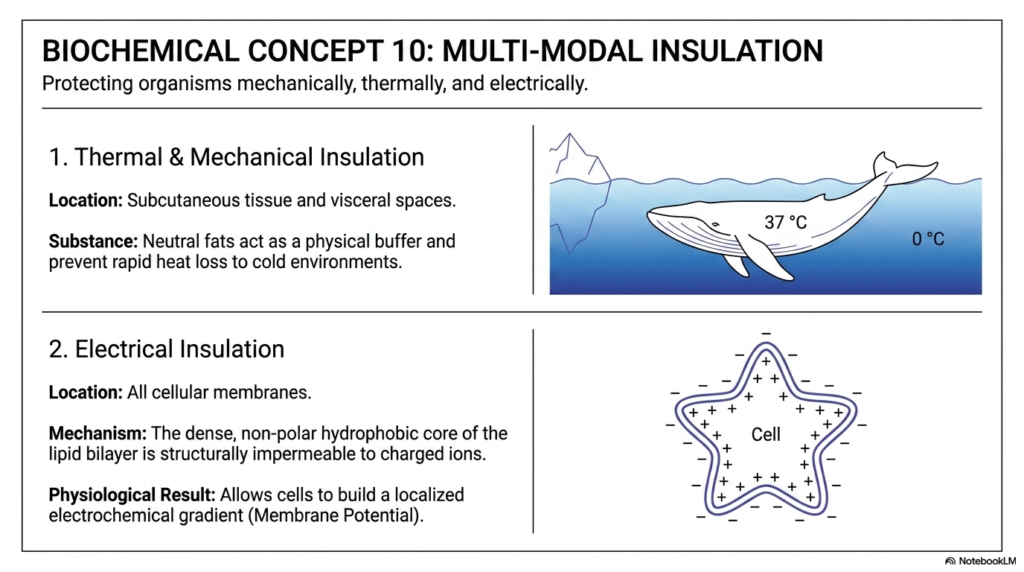
How can a massive blue whale survive happily in the freezing, icy depths of the Arctic Ocean, while at the same time, the neurons in your brain fire electrical impulses at blindingly fast speeds to read this sentence? Surprisingly, both of these biological marvels rely on the exact same chemical properties. The core purpose of this slide is to showcase the multi-modal insulation capabilities of fats. By expanding our Lipid Classification knowledge, we see that lipids provide absolutely crucial mechanical, thermal, and electrical protection for the organism.
First, let’s look at macroscopic protection within our Lipid Classification system. Subcutaneous fat, heavily composed of densely packed neutral fats, acts as a phenomenal physical buffer. It provides mechanical insulation, protecting delicate internal visceral organs from blunt trauma. Simultaneously, it provides profound thermal insulation. Because lipids conduct heat very poorly, a thick layer of fat prevents the rapid loss of core body temperature (37°C) to brutally cold external environments. This specific physiological deployment of lipids ensures the survival of countless species in extreme climates.
But the most fascinating part of this Lipid Classification category occurs at the microscopic level: electrical insulation. All cellular membranes feature a dense, non-polar hydrophobic core. Because charged particles (ions) absolutely cannot pass through this hydrophobic space without a specialized protein channel, the lipid bilayer acts as a perfect electrical insulator. This allows neurons to build up massive localized electrochemical gradients, known as the membrane potential. When this system is coated in specialized lipid wraps called the myelin sheath, nerve impulses travel at lightning speeds. Understanding this branch of Lipid Classification is vital, as the breakdown of this electrical insulation results in devastating neurological diseases like Multiple Sclerosis.
Slide 13: Specialized Tasks in Lipid Classification: Anchors, Vitamins, and Vision
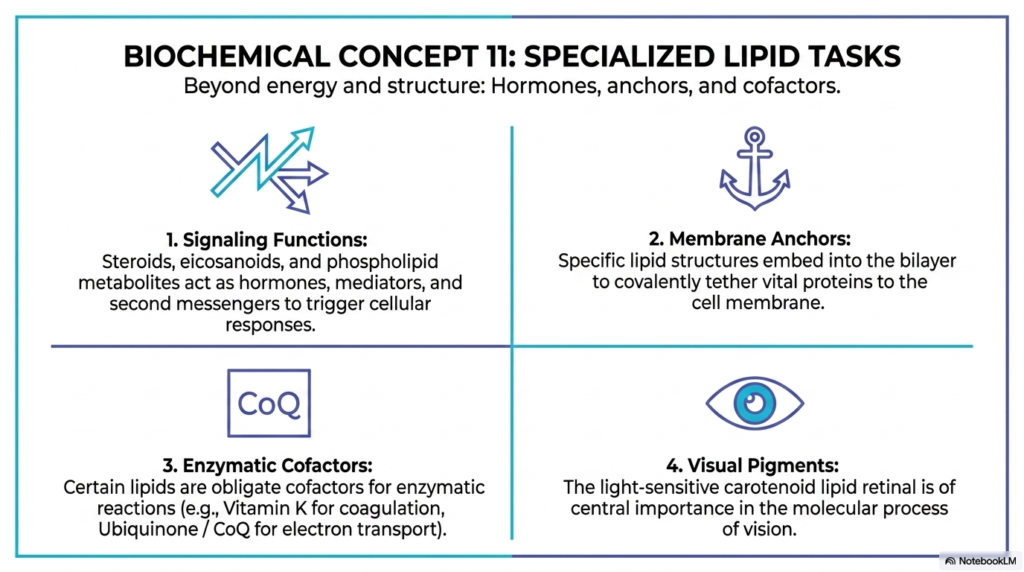
We tend to think of body fat as biologically lazy tissue—just sitting there, storing calories, and keeping us warm. But nothing could be further from the truth. The core purpose of this slide is to break that misconception by exploring the highly specialized, dynamic tasks that lipids perform every single second of your life. Moving completely beyond simple energy and passive structural borders, this exciting facet of Lipid Classification highlights the lipids that act as active chemical catalysts, precise cellular anchors, and the literal molecules that allow you to see light.
When we survey these specialized tasks, the sheer diversity within Lipid Classification is breathtaking. First, we have powerful signaling functions. Specific lipids like steroids, eicosanoids, and various phospholipid metabolites escape the membrane to act as powerful hormones and second messengers, triggering massive, systemic cellular responses. Second, we see lipids acting as precise membrane anchors. Rather than floating freely, vital functional proteins are covalently tethered directly into the cell membrane by specific, localized lipid structures, ensuring they stay exactly where the cell needs them to operate.
Furthermore, some of the most critical enzymatic reactions in the human body completely stall without proper Lipid Classification representatives acting as obligate cofactors. For example, Vitamin K is a lipid required for your blood to clot, and Ubiquinone (Coenzyme Q) is a lipid indispensable for generating energy in the electron transport chain. Finally, we have the visual pigments. The light-sensitive carotenoid lipid known as retinal is central to the molecular process of vision inside your eye. You literally require this specific branch of Lipid Classification just to read the words on this slide!
Slide 14: Essential Lipids in Lipid Classification: What You Must Eat to Survive
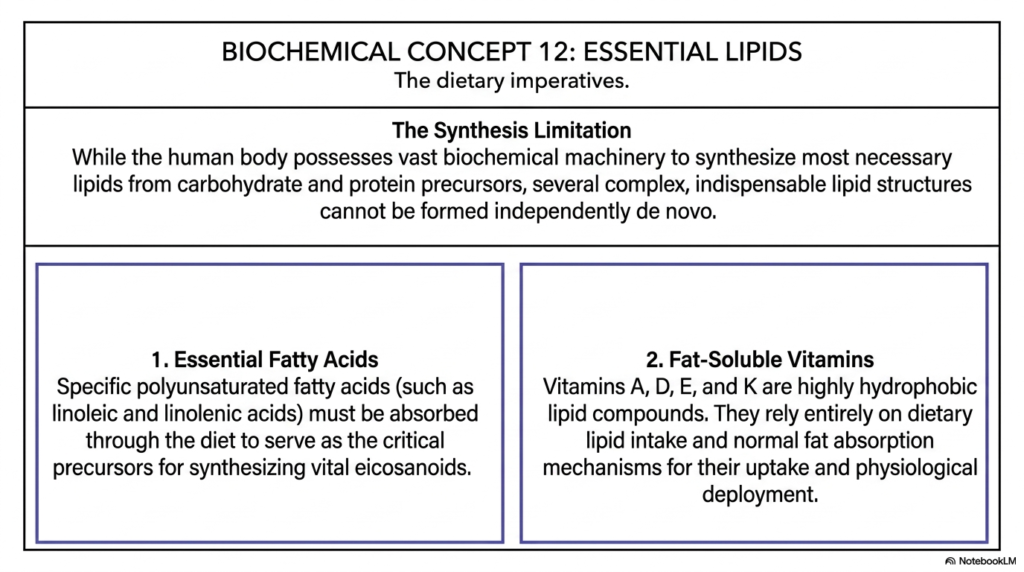
If your body is a magnificent, self-sustaining biochemical factory capable of turning a sugary donut into stored belly fat, why do doctors constantly tell you to eat foods rich in Omega-3s and healthy fats? The reality is that the human factory has a few critical missing blueprints. The core purpose of this slide is to highlight the dietary imperatives of biochemistry. This crucially important section of Lipid Classification deals with the essential molecules that your body absolutely cannot synthesize on its own, meaning you must consume them to survive.
Despite our vast biological machinery, we face a severe synthesis limitation. While we can easily synthesize standard saturated fats from carbohydrate and protein precursors, several complex, highly functional lipid structures cannot be formed de novo (from scratch). In the realm of Lipid Classification, we primarily worry about two major categories here. The first is the essential fatty acids. Specific polyunsaturated fats, heavily featuring multiple double bonds—like linoleic and linolenic acids—must be absorbed through the diet. These aren’t just for energy; they act as the absolute mandatory precursors for synthesizing the vital inflammatory eicosanoids we discussed earlier.
The second crucial dietary group within this Lipid Classification framework consists of the fat-soluble vitamins: Vitamins A, D, E, and K. Because these compounds are highly hydrophobic, they rely completely on normal dietary fat intake and healthy digestive lipid absorption mechanisms to enter the bloodstream and be physiologically deployed. Understanding this specific branch of Lipid Classification is vital for medical students, as patients suffering from gallbladder issues or intestinal diseases often present with severe deficiencies in these essential lipids, leading to night blindness, brittle bones, or spontaneous bleeding.
Slide 15: The Grand Synthesis of Lipid Classification: Form Dictates Function
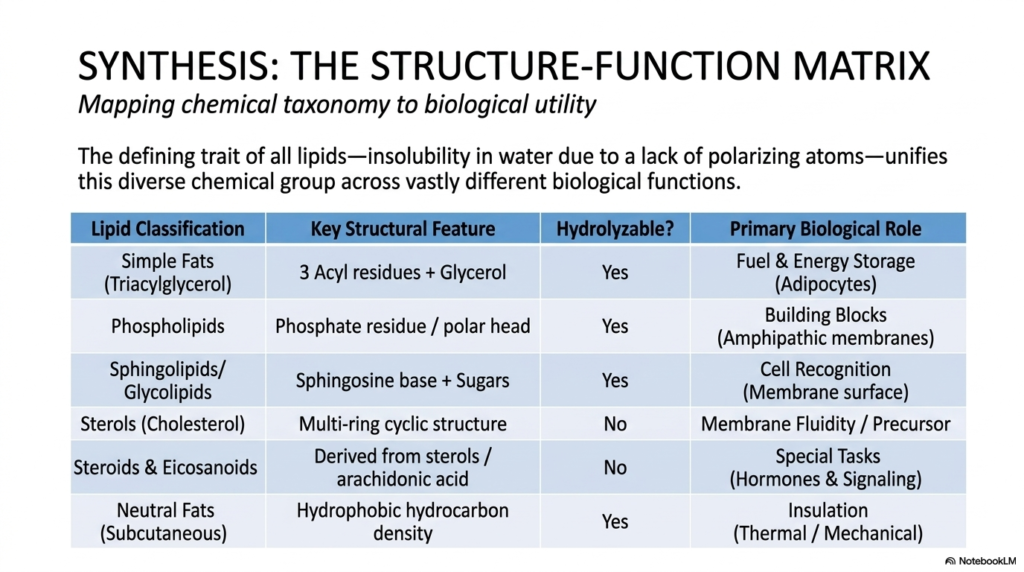
We have journeyed through molecular blueprints, cellular fortresses, electrical insulators, and potent biological messengers. Now, it is time to bring all of these disparate concepts together for the ultimate biochemical exam review. The core purpose of this final slide is to present the grand synthesis: mapping the complex chemical taxonomy directly to biological utility. This matrix is the holy grail of Lipid Classification, perfectly demonstrating the golden rule of biology that structural form undeniably dictates physiological function.
If we look at the structure-function matrix provided on the slide, the entire puzzle of Lipid Classification snaps cleanly into place. We see our hydrolyzable simple fats utilizing their 3 acyl residues strictly for heavy fuel and energy storage. We see phospholipids utilizing their charged polar heads to become the amphipathic building blocks of cell membranes. We track sphingolipids utilizing their unique sugar bases for surface cell recognition, while non-hydrolyzable sterols regulate membrane fluidity. We even map out the neutral fats deployed for deep thermal insulation. The utility of the lipid is permanently locked to its atomic structure.
Yet, despite this massive diversity in form and function, there is one unifying trait that ties this entire Lipid Classification system together. Whether it is a wax coating an ear canal or a steroid hormone signaling a muscle to grow, they all share a defining, fundamental insolubility in water due to their lack of polarizing atoms. This chemical stubbornness against water is the singular property that forces them to build barriers, store dry energy, and act as distinct messengers. Keep this comprehensive Lipid Classification matrix securely in your mind, and you will navigate any biochemical challenge with absolute confidence!
Please read our Content Disclaimer Statement.
Check out our social media channels: