16. Amino Acid Chemistry: Structure and Classification
Every towering skyscraper begins with a simple steel beam, and similarly, every complex organism relies on the precise assembly of microscopic molecules. The human body is a bustling metropolis of proteins, constantly building, repairing, and signaling, all powered by tiny monomeric units. The core purpose of this comprehensive slide deck is to demystify these fundamental building blocks. It serves as an analytical guide for scholars and medical students, breaking down intricate biochemical structures and processes into digestible, visually intuitive concepts, paving the way for a deeper mastery of physiological sciences.
Slide 1: The Foundations of Amino Acid Chemistry
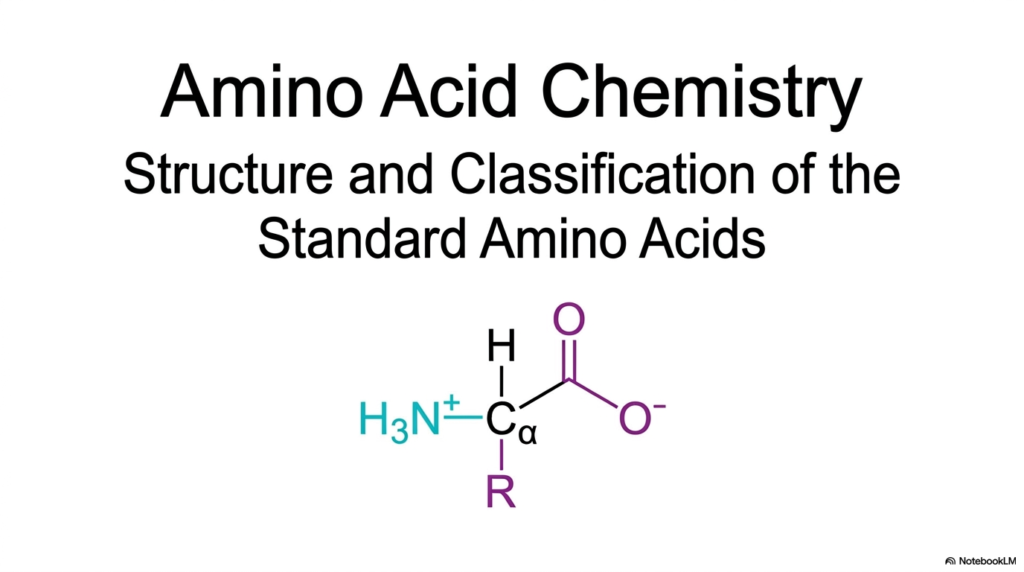
The realm of biological sciences relies heavily on understanding foundational molecular structures. When examining Amino Acid Chemistry, one immediately recognizes the elegant simplicity of life’s essential building blocks. This initial slide introduces the core concepts and presents an analytical guide to the fundamental framework of these crucial molecules. In the broader study of Amino Acid Chemistry, grasping these core components is absolutely essential for advancing into complex protein mechanics. The introductory visual highlights the central alpha-carbon bonded to its distinct functional groups, successfully setting the stage for intricate biochemical pathways. The overarching theme of Amino Acid Chemistry is beautifully captured here, showing how a single monomer acts as the literal foundation for massive, complex biological structures.
The provided diagram illustrates the standard ionized form these molecules typically assume within physiological environments. Observers can clearly identify a central alpha-carbon flanked by a positively charged amino group and a negatively charged carboxylate group. This specific structural orientation is a fundamental cornerstone within the broader study of biochemistry and structural biology. By visualizing the molecule in this dual-charged state, students gain immediate insight into how these essential compounds behave when submerged in cellular fluids. The presence of the variable R-group is also clearly indicated at the bottom of the structure, hinting at the vast chemical diversity that arises from this single standardized molecular template.
Furthermore, the visual representation emphasizes the spatial arrangement of the molecule, which is pivotal for understanding how larger macromolecules eventually assemble, fold, and function. As the academic presentation progresses, the profound physiological implications of this basic atomic layout will become increasingly clear. The structural foundation presented on this slide underpins everything from dynamic enzyme catalysis to the physical structural support found in muscle tissues. Grasping the nuances of this generalized molecular architecture is the first vital step toward mastering the intricate metabolic networks that sustain living organisms daily.
Slide 2: General Structure and Functional Groups in Amino Acid Chemistry
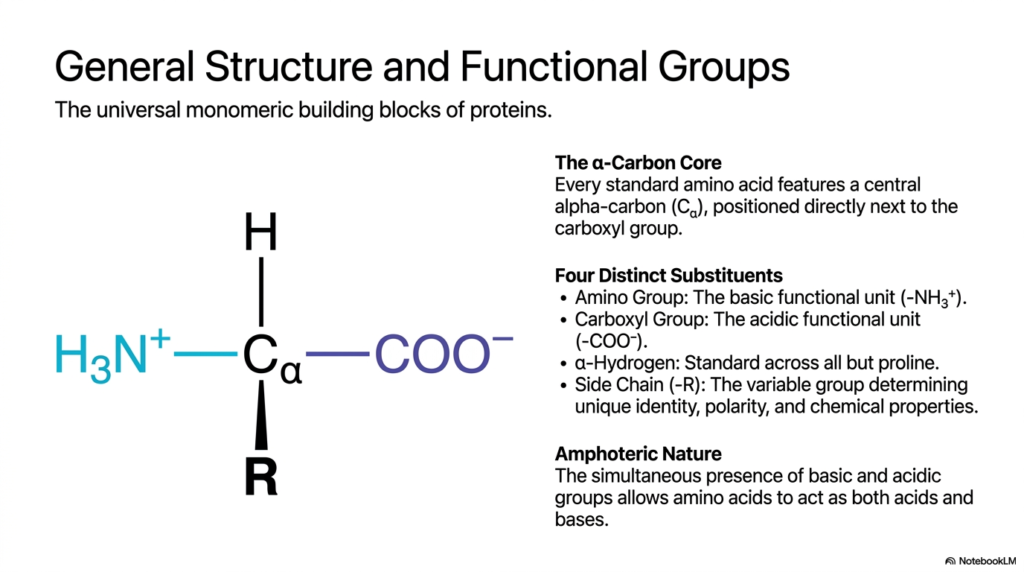
Moving deeper into Amino Acid Chemistry, the second slide dissects the universal monomeric building blocks of proteins into four distinct substituents. Every standard biological monomer features a central alpha-carbon positioned directly adjacent to a carboxyl group. This slide highlights how the intricacies of Amino Acid Chemistry dictate molecular behavior through these specific attachments. The basic functional unit is the amino group, while the acidic functional unit is the carboxyl group. By examining these structural elements, students of Amino Acid Chemistry can begin to predict how different molecules will interact in an aqueous cellular environment, laying the foundation for understanding the formation of complex polypeptide chains.
The slide further identifies the alpha-hydrogen, which remains standard across all standard proteinogenic monomers except for proline. More importantly, it introduces the side chain, commonly referred to as the R-group. This highly variable functional group is entirely responsible for determining the unique identity, overall polarity, and specific chemical properties of each individual molecule. The central alpha-carbon acts as a vital anchor point, holding these four distinct substituents together in a precise geometric configuration. Understanding the specific chemical nature of these four groups is absolutely paramount for any student attempting to master the foundational principles of molecular biology and cellular biochemistry.
Finally, this visual effectively introduces the concept of amphoteric nature. The simultaneous presence of basic amino groups and acidic carboxyl groups allows these versatile molecules to act as acids or bases depending on their environment. This dual capacity is a critical biochemical feature, enabling these monomers to participate in a wide array of dynamic chemical reactions. The structural breakdown provided on this slide ensures that observers fully comprehend the chemical anatomy of these molecules before moving on to explore their more complex stereochemical properties and physiological behaviors in living systems.
Slide 3: Optical Activity and Stereoisomerism within Amino Acid Chemistry
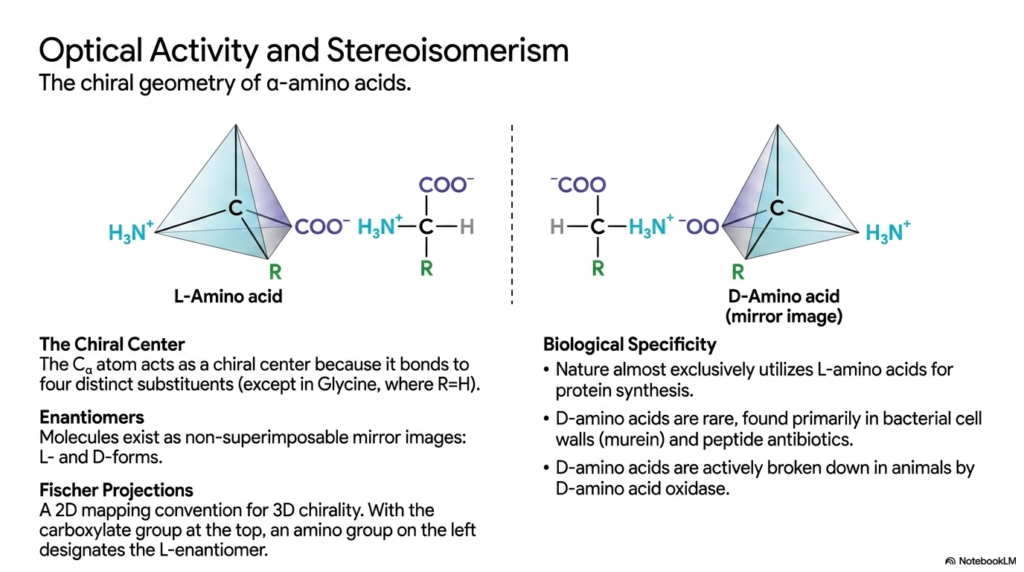
The third slide explores the fascinating chiral geometry of alpha-amino acids, a critical concept in Amino Acid Chemistry. The alpha-carbon atom functions as a chiral center because it bears four distinct substituents, with glycine being the sole exception. In the study of Amino Acid Chemistry, this chirality means that molecules exist as enantiomers, which are non-superimposable mirror images known as the L- and D-forms. Understanding these three-dimensional configurations is a major pillar of Amino Acid Chemistry, as the spatial arrangement of atoms directly dictates biological viability. The slide uses detailed tetrahedral diagrams to visually distinguish between these two mirror-image enantiomers.
To map this three-dimensional chirality onto a two-dimensional plane, the slide introduces Fischer Projections. This standardized mapping convention places the carboxylate group at the top of the diagram. When the amino group is positioned on the left side, the molecule is formally designated as the L-enantiomer. This visual tool is exceptionally useful for students analyzing complex biochemical structures on paper. The clear visual distinction between the L-amino acid and its D-amino acid counterpart highlights the precise atomic constraints that nature places on biological building blocks. The exact three-dimensional orientation of these functional groups is never arbitrary in biological systems.
The concept of biological specificity is prominently featured, noting that nature almost exclusively utilizes L-enantiomers for protein synthesis. D-enantiomers are incredibly rare, found primarily in specialized bacterial cell walls or specific peptide antibiotics. Furthermore, higher organisms possess specialized enzymes, such as D-amino acid oxidase, that actively degrade these rare D-forms. This strict biological preference underscores the extreme evolutionary precision required for cellular machinery to function correctly. By relying exclusively on a single stereoisomeric form, living organisms can efficiently construct highly organized, predictable, and structurally sound protein complexes without metabolic confusion.
Slide 4: Acid-Base Properties and Zwitterions in Amino Acid Chemistry
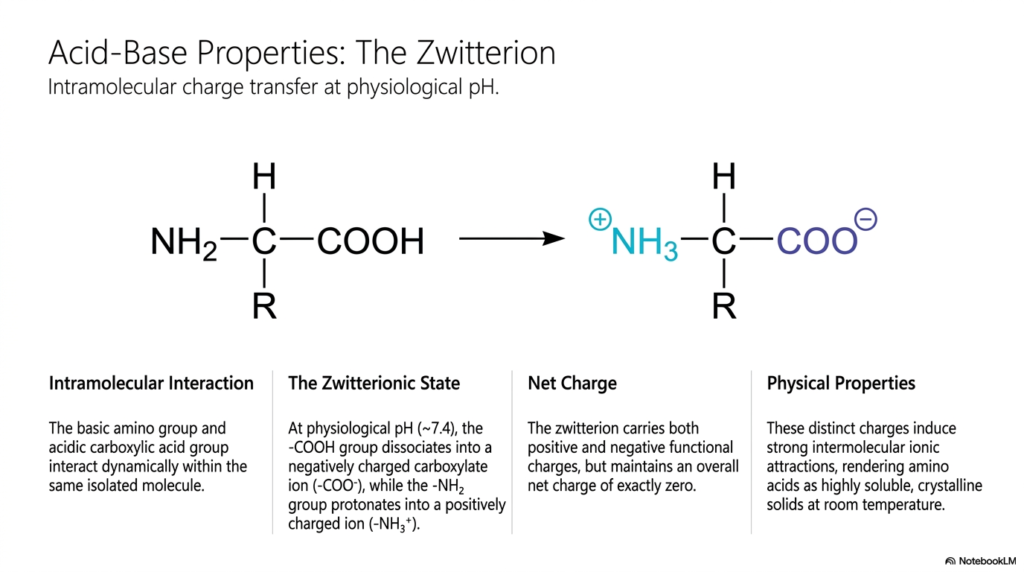
The fourth slide delves into intramolecular charge transfer, a defining feature of Amino Acid Chemistry at physiological pH. When studying Amino Acid Chemistry, the concept of the zwitterion is crucial for understanding molecular behavior in aqueous cellular environments. The visual clearly maps how the basic amino group and the acidic carboxylate group interact dynamically within the same isolated molecule. Grasping this specific intramolecular interaction is fundamental to Amino Acid Chemistry, as it explains why these molecules behave differently from standard organic acids or amines. The slide elegantly illustrates the proton transfer that creates this specialized dual-charged state.
At a standard physiological pH of approximately 7.4, the carboxyl group fully dissociates into a negatively charged ion. Simultaneously, the amino group protonates, transforming into a positively charged ion. This specific internal acid-base reaction results in the zwitterionic state. Despite containing both positive and negative functional charges, the zwitterion maintains an overall net electrical charge of exactly zero. This state is not just a theoretical chemical curiosity; it represents the actual physical form these molecules take while circulating in the human bloodstream or residing within the cytoplasm of a living cell.
The unique net-zero charge of the zwitterionic state significantly impacts the physical properties of these molecules. The presence of distinct positive and negative charges induces remarkably strong intermolecular ionic attractions between neighboring molecules. Consequently, these compounds often present as highly soluble, crystalline solids at standard room temperature. High solubility is biologically imperative, enabling these essential nutrients to dissolve readily in biological fluids for rapid transport and cellular utilization. Understanding these physical properties provides crucial insight into the systemic distribution and cellular uptake mechanisms necessary for metabolic homeostasis.
Slide 5: Dissociation Dynamics and the Isoelectric Point in Amino Acid Chemistry
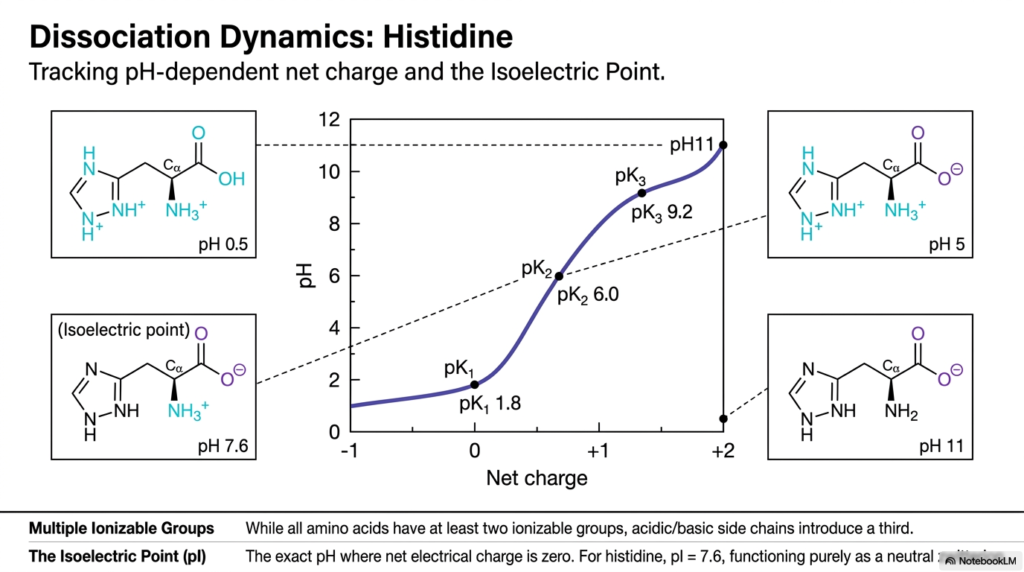
Slide five provides a highly detailed analysis of dissociation dynamics, a cornerstone of analytical Amino Acid Chemistry. The visual tracks the pH-dependent net charge of histidine, showcasing a complex titration curve central to Amino Acid Chemistry. By examining this graph, one can observe how changes in hydrogen ion concentration alter the molecule’s overall electrical state. In the realm of Amino Acid Chemistry, mastering these dynamic dissociation curves is vital for predicting how specific residues will behave within enzyme active sites. The slide clearly illustrates multiple distinct molecular forms corresponding to different environmental pH levels.
While all standard biological monomers possess at least two ionizable groups, histidine features an acidic or basic side chain that introduces a crucial third ionizable group. The titration curve explicitly maps the sequential deprotonation of these three distinct functional groups as the environmental pH systematically increases from 0.5 to 11. The visual provides exact pKa values, indicating the specific biochemical milestones at which each functional group loses a proton. This intricate, multi-step dissociation process highlights the complex, dynamic nature of basic and acidic side chains in response to fluctuating physiological environments.
The slide powerfully introduces the concept of the Isoelectric Point (pI), defined as the exact environmental pH where the net electrical charge of the entire molecule equals zero. For histidine, the visual indicates a pI of 7.6, at which point the molecule functions purely as a neutral zwitterion. Identifying the isoelectric point is critical for understanding protein solubility and stability, as molecules are typically least soluble when carrying a net charge of zero. This specific biochemical metric is heavily utilized in laboratory settings for the physical separation and purification of complex biological mixtures.
Slide 6: Buffering Action and pH Regulation in Amino Acid Chemistry
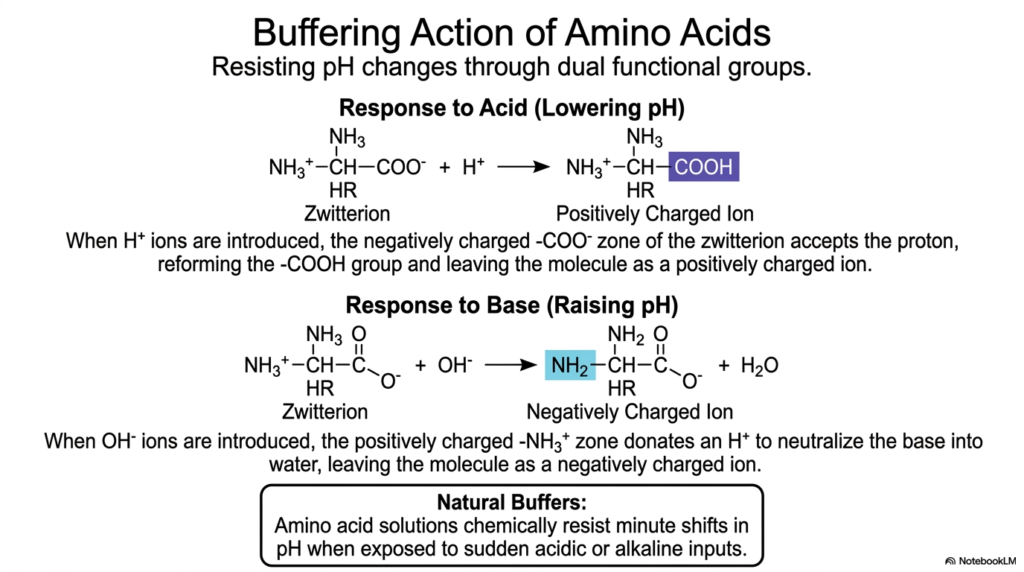
The sixth slide explores a vital physiological function rooted in Amino Acid Chemistry: the buffering action of these molecules. A major focus of Amino Acid Chemistry is understanding how dual functional groups actively resist sudden changes in environmental pH. By examining these chemical equations, students of Amino Acid Chemistry can see precisely how the zwitterion responds to the introduction of strong acids or bases. The slide clearly breaks down the specific molecular transformations that occur, proving how these simple monomers play a massive role in maintaining the delicate acid-base homeostasis required for cellular survival.
The visual first details the specific chemical response to an influx of acid, which attempts to lower the pH. When excess hydrogen ions are introduced into the environment, the negatively charged carboxylate zone of the zwitterion acts as an eager proton acceptor. This rapid acceptance reforms the uncharged carboxyl group, successfully neutralizing the threat and leaving the overall molecule as a positively charged ion. This remarkable chemical adaptability prevents a catastrophic drop in cellular pH, protecting sensitive cellular machinery and structural proteins from immediate acid-induced denaturation and functional destruction.
Conversely, the slide also diagrams the molecular response to an influx of a strong base. When hydroxide ions are introduced, the positively charged amino group of the zwitterion readily donates a proton to form a harmless water molecule. This specific neutralization reaction leaves the monomer as a negatively charged ion, effectively mitigating the alkaline threat. By functioning as robust natural buffers, these complex solutions chemically resist minute shifts in pH when exposed to sudden acidic or alkaline inputs, proving their immense systemic utility beyond simple protein construction.
Slide 7: Structural Classification Taxonomy in Amino Acid Chemistry
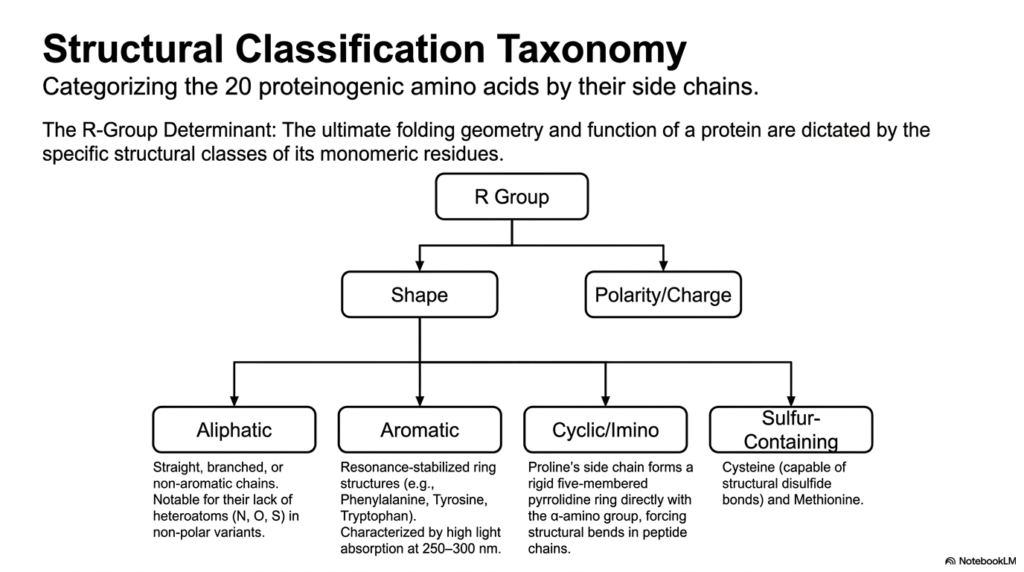
The seventh slide details the structural classification taxonomy, a vital organizational framework within Amino Acid Chemistry. Understanding how to categorize the 20 proteinogenic units is foundational to mastering Amino Acid Chemistry and predicting complex protein structures. This visual explicitly highlights the R-group determinant, which is the core focus of Amino Acid Chemistry classification. The ultimate folding geometry and specific biological function of a finished protein are directly dictated by the specific structural classes of its monomeric residues. The flowchart organizes these side chains into logical groups based primarily on their physical shape and inherent polarity.
The taxonomy branches into specific categories, starting with aliphatic shapes. These consist of straight, branched, or non-aromatic chains notable for their distinct lack of heteroatoms in their non-polar variants. Next, the slide details aromatic structures, including resonance-stabilized rings found in phenylalanine, tyrosine, and tryptophan. These aromatic rings are biochemically characterized by their high light absorption at specific ultraviolet wavelengths. Understanding these distinct physical shapes is crucial, as the physical bulk and rigidity of these side chains severely restrict the potential folding angles of the resulting polypeptide backbone.
The classification further expands to include cyclic or imino variants, highlighting proline’s unique side chain that forms a rigid five-membered pyrrolidine ring. This specific structure forces severe bends in polypeptide chains, acting as a biological corner piece. Finally, the slide categorizes sulfur-containing residues, such as cysteine and methionine. Cysteine is notable for its ability to form strong covalent disulfide bonds with other cysteine residues. These diverse structural categories highlight the vast biochemical toolkit available to living organisms for constructing highly specific, structurally complex microscopic machines.
Slide 8: Chemical Classification by Polarity in Amino Acid Chemistry
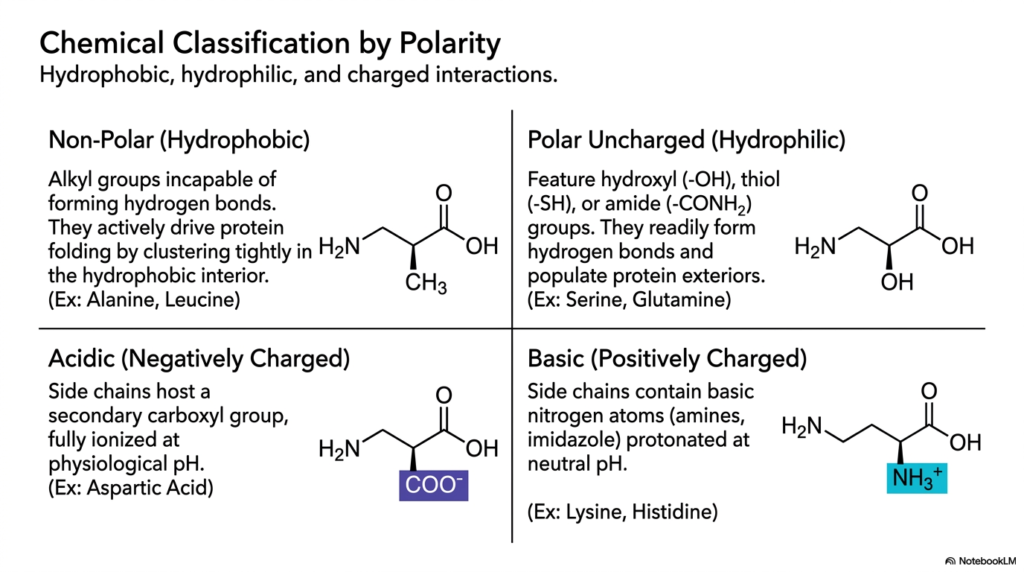
Slide eight transitions into chemical classification by polarity, another essential pillar of Amino Acid Chemistry. Exploring hydrophobic, hydrophilic, and charged interactions is fundamental to the predictive power of Amino Acid Chemistry. By mastering the concepts on this slide, scholars of Amino Acid Chemistry can accurately predict how a protein will fold within an aqueous biological environment. The visual neatly divides the monomeric building blocks into four distinct quadrants: non-polar, polar uncharged, acidic, and basic. Each quadrant details the specific chemical nature of the side chains and their resulting physical behaviors during macromolecular assembly.
The nonpolar, hydrophobic quadrant features alkyl groups that are entirely incapable of forming hydrogen bonds. In aqueous cellular environments, these residues actively drive protein folding by fleeing water and clustering tightly together to form a dry, hydrophobic interior core. Conversely, the polar uncharged quadrant features hydrophilic hydroxyl, thiol, or amide groups. These residues readily form abundant hydrogen bonds with the surrounding solvent, aggressively populating the wet exteriors of folded proteins. This delicate balance between hiding hydrophobic cores and exposing hydrophilic surfaces is the primary thermodynamic driver of all protein-folding dynamics.
The slide also details the charged functional groups, classifying them as acidic or basic. Acidic side chains bear a secondary carboxylate group that remains fully ionized and negatively charged at physiological pH, as in aspartic acid. Basic side chains contain specialized nitrogen atoms that aggressively protonate at neutral pH, resulting in a distinct positive charge, as seen in lysine. These highly charged residues are essential for forming salt bridges, participating dynamically in enzymatic active sites, and directing intricate structural interactions between distinct protein subunits within large macromolecular complexes.
Slide 9: The Proteinogenic Alphabet of Amino Acid Chemistry
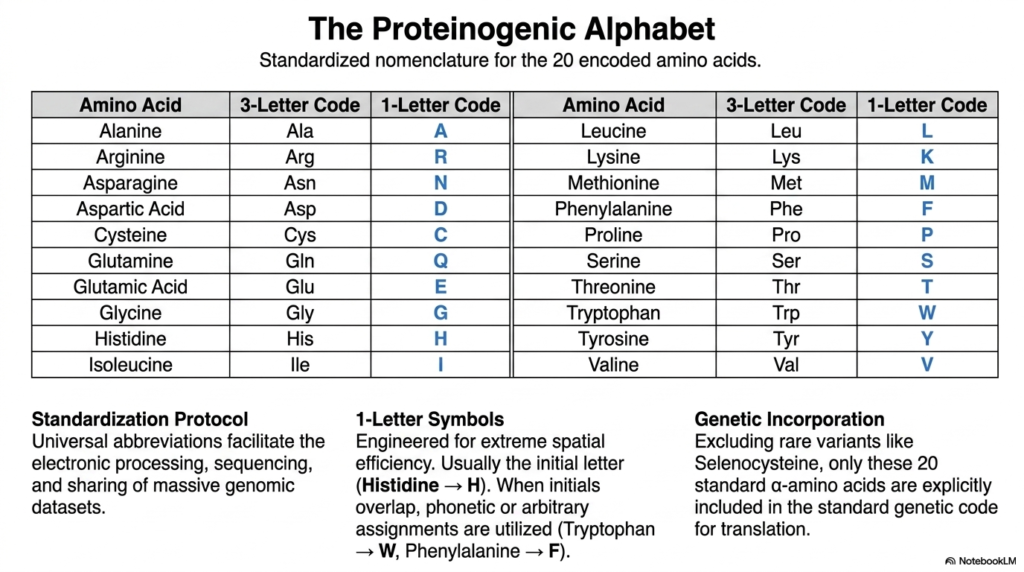
The ninth slide introduces the standard proteinogenic alphabet, the universally accepted nomenclature used in Amino Acid Chemistry. For researchers communicating within the field of Amino Acid Chemistry, mastering this specific three-letter and one-letter coding system is an absolute requirement. This detailed table acts as a comprehensive Rosetta Stone for Amino Acid Chemistry, translating complex molecular structures into simple, heavily standardized text characters. The visual carefully lists all twenty standard building blocks alongside their universally recognized abbreviations, demonstrating how vast genomic and proteomic datasets are efficiently organized and shared globally among molecular biologists.
The standardization protocol is essential for modern biological sciences. Using universal abbreviations dramatically facilitates electronic processing, large-scale data sequencing, and global sharing of extensive genomic datasets. The one-letter symbols, in particular, were heavily engineered for extreme spatial efficiency in early computational biology. While the initial letter of the molecule is usually used, phonetic or arbitrary assignments are often used when initials inevitably overlap, such as assigning ‘W’ to Tryptophan. This optimized system allows researchers to accurately display thousands of monomeric sequences on a single digital screen for rapid comparative analysis.
Furthermore, the slide touches upon the strict rules of genetic incorporation. Excluding exceptionally rare variants, only these 20 standard alpha-monomers are explicitly encoded in the standard genetic code and included in standard ribosomal translation. This highlights a profound evolutionary bottleneck; despite the existence of hundreds of chemical variations in nature, all of life’s incredible diversity is mathematically constructed from this singular, highly conserved alphabet. Understanding this standardized genetic restriction is the very foundation for studying modern genomics, protein engineering, and advanced recombinant DNA technologies.
Slide 10: Nutritional and Metabolic Fates in Amino Acid Chemistry
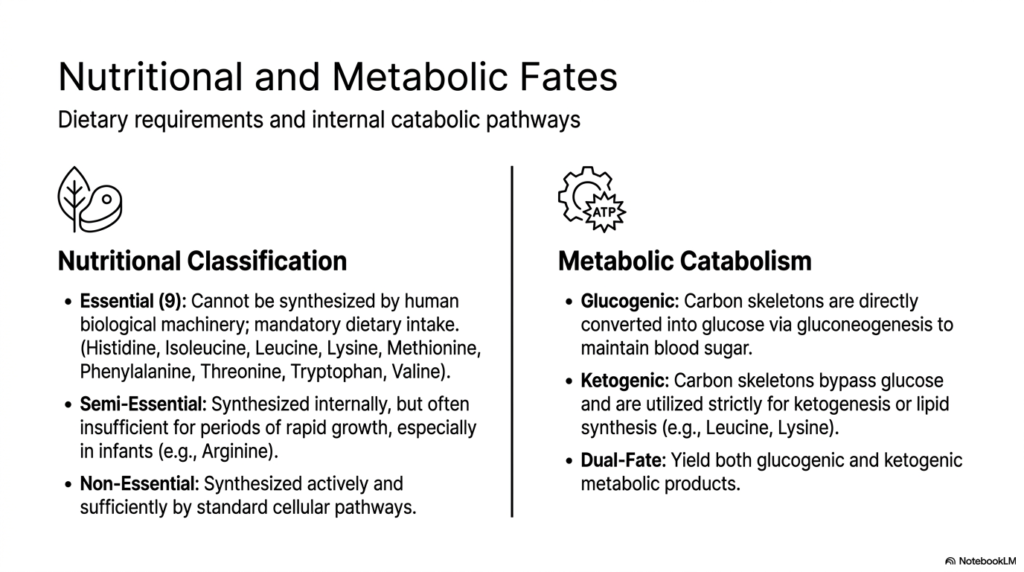
Slide ten shifts focus to nutritional and metabolic fates, bridging the gap between Amino Acid Chemistry and human physiology. Understanding dietary requirements is a practical application of Amino Acid Chemistry that directly impacts human health and disease management. The visual explicitly connects the rigid atomic rules of Amino Acid Chemistry to broad systemic metabolic pathways. The slide carefully divides the topic into nutritional classification and metabolic catabolism, explaining both how these molecules are acquired by the human body and how their carbon skeletons are ultimately dismantled to provide cellular energy and support biosynthesis.
The nutritional classification heavily categorizes these molecules based on human synthesis capabilities. Essential monomers cannot be synthesized internally by human biological machinery, making their dietary intake entirely mandatory for survival. Semi-essential variants can be synthesized internally, but often in volumes insufficient for periods of rapid biological growth, such as during infancy. Conversely, non-essential variants are synthesized actively, consistently, and sufficiently by standard cellular metabolic pathways. This precise nutritional hierarchy dictates human dietary needs and forms the foundational basis for modern clinical nutrition and metabolic disease management protocols.
The catabolism section details the eventual fate of these molecules once their nitrogen groups have been safely removed. Glucogenic carbon skeletons are directly converted into glucose via gluconeogenesis to rapidly stabilize and maintain critical blood sugar levels. Ketogenic carbon skeletons entirely bypass glucose production and are strictly utilized for ketogenesis or rapid lipid synthesis. Dual-fate molecules possess complex carbon backbones that uniquely yield both glucogenic and ketogenic metabolic products. This intricate cellular sorting system ensures that no biochemical energy is wasted during the breakdown of dietary proteins.
Slide 11: Polymerization and the Peptide Bond in Amino Acid Chemistry
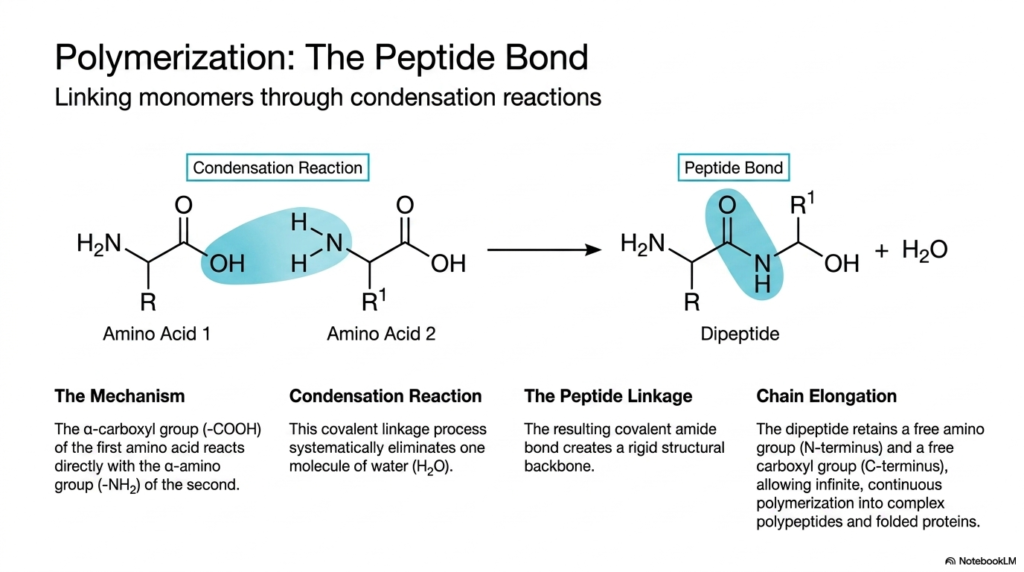
The eleventh slide highlights polymerization and the peptide bond, the defining synthetic reaction of Amino Acid Chemistry. Linking individual monomers into vast chains is the primary biological purpose explored in Amino Acid Chemistry. The visual explicitly details the chemical condensation reaction that serves as the cornerstone of Amino Acid Chemistry and protein translation. Students can clearly observe how two distinct amino acid units are chemically fused to form a dipeptide, accompanied by the specific expulsion of a single water molecule. This slide beautifully illustrates the atomic mechanics of macromolecular assembly.
The documented chemical mechanism shows the alpha-carboxyl group of the first monomer reacting directly and violently with the alpha-amino group of the second monomer. This specific covalent linkage process systematically eliminates one molecule of water, defining it officially as a classic condensation reaction. The resulting covalent amide bond, explicitly highlighted as the peptide linkage, creates a remarkably rigid structural backbone. This rigidity restricts free rotation around the bond, a crucial stereochemical feature that ultimately forces the growing polypeptide chain to adopt highly specific, biologically active three-dimensional folding patterns.
Finally, the slide explores the concept of continuous chain elongation. The newly formed dipeptide remarkably retains a free amino group at the N-terminus and a free carboxyl group at the C-terminus. This retained chemical reactivity allows for infinite, continuous polymerization. By sequentially repeating this identical condensation reaction, cellular ribosomes can rapidly assemble massive, highly complex folded proteins containing thousands of individual monomeric units. Grasping this simple repetitive mechanism is paramount for understanding how genetic blueprints are physically translated into functioning microscopic biological machines.
Slide 12: Analytical Separation and Electrophoresis in Amino Acid Chemistry
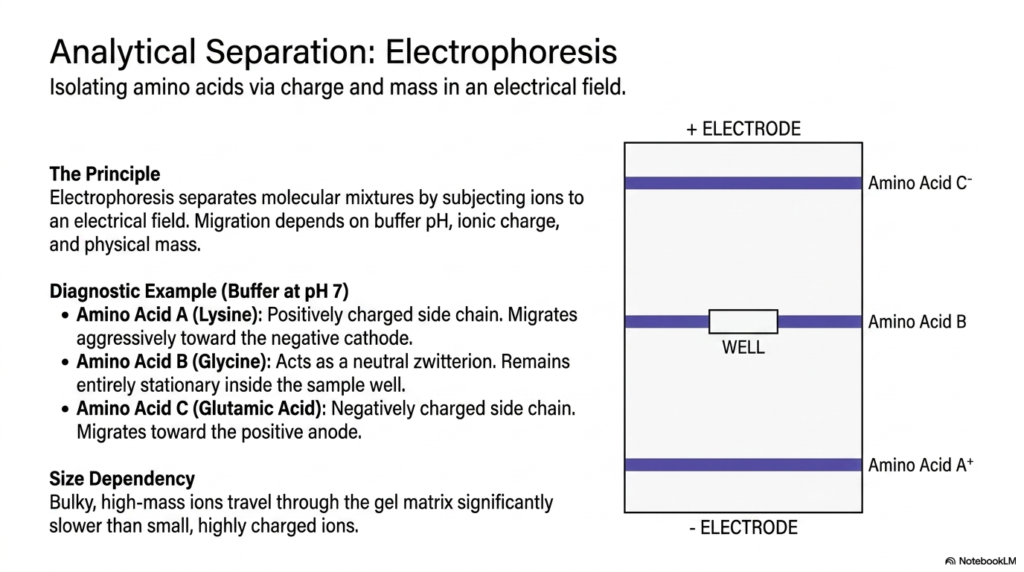
Slide twelve focuses on analytical separation by electrophoresis, a widely used laboratory technique in Amino Acid Chemistry. Isolating specific molecules based on charge and mass is a fundamental practical skill in Amino Acid Chemistry research. The visual clearly explains the underlying principles that enable Amino Acid Chemistry experts to actively separate complex molecular mixtures in a highly controlled electric field. The diagram displays a standard laboratory gel setup, illustrating how varying electrical charges dynamically pull different molecules toward opposite electrodes based on their unique atomic properties.
The core principle of electrophoresis depends heavily on the buffer pH, the molecule’s ionic charge, and its molecular mass. The slide provides a highly effective diagnostic example using a buffer perfectly set at a neutral pH of 7. Lysine, possessing a positively charged basic side chain, aggressively migrates toward the negative cathode. Glutamic acid, bearing a negatively charged carboxylate side chain, strongly migrates toward the positively charged anode. Glycine, acting as a neutral zwitterion at this pH, remains stationary in the central sample well.
Furthermore, the visual notes the critical concept of size dependency during analytical separation. While electrical charge dictates the exact direction of molecular migration, physical mass aggressively dictates the speed. Bulky, high-mass ions are forced to travel through the thick, microscopic gel matrix significantly slower than small, highly charged ions. By expertly manipulating buffer pH and carefully analyzing subsequent migration patterns, researchers can accurately identify, isolate, and purify specific monomeric compounds from highly complex, muddy biological samples, making this a truly indispensable biochemical technique.
Slide 13: Non-Standard Derivatives in Amino Acid Chemistry
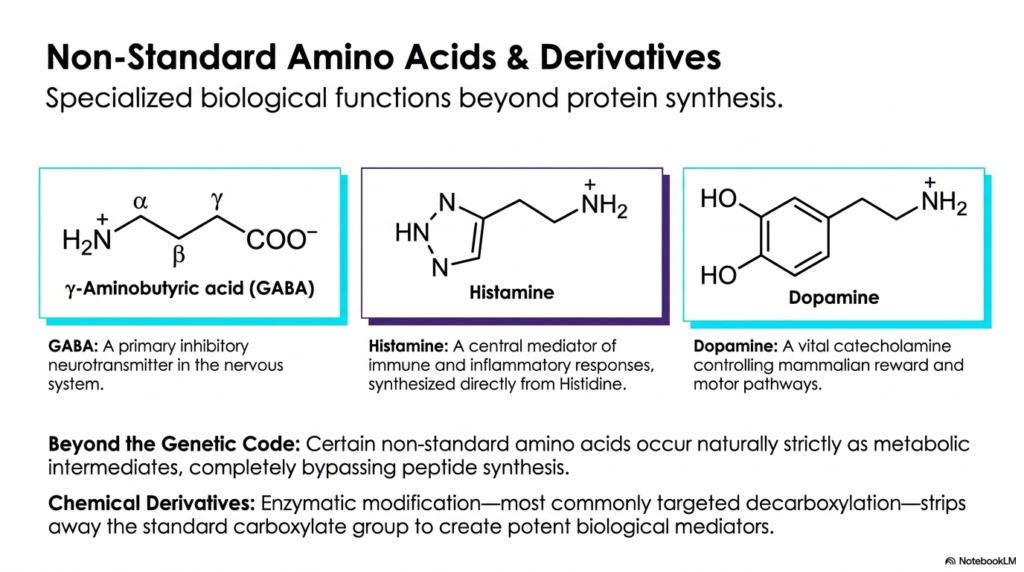
The thirteenth slide dramatically expands the scope of Amino Acid Chemistry by exploring non-standard derivatives. While protein synthesis dominates introductory Amino Acid Chemistry, specialized biological functions heavily rely on these modified variants. Understanding these vital chemical derivatives proves that Amino Acid Chemistry extends deeply into neuroscience and systemic inflammatory responses. The visual highlights three immensely potent biological mediators—GABA, Histamine, and Dopamine—demonstrating how standard molecular blueprints are enzymatically tweaked to create highly specialized chemical messengers that operate entirely independent of standard genetic translation.
The slide details Gamma-Aminobutyric acid (GABA), emphasizing its critical role as a primary inhibitory neurotransmitter actively calming the central nervous system. Next, it examines Histamine, a central mediator of intense immune and inflammatory responses, which is synthesized directly and rapidly from the standard monomer Histidine. Finally, the visual showcases Dopamine, a vital catecholamine that is responsible for regulating complex mammalian reward systems and fine motor pathways. These specialized molecules highlight the incredible versatility of these foundational chemical structures when modified by specific cellular enzymes.
A key takeaway is that these derivatives operate entirely outside the standard genetic code. Certain non-standard variants occur naturally strictly as fleeting metabolic intermediates, completely bypassing standard peptide synthesis. Enzymatic modification, most commonly targeted at decarboxylation, aggressively strips away the standard carboxylate group. This seemingly minor chemical alteration radically transforms a basic nutritional building block into a highly potent, system-altering biological mediator. This perfectly illustrates the profound efficiency of biological systems, aggressively repurposing standard chemical templates for a wide range of physiological applications.
Slide 14: Cellular Economy and Synthesis Costs in Amino Acid Chemistry
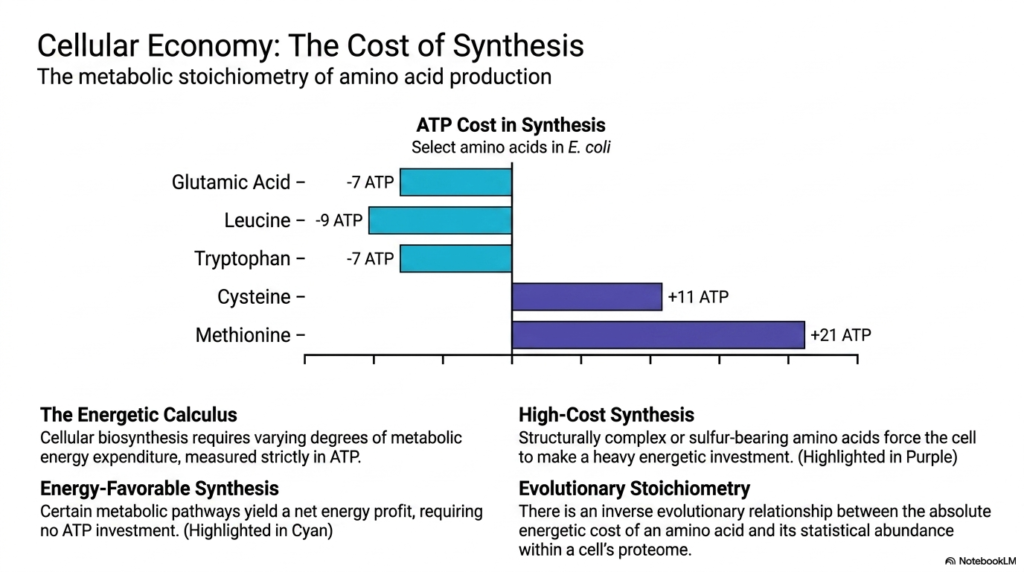
Slide fourteen introduces a fascinating systemic perspective to Amino Acid Chemistry by examining the cellular economy of synthesis. The energetic calculus of biosynthesis is a highly advanced concept within Amino Acid Chemistry, blending metabolic pathways with evolutionary theory. By exploring the precise metabolic stoichiometry detailed on this slide, scholars of Amino Acid Chemistry can understand why cells highly prefer certain molecular building blocks over others. The accompanying bar chart illustrates the substantial variation in ATP required to synthesize specific monomeric units within an E. coli model.
The visual aggressively highlights the stark differences between energy-favorable and high-cost biological synthesis. Certain metabolic pathways yield a net energy profit, requiring absolutely no ATP investment to produce molecules such as Glutamic Acid or Tryptophan. Conversely, structurally complex or sulfur-bearing variants force the living cell to make a heavy, punishing energetic investment. Methionine, for example, demands a massive expenditure of 21 ATP molecules. This rigorous metabolic stoichiometry demands that single-celled organisms carefully budget their cellular energy when aggressively building massive protein structures during periods of rapid growth.
The slide concludes by highlighting a profound evolutionary stoichiometry. There exists a mathematically proven inverse evolutionary relationship between the absolute energetic cost of synthesizing a specific molecule and its statistical abundance within a cell’s total proteome. Simply put, evolution actively and strongly favors the heavy utilization of cheap, energetically inexpensive building blocks, while aggressively conserving expensive, high-cost residues for strictly essential catalytic active sites. This brilliant, energetic optimization ensures maximum biological efficiency and ultimate cellular survival in fiercely competitive, nutrient-deprived natural environments.
Slide 15: The Blueprint Realized in Amino Acid Chemistry
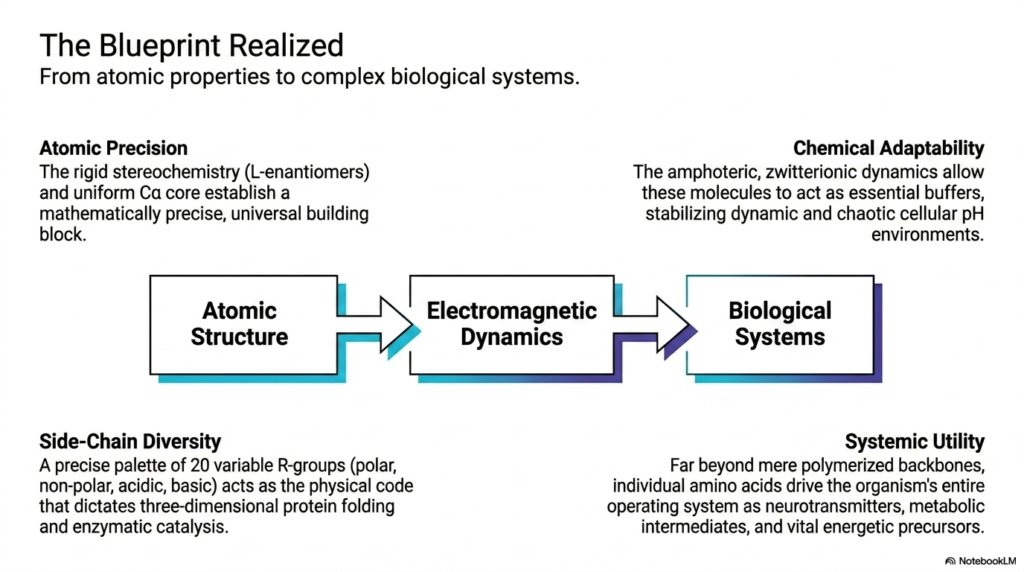
The final slide acts as a profound culmination of Amino Acid Chemistry, summarizing how atomic properties translate into complex biological systems. This powerful visual deeply reinforces why Amino Acid Chemistry is the absolute bedrock of physiological sciences. The flow diagram explicitly connects microscopic atomic structure, intermediate electromagnetic dynamics, and ultimate macroscopic biological systems, finalizing the core narrative of Amino Acid Chemistry. By reviewing this summary, students can fully appreciate the cascading effects that stem from the rigid stereochemistry and precise molecular properties introduced on the very first slide.
The slide reiterates the critical importance of atomic precision, noting how rigid L-enantiomer stereochemistry and a uniform alpha-carbon core establish a mathematically precise, universally utilized biological building block. It also strongly highlights chemical adaptability, reminding the viewer that amphoteric, dynamic zwitterionic behavior allows these molecules to serve as essential buffers, actively stabilizing chaotic cellular pH environments. These microscopic atomic rules absolutely guarantee that macroscopic cellular machinery operates with near-perfect reliability, an absolute necessity for sustaining highly complex, multicellular mammalian life.
Finally, the summary emphasizes side-chain diversity and expansive systemic utility. A highly precise palette of just 20 variable R-groups serves as the physical code that dictates three-dimensional protein folding and enzyme catalysis. Far beyond mere polymerized biological backbones, these individual monomeric molecules actively drive the organism’s entire operating system. They function as potent neurotransmitters, vital metabolic intermediates, and crucial energetic precursors. This concluding slide perfectly underscores that mastering the fundamental interactions among these microscopic chemical building blocks is essential to understanding the grand, complex architecture of biology.
Please read our Content Disclaimer Statement.
Check out our social media channels: