86. Amino Acid Activation: Mechanisms of Protein Biosynthesis
Imagine trying to build a complex skyscraper without first gathering and preparing the exact raw materials; the project would fail before it even began. In the microscopic cellular world, synthesizing functional proteins requires a similarly rigorous preparation phase. This presentation explores the fundamental biochemical mechanisms that power translation. It breaks down the molecular machinery, energetic requirements, and precise proofreading steps necessary to ensure genetic fidelity, providing essential foundational knowledge for future scientific professionals.
Slide 1: Introduction to Amino Acid Activation
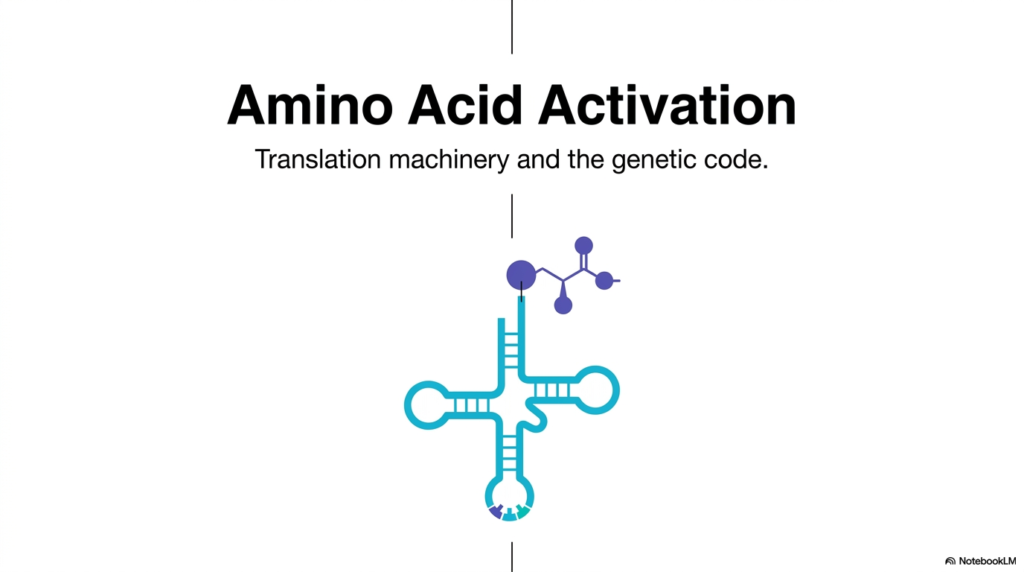
The opening presentation slide introduces the essential concept of Amino Acid Activation, a foundational process in molecular biology and biochemistry. This initial visual sets the stage for understanding how genetic information is translated into functional proteins. The featured illustration shows a transfer RNA (tRNA), a crucial molecule in the translation machinery. A small molecular structure sits attached to the top of the tRNA, representing the vital end product of Amino Acid Activation.
Understanding Amino Acid Activation requires grasping the intricate relationship between the genetic code and the cellular translation machinery. DNA stores genetic blueprints, but proteins perform the actual cellular labor. To bridge this gap, cells rely on a highly coordinated system that matches specific building blocks with corresponding genetic instructions. The visual of the tRNA molecule perfectly embodies this bridge, as it must successfully carry the correct building block to the ribosome. In living organisms, this bridging process must occur continuously and flawlessly to maintain cellular health and function.
The illustration highlights the distinct cloverleaf shape characteristic of tRNA molecules, showcasing its distinct arms and functional loops. The top portion, known as the acceptor stem, is where the specific biological building block securely binds. This chemical binding event is the precise moment Amino Acid Activation occurs, successfully linking a nucleic acid carrier to a protein precursor. Without this critical attachment step, the entire biological assembly line of protein biosynthesis would immediately halt.
As the presentation progresses, the viewer will discover the complex biochemical steps required to achieve Amino Acid Activation. The process is not merely a simple collision of molecules; it involves highly specific enzymes, substantial energy consumption, and precise recognition mechanisms. The initial slide acts as a visual anchor, reminding the audience that every complex protein structure in the human body originates from this single, elegant molecular coupling event. A deep comprehension of these foundational concepts equips future healthcare professionals to better understand metabolic diseases at a molecular level.
Slide 2: The Genetic Code and Amino Acid Activation
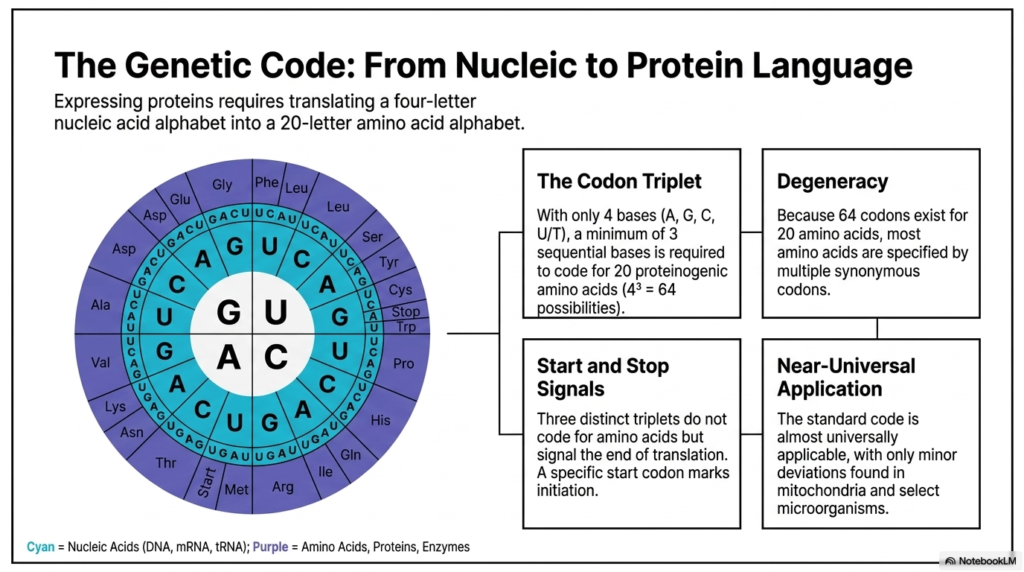
Before diving deeper into the specific mechanics of Amino Acid Activation, it is critical to understand the universal language the cell speaks. The genetic code dictates how a four-letter nucleic acid alphabet flawlessly translates into a complex twenty-letter protein alphabet. The presentation displays a circular codon chart, illustrating how nucleotide triplets specifically map to unique protein building blocks. This structural mapping highlights the absolute necessity for an intermediary molecule to read the code and deliver the correct material.
The fundamental concept of the codon triplet explains that a minimum of three sequential bases is biologically required to code for twenty proteinogenic units, mathematically resulting in sixty-four possible combinations. Because of this mathematical reality, the genetic code exhibits degeneracy. Degeneracy simply means that multiple synonymous codons can specify a single protein building block. This genetic redundancy acts as a built-in buffer against biological errors, ensuring that minor genetic mistakes do not always ruin the final protein structure.
Furthermore, the genetic code includes highly specific start and stop signals to control translation. Three distinct triplets act as stop signals to terminate translation, while a specific start codon marks the necessary initiation point. The near-universal application of this code across different life forms is truly remarkable, with only minor genetic deviations found in mitochondria and select microorganisms. It confirms that all living creatures share a common molecular ancestry, relying on the same fundamental biological dictionary for survival.
How does the cell actually match a specific nucleotide triplet to the correct organic molecule? This is exactly where Amino Acid Activation becomes the essential translational link. The translation machinery relies entirely on the specificity established during Amino Acid Activation to decode the messenger RNA transcripts accurately. If the chemical charging of the tRNA molecules is incorrect, the genetic code is effectively scrambled. Therefore, proper Amino Acid Activation is the physical realization of the genetic code’s rules.
Slide 3: Consequences of Errors Before Amino Acid Activation
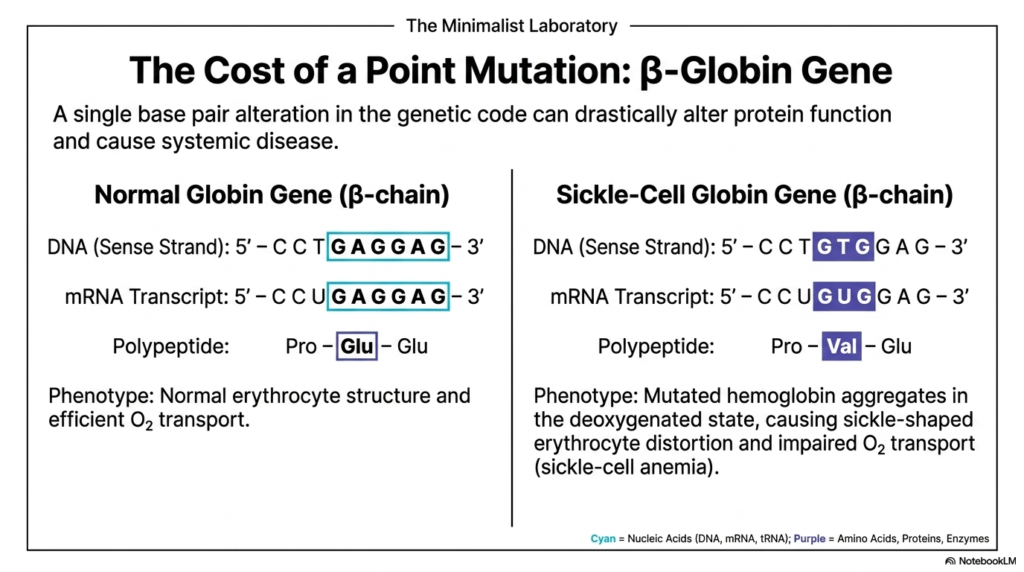
To fully appreciate the chemical precision required during Amino Acid Activation, one must first examine what happens when the genetic instructions themselves are flawed. The third slide illustrates the severe biological cost of a single-point mutation in the beta-globin gene. A normal globin gene sequence utilizes the codon GAG, which dictates the cellular incorporation of glutamate. In stark contrast, the sickle-cell globin gene contains a mutated sequence utilizing GTG, leading to the incorrect incorporation of valine instead. This microscopic substitution has profound physiological consequences.
This single base pair alteration dramatically alters the resulting biological polypeptide chain. In a healthy individual, the normal erythrocyte structure allows for highly efficient oxygen transport throughout the human body. However, the mutated sequence results in a completely different and dangerous phenotype. The altered hemoglobin molecules abnormally aggregate in the deoxygenated state, causing severe physical distortion of the red blood cells. This distortion manifests as the characteristic sickle shape associated with sickle-cell anemia, severely impairing necessary oxygen delivery. Patients suffering from this condition experience chronic pain and severe organ damage.
While this specific devastating disease originates from a fundamental DNA mutation, it highlights the immense biological responsibility placed upon the cellular machinery. If Amino Acid Activation processes were generally sloppy, they would spontaneously introduce similar catastrophic errors into proteins constantly. The strict fidelity of Amino Acid Activation ensures that the translation machinery strictly follows the provided mRNA blueprint, whether that genetic blueprint is healthy or mutated. The cell depends completely on this high-fidelity molecular translation process.
Therefore, the incredible biochemical accuracy of Amino Acid Activation acts as a vital quality control checkpoint for standard genetic translation. The specific enzymes responsible for Amino Acid Activation must perfectly distinguish between structurally similar molecules, such as glutamate and valine, to prevent spontaneous disease phenotypes from arising due to simple translation errors. This compelling slide perfectly demonstrates why microscopic molecular precision is ultimately a matter of life and death for the organism.
Slide 4: An Overview of Amino Acid Activation
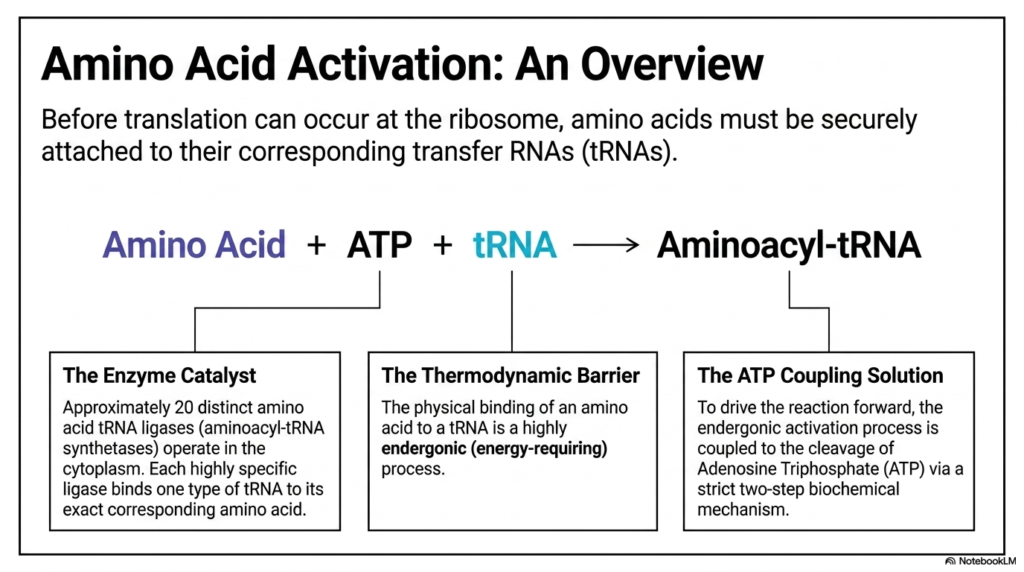
Moving into the core biochemical mechanisms, the fourth slide provides a macroscopic overview of Amino Acid Activation. Before genetic translation can occur at the ribosome, the biological building blocks must be securely attached to their corresponding transfer RNAs. The presented chemical equation shows a free amino acid combining with adenosine triphosphate and a tRNA molecule to form the final charged aminoacyl-tRNA product. This fundamental equation represents the biochemical heart of the entire activation pathway. It elegantly summarizes how potential chemical energy is transformed into functional biological readiness.
To drive this vital reaction forward, the cell must successfully overcome a significant thermodynamic barrier. The physical binding of a free organic molecule to a nucleic acid carrier is a highly endergonic, or energy-requiring, biological process. It simply does not happen spontaneously in nature. Therefore, the energetic requirement of Amino Acid Activation is met through a brilliant ATP coupling solution. The endergonic attachment process is thermodynamically coupled with the cleavage of an energy-dense adenosine triphosphate molecule via a strict two-step mechanism.
The cellular process of Amino Acid Activation is not uncatalyzed; it relies heavily on highly specific enzyme catalysts to function properly. Approximately twenty distinct amino acid tRNA ligases, also known as aminoacyl-tRNA synthetases, operate continuously within the bustling cellular cytoplasm. Each highly specific ligase acts as a master molecular matchmaker, binding one exact type of transfer RNA to its precise corresponding target molecule. Without these specialized biological enzymes, the chemical energy barrier would remain insurmountable, and protein synthesis would fail entirely.
By utilizing specialized ligase enzymes and the energetic currency of ATP, the cell effectively guarantees that Amino Acid Activation proceeds efficiently and accurately. This fundamental step effectively “charges” the transfer RNA, loading it with both the correct molecular cargo and the necessary chemical energy to form peptide bonds later in the ribosome. The successful completion of this phase is an absolute prerequisite for any subsequent genetic translation activities. Understanding this foundational thermodynamic principle helps researchers grasp how cellular energy expenditure directly fuels genetic expression.
Slide 5: The First Step of Amino Acid Activation
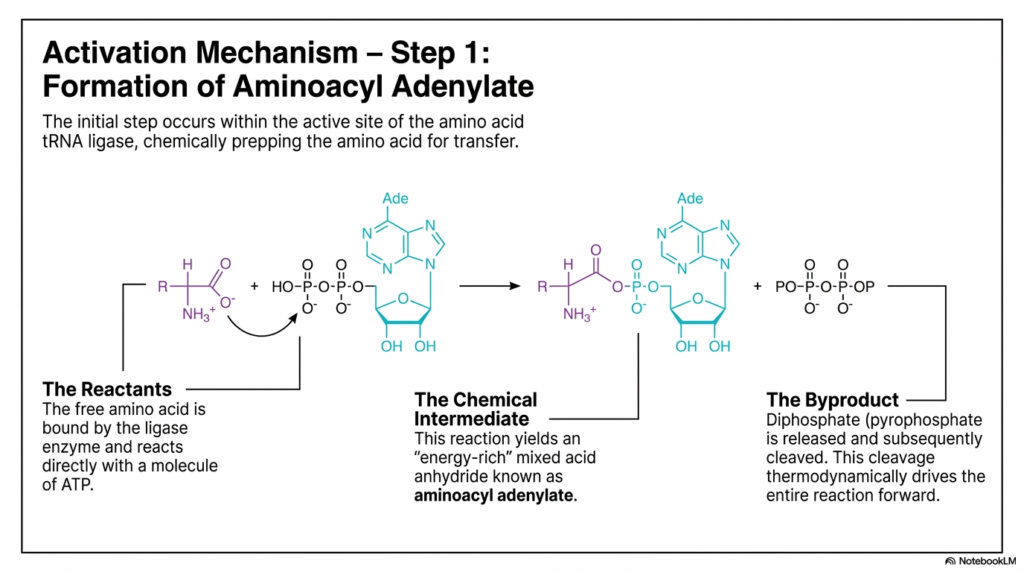
Delving deep into the exact molecular steps, this detailed slide visualizes the crucial initial phase of Amino Acid Activation. The complex chemical structures gracefully illustrate the formation of aminoacyl adenylate, which chemically preps the cargo for eventual transfer. This initial step occurs safely within the protected active site of the specific tRNA ligase enzyme. By physically confining this reaction to the active site, the enzyme protects the highly reactive chemical intermediates from unwanted cellular interference or spontaneous degradation. The enzyme acts as a microscopic crucible, facilitating conditions that would otherwise be thermodynamically unfavorable.
The primary reactants utilized in this first phase of Amino Acid Activation are a free amino acid bound securely by the ligase enzyme and a single molecule of ATP. A precise chemical reaction occurs where the oxygen atom from the molecule’s carboxyl group directly attacks the alpha phosphate of the ATP molecule. This precise biochemical interaction yields a highly energy-rich chemical intermediate known as aminoacyl adenylate, which is classified as a mixed acid anhydride. This temporary intermediate holds tremendous chemical potential. It represents the successful capture of cellular energy.
During this specific stage of Amino Acid Activation, an important chemical byproduct is simultaneously created. Diphosphate, commonly referred to as pyrophosphate, is quickly released from the original ATP molecule. Once released, this metabolic byproduct is cleaved into two separate inorganic phosphate molecules by a different cellular enzyme. The rapid breakdown of this pyrophosphate byproduct is biologically crucial because it thermodynamically drives the entire activation reaction forward, making the initial cellular energy investment effectively irreversible.
Without the successful enzymatic formation of this adenylate intermediate, the subsequent chemical transfer to the transfer RNA would be completely impossible. The temporary mixed acid anhydride bond effectively stores the chemical energy originally found in the ATP molecule. This safely stored energy is strategically positioned to facilitate the upcoming stage of the coupling process. The beautiful molecular structures highlight how chemical energy is deliberately manipulated and safely preserved to ensure the continuous synthesis of massive biological macromolecules.
Slide 6: The Finalizing Step of Amino Acid Activation
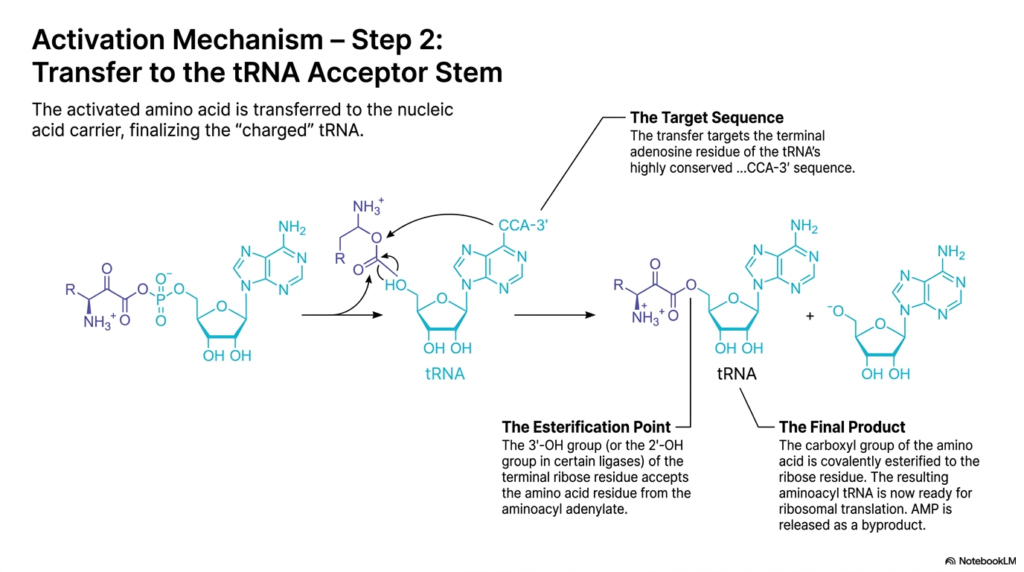
The sixth slide clearly illustrates the concluding biochemical step of Amino Acid Activation. After the high-energy chemical intermediate is successfully formed, the activated molecule is physically transferred to the nucleic acid carrier to finalize the creation of a fully charged tRNA. This targeted transfer specifically targets the terminal adenosine residue of the highly conserved CCA-3′ target sequence found uniformly on all transfer RNAs. This highly conserved sequence acts as a universal docking station for the incoming molecular cargo. It ensures that the cellular machinery can universally recognize the charged carrier.
The precise underlying chemistry of this physical transfer involves a specific esterification point. Depending on the exact functional class of the ligase enzyme facilitating the Amino Acid Activation, either the 3′-OH group or the 2′-OH group of the terminal ribose residue safely acts as the nucleophile. This reactive hydroxyl group forcefully attacks the carbonyl carbon of the aminoacyl adenylate intermediate, gracefully accepting the molecular residue. This highly sophisticated chemical handover permanently breaks the previous high-energy bond to safely form a completely new one.
The final functional product of this elaborate Amino Acid Activation process is the covalently esterified aminoacyl tRNA. The targeted carboxyl group is securely linked to the terminal ribose residue, creating a biologically active molecule that is fully ready to participate in subsequent ribosomal translation. Simultaneously, adenosine monophosphate is harmlessly released as a standard metabolic byproduct, completely dissipating the original chemical structure of the invested ATP molecule. The complex biological cell has successfully stored the necessary kinetic energy in the new ester bond.
The successful completion of Amino Acid Activation marks a highly pivotal transition in basic cellular biology. The crucial genetic information encoded in the nucleic acids is now physically tethered directly to the protein building blocks. These successfully charged carrier molecules will now safely exit the enzyme’s protected active site and travel to the cellular ribosomes, where they will continuously read the messenger RNA transcripts. The intricate biological chemistry detailed in this slide ultimately guarantees that the correct raw materials reach the cellular assembly line continuously.
Slide 7: Quality Control in Amino Acid Activation
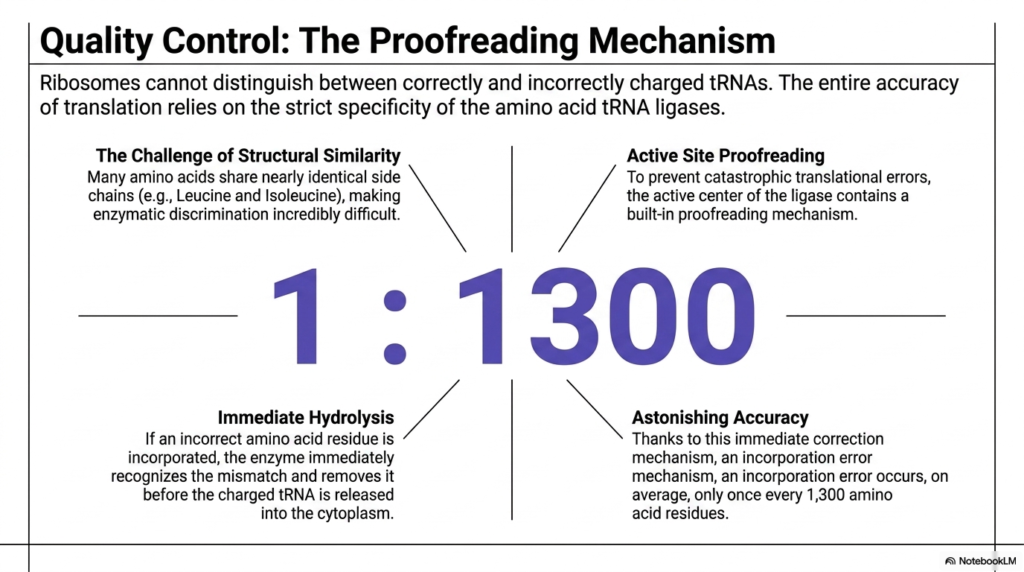
Quality control is absolutely paramount in cellular biology, and this informative slide highlights the crucial proofreading mechanism deeply embedded within Amino Acid Activation. A common biological misconception is that the ribosome verifies the chemical accuracy of the attached molecular cargo. However, ribosomes structurally cannot distinguish between correctly and incorrectly charged carrier molecules. The entire accuracy of genetic translation relies completely on the strict specificity and impressive proofreading capabilities of the ligase enzymes during the Amino Acid Activation phase. If the wrong cargo is attached here, the ribosome will unknowingly build a mutated and potentially dangerous protein.
The specific cellular enzymes responsible for Amino Acid Activation face a massive biochemical hurdle: extreme structural similarity. Many common biological building blocks share nearly identical chemical side chains, making proper enzymatic discrimination incredibly difficult. For example, distinguishing between leucine and isoleucine requires detecting an incredibly minute structural variation. To overcome this, the ligase’s active center contains a highly evolved, built-in proofreading mechanism designed to prevent catastrophic translational errors. This secondary checking system acts as a molecular sieve.
If an incorrect molecular residue is accidentally incorporated during Amino Acid Activation, the specialized enzyme immediately recognizes the geometric mismatch. Before the wrongly charged molecular carrier is mistakenly released into the cellular cytoplasm, the enzyme rapidly triggers an immediate hydrolysis reaction. This targeted hydrolytic action rapidly cleaves the erroneous chemical bond, safely destroying the mistake and resetting the carrier molecule for another attempt. This continuous, real-time biological proofreading prevents toxic or severely non-functional proteins from flooding the delicate cellular ecosystem.
Thanks to this highly effective immediate correction mechanism, the overall functional fidelity of Amino Acid Activation achieves an astonishing level of biochemical accuracy. An incorporation error occurs, on average, only once every 1,300 molecular residues. This truly remarkable statistic heavily highlights the evolutionary perfection of these specific enzymatic gatekeepers. Without this rigorous proofreading system checking every single molecular attachment constantly, complex multicellular life would be virtually impossible, as rapidly accumulating protein errors would quickly lead to systemic cellular failure and eventual organismal death.
Slide 8: Structural Model of Amino Acid Activation Enzymes
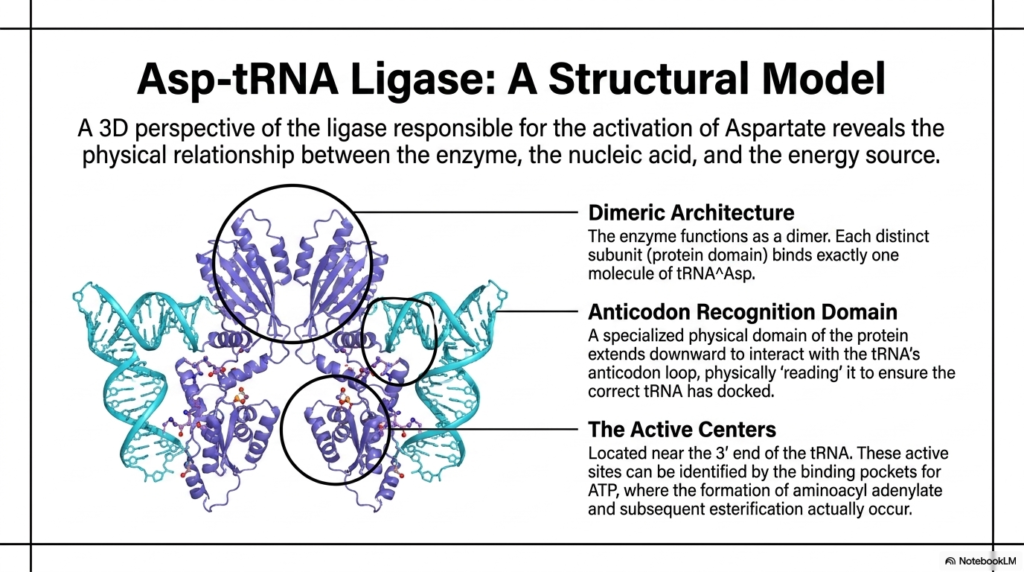
The final presentation slide provides a stunning three-dimensional perspective of the biological machinery executing Amino Acid Activation. Featuring a highly detailed structural model of the aspartate-tRNA ligase, the visual clearly reveals the intimate physical relationship between the protein enzyme, the nucleic acid carrier, and the required energy source. Visualizing this complex physical architecture brings the abstract concepts of Amino Acid Activation into sharp focus, demonstrating how these microscopic factories physically wrap completely around their specific target substrates. The complex structural folding directly reflects the enzyme’s highly specialized and critically important biological function.
A prominent functional feature of this specific ligase enzyme is its dimeric architecture. The enzyme functions as a dimer, meaning it is composed of two distinct protein subunits that work in tandem. Each distinct structural subunit is strictly responsible for binding exactly one molecule of the specific aspartate transfer RNA. This highly symmetrical arrangement strongly stabilizes the complex molecular structure and safely allows for highly coordinated physical movements during the delicate chemical reactions required to finalize the biological attachment of the cargo.
To continuously ensure absolute biological precision during Amino Acid Activation, the ligase enzyme utilizes a specific anticodon recognition domain. A specialized physical portion of the functional protein extends downward to interact directly with the anticodon loop of the attached nucleic acid. The enzyme literally ‘reads’ the unique genetic code physically to ensure the absolute correct carrier has successfully docked. If the physical shape of the anticodon does not perfectly match the protein’s recognition domain, the enzyme safely rejects the carrier entirely. This tactile verification is a critical component of the enzyme’s fail-safe mechanism.
Finally, the detailed structural model beautifully highlights the distinct active centers where Amino Acid Activation physically takes place. Located safely near the 3′ end of the docked nucleic acid, these critical active sites can be easily identified by the specific binding pockets for the energy molecule. This highly specific location is exactly where the enzymatic formation of the adenylate intermediate and the subsequent esterification actually occur. The elegant physical convergence of these distinct molecular domains represents the absolute pinnacle of evolutionary biochemistry in action. The student can now fully visualize the breathtaking molecular choreography required to sustain basic biological life.
Please read our Content Disclaimer Statement.
Check out our social media channels: