88. Mechanisms of Translation Elongation and Termination
Microscopic cellular factories meticulously snap together puzzle pieces to build the intricate machinery of life. That is exactly what happens during Translation Elongation and Termination. This foundational biological process represents the core of protein biosynthesis, where molecular components translate genetic code into functional polypeptide chains. Understanding these mechanics provides students with a deep appreciation for how cells synthesize vital proteins and sustain fundamental biological functions across all living organisms.
Slide 1: Translation Elongation and Termination: Protein Biosynthesis Mechanics
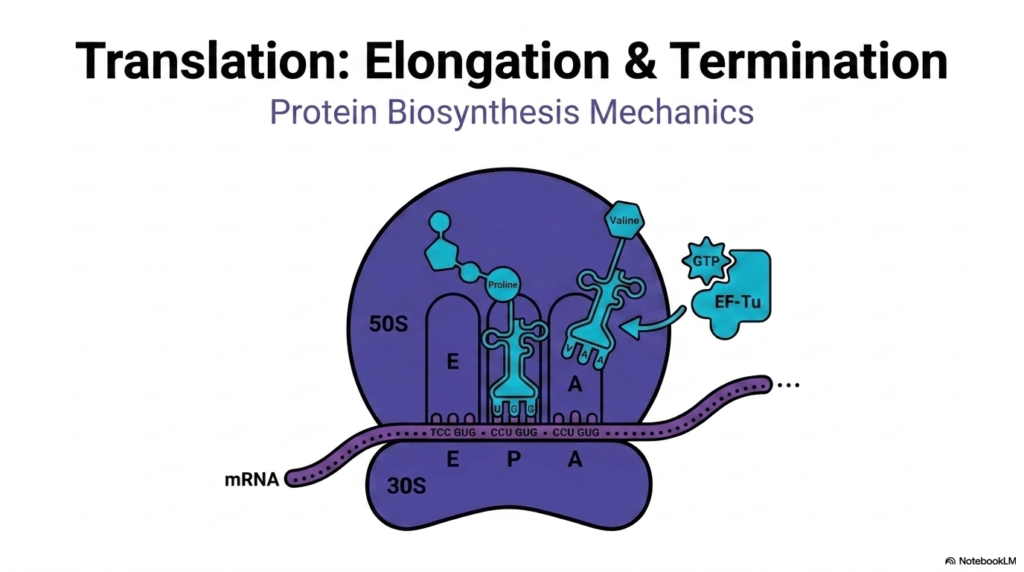
The primary biochemical concept introduced here is the overarching architecture of the ribosome during Translation Elongation and Termination. The ribosome consists of two main structural subunits: the large 50S subunit and the small 30S subunit. Together, they form a tight clamp around the messenger RNA (mRNA) strand. The active ribosome features three distinct docking stations for transfer RNA (tRNA) molecules: the Aminoacyl (A) site, the Peptidyl (P) site, and the Exit (E) site. These precisely arranged sites facilitate the sequential addition of amino acid building blocks.
Furthermore, this initial stage highlights the critical role of specific elongation factors, most notably EF-Tu. This GTP-binding protein operates as a specialized delivery vehicle for the cellular assembly line. It carefully escorts the incoming aminoacyl-tRNA directly to the open A site of the ribosome. The successful delivery of the correct tRNA is an energy-dependent process requiring the presence of GTP. This introductory overview of Translation Elongation and Termination sets the stage for the dynamic chemical reactions that follow.
By observing the spatial layout of the 50S and 30S subunits along the mRNA transcript, students can visualize the precise coordination required for successful protein synthesis. The molecular components must align perfectly to ensure the genetic code is read with absolute accuracy. The physical interplay between the ribosomal binding sites and the elongation factors forms the mechanical basis for the subsequent steps of Translation Elongation and Termination, ensuring that cellular life continues to thrive.
Slide 2: Translation Elongation and Termination: The Ribosomal Baseline
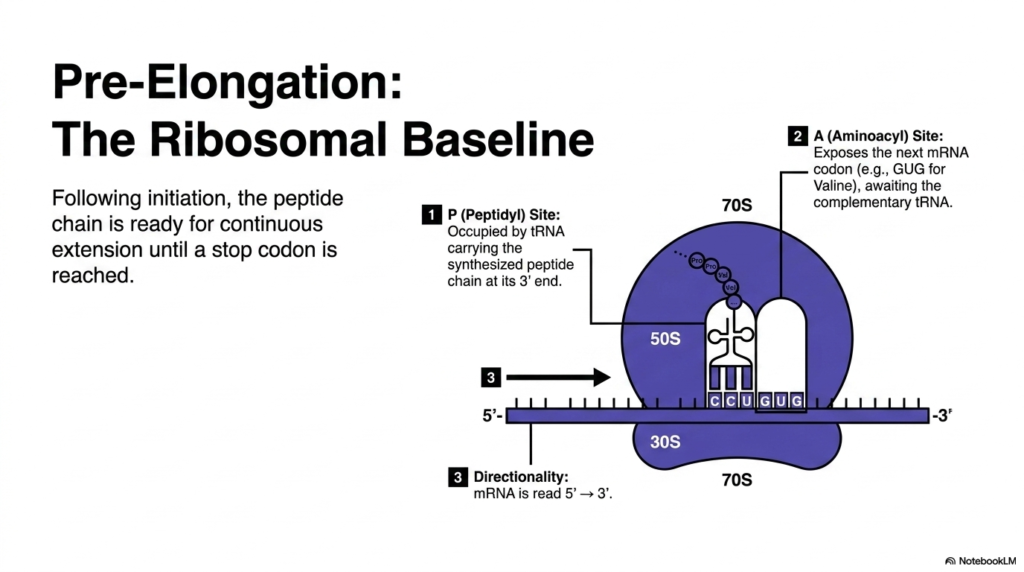
Before a biological assembly line can move forward, the internal machinery must be primed, positioned, and ready to receive raw materials. In cellular biology, this preparatory phase is known as the ribosomal baseline. This specific stage immediately follows the complex initiation sequence and establishes the exact starting conditions required for the continuous extension of the peptide chain. Understanding this baseline is crucial for mastering the overarching mechanics of Translation Elongation and Termination.
The most critical structural feature at this baseline is the distinct status of the three ribosomal binding sites. During this early phase of Translation Elongation and Termination, the Peptidyl (P) site is fully occupied. It holds a tRNA molecule that is already covalently attached to the growing synthesized peptide chain at its 3′ end. This configuration secures the existing chain firmly in place, preventing the newly formed protein structure from floating away prematurely into the surrounding cellular environment.
Conversely, the Aminoacyl (A) site remains completely empty and exposed, patiently waiting for the next mechanical step. This open A site displays the next mRNA codon, such as the specific GUG sequence coding for the amino acid Valine. This exposure dictates which complementary tRNA molecule will enter the ribosome next. The precise physical positioning at this stage ensures that Translation Elongation and termination proceed accurately according to the original genetic blueprint stored within the cell.
Another vital biochemical rule highlighted in this baseline state is the strict directional flow of the entire cellular process. The ribosome consistently reads the single-stranded mRNA in the 5′ to 3′ direction. This unidirectional movement represents an unbreakable physical rule of Translation Elongation and Termination. It guarantees that the sequence of amino acids matches the original genetic instructions transcribed from the cellular DNA, maintaining high fidelity in ongoing protein synthesis.
Slide 3: Translation Elongation and Termination: Aminoacyl-tRNA Delivery
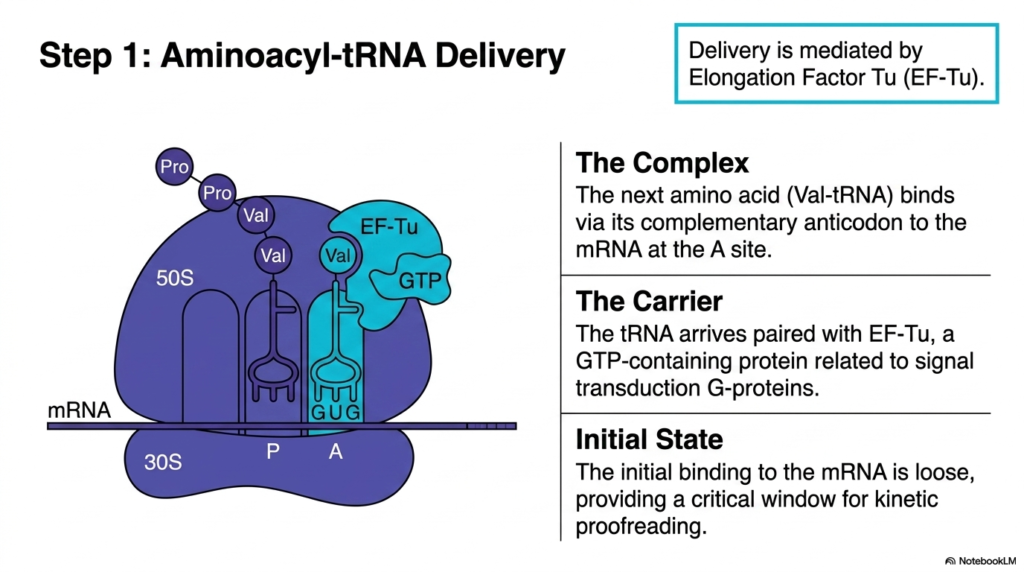
Every new building block in a growing protein structure requires a dedicated escort to arrive safely at the correct biological destination. During the intricate processes of cellular metabolism, this vital delivery service is performed by specific carrier proteins. Step one of the elongation cycle focuses squarely on how the next essential amino acid is brought to the waiting ribosome. This delivery mechanism serves as a fundamental pillar of Translation Elongation and Termination.
The primary biochemical mechanism here involves Elongation Factor Tu (EF-Tu), a crucial GTP-containing protein. EF-Tu is structurally and functionally related to the signal transduction G-proteins found throughout various branches of cell biology. In Translation Elongation and Termination, EF-Tu binds to the incoming aminoacyl-tRNA, such as Val-tRNA, forming a secure delivery complex. This newly formed complex then navigates through the complex cytosol to reach the empty A site of the waiting ribosome.
Once the molecular complex arrives at its final destination, the incoming tRNA attempts to pair its complementary anticodon with the exposed mRNA codon located exactly at the A site. At this specific point in Translation Elongation and Termination, the initial physical binding between the tRNA and the mRNA is intentionally loose. This loose molecular connection is an intentional structural necessity rather than a biological error or a design flaw in the system.
This weak initial interaction provides the cellular machinery with a critical time window for kinetic proofreading. The biological cell must verify that the correct amino acid is being added to the growing chain. If the codon and anticodon do not match, the rejected tRNA is discarded. This rigorous proofreading mechanism makes Translation Elongation and termination highly accurate, effectively minimizing the accumulation of harmful mutations in the final polypeptide product.
Slide 4: Translation Elongation and Termination: Factor Regeneration
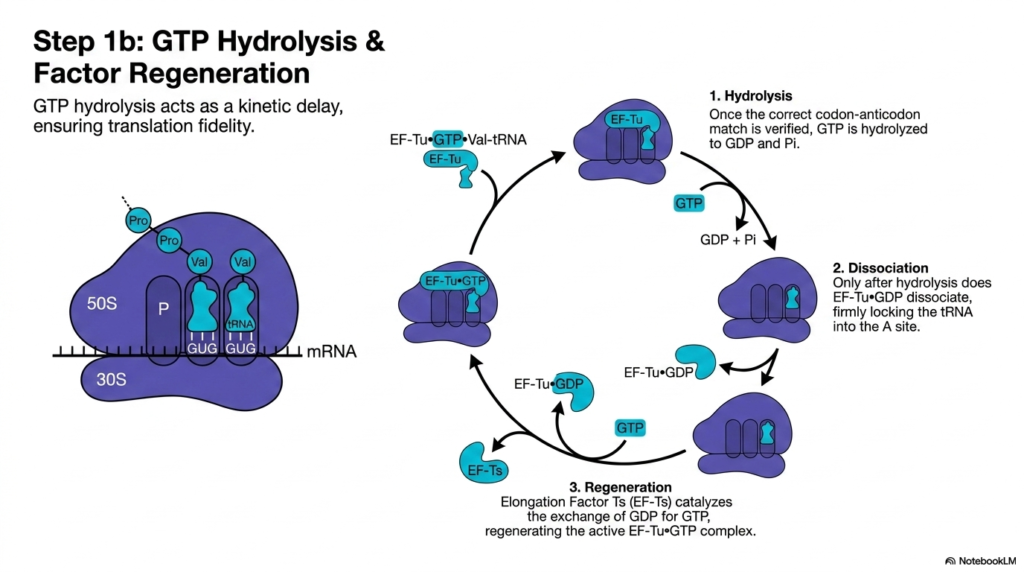
A molecular delivery vehicle provides biological utility only if it can drop off its chemical cargo and return for another trip. In the ongoing cycle of cellular manufacturing, the carrier proteins must undergo a continuous reset process. This slide comprehensively illustrates the crucial steps of energy utilization and factor recycling that keep the ribosomal assembly line running at full capacity. These resetting steps are vital for successful Translation Elongation and Termination.
The recycling process hinges on a brilliant kinetic delay mechanism powered directly by GTP hydrolysis. Once the ribosome verifies the correct codon-anticodon match at the A site, the EF-Tu protein initiates the hydrolysis of its attached GTP into GDP and inorganic phosphate. This rapid chemical reaction is a defining moment in Translation Elongation and Termination. It serves as a strict biological checkpoint, ensuring translation fidelity before the new amino acid is permanently added to the chain.
Following this hydrolysis, a major conformational change occurs within the intricate protein structure. Only after the GTP is converted to GDP does the EF-Tu factor release its tight grip on the tRNA molecule. The spent EF-Tu-GDP complex dissociates from the ribosome, firmly locking the newly delivered tRNA deep into the A site. This precise lock-in step is mandatory for the subsequent catalytic stages of Translation Elongation and Termination to proceed.
Finally, the biological system must regenerate the spent delivery factor for future cellular use. A distinct cellular protein called Elongation Factor Ts (EF-Ts) interacts directly with the ejected EF-Tu-GDP complex. EF-Ts acts as a specialized catalyst, driving the exchange of the exhausted GDP for a fresh, energetic molecule of GTP. This regeneration step restores the active EF-Tu-GTP complex, keeping it available to sustain the rapid pace of Translation Elongation and Termination.
Slide 5: Translation Elongation and Termination: Peptidyl Transferase Activity
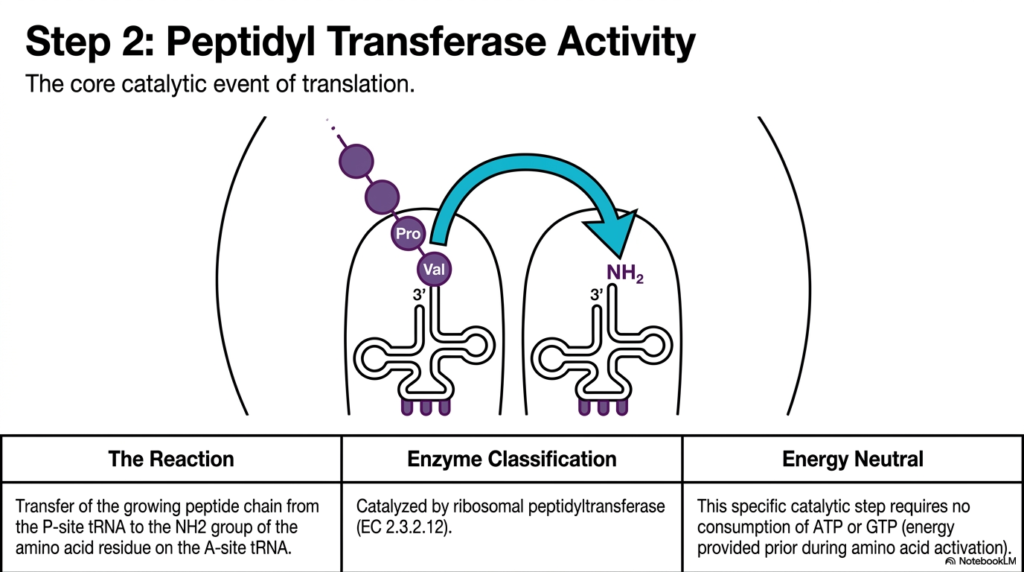
The defining moment of actual chemical bond formation serves as the dramatic climax of the entire protein synthesis process. During the rapid cycles of cellular construction, this central event physically links individual biochemical building blocks into a continuous biological chain. This stage clearly explains the core catalytic reaction in which the growing protein is physically transferred from one carrier directly to another. This is the undisputed heart of translation: elongation and Termination.
The central biochemical event visually depicted here is peptidyl transferase activity. The ribosome catalyzes the direct transfer of the existing, growing peptide chain, which is currently attached to the tRNA resting securely in the P site. This entire chain is physically moved and chemically bonded to the free amino group of the newly arrived amino acid residue located on the A-site tRNA. This step represents the defining chemical reaction of Translation Elongation and Termination.
Interestingly, the official enzyme classification for this unique reaction falls strictly under ribosomal peptidyltransferase. This specific enzymatic action seamlessly connects the individual amino acids via strong covalent peptide bonds. As the chain physically transfers, the tRNA left behind in the P site becomes completely uncharged, having surrendered all of its molecular cargo. This physical handoff is a fundamental mechanical requirement for Translation Elongation and Termination to eventually move forward along the transcript.
A fascinating characteristic of this specific catalytic reaction is its unique thermodynamic profile. Unlike the initial delivery and mechanical movement steps of Translation Elongation and Termination, the peptidyl transferase reaction is energetically neutral. It does not require any immediate consumption of ATP or GTP. The necessary chemical energy was already heavily invested during the earlier phase of amino acid activation, allowing the ribosome to forge the complex peptide bond effortlessly.
Slide 6: Translation Elongation and Termination: The Ribozyme Core
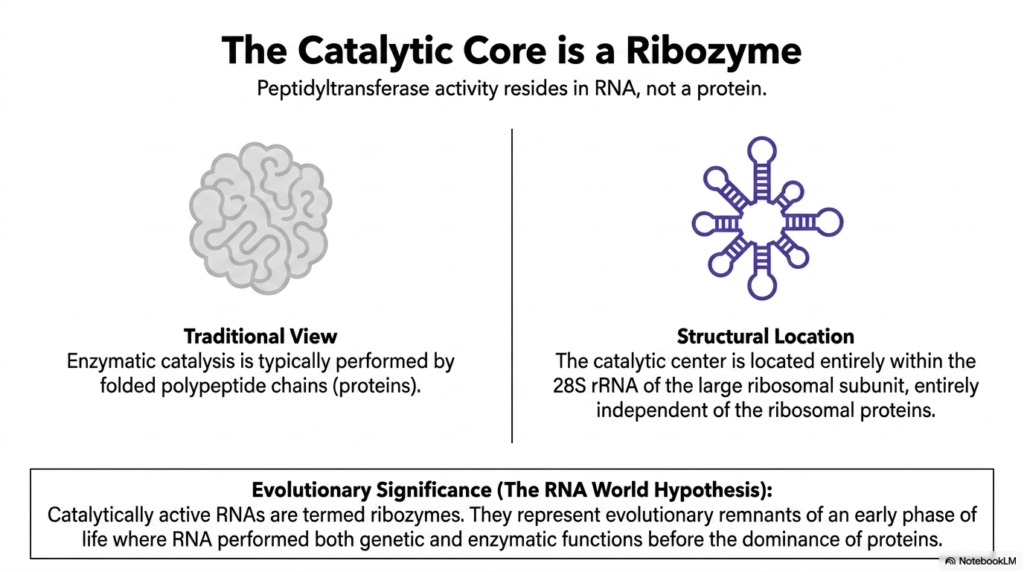
For several decades, the scientific community believed that all critical enzymatic reactions in the living cell were performed exclusively by complex folded proteins. However, detailed modern studies revealed a profound paradigm shift in modern biochemistry. The core machinery responsible for assembling proteins is not actually a protein itself, but rather a highly specialized nucleic acid. This stunning structural revelation profoundly changed how biology students learn about Translation Elongation and Termination.
The traditional biochemical view held that enzymatic catalysis required the complex three-dimensional folding of unique polypeptide chains. But in the unique context of Translation Elongation and Termination, the critical peptidyltransferase activity resides entirely within RNA. Specifically, the active catalytic center is located strictly within the 28S ribosomal RNA of the large ribosomal subunit. This unique RNA structure functions completely independently of the surrounding structural ribosomal proteins scattered throughout the complex.
Nucleic acid molecules that naturally possess such incredible catalytic capabilities are scientifically known as ribozymes. The monumental discovery that the ribosome is fundamentally a giant ribozyme revolutionized our deep understanding of translation, elongation, and Termination. The numerous proteins within the ribosome act merely as a supportive physical scaffold, while the intricate rRNA itself performs the heavy lifting of actual chemical bond formation to build the new protein chain.
Furthermore, this ancient ribozyme core carries profound evolutionary significance for all biological forms of life. It provides strong supporting evidence for the renowned RNA World Hypothesis. This structural theory suggests an early evolutionary phase where RNA performed both genetic storage and active enzymatic functions, long before complex DNA and sophisticated proteins dominated the Earth. Therefore, studying Translation Elongation and Termination provides a direct window into primordial evolutionary biology.
Slide 7: Translation Elongation and Termination: Ribosomal Translocation Mechanics
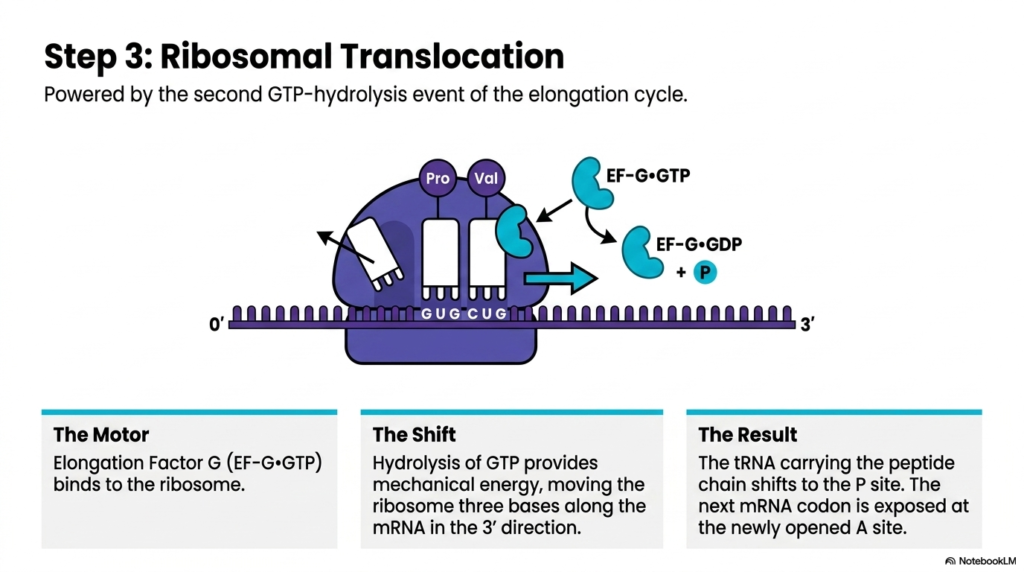
After successfully linking a new amino acid directly to the growing biological chain, the cellular assembly line must advance physically to read the next set of genetic instructions. In the relentless sequence of cellular events, this critical movement is formally called ribosomal translocation. It represents a major mechanical shift driven purely by chemical energy. This physical movement is the most dynamic phase of Translation Elongation and Termination.
This crucial translocation step is entirely powered by the second major GTP-hydrolysis event of the elongation cycle. The specific molecular motor biologically responsible for generating this mechanical movement is Elongation Factor G (EF-G). This highly specialized protein binds to the large ribosomal complex in its active, GTP-bound state. The direct physical involvement of EF-G is essential for maintaining the forward directional momentum of Translation Elongation and Termination.
Once securely bound to the complex, the EF-G protein initiates the hydrolysis of its attached GTP molecule directly into GDP. This chemical hydrolysis reaction instantly releases a significant burst of usable chemical energy. The massive ribosome immediately harnesses this liberated energy to undergo a dramatic structural shift, moving exactly three molecular bases forward along the mRNA strand in the 3′ direction. This precise, measured movement is a hallmark of Translation Elongation and Termination.
As a direct physical result of this energetic shift, the internal layout of the ribosome changes dramatically. The tRNA molecule that currently holds the newly elongated peptide chain is forced to shift from the A site directly into the P site. Consequently, the very next mRNA codon becomes brightly exposed at the newly opened A site, ready for the cycle to repeat, sustaining the pace of Translation Elongation and Termination.
Slide 8: Translation Elongation and Termination: Dissociation and System Reset
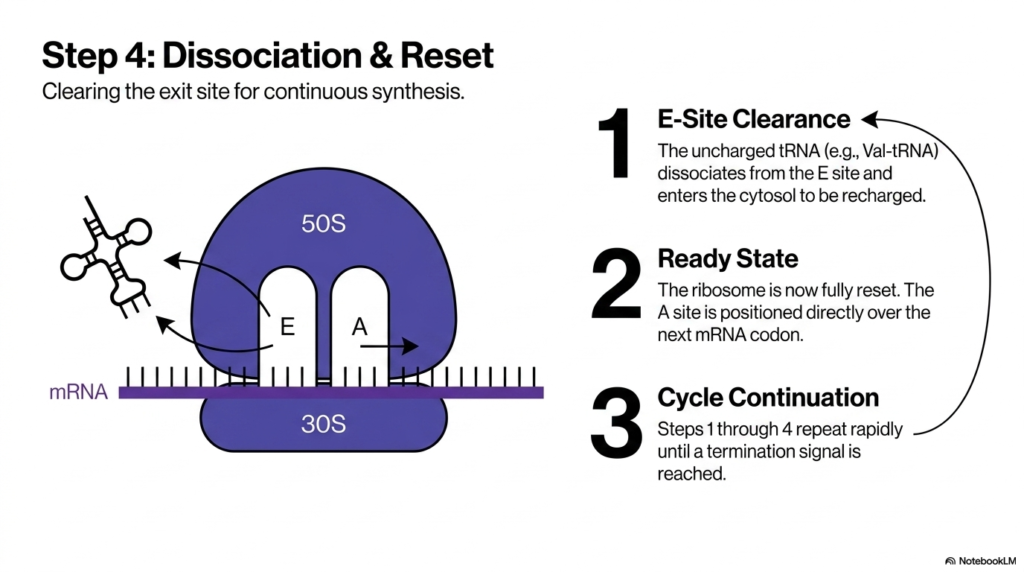
A highly efficient biological factory floor must continually clear away metabolic waste products and empty chemical containers to make room for fresh cellular materials. Similarly, the ribosome must clear its internal structural chambers to continue its critical work without jamming. This slide outlines the vital dissociation and reset phase of Translation Elongation and Termination, which properly prepares the molecular machinery for the start of the next cycle.
The primary mechanical action during this cellular reset phase is the rapid clearance of the internal Exit (E) site. Following the dramatic translocation step, the uncharged tRNA—such as the recently depleted Val-tRNA that just surrendered its amino acid—is pushed directly into the E site. To continuously sustain Translation Elongation and Termination, this uncharged tRNA dissociates completely from the ribosome and freely enters the surrounding cellular cytosol.
Once released into the open cytosol, the uncharged tRNA will be captured by specific cellular synthetase enzymes and recharged with a fresh amino acid for future biological use. Meanwhile, back at the ribosome, the timely departure of the uncharged tRNA leaves the entire complex in a fully ready state. The vital A site is now positioned directly over the next mRNA codon, facilitating ongoing Translation Elongation and Termination.
At this specific biological point, the entire ribosomal complex is fully reset and prepared for cycle continuation. The initial steps of the elongation process will now repeat. The active ribosome continues to relentlessly pull in new tRNAs, form chemical peptide bonds, and forcefully ratchet forward. This cyclical repetition defines the vast bulk of Translation Elongation and Termination, pausing only for specific genetic stop signals embedded in the transcript.
Slide 9: Translation Elongation and Termination: Reaching the Stop Codon
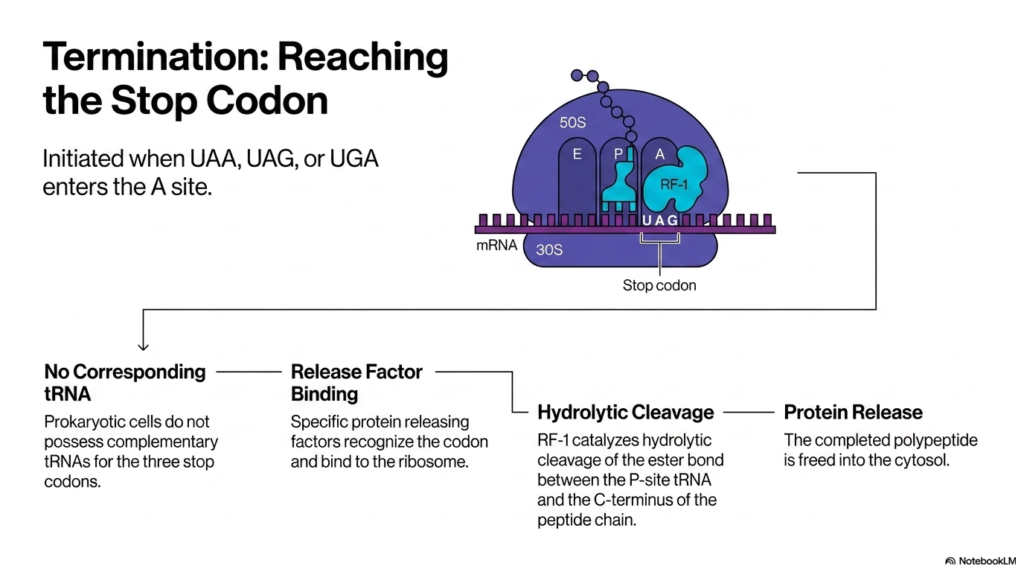
Every complex biological manufacturing task must eventually conclude once the final protein product is fully assembled and structurally complete. In cellular biology, the busy ribosome must know exactly when to stop building the delicate protein chain and release it directly into the living cell. This slide introduces the initial shutdown sequence, triggered by specific genetic stop signals, which marks the beginning of the end for Translation Elongation and Termination.
The critical termination sequence is formally initiated the exact moment a genetic stop codon enters the open A site of the ribosome. These specific mRNA stop sequences strictly include UAA, UAG, and UGA. A critical feature of prokaryotic cells is that they simply do not possess complementary tRNA molecules designed for these three specific stop codons. Consequently, the rapid, standard cycle of Translation Elongation and Termination is suddenly halted.
Instead of a standard tRNA molecule, specialized cellular proteins called Release Factors instantly recognize the exposed stop sequence. Release Factor 1 (RF-1), for instance, mimics a tRNA molecule structurally, allowing it to enter and bind securely to the ribosome exactly at the A site. This specific, targeted protein-RNA interaction is the defining biological trigger that shifts the cellular machinery into the final stages of Translation Elongation and Termination.
Once securely bound, RF-1 initiates a critical chemical reaction. It enzymatically catalyzes the hydrolytic cleavage of the strong ester bond physically connecting the completed polypeptide chain to the final tRNA sitting patiently in the P site. This precise enzymatic cut severs the final molecular anchor holding the new protein firmly in place. Without this precise hydrolytic action, Translation Elongation and Termination could never successfully conclude.
Slide 10: Translation Elongation and Termination: Complex Disassembly
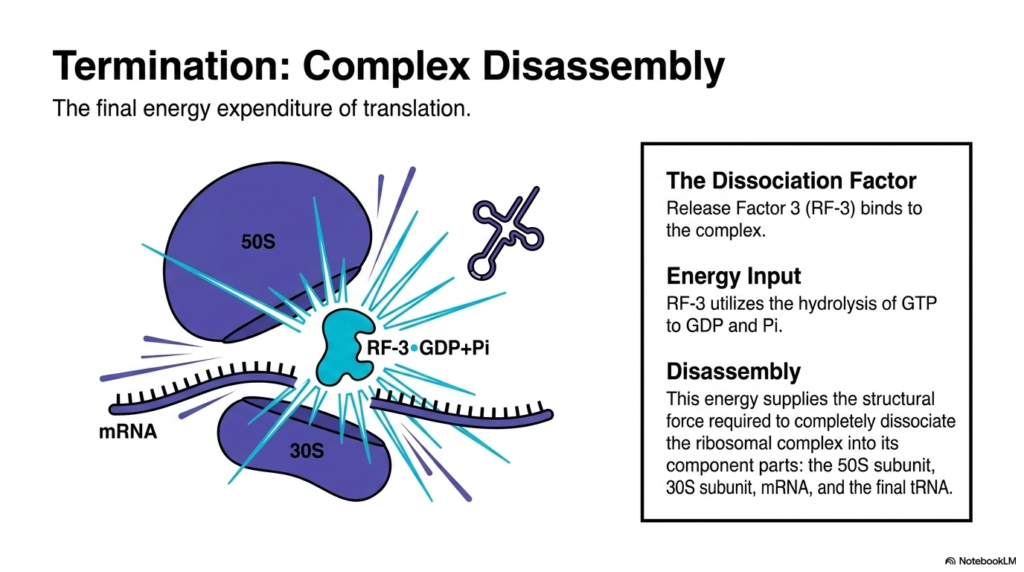
After a brand new protein is successfully manufactured and safely released into the cell, the massive biological factory equipment itself must be systematically broken down and recycled for the next genetic project. The final physical step of cellular protein synthesis involves safely tearing apart the massive ribosomal apparatus. This slide details the incredibly complex disassembly phase that definitively concludes the entire cellular process of Translation Elongation and Termination.
Even though the newly built protein has successfully departed, the large ribosome remains clamped to the mRNA strand, tightly holding onto the final uncharged tRNA molecule. Safely disassembling this massive biological structure requires one final, significant energy expenditure. In the concluding moments of Translation Elongation and Termination, a specialized dissociation protein named Release Factor 3 (RF-3) binds to the lingering ribosomal complex to actively manage this complete molecular teardown process.
This complex disassembly is absolutely not a passive biological event; it is a highly active, strictly energy-driven chemical reaction. RF-3 utilizes the rapid hydrolysis of a GTP molecule, cleanly breaking it down directly into GDP and inorganic phosphate. This crucial chemical energy input supplies the massive structural force necessary to shatter the tightly bound complex. This specific action represents the very last energy cost associated with Translation Elongation and Termination.
The impressive physical force generated by RF-3 forces the dissociation of the intact ribosomal complex directly into its individual structural component parts. The massive cellular complex separates, permanently releasing the large 50S subunit, the small 30S subunit, the used mRNA transcript, and the final empty tRNA safely into the cellular environment. This dramatic structural separation officially concludes the magnificent biological process of Translation Elongation and Termination.
Slide 11: Translation Elongation and Termination: The High Cost of Synthesis
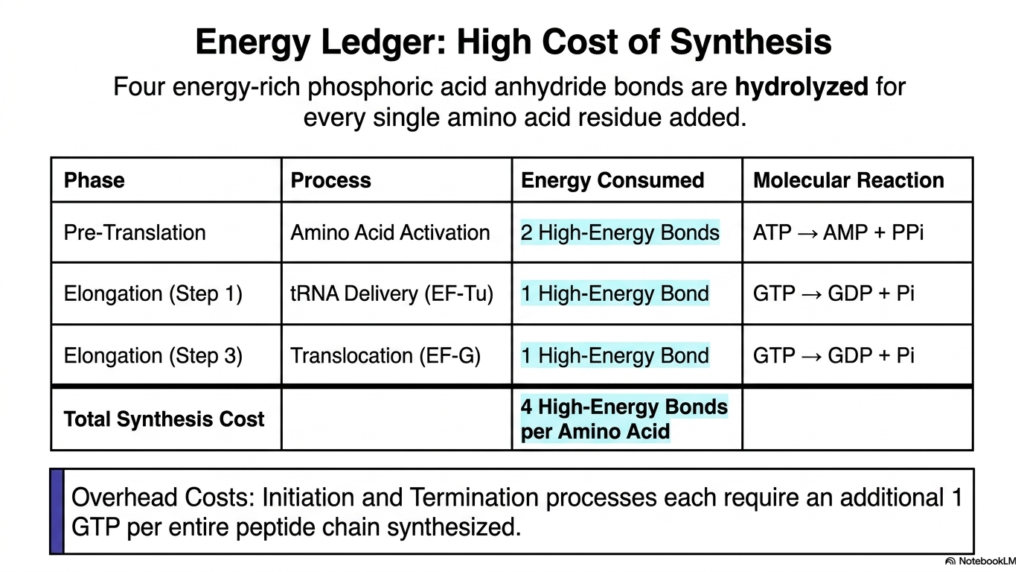
Building massive, complex biological structures entirely from scratch is expensive from a strict thermodynamic perspective. Living cells must continually spend vast amounts of precious chemical currency to manufacture functional proteins accurately and efficiently. This detailed energy ledger slide tallies the steep metabolic costs associated with every single step of Translation, Elongation, and Termination, clearly revealing the immense metabolic burden of rapid cellular growth and ongoing biological maintenance.
The exact biochemical accounting cleanly shows that four high-energy phosphoric acid anhydride bonds are hydrolyzed just to add a single amino acid residue securely to the growing biological chain. Two of these crucial high-energy bonds are consumed heavily in the pre-translation phase during initial amino acid activation, where ATP is enzymatically converted directly to AMP. This is an essential upfront energy cost required for Translation Elongation and Termination to seamlessly proceed.
During the actual rapid elongation cycle, the steep energy expenditure continues relentlessly. Step one safely consumes exactly one high-energy bond when the carrier EF-Tu hydrolyzes GTP during precise tRNA delivery. Step three powerfully consumes yet another high-energy bond when EF-G hydrolyzes GTP to actively power massive ribosomal translocation. This absolutely means the core repetitive cycles of Translation Elongation and Termination are dependent on a constant, steady supply of cellular GTP.
In direct addition to the expensive per-amino-acid costs, there are flat metabolic overhead costs required for the entire complete protein. Both the initial startup and the absolute final shutdown processes require significant energy input. Specifically, the complex initiation and termination phases each strictly require the rapid hydrolysis of one additional GTP molecule per entire synthesized peptide chain. These overhead costs highlight the rigorous biological energy demands of properly managing Translation Elongation and Termination.
Slide 12: Translation Elongation and Termination: Comparative Context and Pharmacology
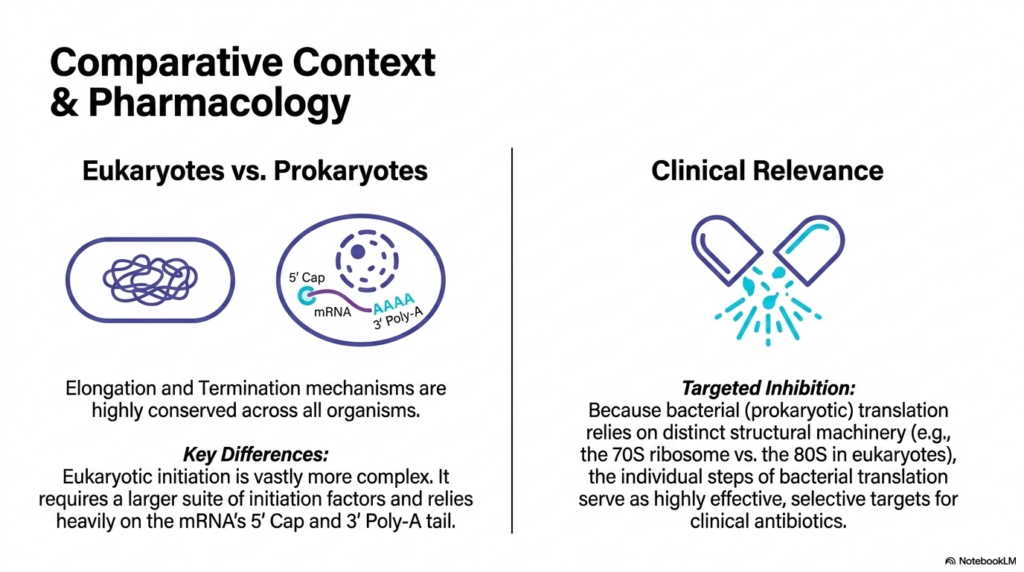
To master the broad field of molecular biology, medical students must understand the ways these fundamental biological processes vary across distinct domains of cellular life. They must also learn exactly how modern medicine can clinically exploit these biochemical differences. This final slide places Translation Elongation and Termination into a broad comparative context, highlighting the stark differences between eukaryotes and prokaryotes, and exploring its truly profound clinical relevance for global healthcare.
At a highly fundamental biological level, the core mechanical mechanisms of Translation Elongation and Termination are beautifully conserved across absolutely all living organisms on Earth. Whether functioning in a complex human cell or a simple bacterium, the basic biochemical steps of accurate tRNA delivery, rapid peptide bond formation, and powerful ribosomal translocation remain remarkably similar. This extensive evolutionary conservation strongly supports the ancient and undeniably vital nature of these specific mechanisms.
However, there are highly significant structural differences. Eukaryotic cellular translation is vastly more structurally complex than the simpler bacterial version. Eukaryotes strictly require a much larger, diverse suite of complex initiation factors. Furthermore, eukaryotic biological systems rely heavily on distinct structural modifications of the mRNA itself, specifically the functional 5′ Cap and the stabilizing 3′ Poly-A tail, which are absent in bacterial Translation Elongation and Termination.
These wonderfully subtle structural and functional differences have massive, life-saving implications for modern pharmacology and clinical medicine. Bacterial translation relies on completely distinct structural machinery, most notably the smaller 70S ribosome, compared directly to the massive 80S ribosome found safely inside human eukaryotic cells. Because of these distinct architectural differences, the exact bacterial mechanisms of Translation Elongation and Termination serve as highly effective, brilliantly selective biological targets for advanced clinical antibiotics.
Please read our Content Disclaimer Statement.
Check out our social media channels: