81. Molecular Genetics: DNA Replication and Gene Expression
Have you ever wondered how a microscopic cell knows exactly how to build an entire human body? The secret lies hidden within the intricate machinery of our DNA and RNA. This educational slide deck breaks down the complex biochemical structures and processes that govern this biological data. For students of medicine and biology, mastering these core principles is essential. The following presentation explores the fundamental mechanisms of life at the cellular level, illuminating how genetic blueprints are faithfully copied, translated, and expressed.
Slide 1: Molecular Genetics Overview: The Blueprint of Life
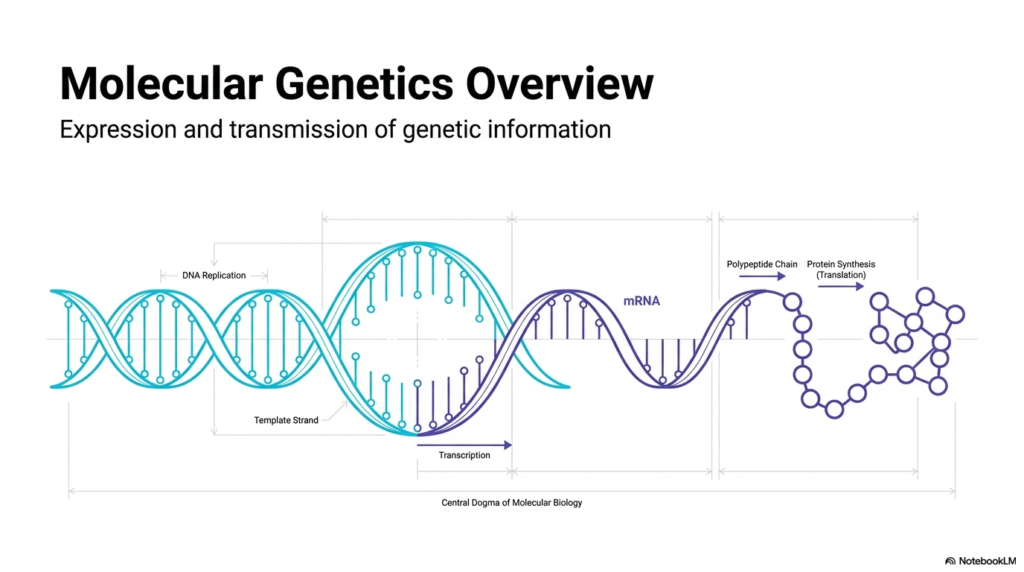
The foundation of life begins with the fundamental principles of Molecular Genetics. This field explores the elegant journey of genetic information, a core biochemical concept often referred to as the central dogma of biology. At its core, the central dogma describes a highly regulated, one-way flow of instructions. Information is securely stored within the twisted double helix of DNA. When a cell prepares to divide, it must first duplicate this vital archive through a process known as replication. This mechanism ensures that every new cell receives an exact copy of the instruction manual. Understanding Molecular Genetics is crucial for comprehending how biological life accurately sustains itself across generations.
To actively utilize these stored instructions, the cell must convert the DNA code into a mobile, readable format. This critical step is called transcription. During transcription, the DNA double helix temporarily unzips. Special enzymes read the template strand and synthesize a complementary molecule called messenger RNA. This mRNA acts as a biological courier. It carries the vital instructions from the protected nucleus into the active cytoplasm. For students studying Molecular Genetics, recognizing the profound differences between the permanent storage medium of DNA and the temporary, disposable nature of messenger RNA is an absolutely fundamental concept.
The final stage of this biochemical relay is translation. Once the messenger RNA reaches the cytoplasm, complex cellular machines called ribosomes attach to the strand. These ribosomes read the RNA sequence like a biological ticker tape. For every three letters of the RNA code, a specific amino acid is added to a growing chain. This chain eventually folds into a functional, three-dimensional protein. Proteins are the ultimate workhorses of the cell, responsible for everything from structural support to enzymatic reactions. By studying Molecular Genetics, future medical professionals learn exactly how this uninterrupted flow of information dictates the form and function of organisms.
Slide 2: Translation in Molecular Genetics: From RNA to Peptide
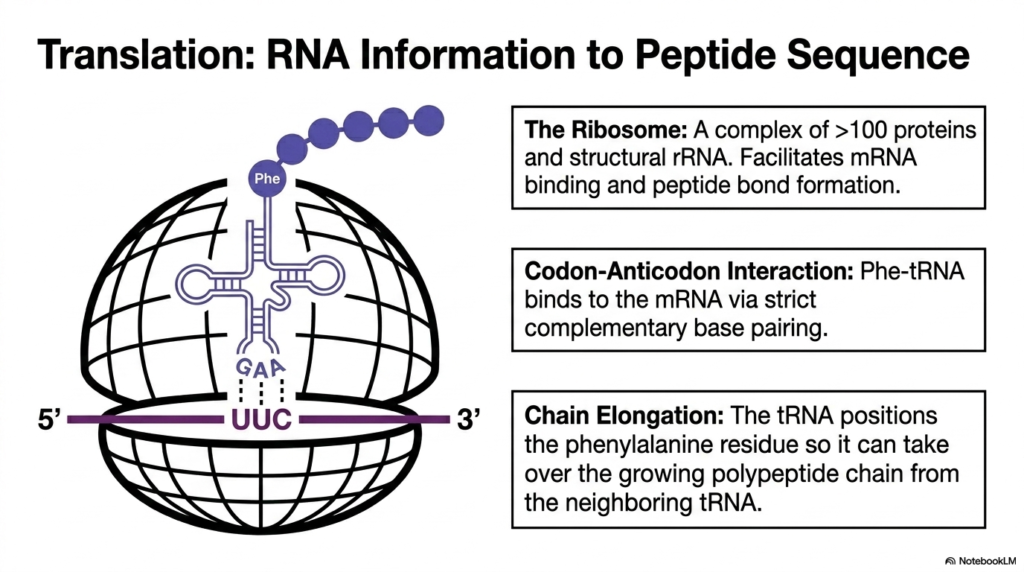
A critical focal point in Molecular Genetics is translation, the intricate process where RNA information is finally converted into a tangible peptide sequence. This remarkable biochemical feat occurs within the ribosome. The ribosome is not a simple molecule but rather a massive, complex factory composed of more than 100 distinct proteins and ribosomal RNA. This complex machinery serves as the cellular workbench. It expertly coordinates the precise binding of messenger RNA and facilitates the rapid formation of peptide bonds between incoming amino acids. Without this highly organized structure, the rapid synthesis of necessary cellular proteins would be entirely impossible.
The magic of this translational process relies entirely on the codon-anticodon interaction, a core principle taught in every Molecular Genetics course. Transfer RNA acts as the physical translator in this system. Each transfer RNA molecule carries a specific amino acid, such as phenylalanine, on one end. On the opposite end, it features a three-nucleotide sequence called an anticodon. This anticodon must bind to the messenger RNA via strict complementary base pairing. If the messenger RNA displays the codon UUC, only a transfer RNA with the anticodon GAA can dock successfully. This strict pairing mechanism prevents devastating errors during protein synthesis.
Once the correct transfer RNA is locked into position, chain elongation proceeds rapidly. The ribosome aligns the new amino acid residue so that it can smoothly transfer it to the growing polypeptide chain from the neighboring transfer RNA. This hand-off is a thermodynamically favorable reaction catalyzed by the ribosome itself. As the ribosome shifts down the messenger RNA strand, empty transfer RNA molecules are ejected, and new loaded ones enter the complex. The study of Molecular Genetics shows that this continuous cycle of elongation builds the vast array of structural and functional proteins required to sustain complex life forms.
Slide 3: The Central Dogma of Expression in Molecular Genetics
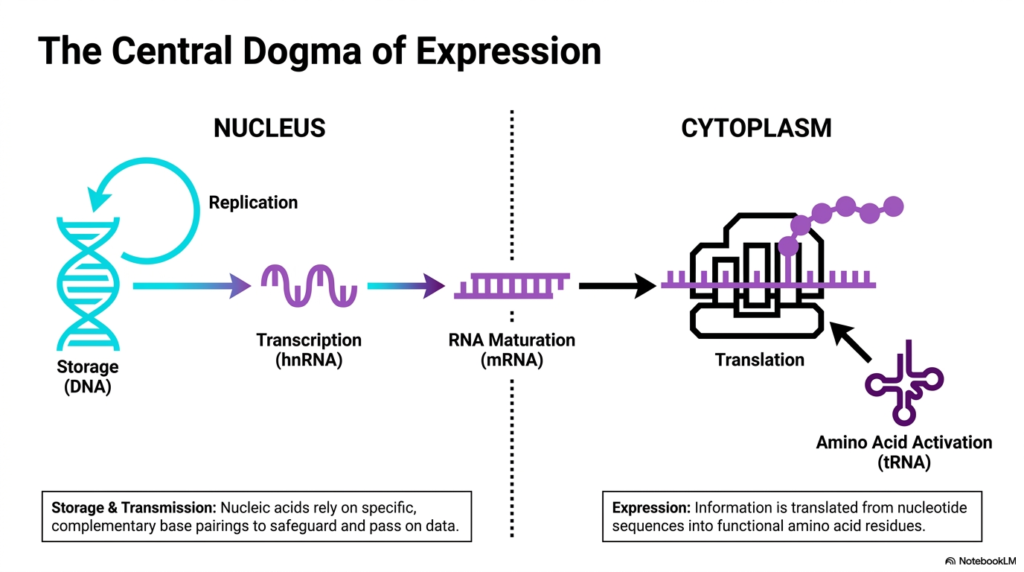
The central dogma of expression is the grand unifying theory of Molecular Genetics. It maps out the precise geographic locations where different stages of information processing occur within a eukaryotic cell. The cell nucleus acts as the highly secure vault for genetic storage. Here, the DNA double helix resides permanently. Nucleic acids rely on specific, complementary base pairings to safeguard and pass on data. Within the protective confines of the nucleus, two major events occur: replication, where DNA is meticulously copied before cell division, and transcription, where specific genes are transcribed into a precursor RNA called heterogeneous nuclear RNA.
Before this raw genetic message can leave the nucleus, it must undergo crucial modifications. This transitional phase is known as RNA maturation. The raw RNA is processed, spliced, and refined into mature messenger RNA. This step acts as the critical bridge between the protected nuclear environment and the bustling cytoplasm. Students of Molecular Genetics must understand that this maturation process is heavily regulated. Only properly processed messenger RNA is granted an exit pass through the nuclear pores. This strict quality control ensures that flawed or incomplete instructions are destroyed before they can cause cellular damage.
Once the mature messenger RNA successfully enters the cytoplasm, the expression phase begins in earnest. The cytoplasm houses the heavy ribosomal machinery required for translation. Here, the abstract nucleotide sequences are finally translated into functional amino acid residues. Transfer RNA molecules, activated with specific amino acids, converge on the ribosome to build the encoded protein. The beauty of Molecular Genetics lies in this seamless transition across cellular compartments. The information begins as tightly coiled DNA in the nucleus and ends up as a functional, three-dimensional protein operating in the cytoplasm, completing the central dogma. By mastering these spatial dynamics, scholars gain a profound appreciation for cellular organization.
Slide 4: Storage and the Genetic Code in Molecular Genetics
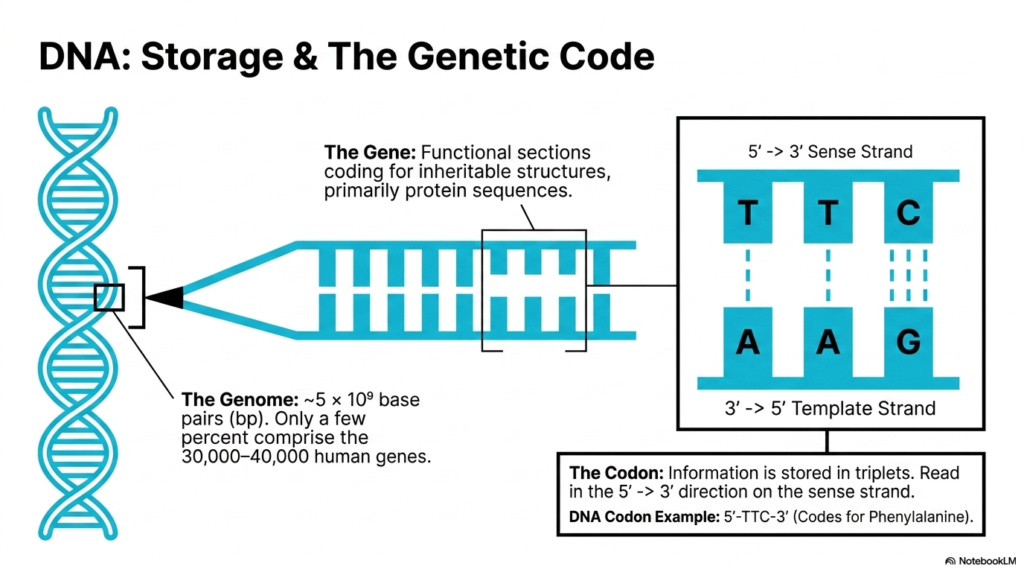
To understand the fundamental basis of biology, one must examine how DNA functions as the ultimate storage medium in Molecular Genetics. The entire collection of DNA within an organism is called the genome. In humans, this genome is incredibly vast, comprising approximately three billion base pairs. Interestingly, only a very small fraction of this massive chemical archive actually codes for functional products. These functional sections are known as genes. There are roughly 30 to 40,000 human genes in total. Genes are the specific instructional units that code for inheritable structures, primarily complex protein sequences necessary for cellular survival, differentiation, and replication.
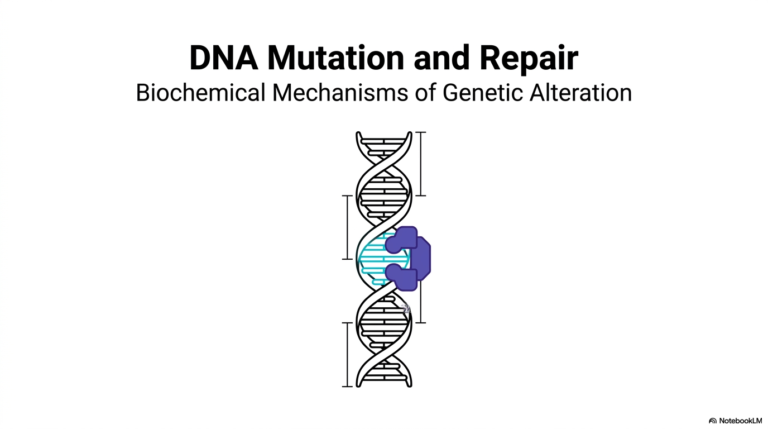
When exploring Molecular Genetics, the biochemical structure of the DNA double helix is of paramount importance. The double helix consists of two distinct strands running in opposite, antiparallel directions. The first is the sense strand, which runs in the 5′-to-3′ direction. The sequence of the sense strand perfectly matches the final RNA transcript. The second strand is the template strand, which runs in the 3 ′ to 5 ′ direction. The cellular machinery physically reads this template strand during transcription to build the complementary RNA. Recognizing the distinct roles of these strands is crucial for analyzing genetic processes.
The actual information within these genes is stored in a highly specific format known as the genetic code. This code relies heavily on codons, sequences of three consecutive nucleotides. Information is always read in triplets in the five-prime to three-prime direction on the sense strand. For example, the DNA codon TTC specifies the placement of the amino acid phenylalanine. The foundational principles of Molecular Genetics highlight that this triplet code is remarkably robust. This elegant, universally shared language allows a small alphabet of nucleic acids to dictate the staggering, endless complexity of life on Earth.
Slide 5: Copying the Matrix: DNA Replication in Molecular Genetics
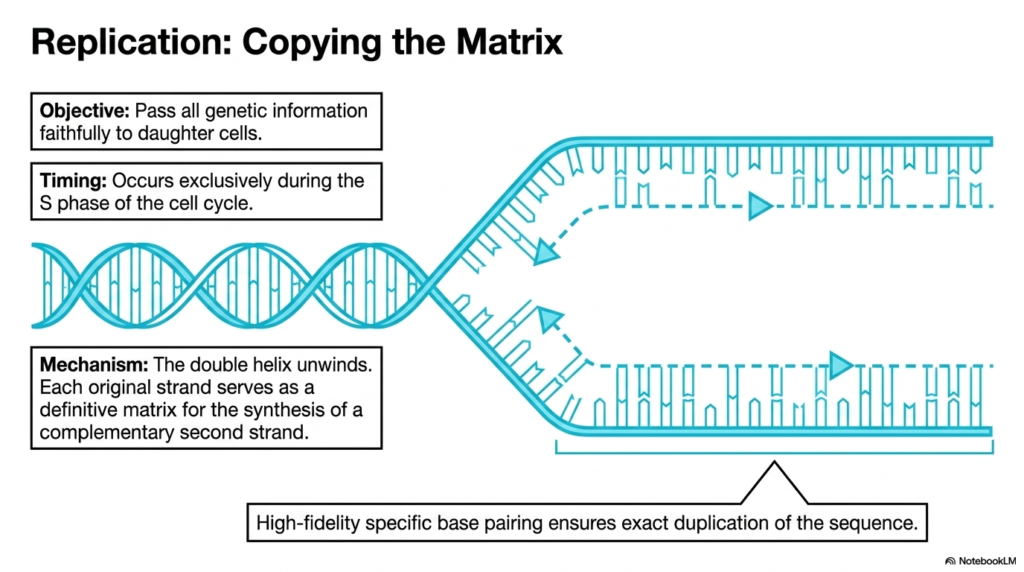
DNA replication is one of the most critical biochemical events studied within the field of Molecular Genetics. The primary objective of replication is straightforward but absolutely essential for the continuation of life. The cell must faithfully and accurately pass all of its genetic information to its daughter cells. If this process fails, the resulting cells will suffer from severe mutations or die outright. To ensure this happens in an organized manner, replication is tightly regulated by the cell cycle. It occurs exclusively during the synthesis phase (S phase), ensuring the genome is fully duplicated before the cell attempts to physically divide.
The mechanism driving this duplication is an elegant display of high-fidelity biochemistry. The process begins when the tightly coiled double helix unwinds, breaking the hydrogen bonds that hold the two strands together. Once separated, each of the original strands serves as a definitive matrix, or template. Specialized enzymes move along these exposed templates to synthesize a complementary second strand. In the study of Molecular Genetics, this is known as semi-conservative replication. Each new DNA molecule consists of one original, ancient parent strand and one entirely newly synthesized daughter strand. This method significantly reduces the chance of permanent copying errors.
The extraordinary accuracy of this process relies entirely on high-fidelity specific base pairing. Adenine will always pair with thymine, and cytosine will always pair with guanine. This rigid chemical rule ensures the exact duplication of the sequence across billions of base pairs. Molecular Genetics reveals that the replication machinery also includes built-in proofreading functions to catch and correct the rare mismatch errors that occasionally happen. Through this continuous unwinding, copying, and proofreading, the cell guarantees that its vast biological library is perfectly preserved for the next generation of cells, securing the organism’s legacy. This level of precision is the bedrock of biological inheritance.
Slide 6: Transcription Mechanisms in Molecular Genetics
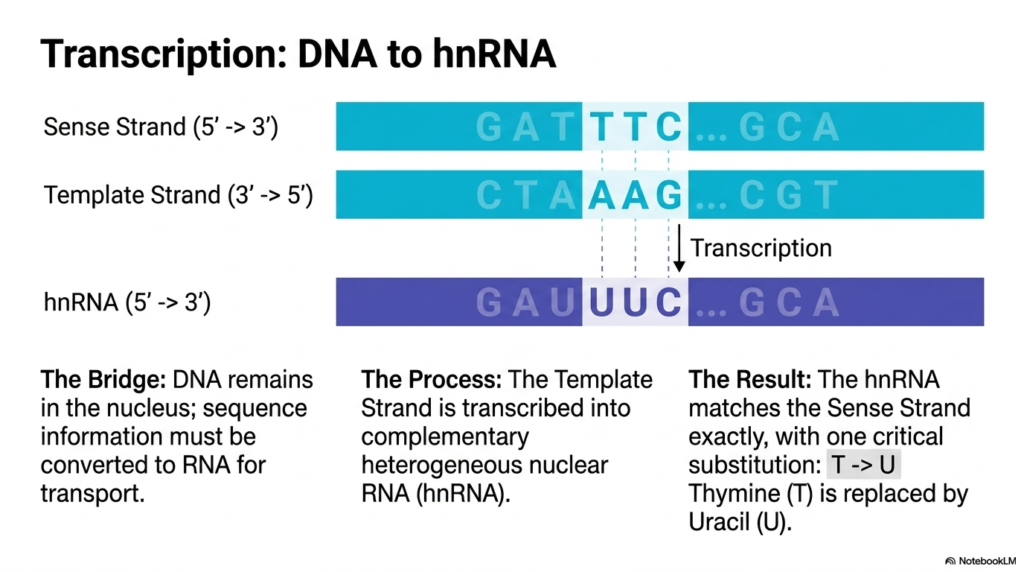
Transcription serves as the critical communication bridge in the extensive study of Molecular Genetics. Because the valuable DNA archive remains securely locked within the cell nucleus, its sequence information must be converted into a mobile RNA format for transport. This essential conversion allows the cell to keep the original DNA blueprint safe from potential damage in the cytoplasm while still actively utilizing the genetic instructions. The transcription process bridges the gap between static genetic storage and dynamic protein synthesis. Understanding this bridge is a vital component for anyone aiming to master the biochemical flow of cellular data.
The biochemical process of transcription begins by isolating the correct section of the genome. The enzymes involved read the template strand, which runs from three-prime to five-prime. This template strand is then actively transcribed into a complementary molecule called heterogeneous nuclear RNA. While the sequence is being built, the resulting heterogeneous nuclear RNA perfectly matches the opposing sense strand. Exploring Molecular Genetics reveals that this process is highly specific and thermodynamically driven by the cleavage of high-energy phosphate bonds, ensuring the RNA chain grows steadily and accurately in the five-prime to three-prime direction.
However, the transition from DNA to RNA involves one critical structural substitution that defines Molecular Genetics. While the resulting heterogeneous nuclear RNA matches the DNA sense strand exactly, the nitrogenous base thymine is completely replaced by uracil. Therefore, wherever an adenine appears on the template strand, the transcription machinery inserts a uracil instead of a thymine. This chemical distinction helps the cell easily differentiate between its permanent DNA archives and its temporary RNA transcripts. The final newly minted heterogeneous nuclear RNA is now a raw, unedited copy of the genetic instruction, ready for further essential cellular processing and refinement.
Slide 7: RNA Maturation in Molecular Genetics: Refining the Message
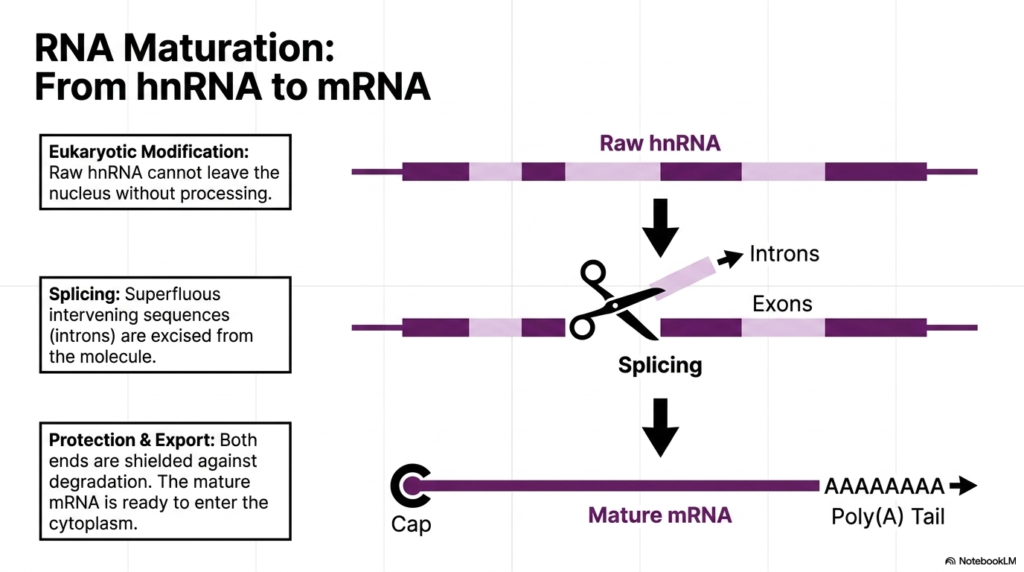
In the intricate world of Molecular Genetics, the immediate product of transcription is never the final product. The newly synthesized raw heterogeneous nuclear RNA is essentially a rough draft. It cannot leave the nucleus without undergoing extensive processing and eukaryotic modification. This raw transcript contains both necessary coding sequences and large stretches of non-coding interruptions. If the cell attempted to translate this unrefined molecule, the resulting protein would be entirely non-functional and potentially toxic. Therefore, the cell employs a highly sophisticated biochemical editing system to properly prepare the message for its inevitable journey into the active cytoplasm.
The most dramatic step in this editing phase is RNA splicing, a cornerstone concept in Molecular Genetics. During splicing, massive protein-RNA complexes act like molecular scissors. They physically identify and excise the superfluous, intervening sequences known as introns. These introns are discarded, while the valuable coding regions, called exons, are precisely stitched back together. This complex cut-and-paste operation ensures that the final RNA molecule contains a continuous, unbroken sequence of usable genetic instructions. Splicing must be perfectly accurate down to the single nucleotide to prevent dangerous shifts in the downstream reading frame.
Beyond splicing, the transcript also requires robust physical protection against cellular enzymes. To shield the molecule from rapid degradation, protective chemical modifications are added to both ends of the strand. A specialized cap structure is attached to the leading end, while a long string of adenine nucleotides, known as the poly-A tail, is forcefully added to the trailing end. In the robust framework of Molecular Genetics, these protective modifications signal that the mature messenger RNA is fully processed and structurally sound. Only when these caps and tails are securely in place is the mature transcript authorized to exit the nucleus.
Slide 8: Amino Acid Activation in Molecular Genetics
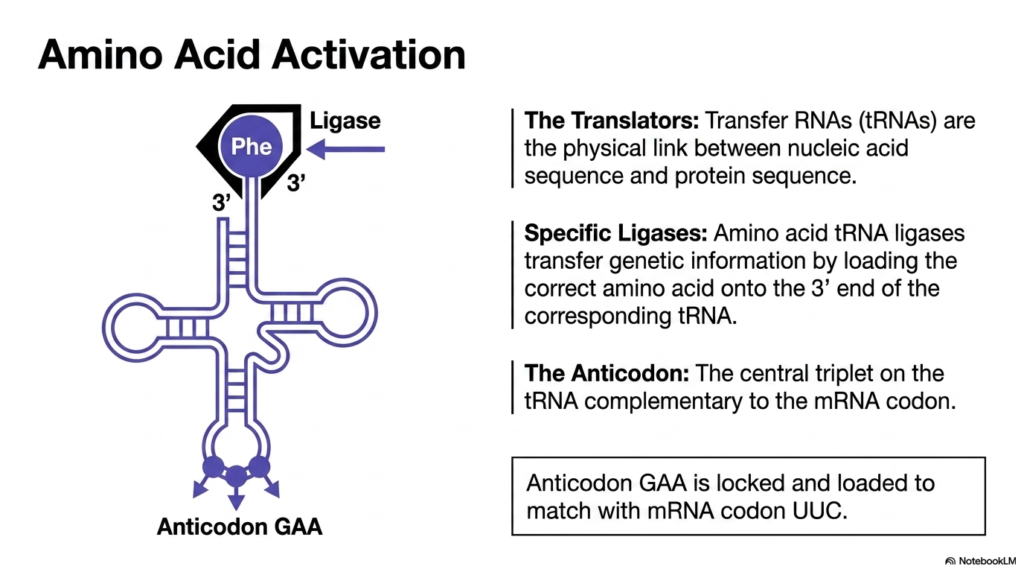
Amino acid activation is the critical preparatory phase for protein synthesis in Molecular Genetics. Before any peptide bonds can be formed, the appropriate amino acids must be physically linked to their corresponding transfer molecules. Transfer RNAs serve as these vital biological translators. They represent the sole physical link connecting the abstract, code-based nucleic acid sequence to the tangible, functional protein sequence. A transfer RNA molecule folds into a highly specific three-dimensional shape, often resembling a cloverleaf, which allows it to interface seamlessly with both the ribosome and specialized cellular enzymes.
The attachment of an amino acid to a transfer RNA is not automatic. It requires the targeted action of specific enzymes known as aminoacyl-tRNA ligases. These highly specialized ligases consume cellular energy to forcefully transfer genetic information. They achieve this by loading the correct amino acid onto the 3 ′ end of the corresponding transfer RNA molecule. Students of Molecular Genetics must recognize that the accuracy of these ligase enzymes is paramount. If a ligase makes a biochemical mistake and accidentally attaches the wrong amino acid, the error will be permanently incorporated into the final functional protein structure, potentially causing massive cellular disruption.
The defining feature of every activated transfer RNA is the anticodon. The anticodon is a central triplet of nucleotides located at the base of the transfer RNA molecule. This sequence is perfectly complementary to a specific messenger RNA codon. For instance, the anticodon sequence GAA is structurally locked and loaded to match perfectly with the messenger RNA codon UUC. The principles of Molecular Genetics dictate that this exact spatial pairing guarantees that the correct amino acid, such as phenylalanine, is delivered precisely when the highly active ribosomal machinery demands it.
Slide 9: The Nucleic Acid Arsenal of Molecular Genetics
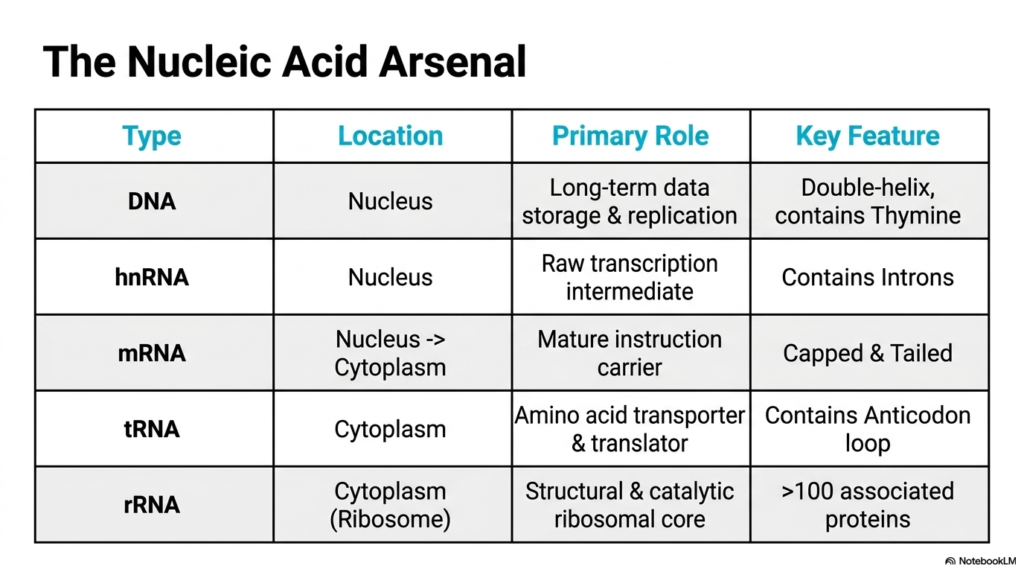
To master the complexities of cellular biology, one must categorize the primary tools used in Molecular Genetics. The cell relies on a diverse arsenal of nucleic acids, with each molecule specialized for a distinct role. Deoxyribonucleic acid, or DNA, is the master blueprint. Residing permanently in the nucleus, it has a primary role in long-term data storage and faithful replication. Its key structural feature is the famous double helix, and it is chemically distinguished by the presence of the nitrogenous base thymine. DNA sacrifices cellular mobility for extreme biochemical stability, keeping the irreplaceable genetic code safe from highly reactive cellular environments.
Ribonucleic acids perform the dynamic work of gene expression. Heterogeneous nuclear RNA serves as the raw transcription intermediate. Located strictly within the nucleus, its key feature is the presence of interrupting intron sequences. Once these introns are removed, the molecule becomes mature messenger RNA. This mRNA acts as the mature instruction carrier, migrating from the protective nucleus out into the active cytoplasm. Its defining structural features are the protective cap and the long poly-A tail. In the study of Molecular Genetics, observing the complex transition from heterogeneous nuclear RNA to mature messenger RNA beautifully illustrates how extensively cells edit and refine their own biological data.
The final tools in this arsenal are heavily involved in the actual construction of proteins. Transfer RNA operates in the cytoplasm as the dedicated amino acid transporter and translator. Its key feature is the anticodon loop, which reads the messenger RNA instructions. Finally, ribosomal RNA serves as the structural and critical catalytic core of the massive ribosome itself. Associated with over 100 different proteins, ribosomal RNA actively forms peptide bonds. The overarching theme of Molecular Genetics is that all these vastly diverse nucleic acids must operate in perfect, synchronized harmony to maintain and propagate biological life.
Slide 10: The Unbroken Chain of Complementarity in Molecular Genetics
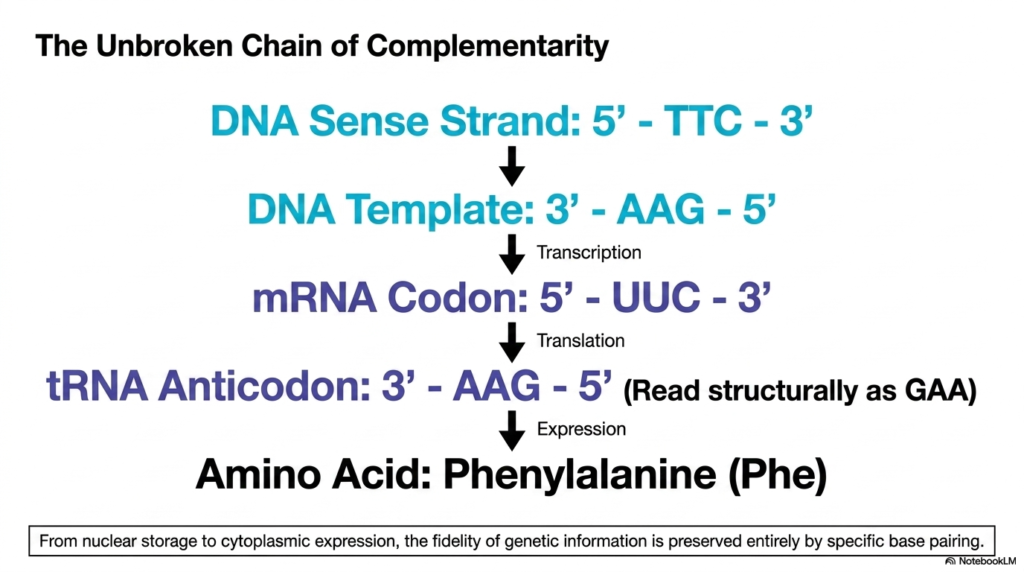
The grand conclusion to our exploration of Molecular Genetics is the unbroken chain of complementarity. This sequence represents the continuous, flawless transfer of biological data from nuclear storage to cytoplasmic expression. The journey begins with the DNA sense strand. For example, a sense sequence reading five-prime to three-prime as TTC is the original master code. This sequence is then flipped and stored on the DNA template strand as the sequence AAG, running from the three-prime to the five-prime direction. This alternating, complementary storage system is the robust, evolutionary fail-safe mechanism that successfully anchors the entire complex biological process.
During transcription, the cellular machinery reads the DNA template strand and builds the messenger RNA codon. Through complementary base pairing, the template sequence AAG is transcribed into the messenger RNA codon UUC. The message is now fully mobilized and leaves the nucleus. Once it reaches the ribosome, translation begins. The transfer RNA anticodon, running three-prime to five-prime as AAG, successfully docks with the messenger RNA codon. An essential principle taught in the field of Molecular Genetics is that this anticodon sequence physically and structurally reflects the very original DNA sense strand, with uracil simply replacing the original thymine.
This remarkable unbroken chain culminates in the final stage of expression. Because of this exact, highly regulated sequence of biochemical hand-offs, the precise and necessary amino acid, in this specific case, phenylalanine, is correctly incorporated into the growing structural protein chain. From the deep, highly protected nuclear storage all the way out to active cytoplasmic expression, the extraordinarily high fidelity of genetic information is preserved entirely by specific, rigid base pairing. The rigorous study of Molecular Genetics demonstrates that functional life does not rely on chance but rather on rigid, complementary chemical rules that perfectly protect and faithfully execute the inherited biological blueprint.
Please read our Content Disclaimer Statement.
Check out our social media channels: