131. Bone and Teeth Biochemistry: Molecular Insights
Have you ever wondered how bones support your body or how teeth withstand a lifetime of chewing? The secret lies in a dynamic balance of minerals, proteins, and living cells. Understanding Bone and Teeth Biochemistry is essential to grasping how tissues build, maintain, and protect the body’s physical framework. This slide deck explores the fundamental molecular structures, cellular mechanisms, and chemical pathways that govern skeletal and dental health.
Slide 1: Introduction to Bone and Teeth Biochemistry
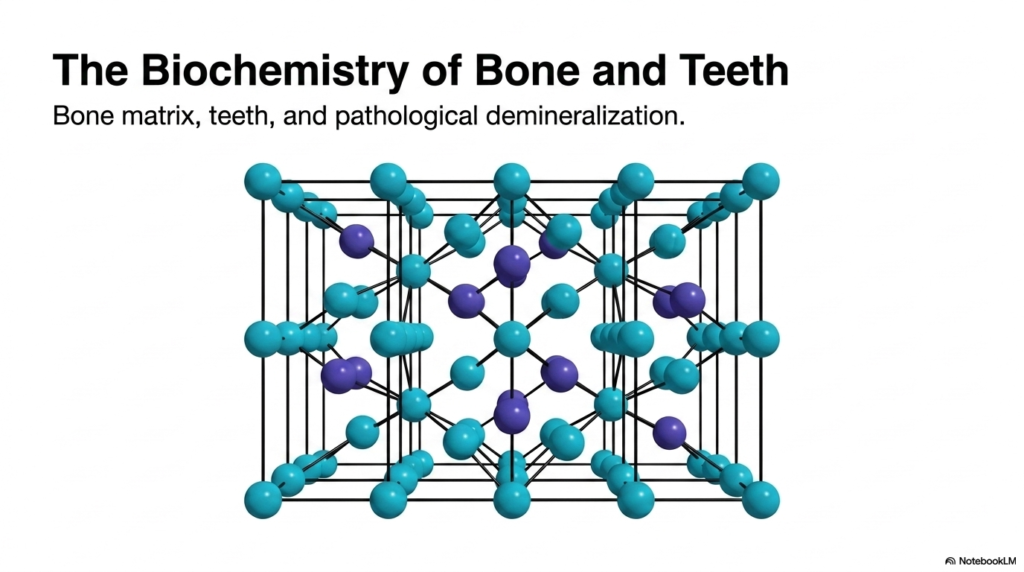
Human skeletons and teeth are extraordinary biological structures that endure tremendous physical stress throughout a lifespan. The study of Bone and Teeth Biochemistry reveals how specialized connective tissues blend rigid inorganic crystals with flexible organic protein matrices. This intricate structural combination creates biological frameworks that are remarkably tough, highly resilient, and surprisingly lightweight.
At the heart of Bone and Teeth Biochemistry is biomineralization, a tightly regulated chemical process where calcium and phosphate ions form structured crystalline arrangements. These mineral crystals deposit within organized collagen networks, transforming soft protein scaffolding into hardened biological structures. This specialized matrix allows bones and teeth to bear heavy mechanical loads while withstanding continuous physical impact.
Pathological conditions occur when the natural equilibrium between mineral deposition and breakdown shifts toward mineral loss. Uncontrolled demineralization weakens skeletal bones and dissolves protective tooth enamel, leading to clinical issues such as osteoporosis, skeletal fractures, and dental caries. By exploring Bone and Teeth Biochemistry, students learn how metabolic signals, cellular enzymes, and environmental factors constantly shape structural integrity.
Understanding these foundational biochemical principles explains how living systems maintain hard tissues while adapting to systemic physiological demands. The underlying molecular architecture demonstrates how precise chemical organization directly dictates biological durability throughout human life.
Slide 2: Cellular Builders and Destroyers in Bone and Teeth Biochemistry
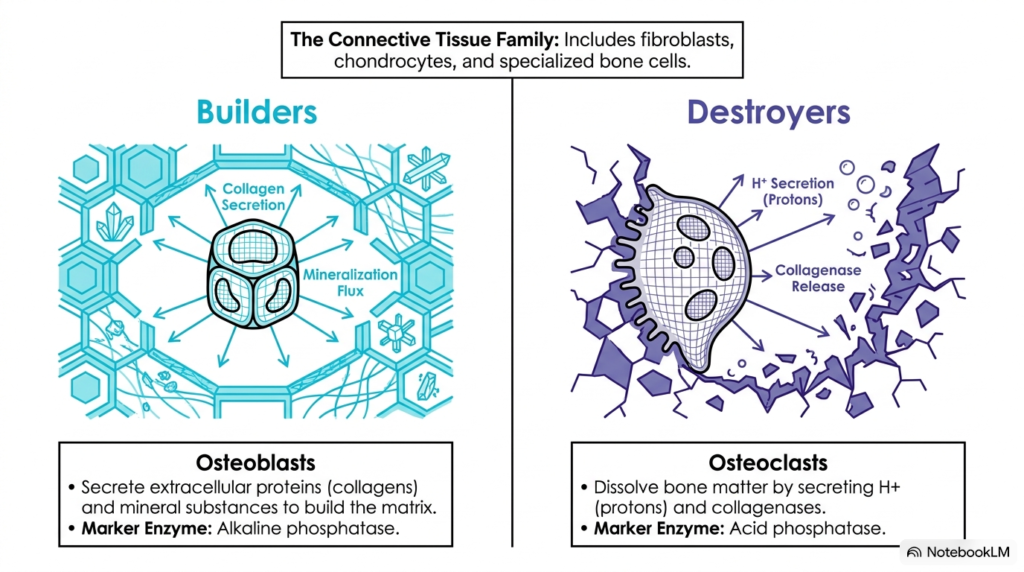
Bone remodeling relies on a dynamic balance between two specialized cell types derived from the connective tissue family. In Bone and Teeth Biochemistry, osteoblasts are the primary builders, while osteoclasts act as specialized destroyers. Together, these cells continuously sculpt bone architecture, adjust mineral density, and maintain systemic mineral homeostasis throughout an individual’s life.
Osteoblasts synthesize and secrete organic extracellular proteins, primarily type I collagen, along with mineral substances to construct the bone matrix. A key clinical marker for osteoblast activity is alkaline phosphatase, an enzyme that increases local phosphate concentrations to promote mineralization. Through this pathway, osteoblasts ensure that new bone matrix is properly formed and mineralized during growth and tissue repair.
Conversely, osteoclasts are multinucleated cells that dissolve mineralized bone matter during remodeling. In bone and Teeth Biochemistry, osteoclasts create an isolated microenvironment by actively secreting protons to lower local pH and dissolve hydroxyapatite crystals. They also release collagenases to break down the organic matrix and use acid phosphatase as their primary enzymatic marker.
Balanced cross-talk between osteoblasts and osteoclasts ensures healthy bone turnover without net loss of structural mass. When osteoclasts outpace osteoblasts, skeletal fragility increases significantly. Studying Bone and Teeth Biochemistry helps students understand how targeted pharmacological interventions can restore cellular balance and prevent metabolic bone diseases.
Slide 3: Organic and Inorganic Components in Bone and Teeth Biochemistry
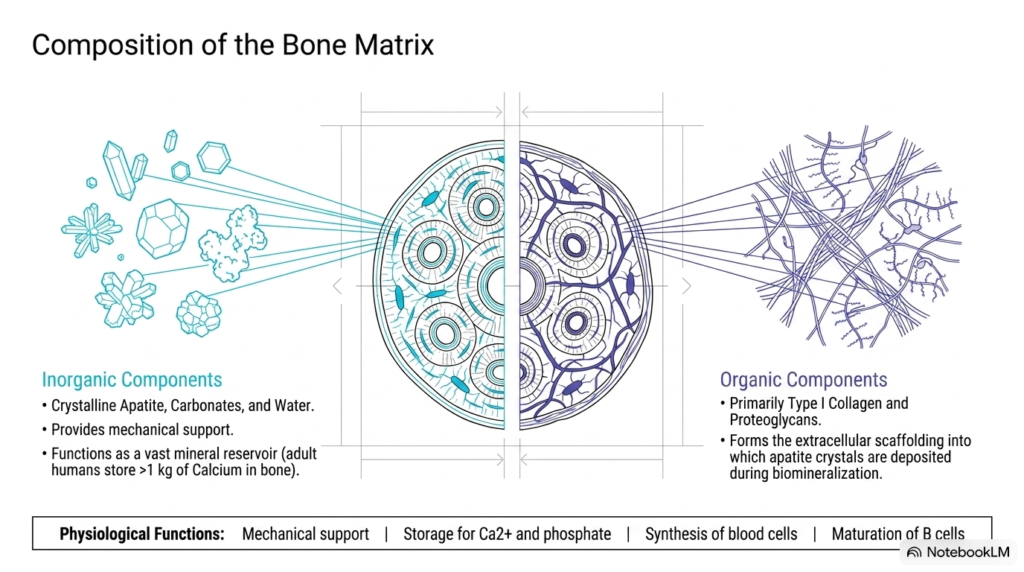
The mechanical strength and biological flexibility of skeletal tissue stem directly from the extracellular matrix’s dual composition. In Bone and Teeth Biochemistry, the matrix is divided into distinct inorganic and organic fractions that work cooperatively. This composite design gives bones their unique ability to withstand both compressive forces and tensile stress.
The inorganic component consists mainly of crystalline apatite, carbonates, and bound water. This mineral phase provides structural rigidity and acts as a massive mineral reservoir, storing over one kilogram of calcium in adult humans. Within Bone and Teeth Biochemistry, this reservoir is crucial for maintaining systemic calcium homeostasis, releasing or absorbing ions as physiological demands fluctuate daily.
The organic fraction is composed primarily of type I collagen triple helices and proteoglycans. These proteins form a flexible extracellular scaffolding into which microscopic apatite crystals deposit during biomineralization. Without collagen, bone tissue would become brittle and shatter easily under physical stress, whereas a lack of mineral content causes soft, flexible bones.
Beyond mechanical support and mineral storage, the bone matrix supports critical systemic functions. It hosts hematopoiesis, providing the microenvironment necessary for blood cell synthesis and B cell maturation. Understanding Bone and Teeth Biochemistry reveals how these structural and metabolic roles intersect seamlessly within human physiology.
Slide 4: Apatite Crystal Structures in Bone and Teeth Biochemistry
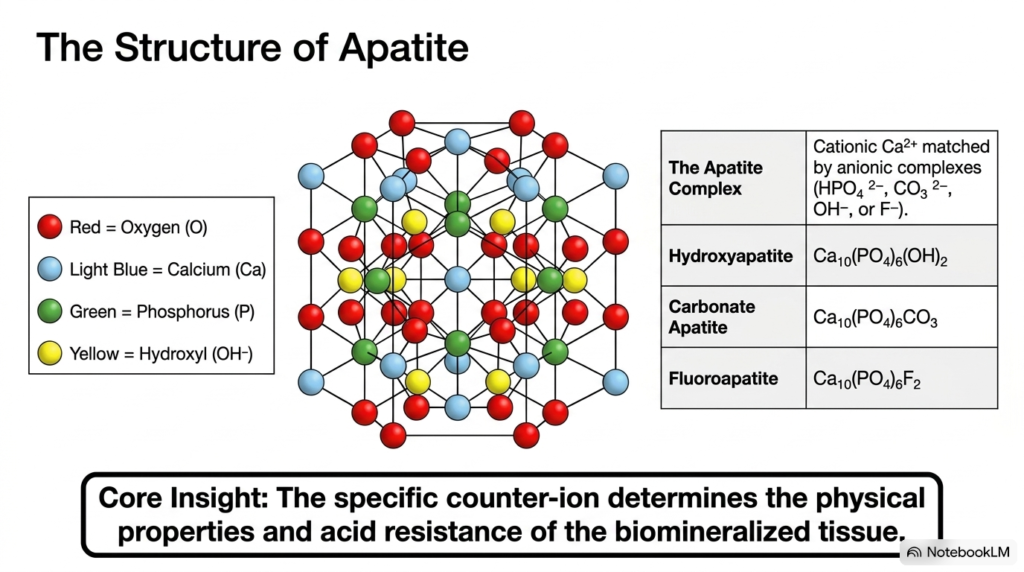
At the sub-microscopic level, the hardness of skeletal and dental tissues depends on the crystal structure of apatite minerals. In Bone and Teeth Biochemistry, apatite is a calcium phosphate complex where cationic calcium ions pair with various anionic species. These counter-ions directly influence the physical stability, lattice perfection, solubility, and acid resistance of biomineralized structures across different body tissues.
Biological hydroxyapatite, represented by the chemical formula Ca10(PO4)6(OH)2, serves as the fundamental mineral phase in mammalian bones and teeth. Within Bone and Teeth Biochemistry, hydroxyl ions fit precisely into the crystal lattice alongside calcium and phosphate ions. However, chemical substitutions often occur during tissue formation, producing altered apatite variants such as carbonate apatite or fluoroapatite that display distinct physical traits.
When carbonate ions replace phosphate or hydroxyl groups, the resulting carbonate apatite exhibits reduced crystalline perfection and increased solubility in acidic environments. Conversely, substituting hydroxyl ions with fluoride ions yields fluoroapatite, Ca10(PO4)6F2. Fluoroapatite features a tighter crystal lattice that significantly enhances physical hardness and chemical stability against acid attack, protecting enamel against degradation.
A central insight of Bone and Teeth Biochemistry is that specific counter-ion substitutions dictate tissue resilience and physiological performance. Understanding these lattice dynamics explains why enamel mineral composition dictates dental caries susceptibility and informs preventive dental therapies used in modern clinical practice.
Slide 5: Hormonal Regulation of Mineralization in Bone and Teeth Biochemistry
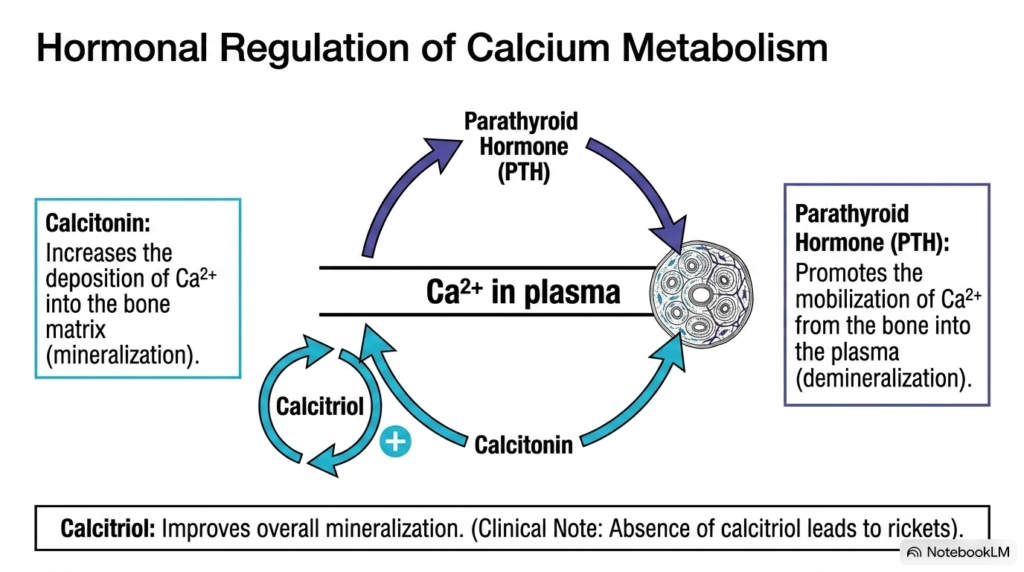
Systemic calcium balance requires precise endocrine regulation to coordinate bone mineralization and resorption across the body. In Bone and Teeth Biochemistry, three major hormones—parathyroid hormone, calcitonin, and calcitriol—control plasma calcium levels. These chemical messengers target bone cells, kidney tubules, and intestinal enterocytes to maintain tight physiological calcium boundaries necessary for muscular and neural function.
The parathyroid glands secrete parathyroid hormone in response to low plasma calcium levels, promoting calcium mobilization from bone into circulation. Within Bone and Teeth Biochemistry, parathyroid hormone indirectly stimulates osteoclasts, driving bone demineralization to restore blood calcium concentrations. Prolonged elevation of parathyroid hormone can lead to significant skeletal mineral loss, structural weakness, and increased fracture risk over time.
In contrast, calcitonin acts as a physiological antagonist to parathyroid hormone during hypercalcemia. Calcitonin inhibits osteoclast activity and increases calcium deposition into the bone matrix, promoting net mineralization and structural preservation. Meanwhile, calcitriol, the active form of vitamin D, enhances intestinal calcium absorption and supports overall bone matrix mineralization.
A thorough understanding of Bone and Teeth Biochemistry highlights the clinical significance of these endocrine pathways in maintaining systemic mineral balance. For example, severe calcitriol deficiency impairs mineral deposition, leading to conditions such as rickets in growing children and osteomalacia in adults.
Slide 6: Dental Architecture and Mineral Gradients in Bone and Teeth Biochemistry
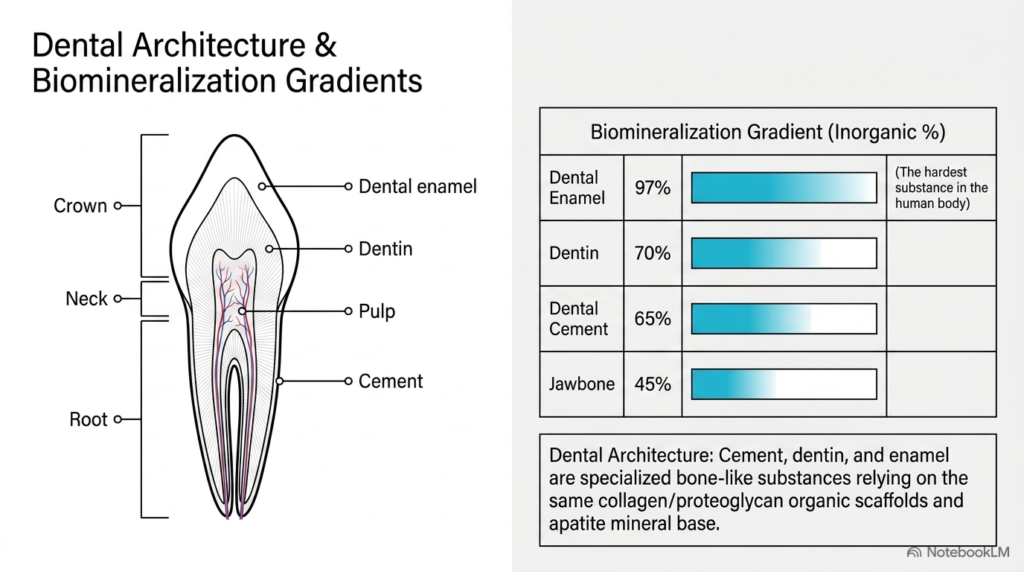
Teeth are specialized anatomical structures organized into distinct regions: the visible crown, the intermediate neck, and the anchoring root. Within Bone and Teeth Biochemistry, dental tissues display a striking gradient of mineral density across their structural layers. Each layer relies on an organic collagen and proteoglycan scaffold embedded with crystalline apatite minerals tailored to specific mechanical environments.
Dental enamel forms the outermost protective layer of the tooth crown and represents the most highly mineralized tissue in the human body. Composed of ninety-seven percent inorganic mineral by weight, enamel is the hardest substance produced by human physiology. In Bone and Teeth Biochemistry, this extreme mineralization allows enamel to endure immense bite forces without deforming, cracking, or wearing down under daily use.
Beneath the enamel lies dentin, which contains seventy percent inorganic content, providing essential shock absorption and structural flexibility for the brittle outer enamel shell. Dental cementum covers the root surface and contains sixty-five percent inorganic mineral, anchoring the tooth to the surrounding jawbone, which contains forty-five percent inorganic mineral material.
This progressive biomineralization gradient illustrates how Bone and Teeth Biochemistry adapts basic connective tissue templates for specialized mechanical duties. The seamless integration of enamel, dentin, cementum, and jawbone ensures optimal functional durability under continuous biomechanical stress.
Slide 7: Microbial Ecology and Plaque in Bone and Teeth Biochemistry
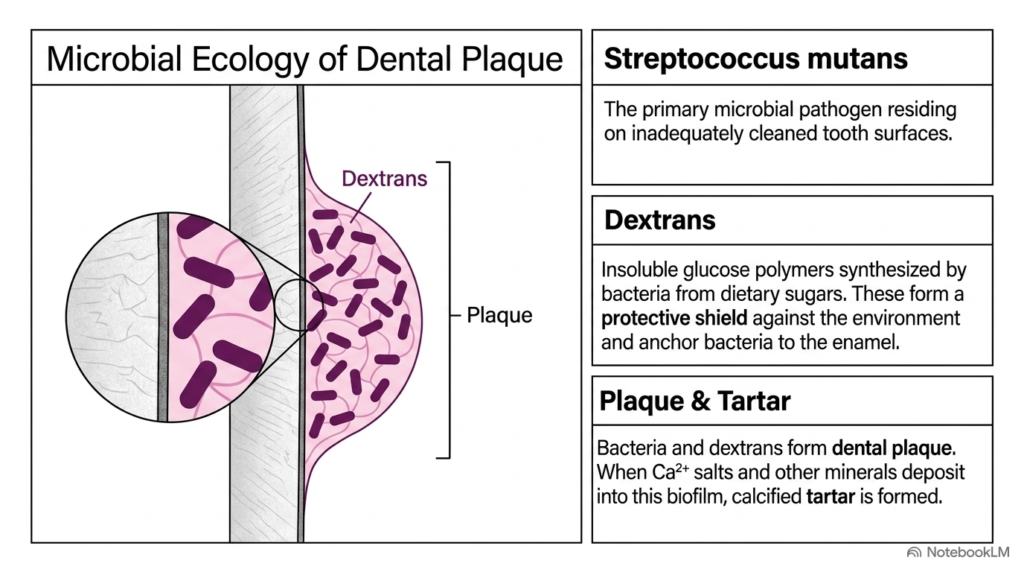
The oral cavity hosts a complex microbial ecosystem that directly impacts dental health through biofilm formation on tooth surfaces. In Bone and Teeth Biochemistry, Streptococcus mutans is recognized as the primary bacterial pathogen that initiates dental decay. This bacterium colonizes tooth surfaces, converting dietary sugars into adhesive extracellular matrices that facilitate rapid bacterial attachment and colonization.
Streptococcus mutans uses dietary sugars to synthesize dextrans, insoluble glucose polymers produced through enzymatic activity. Within Bone and Teeth Biochemistry, dextrans act as a protective barrier that shields embedded bacteria from antimicrobial agents, mechanical flushing, and salivary clearance. This sticky polymer matrix firmly anchors bacterial colonies to tooth enamel, establishing a highly organized dental plaque biofilm.
As plaque matures, bacterial colonies proliferate within this protected matrix, creating localized microenvironments that trap metabolic waste products and organic acids. Over time, calcium salts and other salivary minerals deposit into uncleaned plaque, causing it to calcify into hard dental tartar. Simple brushing cannot remove tartar, which accelerates localized tissue damage.
Studying Bone and Teeth Biochemistry emphasizes that plaque is an active metabolic biofilm rather than a simple passive debris layer. Disrupting dextran synthesis and bacterial adhesion remains a primary goal in maintaining oral hygiene and preventing pathological demineralization.
Slide 8: Caries and Anaerobic Glycolysis in Bone and Teeth Biochemistry
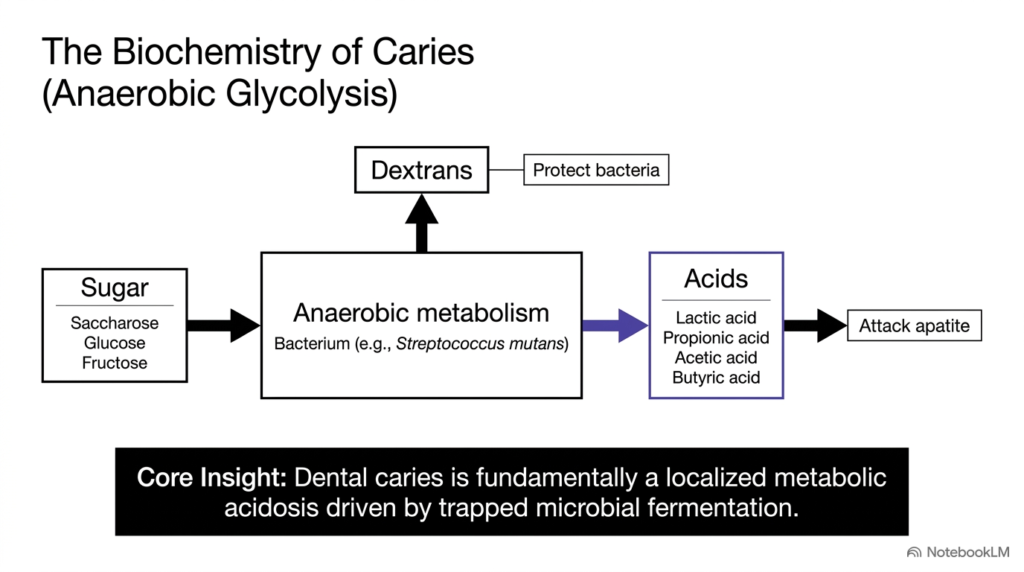
Dental caries is fundamentally a localized metabolic acidosis caused by bacterial fermentation of dietary carbohydrates. In Bone and Teeth Biochemistry, simple dietary sugars such as sucrose, glucose, and fructose serve as primary metabolic substrates for pathogenic oral microorganisms. Streptococcus mutans rapidly imports these sugars to drive high-rate anaerobic glycolysis within the dense plaque biofilm.
Because dental plaque restricts oxygen diffusion, oral bacteria rely exclusively on anaerobic metabolic pathways to generate cellular energy. Within Bone and Teeth Biochemistry, anaerobic glycolysis yields concentrated organic acid byproducts, including lactic acid, propionic acid, acetic acid, and butyric acid. Lactic acid is the predominant and most potent acid produced, driving a sharp decline in localized salivary pH.
The dextran matrix plays a critical role by trapping these organic acids directly against the tooth enamel surface. This barrier prevents salivary bicarbonate buffer from neutralizing the localized acid buildup, creating a harsh acidic microenvironment that remains insulated from external clearance mechanisms directly adjacent to the mineralized tooth surface.
Ultimately, Bone and Teeth Biochemistry demonstrates that caries development is a continuous biochemical chain reaction. Fermentation transforms dietary sugars into concentrated organic acids, setting the stage for direct chemical destruction, loss of calcium salts, and severe mineral dissolution of the underlying tooth structure.
Slide 9: Acid-Driven Demineralization in Bone and Teeth Biochemistry
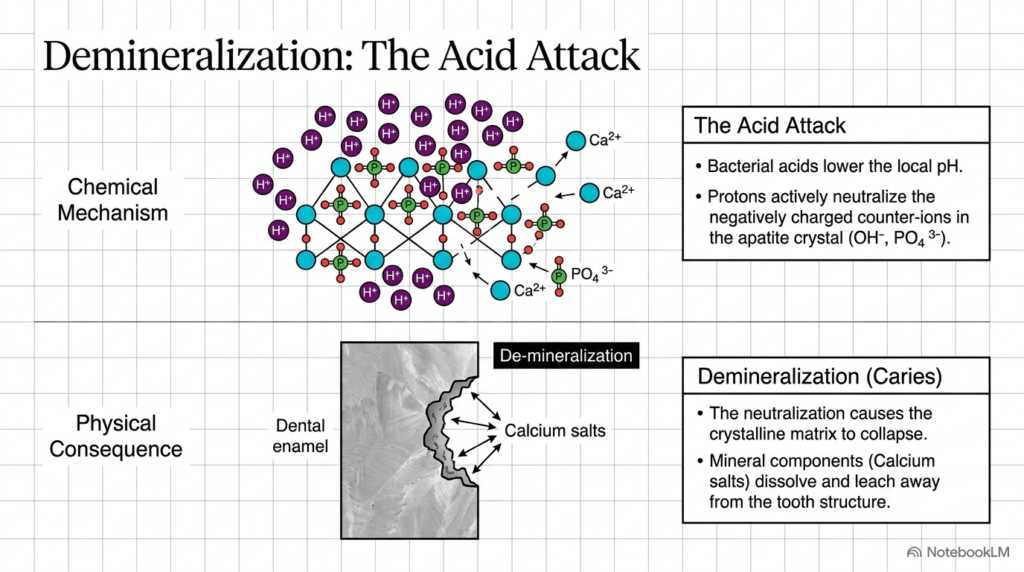
The physical destruction of tooth enamel during caries progression follows a precise chemical mechanism driven by excess hydrogen ions. In Bone and Teeth Biochemistry, bacterial acids lower the local pH below the critical threshold of five point five. This sharp pH drop initiates an aggressive chemical attack on the crystalline apatite lattice.
As proton concentrations rise, excess hydrogen ions actively react with negatively charged counter-ions within the apatite crystal structure. Protons bind to hydroxyl ions to form water and protonate phosphate ions into hydrogen phosphate species. In bone and Teeth Biochemistry, this chemical neutralization strips essential counter-ions from the crystal lattice, destroying the electrostatic balance that holds the mineral structure together.
As counter-ions are neutralized, the crystalline matrix collapses, causing calcium ions and phosphate species to dissolve into the surrounding fluid. These dissolved mineral components leach away from the enamel surface, leading to irreversible loss of tissue density, micro-structural weakening, and eventual physical cavitation of the tooth.
Understanding acid attack mechanisms in Bone and Teeth Biochemistry clarifies why localized pH control and effective salivary buffering are essential for dental preservation. Without timely clinical intervention, continuous demineralization progresses from sub-surface mineral loss to severe, painful structural damage and full physical cavitation across the entire tooth crown.
Slide 10: Fluoridization and Defensive Strategies in Bone and Teeth Biochemistry
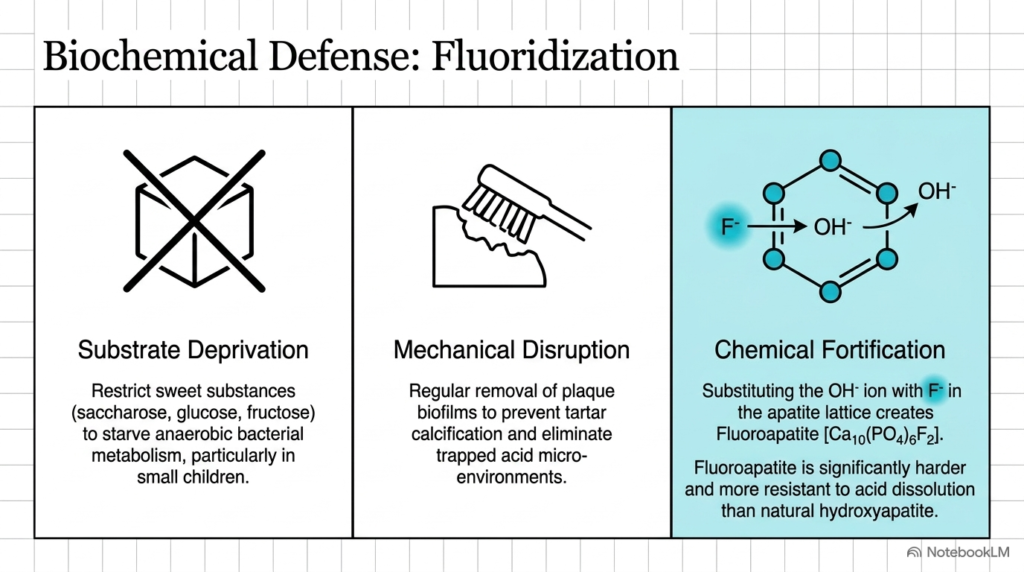
Preventing dental caries requires a comprehensive multi-faceted approach that targets bacterial metabolism, biofilm integrity, and crystal chemistry. In Bone and Teeth Biochemistry, three primary defensive strategies are employed: substrate deprivation, mechanical biofilm disruption, and chemical fortification. Together, these measures effectively halt acid-mediated tooth destruction and preserve structural mineral integrity over time.
Substrate deprivation involves restricting dietary sugars such as sucrose, glucose, and fructose, starving anaerobic bacteria and preventing organic acid production within plaque. Mechanical disruption through regular brushing and flossing physically removes plaque biofilms, eliminating trapped acidic microenvironments. In bone and Teeth Biochemistry, combining these lifestyle interventions significantly reduces bacterial acid production on enamel surfaces.
Chemical fortification using fluoride provides the most robust molecular defense against demineralization and acid attack. Fluoride ions replace hydroxyl groups within the native hydroxyapatite lattice, transforming it into fluoroapatite, Ca10(PO4)6F2. Fluoroapatite features a more compact crystal lattice that resists acid dissolution far better than native hydroxyapatite during pH fluctuations.
Through these integrated chemical and mechanical interventions, Bone and Teeth Biochemistry offers highly effective practical solutions for modern clinical dentistry. Fluoridization actively transforms vulnerable hydroxyapatite enamel into a highly acid-resistant fluoroapatite barrier, demonstrating the profound clinical power of targeted molecular prevention in maintaining lifelong oral health.
Slide 11: The Biomineralization Continuum in Bone and Teeth Biochemistry
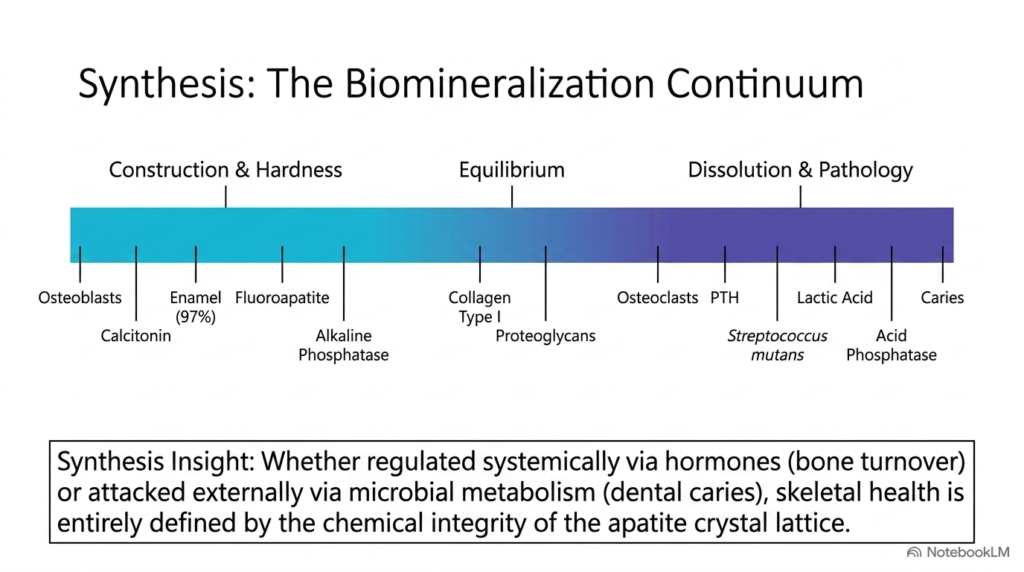
Skeletal and dental health exists along a continuous biochemical spectrum ranging from active tissue construction to pathological dissolution. In Bone and Teeth Biochemistry, overall tissue integrity depends on a precise balance between mineral-depositing processes and acid-mediated mineral breakdown. This biomineralization continuum unites systemic bone turnover and localized dental decay under a single comprehensive biochemical framework.
On the construction end of the spectrum, osteoblasts, calcitonin, alkaline phosphatase, and fluoride support active tissue synthesis, mineralization, and maximum structural hardness. Conversely, the dissolution end is driven by osteoclasts, parathyroid hormone, Streptococcus mutans fermentation, lactic acid production, and acid phosphatase activity. Within Bone and Teeth Biochemistry, collagen scaffolds and proteoglycans maintain structural equilibrium between these opposing physiological forces.
A central synthesis insight of Bone and Teeth Biochemistry is that skeletal durability depends fundamentally on apatite crystal lattice integrity. Whether challenged by systemic endocrine shifts during remodeling or localized microbial acid attack during dental caries, hard tissue stability relies entirely on the chemical resistance of its underlying mineral phase.
By mastering these unified principles, students appreciate how cellular signaling, microbial ecology, and crystal chemistry converge in human biology. This holistic perspective empowers future clinicians to diagnose, prevent, and treat skeletal and dental disorders effectively throughout their medical careers.
Please read our Content Disclaimer Statement.
Check out our social media channels: