89. Antibiotics Mechanism of Action: A Biochemical Overview
Microscopic pathogens have shaped human history, often dictating the survival of entire populations. To combat these invisible threats, science developed molecular weapons designed to target and neutralize them. The core purpose of this first slide is to introduce the foundational concept of the antibiotics mechanism of action. It sets the stage for exploring how specific molecular structures interact with bacterial targets to achieve therapeutic outcomes, providing a necessary introduction to biochemical inhibition strategies.
Slide 1: Antibiotics Mechanism of Action: Unlocking Molecular Inhibition
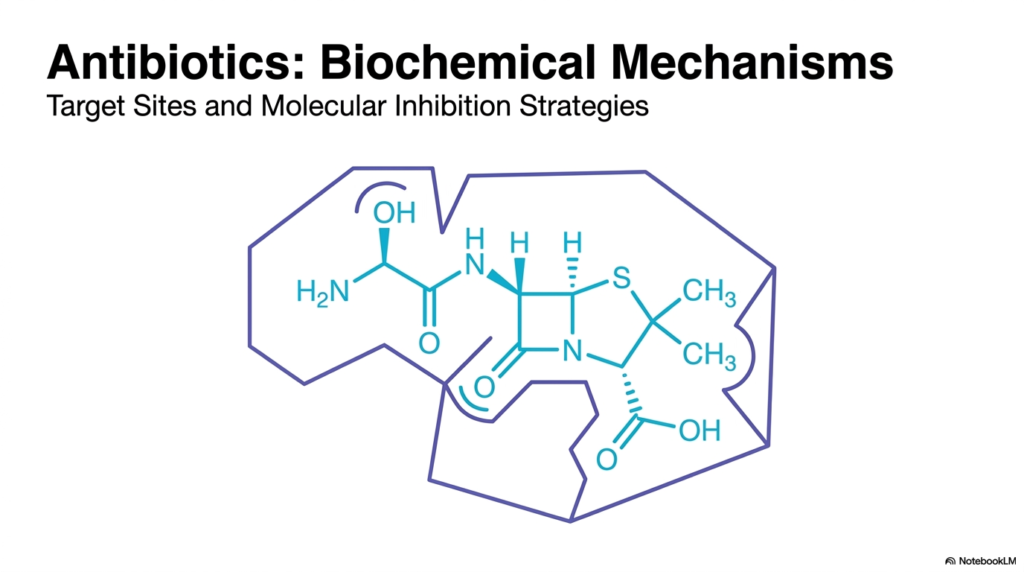
Understanding the antibiotics mechanism of action requires a deep dive into the specific target sites within bacterial cells. The slide presents the chemical structure of a classic beta-lactam molecule, representing one of the most successful classes of antibacterial agents. This structure highlights the importance of molecular geometry and reactive centers in pharmacology. By analyzing these chemical frameworks, students gain insight into how drugs achieve precise interactions with pathogenic enzymes or cellular components. Such structural features dictate the entire trajectory of the antibiotics mechanism of action, defining whether a drug will succeed or fail in the clinical environment.
A crucial aspect of biochemical inhibition strategies involves identifying unique vulnerabilities within the pathogen. The visual representation on the slide emphasizes that these drugs are not random toxins but highly specialized molecules. They fit perfectly into bacterial receptors or active sites, much like a key into a lock. This precise interaction is the fundamental basis of the antibiotics mechanism of action, allowing medications to disrupt vital bacterial processes without harming human host cells. As researchers continue to study these molecular inhibition strategies, they uncover new ways to design even more effective treatments against evolving microbial threats.
The intricate molecular design shown on the slide also hints at the ongoing arms race between pharmacology and bacterial evolution. When the fundamental structure of an antibacterial agent is understood, one can better appreciate how slight modifications can dramatically alter its efficacy. Mastery of these molecular blueprints allows scientists to predict potential resistance pathways. By studying this initial visual overview, learners prepare themselves to explore the complex biochemical pathways that follow, building a robust understanding of molecular pharmacology and microbial defense.
Slide 2: Antibiotics Mechanism of Action: Defining the Biochemical Arsenal
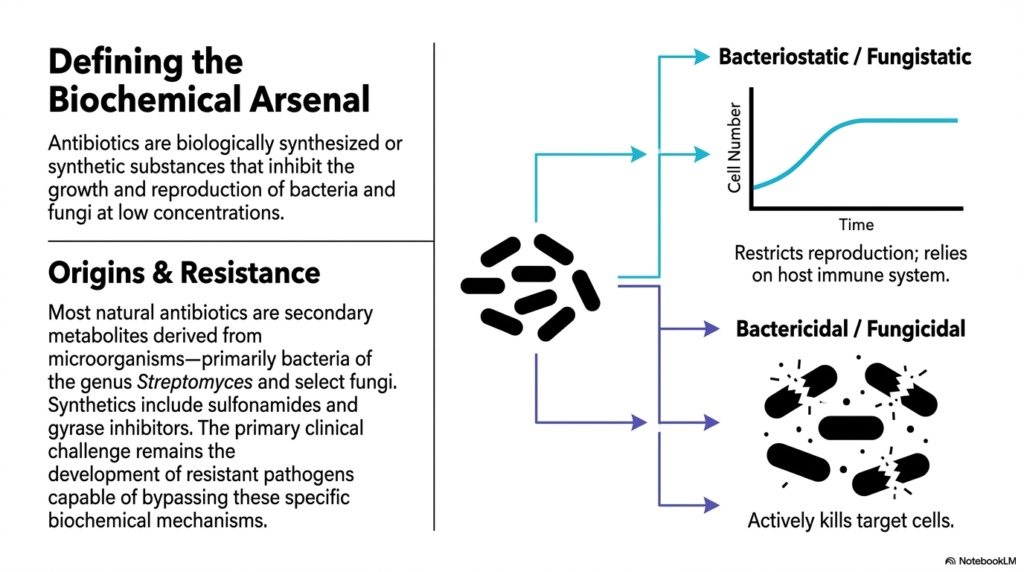
Medical practitioners must distinguish between halting an infection and completely eradicating it. This distinction is vital for patient recovery, especially in individuals with compromised immune systems. The core purpose of this slide is to classify the biochemical arsenal used against pathogens, detailing the fundamental differences between bacteriostatic and bactericidal treatments. It establishes a clear framework for understanding how antibiotics’ mechanisms of action fundamentally alter bacterial growth and survival dynamics.
Natural antibacterial agents typically originate as secondary metabolites from microorganisms like the Streptomyces bacteria or specific fungi. These natural origins highlight an evolutionary warfare that has existed for millennia. Conversely, synthetic options like sulfonamides are designed in laboratories to mimic or disrupt essential biological pathways. Whether natural or synthetic, defining the antibiotics mechanism of action is crucial for overcoming the primary clinical challenge: bacterial resistance. Pathogens constantly evolve to bypass these specific biochemical mechanisms, making it essential to understand their origins and fundamental classifications to stay ahead in medical treatments.
The slide visually contrasts bacteriostatic and bactericidal outcomes, providing a clear picture of cellular impact. Bacteriostatic agents restrict cellular reproduction, causing the bacterial population to level off rather than multiply. This specific antibiotics mechanism of action relies heavily on the host immune system to clear the remaining stagnant pathogens. Such treatments are highly effective when the patient has a robust immune response to help clear the infection. Understanding this dynamic ensures proper application in various clinical scenarios where merely stalling bacterial growth is sufficient for recovery.
In contrast, bactericidal agents take a more aggressive approach by actively destroying the target cells. The graphical representation shows bacterial cells breaking apart, indicating a complete structural or metabolic failure induced by the drug. This type of antibiotic’s mechanism of action is often necessary for severe or life-threatening infections where immediate pathogen elimination is required. By mastering these two primary categories, students build a critical foundation for evaluating drug efficacy and making informed pharmacological decisions in future medical practice.
Slide 3: Antibiotics Mechanism of Action: Targeting Bacterial Metabolism
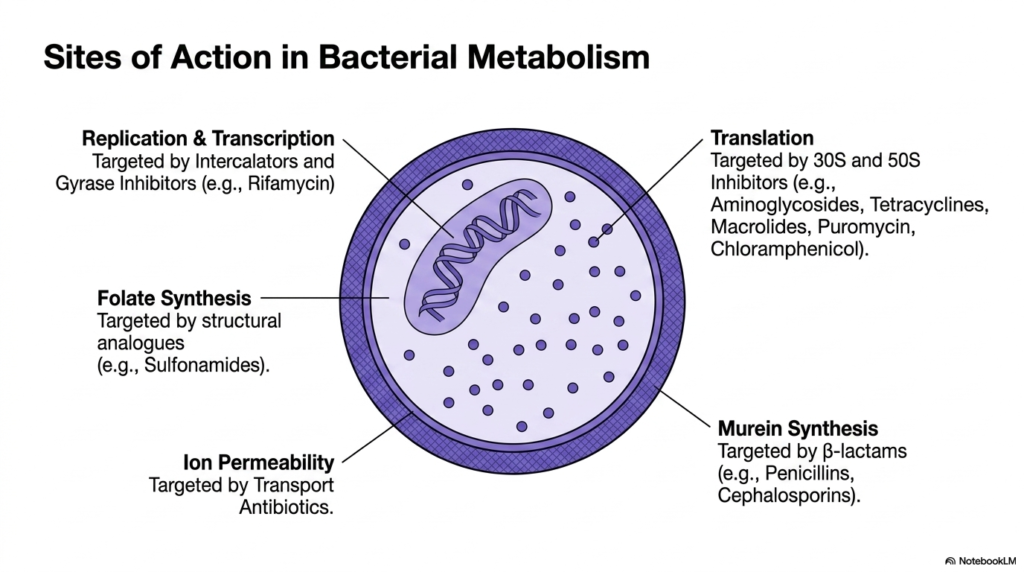
A microscopic battlefield exists within every infected cell, where precise targeting is the key to victory. To minimize collateral damage to human tissues, drugs must exploit unique vulnerabilities in pathogen biology. The core purpose of this slide is to map the specific sites of action within bacterial metabolism. It visually categorizes the diverse targets that dictate the antibiotics’ mechanism of action, offering a comprehensive overview of how different drug classes disrupt cellular function.
The illustration reveals a cross-section of a bacterial cell, highlighting critical operational centers. One major target is the replication and transcription machinery, where agents like intercalators and gyrase inhibitors interfere with genetic processing. Another crucial site is the machinery responsible for translation. Here, drugs target the 30S and 50S ribosomal subunits to halt protein synthesis. By pinpointing these diverse locations, the slide demonstrates how the antibiotics’ mechanism of action can be tailored to disrupt specific life-sustaining processes within the pathogen while leaving eukaryotic host cells largely unaffected.
Beyond genetics and protein synthesis, cellular integrity and nutrient production serve as vital targets. Murein synthesis, essential for cell wall construction, is aggressively targeted by beta-lactams like penicillins. Meanwhile, folate synthesis is blocked by structural analogs such as sulfonamides, starving the bacteria of essential metabolic precursors. Understanding these distinct pathways is central to grasping the antibiotics mechanism of action. Each drug class is meticulously designed to exploit a specific metabolic dependency, ensuring that the bacterial cell cannot sustain its structural integrity or continue its reproductive cycle.
Finally, the slide highlights ion permeability as a target for transport antibiotics, which compromise the cellular membrane. This diverse array of metabolic targets showcases the complexity of pharmacological intervention. When students analyze these distinct sites, they gain a holistic view of the antibiotics mechanism of action. Recognizing how different therapeutic classes attack specific metabolic pathways allows for a deeper appreciation of combination therapies and the strategic deployment of modern medicines against resilient bacterial strains.
Slide 4: Antibiotics Mechanism of Action: Distorting the Double Helix
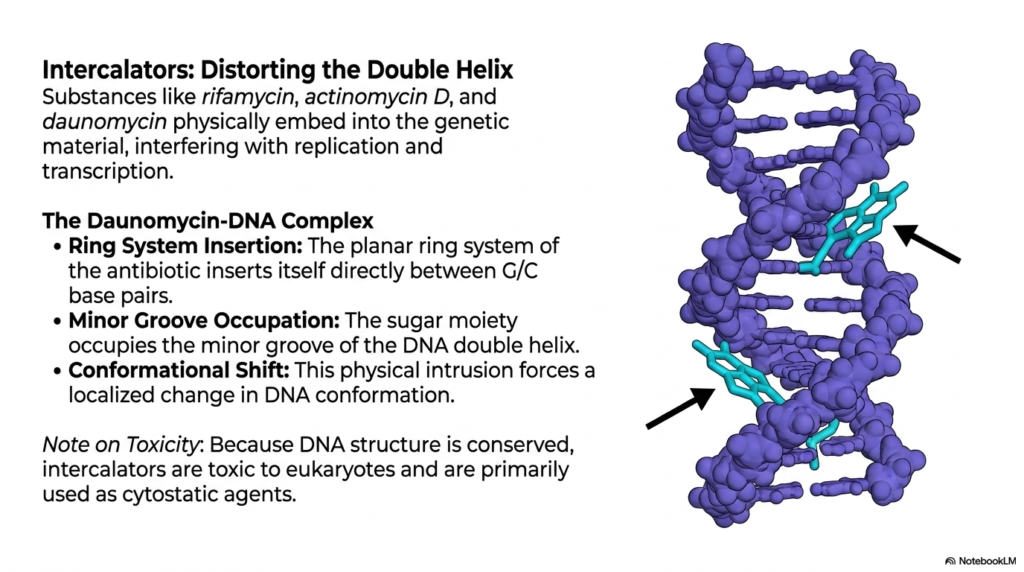
Genetic instructions are the blueprint of all cellular life, making DNA a prime target for chemical disruption. When these blueprints are mangled, cellular reproduction immediately grinds to a halt. The core purpose of this slide is to explain the function of intercalators, focusing on how they physically distort the DNA double helix. It provides a detailed look into an antibiotics mechanism of action that attacks the genetic material directly, preventing essential transcription and replication processes.
Intercalators like rifamycin, actinomycin D, and daunomycin function by embedding themselves directly into the genetic material. The provided visual details the daunomycin-DNA complex, showing exactly how the planar ring system of the molecule inserts itself between the guanine and cytosine base pairs. Concurrently, the sugar moiety of the drug occupies the minor groove of the DNA structure. This physical intrusion defines the antibiotic’s mechanism of action for this class, forcing a localized but catastrophic change in the overall DNA conformation that halts enzymatic reading.
Because this conformational shift distorts the double helix, the necessary machinery for replication and transcription can no longer process the genetic code. The structural disruption is a highly effective mechanism of action for antibiotics to stop rapid cellular division. However, this sheer chemical effectiveness comes with significant clinical caveats. The molecular alteration is profound enough to physically block any enzyme attempting to travel along the DNA strand, ensuring that the targeted cell cannot access its own genetic survival instructions.
A critical note on toxicity accompanies this structural explanation. Because the fundamental structure of DNA is highly conserved across both prokaryotic and eukaryotic organisms, intercalators do not discriminate effectively between bacterial and human cells. Consequently, this specific antibiotic’s mechanism of action is highly toxic to eukaryotes. Due to this severe toxicity profile and the lack of selective pathogen targeting, these powerful agents are primarily utilized in specialized clinical settings. They function as potent cytostatic agents for oncology treatments, rather than standard therapeutics for common bacterial infections.
Slide 5: Antibiotics Mechanism of Action: Halting Replication Mechanics
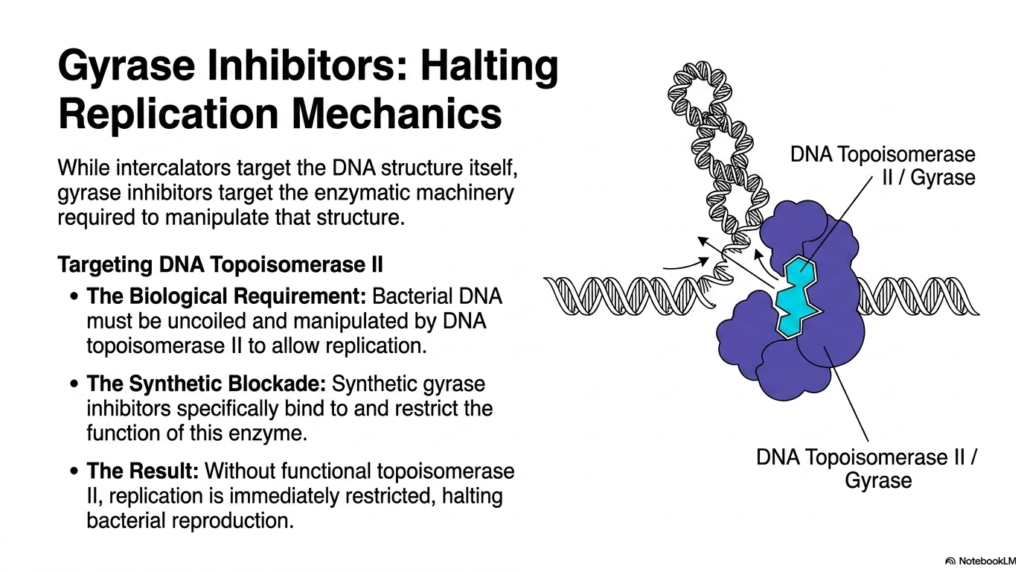
While some drugs destroy the genetic code, others target the specialized machines that read it. Without functional cellular machinery, even pristine DNA becomes completely useless to a dividing cell. The core purpose of this slide is to detail the function of gyrase inhibitors, contrasting them with intercalators. It explains an antibiotic’s mechanism of action that relies on an enzymatic blockade rather than structural damage, specifically targeting the bacterial processes required for DNA manipulation and uncoiling.
Bacterial DNA exists in a tightly coiled state and must be unraveled to allow for cellular replication. The enzyme DNA topoisomerase II, commonly known as gyrase, performs this essential biological requirement. The slide visualizes how this enzyme complexes with the DNA strand to manage structural tension. Understanding this uncoiling process is crucial because it introduces a highly selective target for the antibiotics’ mechanism of action. By focusing on a specific bacterial enzyme, drugs can halt reproduction without directly damaging the conserved DNA structure itself.
Synthetic gyrase inhibitors are designed to specifically bind to and restrict the function of this critical enzyme. Unlike agents that distort the double helix, this targeted synthetic blockade represents a highly refined antibiotics mechanism of action. The graphical representation shows the inhibitor lodging into the topoisomerase complex, physically preventing it from performing its uncoiling duties. This precise enzymatic interference highlights the sophistication of modern drug design, demonstrating how targeting functional machinery can be just as fatal to a pathogen as attacking its physical structure.
The ultimate result of this enzymatic blockade is immediate and catastrophic for the pathogen. Without a functional topoisomerase II enzyme, the replication fork cannot advance, and bacterial reproduction is immediately restricted. This specific antibiotics mechanism of action ensures that the bacterial population cannot expand, allowing the host immune system to clear the existing infection. By disabling the mechanical tools required for cellular division, gyrase inhibitors provide a highly effective and targeted approach to halting bacterial pathogenesis in its tracks.
Slide 6: Antibiotics Mechanism of Action: Inhibitors of Translation
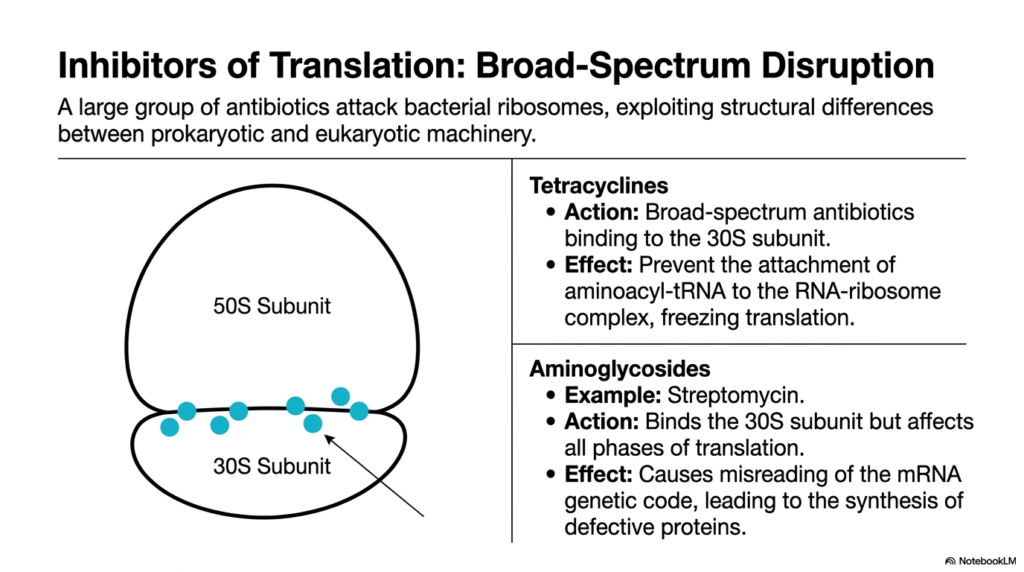
Proteins are the essential biological workhorses of any cell, driving everything from structural integrity to metabolic function. Disrupting their ongoing production is a guaranteed method to induce cellular failure and eventual death. The core purpose of this slide is to deeply explore broad-spectrum disruption through translation inhibitors. It details an antibiotics mechanism of action that attacks the bacterial ribosome, successfully exploiting the crucial structural differences between prokaryotic and eukaryotic cellular machinery to achieve outstanding therapeutic selectivity.
A massive group of antibacterial agents focuses entirely on crippling bacterial protein synthesis. The visual diagram highlights the 50S and 30S subunits of the bacterial ribosome, which serve as the primary targets for these drugs. Tetracyclines, for instance, are broad-spectrum agents that bind securely to the 30S subunit. Their specific antibiotics mechanism of action prevents the attachment of aminoacyl-tRNA to the RNA-ribosome complex. This action effectively freezes the translation process, completely stalling the production of necessary cellular proteins.
Aminoglycosides, such as streptomycin, also target the 30S ribosomal subunit but execute a slightly different strategy. Instead of merely freezing the process, this distinct antibiotics mechanism of action affects all phases of translation. It induces a critical misreading of the mRNA genetic code by the ribosome. As a result, the bacteria begin to synthesize defective and completely non-functional proteins. These toxic, malformed proteins rapidly accumulate within the cellular environment, leading to a catastrophic breakdown of normal biological functions.
By targeting the ribosome, these powerful translation inhibitors exploit a major evolutionary divergence between human host cells and bacterial pathogens. Eukaryotic ribosomes differ structurally and chemically from prokaryotic ones, allowing these medications to disrupt pathogen operations with minimal host toxicity. Analyzing this specific antibiotics mechanism of action reveals exactly why broad-spectrum disruption remains such a reliable clinical strategy today. It showcases the true elegance of molecular pharmacology, where seemingly slight differences in cellular machinery can be actively leveraged to create highly effective, life-saving medical treatments against severe systemic infections.
Slide 7: Antibiotics Mechanism of Action: Elongation and Mimicry
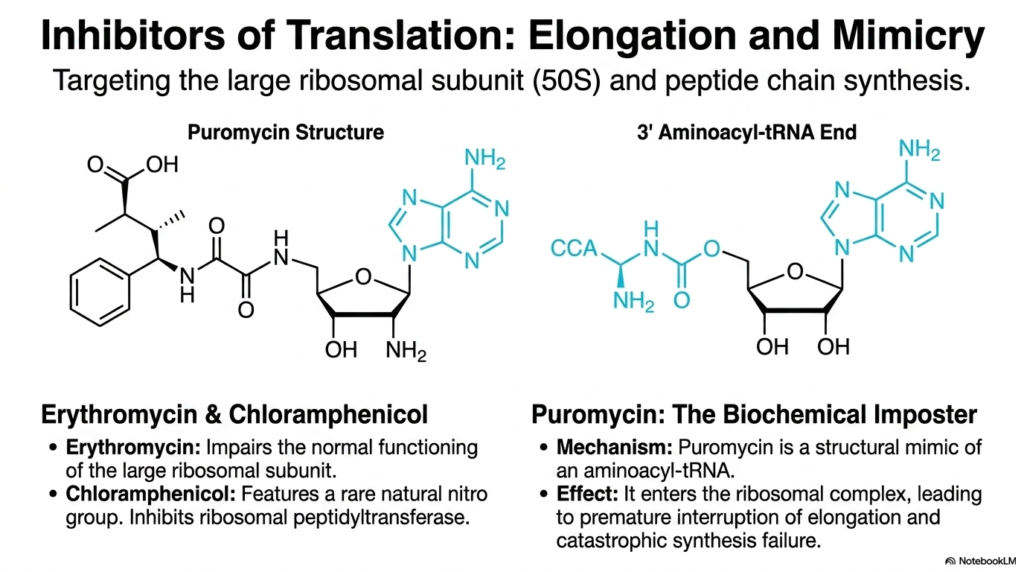
Deception at the molecular level is a highly effective strategy for halting pathogen growth. By masquerading as essential cellular components, drugs can trick bacterial machinery into profound functional errors. The core purpose of this slide is to detail the interruption of peptide chain synthesis. It illustrates an antibiotic’s mechanism of action based on structural mimicry and elongation inhibition, focusing specifically on how agents target the large ribosomal subunit to sabotage protein creation.
While many drugs target the 30S subunit, others focus aggressively on the large 50S ribosomal subunit. Agents like erythromycin work by broadly impairing the normal functional dynamics of this large subunit, severely halting pathogen operations. Conversely, chloramphenicol, which features a remarkably rare natural nitro group, directly inhibits the critical ribosomal peptidyltransferase enzyme. This highly targeted antibiotics mechanism of action physically stops the biological machinery from linking amino acids together, ensuring that the growing peptide chain cannot be successfully elongated during active translation.
The provided visual offers a fascinating structural comparison between the drug puromycin and the 3′ end of a natural aminoacyl-tRNA molecule. Puromycin is accurately dubbed the ‘biochemical imposter’ because its chemical framework is an almost perfect structural mimic of the natural aminoacyl-tRNA. This highly deceptive antibiotics mechanism of action allows puromycin to easily enter the active ribosomal complex. Because the bacterial ribosome cannot distinguish the synthetic drug from the natural biological substrate, it readily incorporates the imposter molecule into the vital translation machinery.
Once puromycin successfully infiltrates the active ribosomal complex, the metabolic results are truly devastating for the pathogen. The incorporation of this chemical imposter leads directly to a premature interruption of peptide chain elongation. This deceptive antibiotics mechanism of action causes a catastrophic synthesis failure, immediately releasing incomplete and entirely useless protein fragments into the bacterial cytoplasm. By studying these sophisticated chemical masquerades, students gain a deeper appreciation for the complex structural dynamics that actively dictate molecular inhibition and microbial cell death.
Slide 8: Antibiotics Mechanism of Action: Breaking the Barrier
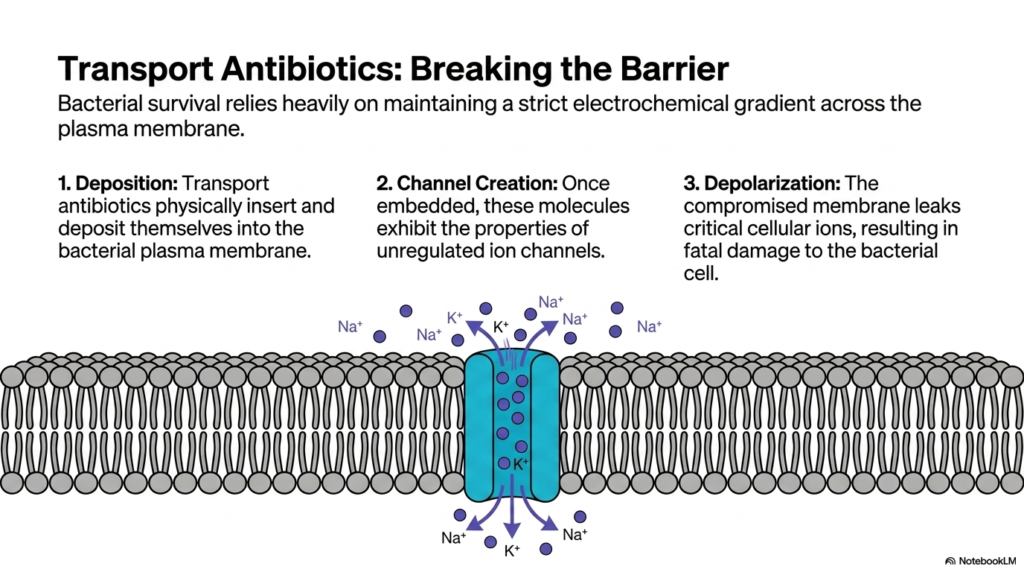
A living cell without a secure border is completely defenseless against its surrounding external environment. Maintaining a strict electrochemical gradient across the delicate plasma membrane is absolutely essential for long-term bacterial survival. The core purpose of this slide is to deeply explain membrane disruption through specialized transport antibiotics. It visually illustrates an antibiotics mechanism of action that physically breaches cellular defenses, detailing a precise three-step process that directly leads to unregulated ion leakage and rapid, fatal cellular depolarization.
The destruction of the bacterial plasma membrane begins with a physical invasion of the lipid bilayer. In the first step, known as deposition, transport antibiotics physically insert and deposit themselves directly into the cellular membrane structure. This initial step of the antibiotics mechanism of action is crucial because it firmly anchors the disruptive molecules within the highly regulated border of the pathogen. The graphical representation shows these structures integrating seamlessly into the tightly packed lipid environment, setting the stage for imminent cellular failure.
Once firmly embedded within the plasma membrane, these invasive molecules undergo a critical functional transformation. They begin to exhibit the properties of unregulated ion channels, essentially creating unclosable pores in the cell wall. This specific antibiotics mechanism of action circumvents the carefully managed transport systems that the bacteria rely on to maintain internal homeostasis. The creation of these artificial channels strips the pathogen of its ability to control what enters and exits the cellular environment, leading to severe biological vulnerability.
The final catastrophic phase of this membrane disruption is widespread cellular depolarization. The compromised plasma membrane begins to violently leak critical cellular ions, such as potassium and sodium, into the surrounding environment. This sudden and unregulated ionic shift is the ultimate goal of this antibiotics mechanism of action, resulting in fatal physiological damage to the bacterial cell. By aggressively breaking the barrier, transport antibiotics cause a rapid loss of structural and energetic integrity, ensuring rapid and complete pathogen elimination.
Slide 9: Antibiotics Mechanism of Action: Competitive Synthetic Inhibition
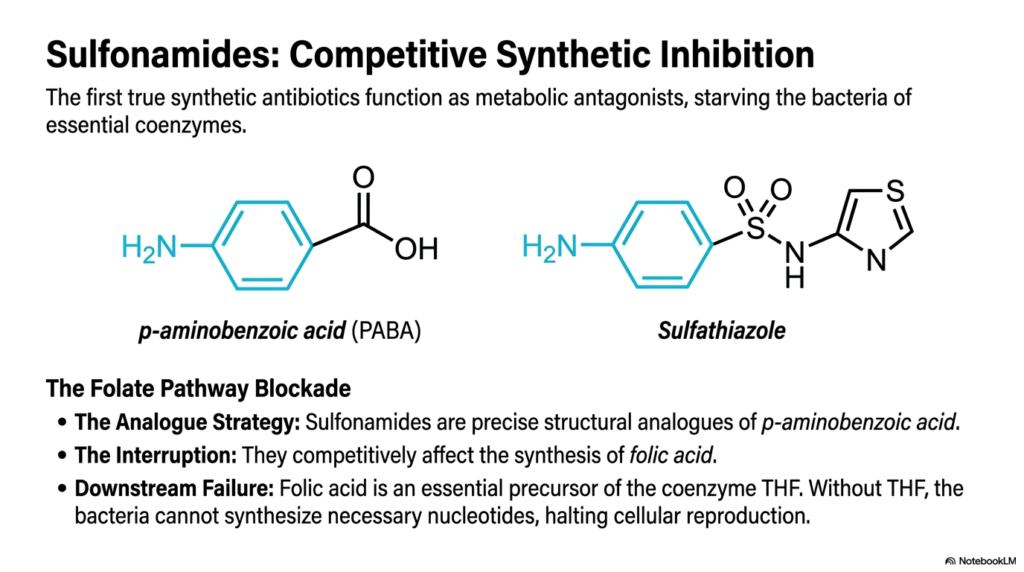
Denying a growing organism access to its basic metabolic building blocks is a highly effective way to starve it out. By interfering with nutrient synthesis, science can halt microbial replication entirely. The core purpose of this slide is to explore metabolic antagonism through sulfonamides, the very first true synthetic antibiotics. It details an antibiotics mechanism of action grounded in precise structural mimicry, specifically targeting the crucial folate pathway to systematically starve the bacteria of essential coenzymes needed for survival.
The slide highlights the chemical strategy of competitive inhibition by comparing the natural substrate p-aminobenzoic acid (PABA) with the synthetic drug sulfathiazole. Sulfonamides are crafted to be precise structural analogues of PABA, visually demonstrating a highly calculated chemical deception. This analogue strategy defines the antibiotics mechanism of action for this class, as the synthetic molecules compete directly with natural substrates for binding sites on critical metabolic enzymes. This structural resemblance is the essential first step in initiating a targeted metabolic blockade.
By successfully competing for enzymatic binding sites, sulfonamides effectively interrupt the biological synthesis of folic acid. Folic acid is an absolutely vital precursor for the production of the coenzyme tetrahydrofolate (THF). This interruption is the central feature of this antibiotics mechanism of action, causing a severe bottleneck in bacterial metabolism. The bacteria unknowingly integrate the synthetic analogue instead of the required PABA, resulting in a dysfunctional metabolic pathway that can no longer produce the essential biological compounds required for life.
The downstream failure resulting from this folic acid blockade is ultimately fatal for bacterial reproduction. Without a steady supply of THF, the bacterial cell is entirely unable to synthesize the necessary nucleotides, which are the fundamental biological building blocks of DNA and RNA. Consequently, this specific antibiotics mechanism of action successfully halts cellular reproduction by deeply starving the pathogen at a strict molecular level. This elegant synthetic inhibition remains a foundational cornerstone of modern pharmacology, illustrating exactly how metabolic starvation can effectively neutralize rapidly dividing microbial pathogens.
Slide 10: Antibiotics Mechanism of Action: The Beta-Lactam Class Foundations
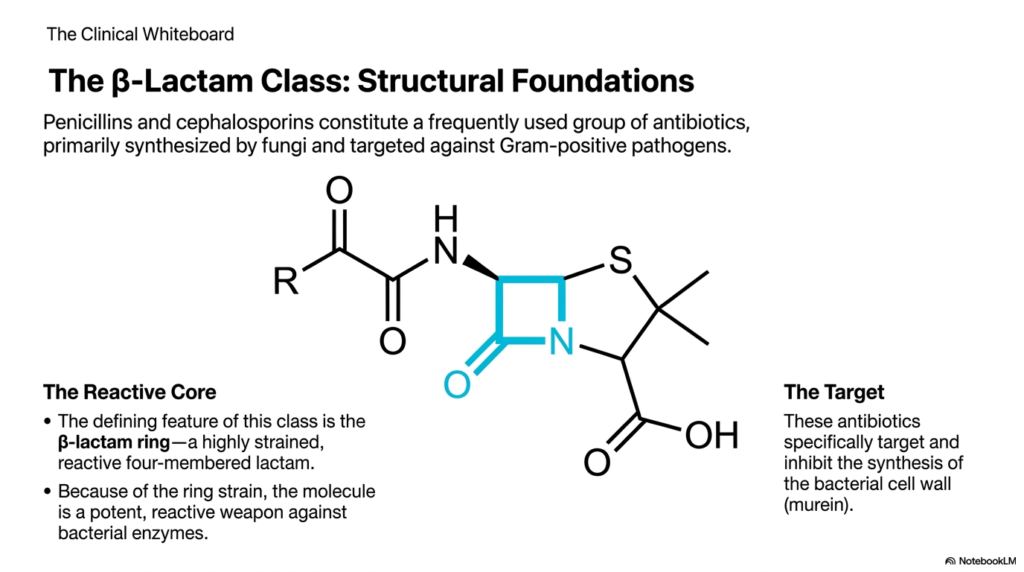
The protective outer wall of a bacterium is its primary defense against environmental stress and internal osmotic pressure. Breaching this structural armor causes the cell to rapidly burst and perish. The core purpose of this slide is to introduce the structural foundations of the highly effective beta-lactam class of drugs. It explores an antibiotics mechanism of action that actively targets Gram-positive pathogens, focusing on the unique, highly reactive chemical core that defines molecules like penicillins and cephalosporins.
Penicillins and cephalosporins constitute one of the most frequently used and historically significant groups of pharmacological agents, primarily synthesized by specific environmental fungi. The clinical whiteboard visual provided centers heavily on the singular defining feature of this entire class: the distinctive beta-lactam ring. Understanding this specific chemical structure is absolutely crucial for thoroughly grasping the broader mechanism of action of antibiotics. The ring itself is a highly strained, deeply reactive four-membered lactam that serves as the primary biochemical weapon against strong bacterial cell defenses.
Because of the immense internal chemical strain inherent within this specific four-membered ring, the molecule becomes extremely potent and highly reactive. It is chemically primed to spring open and aggressively attack vulnerable bacterial enzymes upon contact. This reactive tension is the true driving force behind the antibiotics mechanism of action for this class. The structural instability of the beta-lactam ring is not a chemical flaw, but rather a carefully evolved molecular feature that makes these specific drugs exceptionally lethal to actively dividing microorganisms.
The ultimate cellular target for these reactive molecules is the bacterial cell wall, specifically the synthesis of murein. By specifically targeting and inhibiting the complex enzymes responsible for building this structural layer, beta-lactams fatally compromise pathogen integrity. This targeted antibiotics mechanism of action ensures that as the bacteria attempt to grow and divide, they cannot construct a stable outer boundary. The detailed study of this reactive core provides students with foundational insights into how structural chemistry directly dictates profound pharmacological success.
Slide 11: Antibiotics Mechanism of Action: The Suicide Substrate
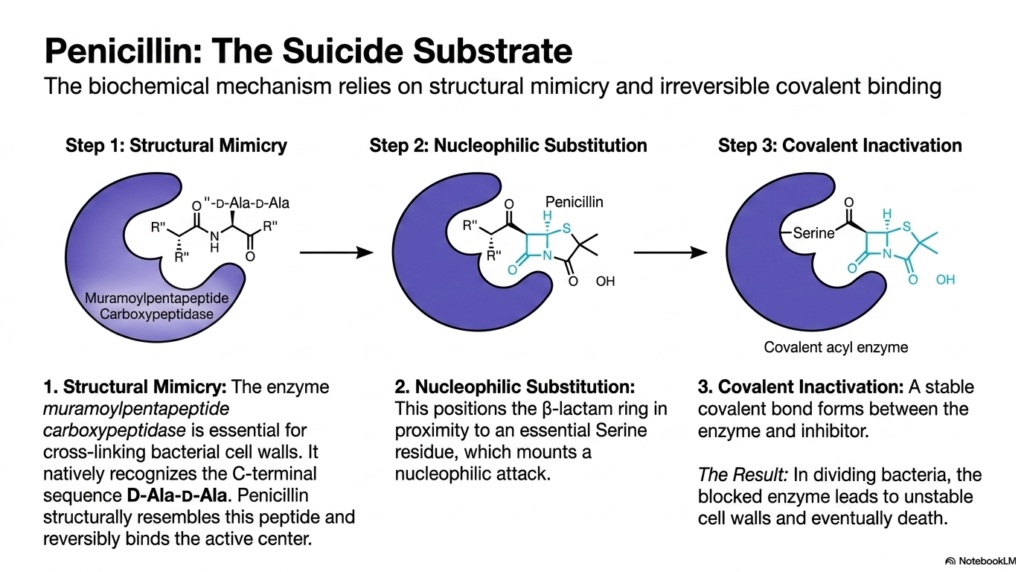
Some molecular weapons function by permanently disabling the cellular machinery they encounter, effectively sacrificing themselves to ensure the pathogen’s destruction. This irreversible molecular bonding is a hallmark of highly advanced biochemical warfare. The core purpose of this slide is to detail the precise, step-by-step chemical reaction of penicillin. It illustrates a terminal antibiotics mechanism of action that utilizes brilliant structural mimicry and a permanent covalent binding strategy to irreversibly deactivate essential cell wall construction enzymes.
The detailed biochemical process begins with structural mimicry. The bacterial enzyme muramoylpentapeptide carboxypeptidase natively recognizes the specific C-terminal sequence D-Ala-D-Ala to cross-link bacterial cell walls. Penicillin is chemically structured to highly resemble this natural biological peptide. This clever disguise initiates the antibiotics mechanism of action, allowing the drug to reversibly bind to the active center of the crucial enzyme. The bacteria, entirely unable to distinguish the drug from its actual building materials, readily accepts the fatal imposter into its machinery.
Following this initial binding, a critical nucleophilic substitution occurs. This step perfectly positions the highly strained beta-lactam ring in very close proximity to an essential Serine residue located within the enzyme’s active site. This proximity is the pivotal moment for this antibiotics mechanism of action, as the Serine residue mounts a powerful nucleophilic attack directly against the reactive ring. The chemical tension of the beta-lactam ring is finally released, springing open to rapidly engage the attacking bacterial enzyme.
The final phase is complete and permanent covalent inactivation. A highly stable, completely unbreakable covalent bond rapidly forms between the vital Serine enzyme residue and the opened inhibitor ring, creating a permanent acyl enzyme complex. Because of this terminal antibiotics mechanism of action, the bacterial enzyme is irreversibly blocked and rendered entirely useless. In rapidly dividing bacterial populations, this absolute loss of functional cross-linking enzymes inevitably leads to highly unstable, dangerously weakened cell walls, ultimately resulting in catastrophic cellular rupture and guaranteed microbial death.
Slide 12: Antibiotics Mechanism of Action: Synthesizing Inhibition Strategies
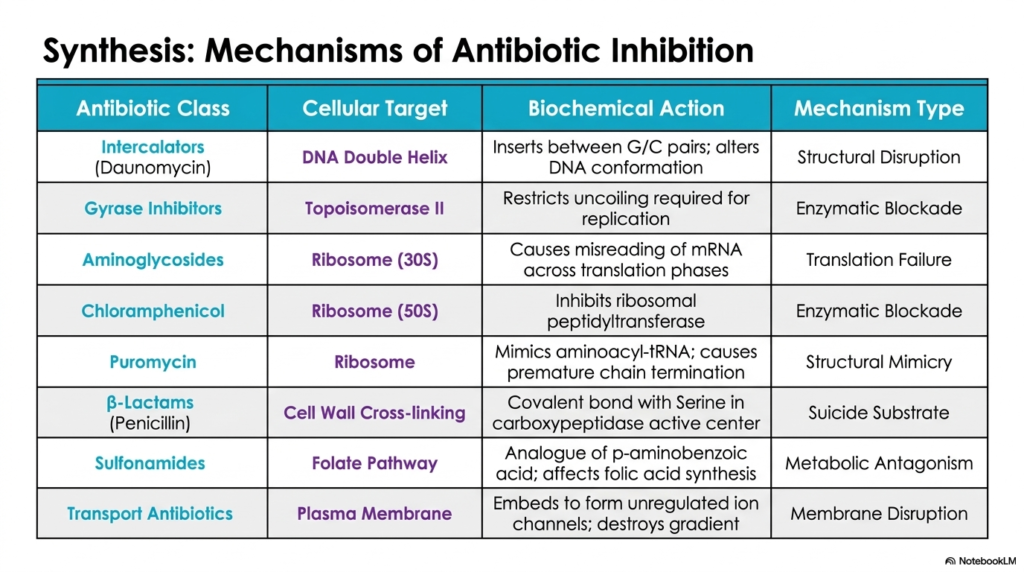
Mastering pharmacology requires the ability to quickly synthesize complex data and categorize diverse molecular behaviors into a unified, understandable framework. A clear, comprehensive overview is essential for accurately comparing therapeutic options. The core purpose of this final slide is to provide a comprehensive summary of all major drug classes previously discussed. It tabulates the precise cellular targets and biochemical actions, serving as an ultimate reference guide for understanding the diverse variations of the antibiotics mechanism of action.
The provided synthesis table meticulously categorizes each major drug class alongside its specific cellular target and precise biochemical action. For instance, powerful intercalators like daunomycin are shown to disrupt the DNA double helix through structural disruption, while gyrase inhibitors utilize an enzymatic blockade directly against topoisomerase II. Reviewing this structured data reinforces a holistic understanding of the antibiotics mechanism of action. It highlights how different chemical classes can achieve cellular inhibition through entirely distinct, highly specialized metabolic pathways and structural interventions.
Furthermore, the table beautifully contrasts translation failures, such as those caused by aminoglycosides on the 30S ribosome, with structural mimicry techniques utilized by puromycin. It also details how beta-lactams function as suicide substrates targeting cell wall cross-linking, and how sulfonamides achieve severe metabolic antagonism within the crucial folate pathway. By analyzing these categorized differences, medical students can better appreciate how a specific antibiotics mechanism of action is strategically selected based on the unique biological vulnerabilities of the targeted invading pathogen.
Finally, the summary highlights membrane disruption caused by transport antibiotics, completing the extensive, diverse spectrum of pharmacological intervention strategies. This consolidated visual reference bridges the gap between abstract molecular chemistry and practical clinical application. Mastery of this summarized table ensures a thorough, deeply functional comprehension of the antibiotics mechanism of action. It empowers future medical professionals to make highly informed, scientifically sound decisions when selecting appropriate therapeutic agents to combat highly resilient, rapidly evolving bacterial threats in modern clinical environments.
Please read our Content Disclaimer Statement.
Check out our social media channels: