120. Metabolic Biotransformation: Mechanisms of Hepatic Detoxification
Every single day, your body encounters thousands of foreign compounds, from food additives and medications to environmental pollutants. How does your liver keep these potentially dangerous molecules from overwhelming your cells? The answer lies in specialized biochemical conversion processes. This slide deck breaks down the core biochemical pathways that process foreign and internal molecules, walking you step by step through cellular defense mechanisms. You will explore how enzymes modify lipophilic compounds to make them water-soluble, safe, and ready for excretion, preserving cellular homeostasis and protecting human health.
Slide 1: Overview of Hepatic Metabolic Biotransformation Pathways
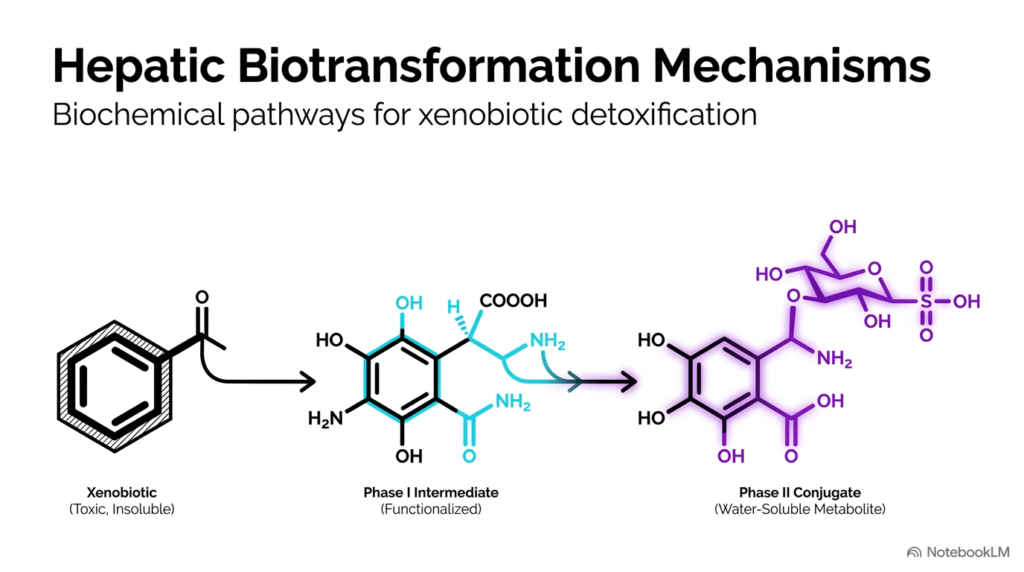
The human liver functions as a sophisticated chemical processing center that protects cells from toxic exposures. Every day, lipophilic compounds enter the circulatory system. Because these nonpolar substances readily dissolve in cellular membranes, they tend to accumulate in biological tissues rather than exiting through liquid waste. The body overcomes this challenge through metabolic biotransformation, a multi-step enzymatic process that systematically alters chemical structures. By converting lipophilic molecules into hydrophilic forms, the liver ensures that hazardous substances can be safely removed from circulation.
This central pathway operates through two coordinated functional stages. In the first phase, specialized enzymes introduce or unmask polar chemical groups on toxic substrates. This initial modification creates a reactive handle on an otherwise inert framework. Following this interconversion, phase two enzymes attach large, charged molecular groups to the handle. Through metabolic biotransformation, the toxic and insoluble starting material shifts into a water-soluble metabolite. This structural transformation effectively neutralizes biological activity while preparing the compound for clearance through biliary or urinary excretion.
Understanding this sequence is essential for medical and scientific disciplines. Pharmacologists rely on these chemical principles to design effective drugs that remain active long enough to treat disease before breaking down. Likewise, toxicologists examine these pathways to predict how environmental chemicals interact with human tissues. Through metabolic biotransformation, the liver maintains systemic equilibrium and prevents toxic accumulation. This foundational architecture underpins cellular defense, making it a core concept in modern biochemistry and pharmacology.
Slide 2: The Biological Mandate for Metabolic Biotransformation
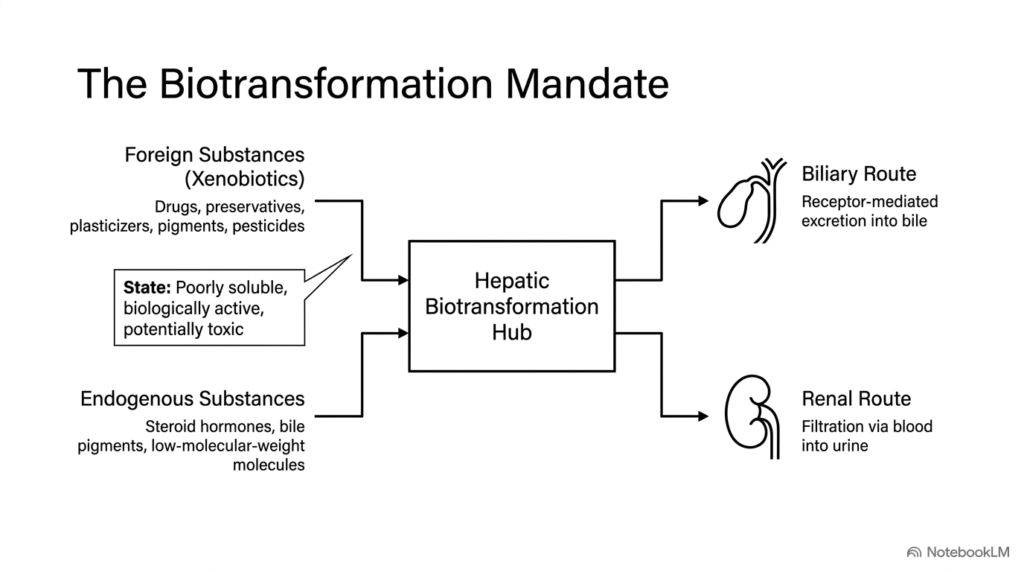
The liver acts as an indispensable filter, processing both external threats and internal chemical signals. Foreign substances, known as xenobiotics, include prescription drugs, food preservatives, industrial plasticizers, artificial pigments, and agricultural pesticides. These molecules are typically poorly soluble in water, biologically active, and potentially toxic to tissues. Without intervention, these fat-soluble toxins would lodge within cell membranes and disrupt essential physiological functions. The liver relies on metabolic biotransformation to transform these hazardous compounds into manageable metabolites that can be eliminated without damaging organ systems.
Beyond handling environmental inputs, the liver regulates endogenous compounds that have fulfilled their physiological roles. Steroid hormones, bile pigments, and low-molecular-weight signaling molecules must be promptly inactivated to prevent chronic receptor overstimulation. The hepatic hub coordinates metabolic biotransformation to maintain precise hormone balances and prevent toxic metabolic buildup. By processing internal and external compounds through shared pathway machinery, hepatocytes maintain tight control over systemic chemical concentrations.
After modification, the liver directs molecules toward specific clearance routes based on their physical properties. Larger conjugated metabolites are typically routed through the biliary system, where receptor-mediated transport secretes them into bile for elimination in the intestine. Smaller water-soluble metabolites enter the bloodstream and travel to the kidneys for renal filtration into urine. Through metabolic biotransformation, the liver ensures that converted products reach their appropriate excretory destination smoothly. This dual-route system highlights the physiological necessity of biochemical processing in human health.
Slide 3: Sequential Detoxification Steps in Metabolic Biotransformation
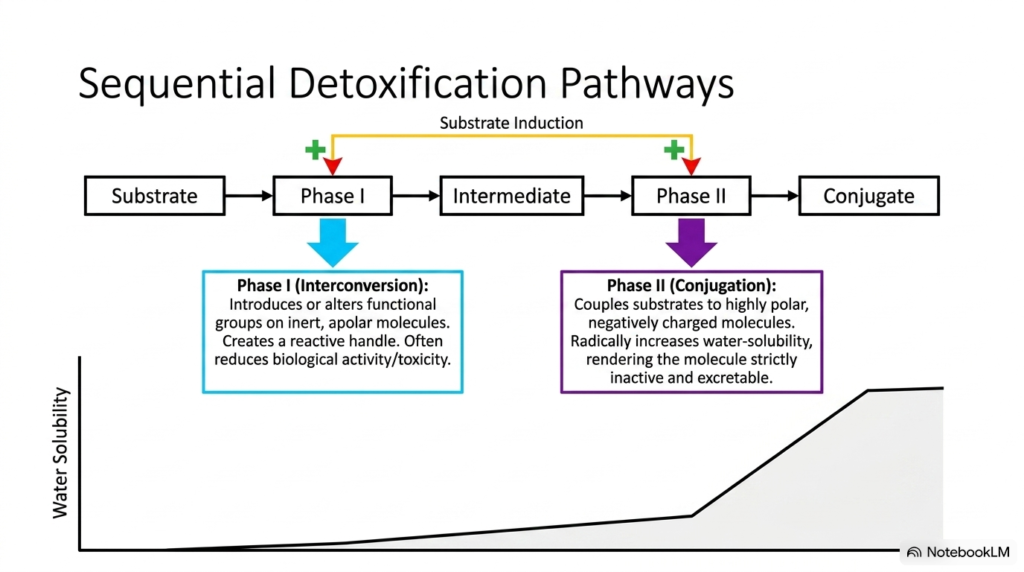
Neutralizing complex lipophilic molecules requires a structured, multi-step enzymatic strategy. The body does this through a sequential process that systematically increases water solubility. In phase one, interconversion reactions introduce or alter polar functional groups on inert, nonpolar substrates. This step creates a chemical handle while frequently reducing biological activity and toxicity. During phase two conjugation, transferase enzymes attach highly polar, negatively charged molecules to that newly created handle. This sequential architecture in metabolic biotransformation converts lipophilic compounds into hydrophilic products ready for excretion.
A key feature of this processing framework is substrate induction. When foreign compounds enter the cell, they stimulate the genetic expression of phase one and phase two enzymes. This feedback loop speeds up metabolic biotransformation during times of elevated chemical exposure. Furthermore, physical properties change dramatically across these steps. While phase one causes a modest rise in polarity, phase two causes a steep increase in water solubility. This sharp upward shift ensures that conjugated products cannot diffuse back across cell membranes into the bloodstream.
By coupling functional group interconversion directly to conjugation, hepatocytes minimize the lifespan of reactive chemical intermediates. Some phase one products retain mild reactivity, but rapid phase two conversion renders them strictly inactive and excretable. Through metabolic biotransformation, cells balance chemical reactivity with rapid elimination, preventing organ toxicity. Understanding this sequential progression helps students appreciate how hepatic enzymes work together to shield the body from metabolic overload and chemical injury.
Slide 4: Phase I Reaction Types in Metabolic Biotransformation
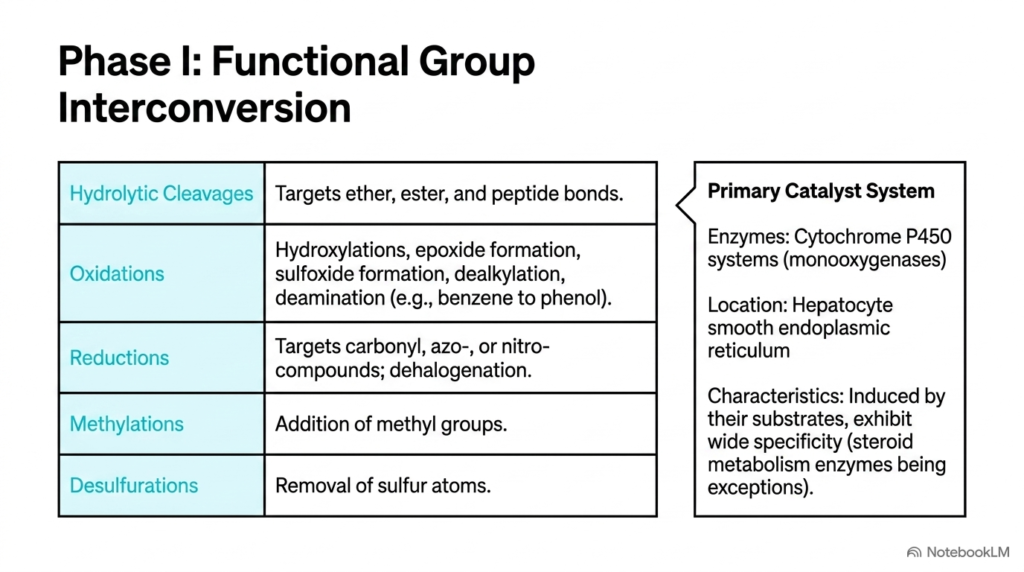
Phase one reactions serve as the primary modification stage for hydrophobic compounds entering hepatocytes. These interconversion processes rely heavily on the cytochrome P450 enzyme superfamily, a group of monooxygenases localized within the smooth endoplasmic reticulum. Cytochrome P450 enzymes exhibit remarkably broad substrate specificity, allowing a single enzyme type to modify hundreds of distinct structures. Substrates frequently induce enzyme synthesis, boosting processing capacity during sustained exposures. This broad catalytic range enables metabolic biotransformation to process diverse pharmaceuticals and environmental chemicals effectively.
Five distinct chemical reaction categories drive phase one interconversions. Hydrolytic cleavages split ether, ester, and peptide bonds using water molecules. Oxidation reactions perform hydroxylations, epoxide formations, sulfoxidations, dealkylations, and deaminations, such as converting benzene into phenol. Reduction reactions target carbonyl, azo, and nitro groups, as well as dehalogenation. Methylations add methyl groups to targeted heteroatoms, while desulfurations remove sulfur atoms from carbon skeletons. Each reaction type within metabolic biotransformation equips hydrophobic frameworks with functional groups required for subsequent processing.
Though these modifications slightly increase water solubility, their main goal is to expose reactive sites for phase two enzymes. By inserting hydroxyl, carboxyl, or amino handles, phase one enzymes prepare inert substrates for heavy conjugation. This enzymatic versatility underpins drug metabolism and toxicology. Through metabolic biotransformation, hepatocytes adapt to novel chemical threats without needing a unique enzyme for every individual compound.
Slide 5: Hydrolysis Mechanisms in Phase I Metabolic Biotransformation
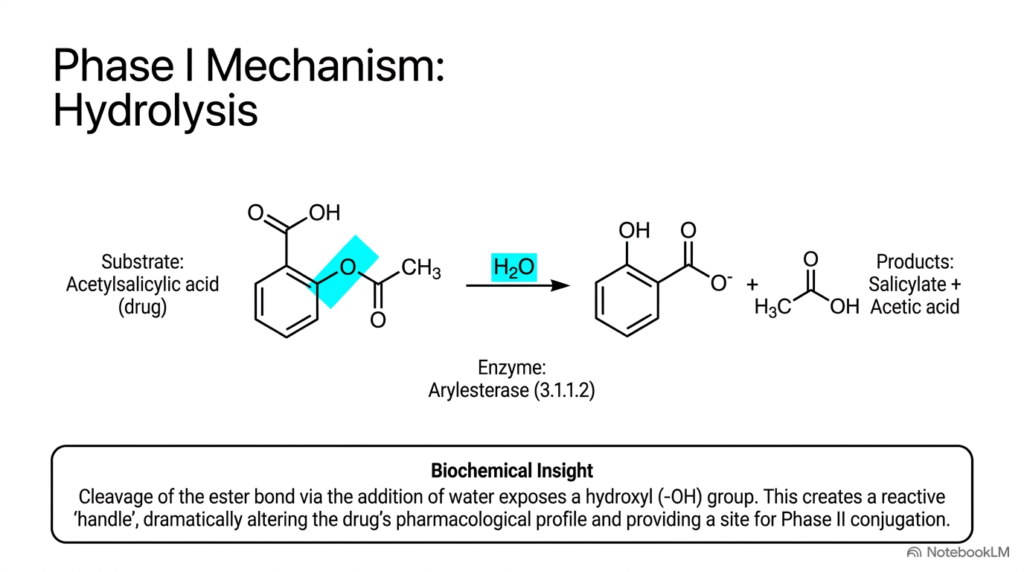
Hydrolysis is a vital Phase I interconversion mechanism in metabolic biotransformation that uses water to cleave chemical bonds within ester, amide, or ether frameworks. A classic biological illustration involves acetylsalicylic acid, commonly known as aspirin. When aspirin enters hepatocytes, the enzyme arylesterase catalyzes a nucleophilic attack using water molecules. This reaction splits the ester linkage connecting the acetyl group to the aromatic ring. The resulting cleavage yields two distinct products: salicylate and acetic acid, altering the drug’s activity profile.
Breaking the ester bond exposes a free hydroxyl group on salicylate’s benzene ring. This newly exposed hydroxyl group acts as a polar handle, increasing water solubility and creating a binding site for phase two transferases. Before this cleavage, the acetylated molecule acts as an active analgesic agent. Following ester hydrolysis during metabolic biotransformation, the pharmacological behavior shifts significantly. This demonstrates how phase one enzymes modulate drug potency while preparing substrates for clearance.
Understanding hydrolytic cleavage provides key insights into prodrug design and pharmacokinetics. Pharmaceutical scientists often attach ester groups to active drugs, creating inactive prodrugs that survive stomach acid before releasing active compounds inside hepatocytes. Through metabolic biotransformation, esterases convert these modified precursors into therapeutic drugs right at target tissues. This reaction also shows how simple water addition can radically alter chemical stability and cellular distribution, underscoring the efficiency of hepatic processing.
Slide 6: Methylation Pathways in Phase I Metabolic Biotransformation
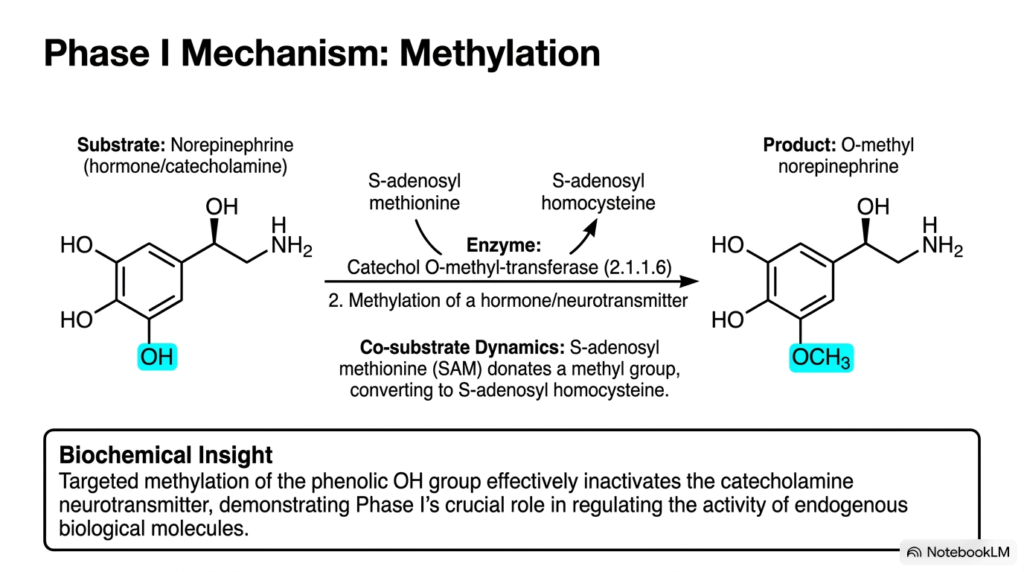
While many phase one reactions introduce polar handles to increase solubility, targeted methylation reactions serve a distinct physiological purpose. Methylation involves transferring a single carbon methyl group to specific hydroxyl, amino, or thiol functional groups on a substrate. A prime biological example involves norepinephrine, a major catecholamine hormone and neurotransmitter. Within hepatocytes, the enzyme catechol O-methyltransferase catalyzes the transfer of a methyl group onto the phenolic hydroxyl group of norepinephrine, yielding O-methyl norepinephrine. In this context of metabolic biotransformation, structural modification focuses on signal inactivation.
This reaction relies on a crucial co-substrate: S-adenosylmethionine. S-adenosyl methionine acts as an energetic methyl donor, transferring its methyl group to the substrate while converting into S-adenosyl homocysteine. Adding this methyl group masks the phenolic hydroxyl, blocking the molecule from binding adrenergic receptors. Through metabolic biotransformation, the liver rapidly turns off potent neurotransmitters once their signaling duties conclude. This enzyme system plays a critical role in controlling systemic catecholamine levels and preventing cardiovascular overstimulation.
This pathway highlights how phase one modifications regulate endogenous biological molecules alongside foreign toxins. By altering physical structure and charge distribution, methylation changes the pharmacological properties of hormones and signaling factors. Students should recognize that metabolic biotransformation is not limited to adding oxygen or splitting bonds; it encompasses fine chemical tuning to maintain homeostasis. Mastering these enzymatic dynamics explains how cells control signaling molecule lifespans with high precision.
Slide 7: Phase II Conjugation Types in Metabolic Biotransformation
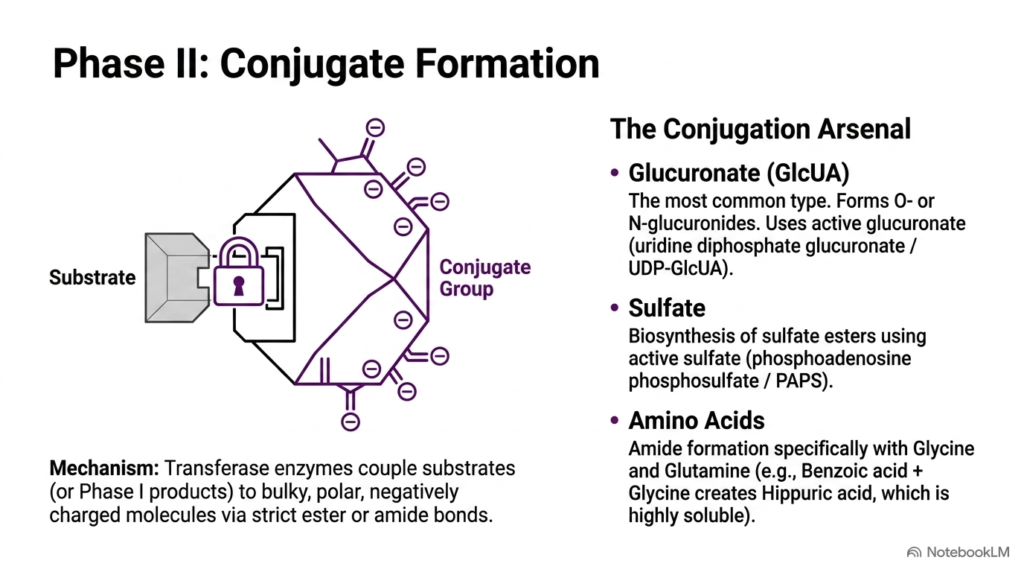
Phase two reactions represent the definitive detoxification step in cellular defense. During this stage, specialized transferase enzymes couple substrates or phase one products to bulky, highly polar, negatively charged endogenous molecules. These covalent attachments occur primarily through ester or amide bonds. By locking these large hydrophilic groups onto chemical handles, phase two reactions shield lipophilic regions and dramatically boost water solubility. Within metabolic biotransformation, phase two conjugation transforms reactive or biological compounds into strictly inactive, excretable waste products.
The liver utilizes three primary conjugation strategies within its metabolic arsenal. Glucuronidation is the most common pathway, forming glucuronides by transferring active glucuronate from uridine diphosphate glucuronate onto target substrates. Sulfation utilizes active sulfate from 3′-phosphoadenosine-5′-phosphosulfate to form charged sulfate esters on hydroxyl groups. Amino acid conjugation forms amide bonds specifically using glycine or glutamine. For instance, coupling benzoic acid with glycine produces hippuric acid, a highly water-soluble compound excreted by renal tubules. Each metabolic biotransformation pathway relies on specific activated co-substrates.
These conjugation systems require significant cellular energy to synthesize high-energy co-substrates like UDP-glucuronate and PAPS. However, this energetic investment yields substantial protection against toxic stress. The resulting bulky, charged conjugates cannot cross lipid bilayers, effectively trapping them in aqueous blood or bile for excretion. Through metabolic biotransformation, transferases convert potentially hazardous chemicals into benign molecules, safeguarding cellular structures from oxidative damage and organ failure.
Slide 8: Glucuronidation Mechanisms in Phase II Metabolic Biotransformation
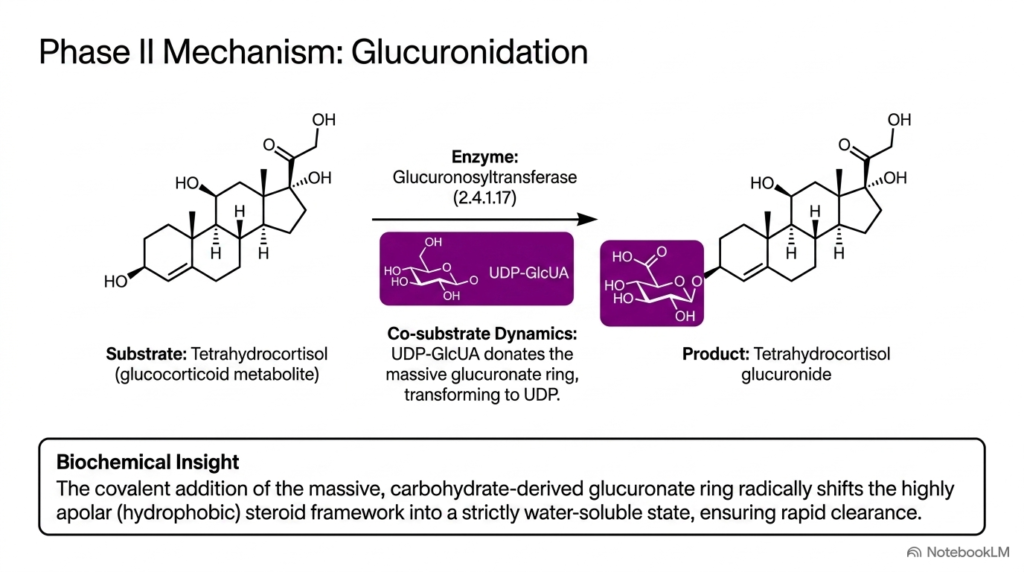
Glucuronidation is the most dominant Phase II conjugation reaction in mammalian hepatocytes. Glucuronosyltransferase enzymes catalyze this reaction by transferring a glucuronate sugar ring from uridine diphosphate glucuronate to an acceptor substrate. An important physiological substrate is tetrahydrocortisol, a breakdown product of glucocorticoid hormones. Tetrahydrocortisol possesses a rigid, nonpolar steroid core that dissolves poorly in water. As part of metabolic biotransformation, hepatocytes attach a glucuronate ring to this steroid framework to facilitate rapid clearance.
During the reaction, UDP-glucuronate donates its massive carbohydrate moiety to a hydroxyl group on tetrahydrocortisol, releasing free UDP. Adding this large sugar ring introduces multiple polar hydroxyl groups and a carboxylic acid group that carries a negative charge at physiological pH. In metabolic biotransformation, this structural modification shifts the hydrophobic steroid framework into a highly water-soluble state. The resulting tetrahydrocortisol glucuronide is strictly locked in an inactive conformation, preventing further binding to glucocorticoid receptors.
Because glucuronidation exhibits high capacity and broad substrate specificity, it serves as a primary pathway for clearing steroids, bilirubin, and many drugs. Once conjugated, membrane transporters recognize these bulky sugar complexes and pump them into bile or blood. Through metabolic biotransformation, hepatocytes clear potent internal steroids promptly to maintain hormonal balance. Understanding glucuronidation gives students a foundational model for how cells add bulky hydrophilic groups to eliminate hydrophobic compounds.
Slide 9: Inorganic Toxin Clearance in Metabolic Biotransformation
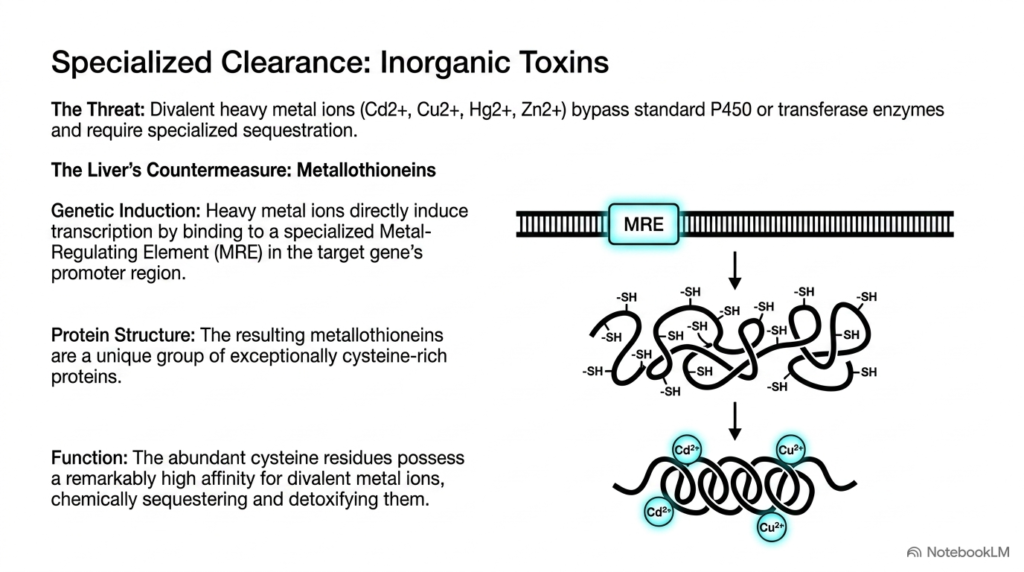
While phase one and phase two enzymes excel at modifying organic molecules, divalent heavy metal ions pose a unique chemical challenge. Metals like cadmium, copper, mercury, and zinc lack carbon skeletons or standard functional handles, allowing them to bypass traditional cytochrome P450 and transferase enzymes. Left unmanaged, these toxic ions bind essential proteins and induce severe oxidative stress. Hepatocytes counter this threat through a specialized metabolic biotransformation mechanism that uses metal-binding proteins called metallothioneins to sequester inorganic pollutants.
The cell manages heavy metal exposure through transcriptional gene induction. When divalent metal ions enter hepatocytes, they bind to metal-regulating elements located in the promoter regions of metallothionein genes. This binding event triggers rapid mRNA transcription and protein synthesis. Metallothioneins possess a unique structure rich in cysteine residues, which contain sulfur-bearing thiol groups. In metabolic biotransformation, these abundant thiol groups form high-affinity coordination bonds with divalent metals, tightly trapping ions within a protective protein scaffold.
Chemical sequestration by metallothioneins prevents heavy metal ions from interacting with vulnerable organelles and enzymes. Instead of converting or excreting these metals through traditional routes, the liver safely stores them or facilitates gradual biliary excretion. Through metabolic biotransformation, metallothioneins maintain intracellular metal homeostasis and shield tissues from heavy metal toxicity. This specialized pathway highlights the liver’s ability to adapt its metabolic machinery to handle inorganic threats alongside organic compounds.
Slide 10: Integrated Synthesis of Metabolic Biotransformation
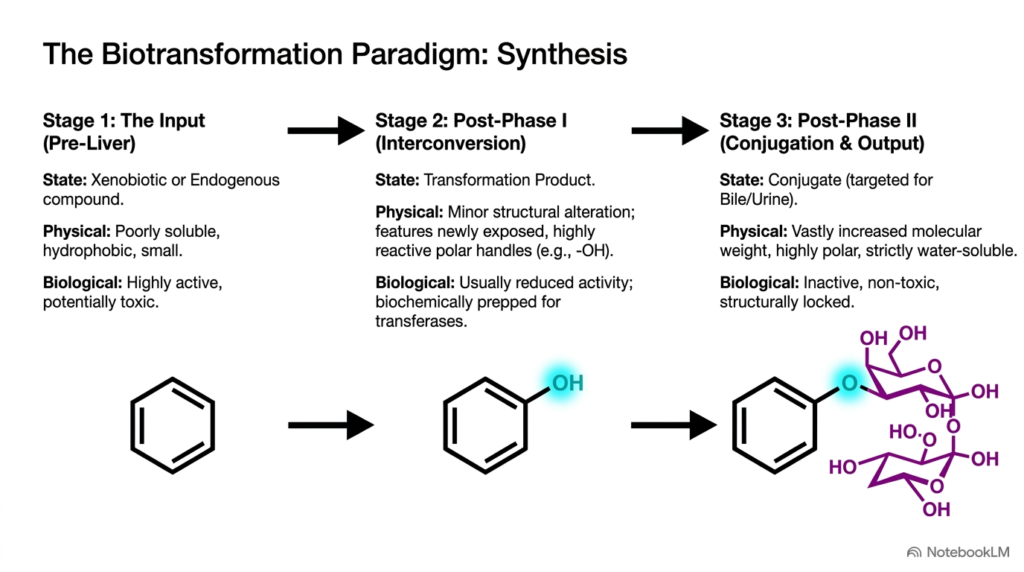
Synthesizing the overall paradigm reveals how hepatocytes integrate separate enzymatic stages into a unified chemical defense system. Stage one begins when lipophilic foreign compounds or endogenous hormones enter the liver. In this initial pre-liver state, molecules are small, hydrophobic, and poorly soluble in water. They possess high biological activity and potential toxicity because they cross lipid membranes easily. Through metabolic biotransformation, the liver initiates a progressive sequence of chemical modifications that systematically alters physical properties and biological activity.
Stage two represents the post-phase-one interconversion product. Enzymes like cytochrome P450s alter the substrate framework, exposing reactive polar handles such as hydroxyl groups. At this intermediate point, the molecule exhibits minor structural changes, slightly increased polarity, and reduced biological activity. This interconversion prepares the substrate for transferases. In metabolic biotransformation, this crucial intermediate step creates the exact chemical handle required for phase two conjugation, bridging initial modifications with final clearance steps.
Stage three completes the pathway through post-phase-two conjugation. Transferase enzymes attach massive polar groups like glucuronate, dramatically increasing molecular weight and water solubility. The resulting conjugate is biologically inactive, non-toxic, and structurally locked against membrane passage. The body rapidly eliminates these water-soluble products via bile or urine. Through metabolic biotransformation, hepatocytes convert potentially dangerous compounds into excretable waste. This integrated pathway showcases the chemical elegance of liver biochemistry in preserving cellular health.
Please read our Content Disclaimer Statement.
Check out our social media channels: