101. Lipoproteins: Biochemical Structures and Lipid Transport
Imagine trying to mix oil and water; the two stubbornly refuse to blend. Blood plasma faces the exact same physical problem when transporting essential fats. This slide deck explores the structural biochemistry of lipid transport, detailing how specialized complexes solve this fundamental biological challenge. By breaking down molecular architecture, metabolic pathways, and targeted cellular interactions, this comprehensive guide provides medical and university students with a clear understanding of human lipid metabolism.
Slide 1: Introduction to Lipoproteins: The Molecular Vehicles of Metabolism
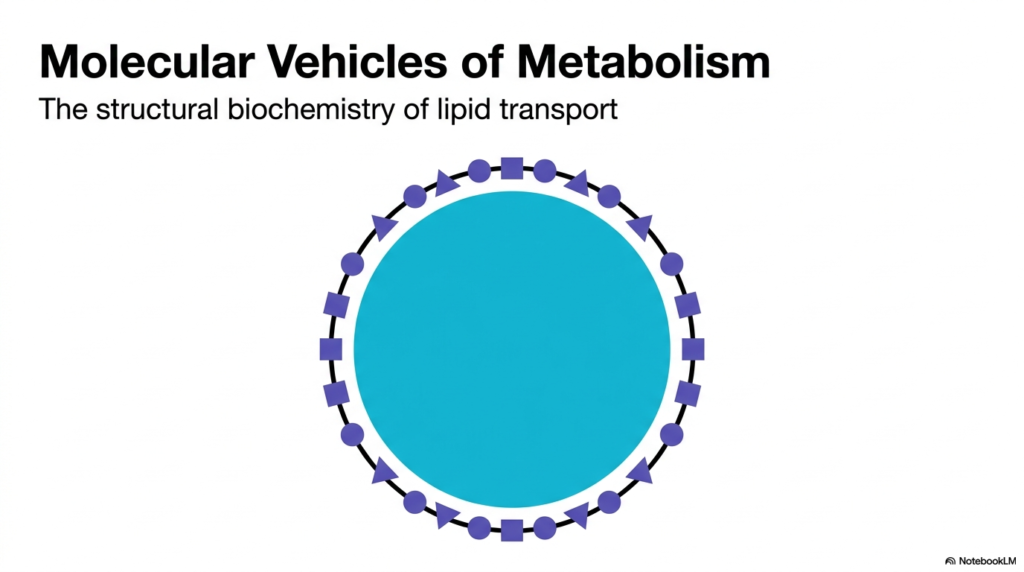
To understand human metabolism, students must first grasp how the body moves essential energy sources and cellular building blocks through an inherently aqueous environment. The circulatory system functions as a massive, water-based highway, yet many of the most crucial metabolic molecules, such as fats and cholesterol, are highly hydrophobic. This fundamental incompatibility requires a sophisticated biological and structural solution. The human body cannot simply dump raw, unprocessed fats into the bloodstream and expect them to reach specific tissues safely. Instead, the system relies on highly specialized molecular vehicles known as lipoproteins to facilitate this complex and essential journey across the human body.
These remarkable structures represent a masterpiece of evolutionary biochemical engineering. By combining specific proteins and various lipid classes into a single, cohesive macromolecule, the body creates a perfectly stable transport mechanism. Lipoproteins effectively shield water-repelling molecules from the surrounding blood plasma, allowing them to circulate freely without aggregating or causing catastrophic vascular damage. This opening slide introduces the foundational concept of these essential lipid transporters, depicting a simplified spherical model that elegantly highlights their protective outer shell and internal cargo capacity designed for safe plasma navigation.
For medical and college biochemistry students, mastering the structural biochemistry of lipoproteins is an absolutely critical learning objective. These spherical complexes are not merely passive cargo ships floating through the plasma; they are incredibly dynamic, interactive particles that directly dictate how metabolic energy is stored and distributed. Furthermore, lipoproteins control how cellular membranes are constructed across different tissues and provide the necessary precursors for synthesizing vital steroid hormones.
By grasping this introductory concept, students build the necessary framework to understand complex lipid metabolism. The study of lipoproteins ultimately bridges the gap between basic structural biochemistry and applied clinical pathology, explaining how the body maintains intricate lipid homeostasis over a human lifespan. Understanding this biological foundation is step one for any future medical professional.
Slide 2: Lipoproteins and the Lipid Transport Paradox
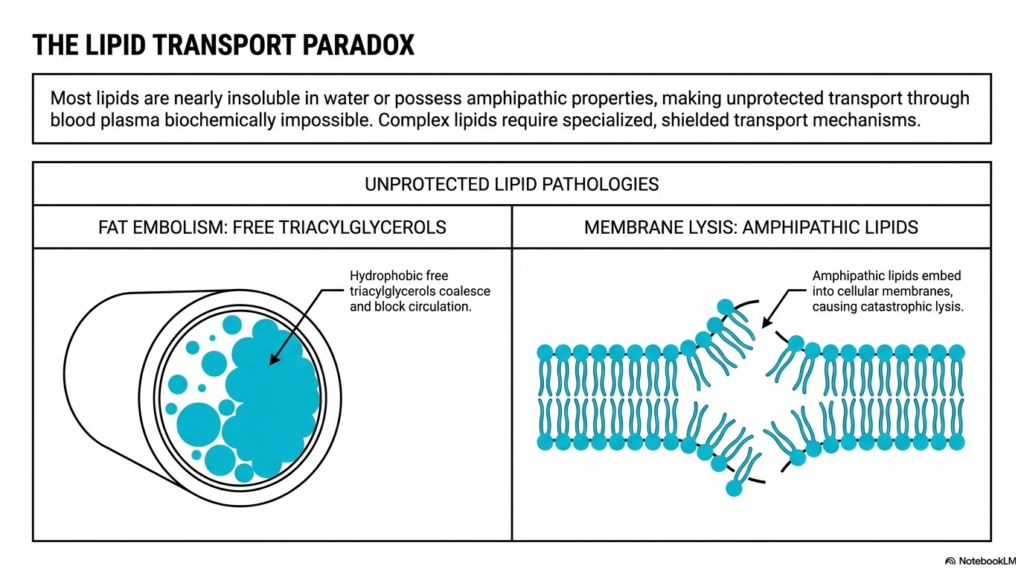
The transport of fats through the human bloodstream presents a fascinating biological conundrum often referred to as the lipid transport paradox. Most dietary and synthesized lipids are nearly insoluble in water or possess strong amphipathic properties. Because blood plasma is an essentially aqueous environment, unprotected transport of these molecules is biochemically impossible and physically dangerous. If the body attempted to move these molecules without specialized carriers, the physiological consequences would be immediate and severe. This biological reality is precisely why lipoproteins are indispensable for human survival.
This slide illustrates two primary pathologies that would occur without protected transport mechanisms. First, free triacylglycerols, being highly hydrophobic, would naturally coalesce in the blood. Like oil droplets clumping together in a glass of water, these free fats would form massive lipid droplets. This unchecked aggregation leads to fat embolisms, where the coalesced triacylglycerols physically block microcirculation, potentially causing fatal ischemia in critical organs. By packaging these fats securely within an apolar core, lipoproteins prevent this dangerous aggregation entirely.
The second major pathology involves amphipathic lipids, such as free fatty acids and certain phospholipids. These molecules have both water-loving and water-repelling regions, making them act like powerful biological detergents. If left unprotected in the plasma, these amphipathic lipids would rapidly embed themselves into the phospholipid bilayers of red blood cells and endothelial tissues. This unregulated insertion would disrupt membrane integrity, leading to catastrophic cellular lysis and widespread tissue damage throughout the vascular system.
By isolating these dangerous amphipathic molecules within their carefully structured outer shells, lipoproteins cleverly neutralize this destructive detergent effect. Medical students must recognize that the evolution of these transport complexes was strictly driven by the urgent need to prevent these exact toxicities. The biochemical architecture of lipoproteins is a direct biological response to the lipid transport paradox, keeping the vascular system clear and safe.
Slide 3: Biochemical Architecture of Lipoproteins
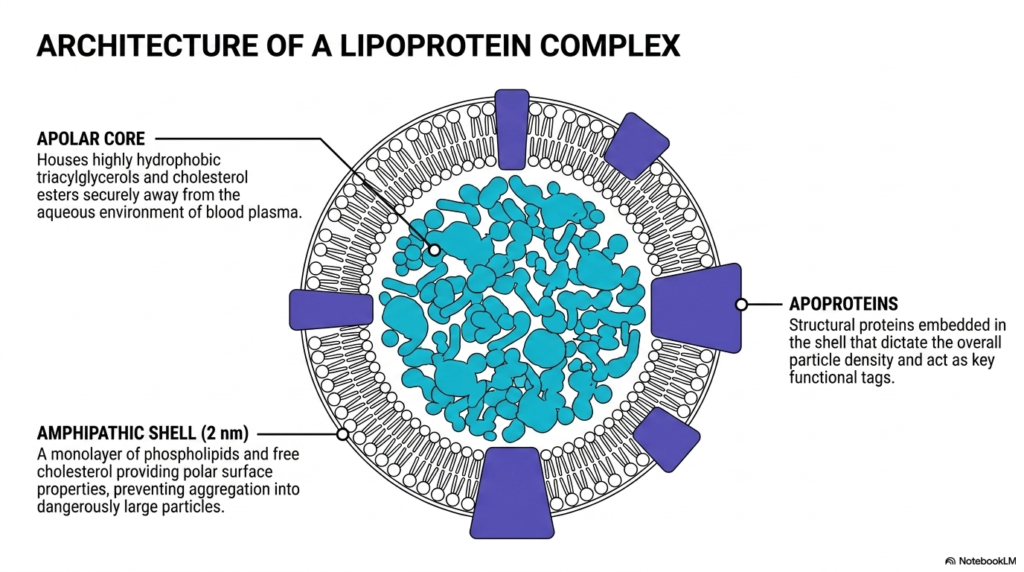
To solve the lipid transport paradox, nature designed a highly specific molecular architecture. This slide breaks down the cross-sectional anatomy of standard lipoproteins, revealing how their structural components achieve remarkably secure lipid transport. Every complex is essentially a biochemical sphere divided into two distinct functional regions: an apolar core and a highly organized amphipathic shell. The precise arrangement of these components allows lipoproteins to interface seamlessly with the aqueous blood plasma while safely hiding massive amounts of hydrophobic cargo inside their centers.
The apolar core is the functional heart of the particle, acting as a protected storage vault. It houses highly hydrophobic molecules, primarily dense triacylglycerols and cholesterol esters. Notably, the body utilizes a specialized esterification process to attach a fatty acid directly to cholesterol, rendering the molecule completely hydrophobic and forcing it deep into this central core. By burying these molecules away from the plasma, lipoproteins ensure that potentially dangerous lipid coalescence never occurs in the open bloodstream.
Surrounding this core is the amphipathic shell, which measures approximately two nanometers thick. This structural shell is composed of a specialized monolayer of phospholipids and unesterified free cholesterol. The polar head groups of these surface molecules face outward toward the aqueous plasma, providing the essential surface solubility required for circulation. This ingenious biological boundary acts as a protective buffer, preventing the circulating particles from aggregating into dangerously large masses that could easily impede delicate vascular circulation.
Finally, embedded within this outer shell are the crucial apoproteins. These structural proteins are arguably the most important feature of lipoproteins, as they dictate the overall physical density of the particle and serve as highly specific functional tags. Without these integrated surface proteins, the lipid spheres would be completely blind, inert droplets floating aimlessly through the vasculature. Their inclusion successfully transforms a simple lipid micelle into a highly sophisticated, targeted biological delivery vehicle.
Slide 4: Lipoproteins and Apoproteins as Biochemical Keys
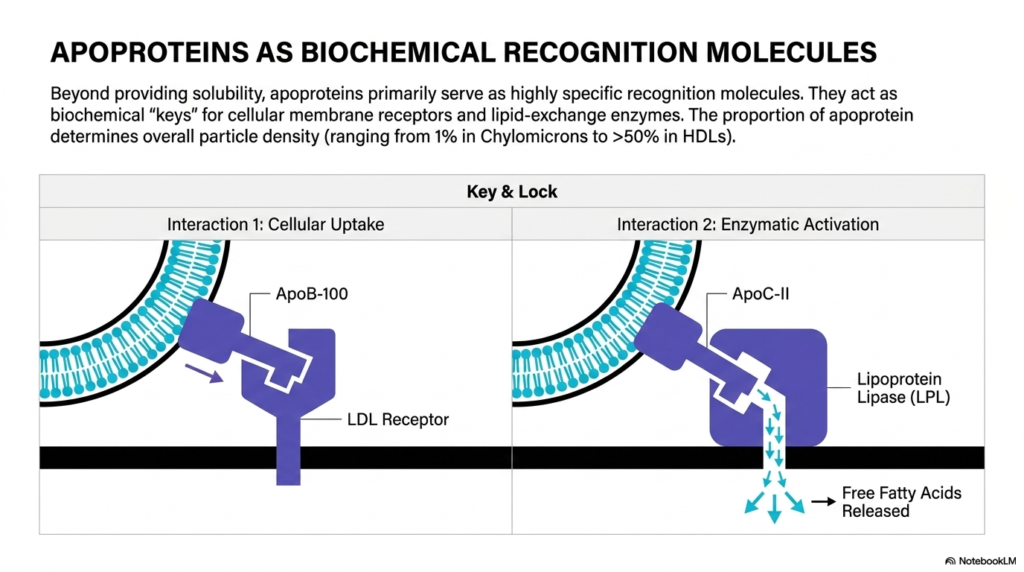
While the lipid shell provides essential solubility, the embedded apoproteins dictate the particle’s actual metabolic fate. Beyond simply holding the spherical structure together, these surface molecules serve as highly specific biochemical recognition markers. They function precisely like intricate molecular keys designed to unlock cellular membrane receptors and activate crucial lipid-exchange enzymes. The specific combination of apoproteins on the surface determines exactly how and where lipoproteins will deliver their precious lipid cargo throughout the human body.
This slide highlights two fundamental key-and-lock interactions that drive overall lipid metabolism. The first interaction demonstrates targeted cellular uptake, featuring the ApoB-100 protein acting as the biological key. Tissues that require a fresh supply of cholesterol express a highly specialized LDL receptor on their outer cell membranes. This cellular receptor is uniquely configured to recognize and bind exclusively to the ApoB-100 protein located on the surface of circulating lipoproteins. Once this perfect physical match occurs, the cell can safely internalize the entire particle.
The second critical interaction showcases enzymatic activation, featuring the ApoC-II protein. As lipoproteins circulate through narrow capillary beds, they encounter an enzyme called Lipoprotein Lipase, which is firmly tethered to the endothelial walls. However, this specific enzyme remains completely dormant until it physically binds with the ApoC-II protein. This apoprotein acts as a direct allosteric activator, turning on the lipase enzyme. Once activated, the enzyme aggressively hydrolyzes the internal triacylglycerols, releasing free fatty acids for surrounding tissues to use as energy.
The total proportion of these structural proteins also directly determines the overall particle density, which can range from barely one percent in certain complexes to over fifty percent in others. Understanding these specific apoprotein interactions is paramount for medical students, as genetic mutations in these proteins frequently lead to severe metabolic and cardiovascular diseases. Without these precise molecular keys, the transport system would completely fail.
Slide 5: The Spectrum of Lipoproteins in Blood Plasma
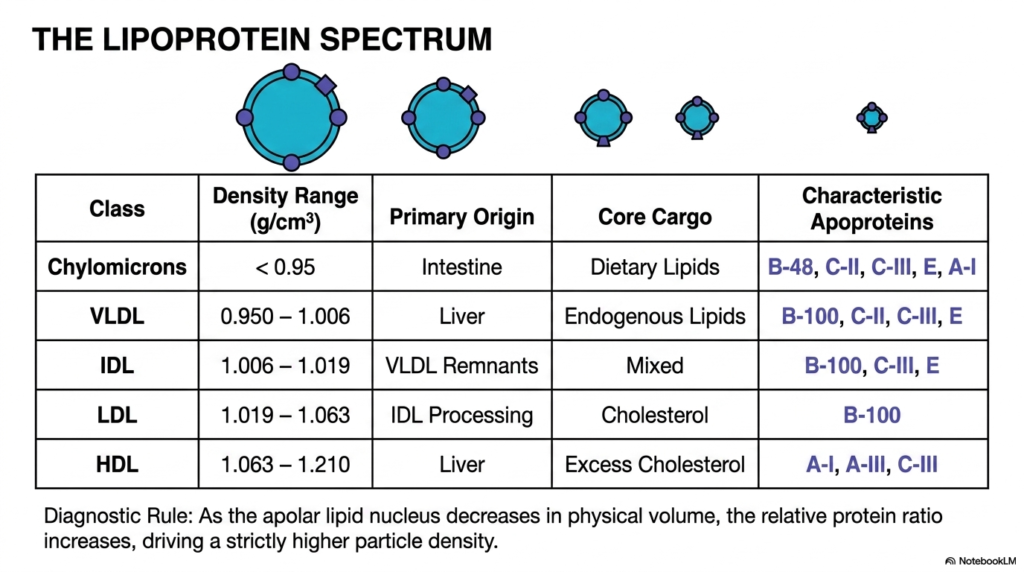
The lipid transport system is not a simple, one-size-fits-all mechanism; rather, it features a diverse family of biological complexes categorized by their physical properties. This slide details the comprehensive spectrum of lipoproteins, carefully classifying them based on their relative densities, primary tissue origins, core lipid cargo, and characteristic apoprotein signatures. Because lipids are significantly lighter than water and proteins are physically heavier, the structural ratio of lipid to protein in any given particle strictly determines its overall biological density.
At the absolute lowest end of the density spectrum are the chylomicrons. These massive biological particles originate exclusively in the intestine and are primarily responsible for transporting dietary lipids, packing an enormous volume of acquired triacylglycerols. Next in line are the Very-Low-Density Lipoproteins, or VLDL, which are synthesized directly by the liver to transport endogenously created lipids to peripheral tissues. As VLDL particles circulate and systematically lose their lipid cargo to hungry tissues, they physically shrink and temporarily become Intermediate-Density Lipoproteins, or IDL.
Further lipid extraction eventually converts these intermediate particles into Low-Density Lipoproteins, commonly known in medicine as LDL. These smaller, substantially denser particles are primarily composed of cholesterol and carry the crucial ApoB-100 protein for targeted cellular delivery. Finally, High-Density Lipoproteins, or HDL, represent the densest functional class. Originating primarily from the liver, HDL particles contain the highest ratio of protein to lipid and play a vital protective role in scavenging excess cholesterol from various peripheral tissues.
A crucial diagnostic rule for medical students to remember is that across all lipoproteins, as the apolar lipid nucleus decreases in physical volume, the relative protein ratio inherently increases. This mathematical shift directly drives a strictly higher particle density across the entire spectrum. Recognizing these distinct classes of lipoproteins allows clinical professionals to interpret blood lipid panels more precisely and diagnose metabolic syndromes.
Slide 6: Exogenous Pathway of Lipoproteins and Dietary Lipids
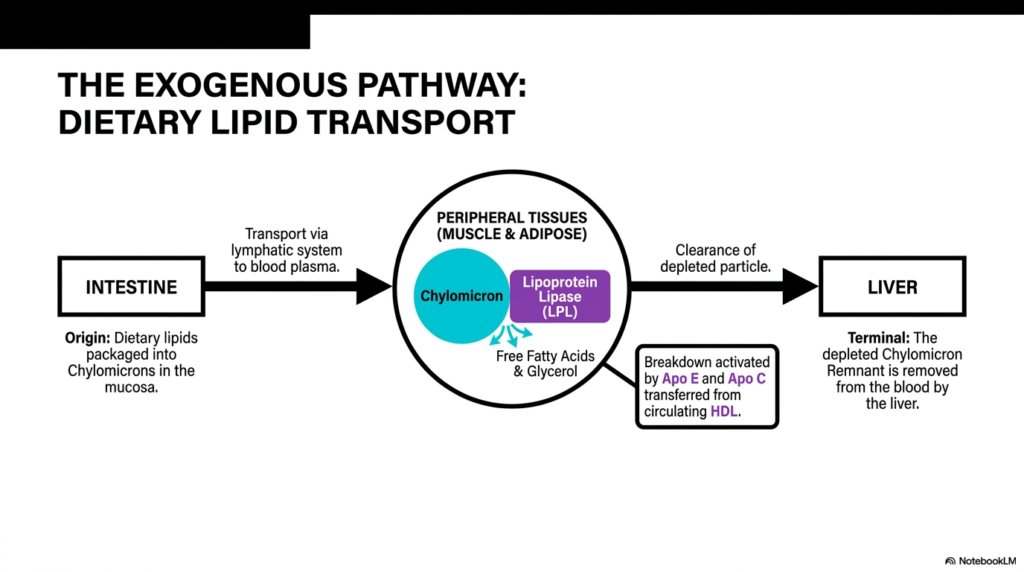
When humans consume a fat-rich meal, the body must safely transport the newly ingested lipids from the digestive system to the various tissues that desperately need energy. This complex physiological journey is governed by the exogenous pathway, a specialized biological circuit dedicated entirely to dietary lipid transport. This slide outlines the macro-level flow of this crucial pathway, illustrating how intestinal cells carefully package dietary fats into specific lipoproteins to safely cross the dangerous aqueous barrier of the bloodstream.
The process begins deep in the intestinal mucosa, where freshly absorbed dietary lipids are systematically packaged into massive lipoproteins known as chylomicrons. Because these newly formed lipoproteins are far too large to enter the tiny blood capillaries directly, they are first secreted into the more accommodating lymphatic system. They travel safely through the lymph fluid until they eventually drain directly into the major blood plasma circulation. Once in the bloodstream, these giant particles begin their crucial interaction with peripheral tissues.
At these peripheral sites, such as skeletal muscle and adipose tissue, the chylomicrons encounter Lipoprotein Lipase, the key enzyme responsible for cargo extraction. Interestingly, this breakdown is specifically activated by Apo E and Apo C proteins, which are not native to the original intestinal particle. Instead, these essential apoproteins are generously transferred to the circulating chylomicron from local HDL particles in the blood. This vital transfer activates the lipase, allowing it to rapidly extract free fatty acids to fuel cellular respiration.
After the peripheral tissues have aggressively stripped the particle of its primary triacylglycerol cargo, a severely depleted chylomicron remnant is left behind floating in the circulation. The pathway reaches its terminal stage when the liver recognizes this specific remnant particle and completely removes it from the bloodstream for final processing. Understanding how lipoproteins gracefully navigate this exogenous pathway is absolutely critical for students studying human digestion and postprandial energy distribution.
Slide 7: Endogenous Pathway of Lipoproteins and Hepatic Distribution
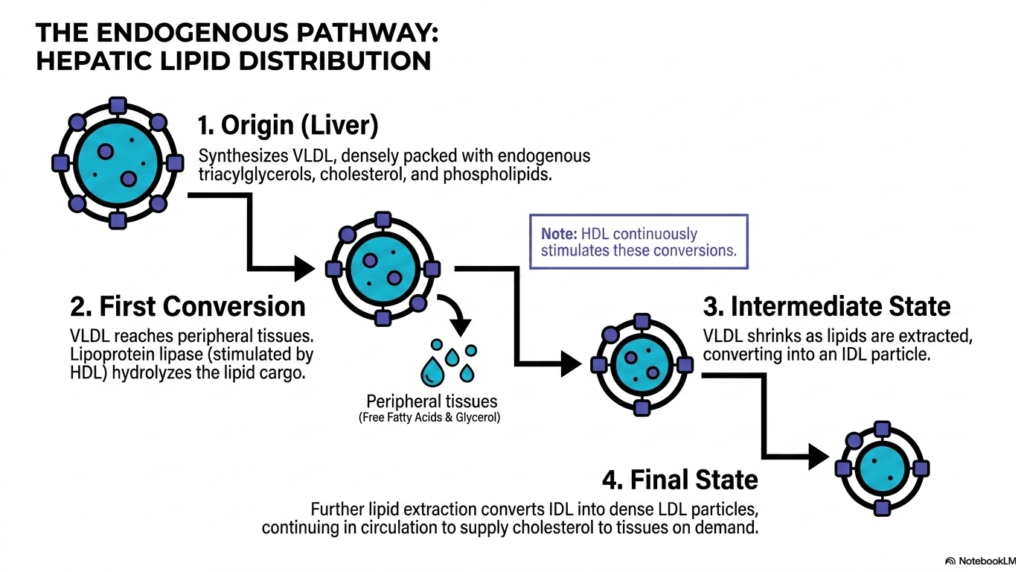
While the exogenous pathway adeptly handles incoming dietary fats, the body also requires a robust biological system for distributing lipids synthesized internally, especially during periods of fasting. This vital process is skillfully managed by the endogenous pathway, a specialized metabolic circuit centered entirely around hepatic lipid distribution. This slide traces the sequential transformation of liver-derived lipoproteins as they continually circulate through the body, constantly adjusting their composition to meet the shifting metabolic demands of peripheral tissues.
The endogenous pathway originates directly in the liver, which acts as the metabolic hub for synthesizing lipoproteins. The liver thoughtfully creates a particle called VLDL, heavily packing it with endogenous triacylglycerols, newly synthesized cholesterol, and supporting phospholipids. Once secreted into the bloodstream, this specialized VLDL particle heads directly toward peripheral tissues. Just like in the exogenous pathway, the circulating particle predictably interacts with peripheral Lipoprotein Lipase. This crucial enzymatic reaction is continuously stimulated by circulating HDL particles.
As the peripheral tissues aggressively extract these needed lipids for metabolic energy, the original VLDL particle undergoes a dramatic physical transformation. It rapidly shrinks in total volume and distinctly increases in density, dynamically converting into a transient intermediate state known as an IDL particle. This specific intermediate state does not last very long in the regular circulation. Further lipid extraction and careful structural remodeling by hepatic enzymes efficiently convert the IDL into a highly dense LDL particle.
This final biological state, the LDL particle, continues to circulate freely in the blood plasma with one primary mission: to continuously supply pure cholesterol to extrahepatic tissues strictly on demand. By carefully studying this sequential cascade, biochemistry students can clearly see how lipoproteins physically evolve in real-time. The endogenous pathway perfectly illustrates the incredibly dynamic, highly responsive nature of human lipid metabolism and hepatic regulation.
Slide 8: Lipoproteins and Receptor-Mediated Endocytosis
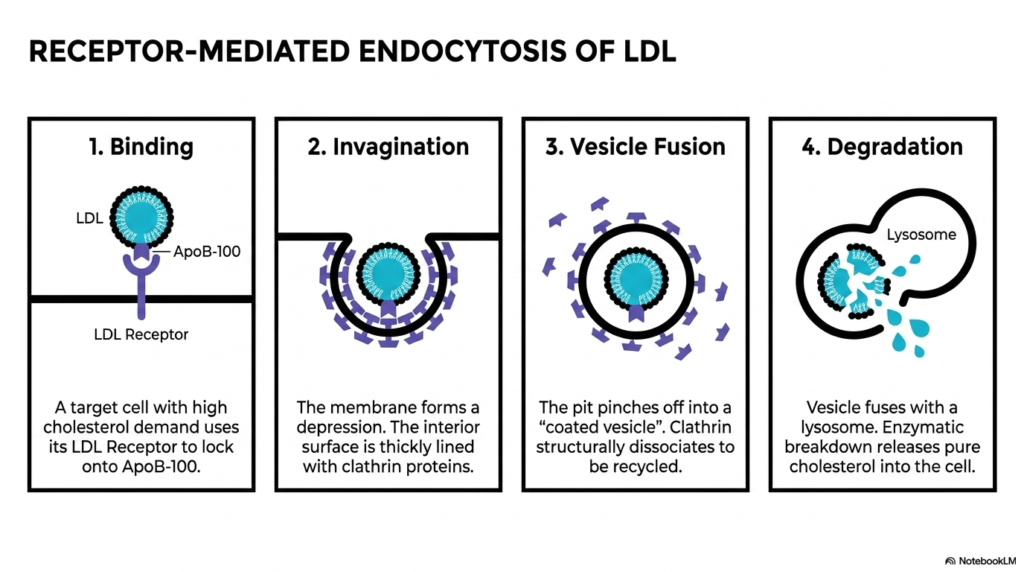
Once dense LDL particles are successfully formed in the bloodstream, they must somehow deliver their heavily protected cholesterol payload directly into the interior of target cells. Because the required cholesterol is safely buried deep within the apolar core, it cannot simply diffuse across the solid cellular membrane. Instead, tissues intelligently utilize a highly orchestrated, four-step mechanical process known as receptor-mediated endocytosis. This slide breaks down the specific cellular mechanics that allow target tissues to safely capture and completely consume intact lipoproteins from the surrounding blood plasma.
The delivery process begins with precise molecular binding. A target cell experiencing high cholesterol demand will actively express localized LDL receptors on its outer plasma membrane. These highly specific receptors physically reach out and lock firmly onto the ApoB-100 protein embedded in the shell of lipoproteins. Once this precise biochemical lock is successfully engaged, the cell membrane begins to physically change shape. This second stage, known as invagination, involves the outer membrane forming a distinct, localized inward depression.
During this invagination phase, the interior cellular surface of the growing depression is heavily lined with structural clathrin proteins, which forcefully pull the membrane inward. In the third stage, vesicle fusion, the invaginated pit dramatically pinches off from the main cellular membrane, creating a fully enclosed coated vesicle trapped safely inside the cell cytoplasm. Immediately after this separation, the clathrin network structurally dissociates from the vesicle so the cellular machinery can rapidly recycle the proteins for future use.
The final crucial stage involves total cellular degradation. The newly formed, uncoated vesicle actively fuses with a specialized biological organelle called a lysosome. The lysosome’s harsh enzymatic environment systematically breaks down the entire structure of the captured lipoproteins. This highly controlled molecular destruction ultimately releases pure, usable cholesterol directly into the target cell, successfully completing the localized delivery process without ever exposing the broader tissue to dangerous lipid toxicity.
Slide 9: Lipoproteins, Reverse Transport, and the LCAT Reaction
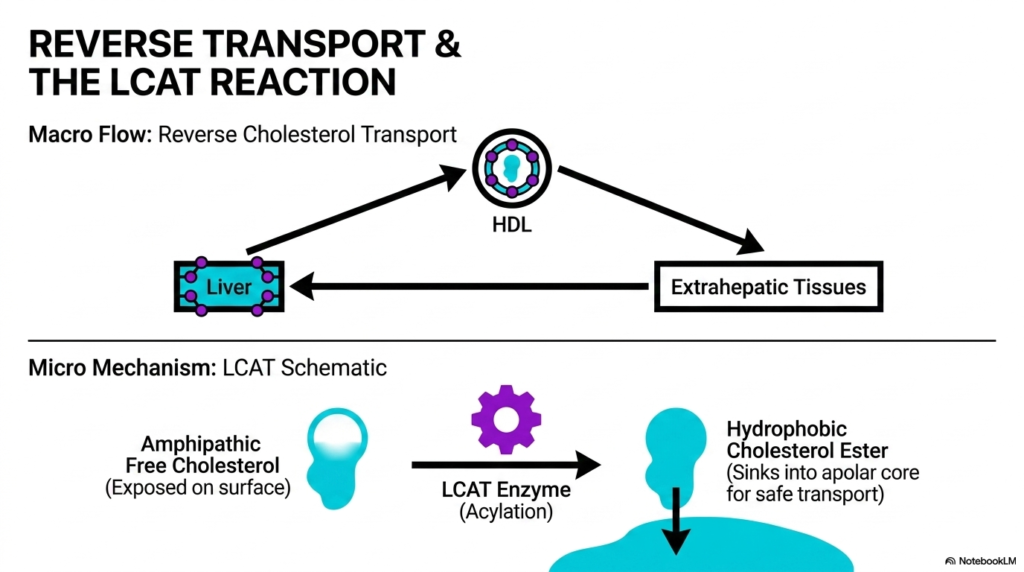
While most metabolic pathways focus strictly on delivering lipids to extrahepatic tissues, the human body also requires a mechanism to actively remove excess cholesterol and safely return it to the liver for excretion. This vital biological clearance process is known clinically as reverse cholesterol transport. Without this continuous scavenging system, cholesterol would relentlessly accumulate in peripheral cells and arterial walls, leading to rapid cellular toxicity and severe cardiovascular disease. This slide vividly explains how specific high-density lipoproteins act as the body’s primary molecular scavengers.
On a macro-flow level, reverse cholesterol transport represents a massive, continuous circulatory loop. High-density particles actively traverse the bloodstream, making direct physical contact with various extrahepatic tissues along the way. They essentially act like molecular vacuum systems, carefully drawing out dangerous accumulations of free cholesterol from the outer cellular membranes of these distant tissues. Once fully loaded with this scavenged lipid cargo, these specialized lipoproteins navigate back through the venous system to deliver the excess cholesterol directly to the liver.
However, the specific micro-mechanism that enables this continuous scavenging is driven by a brilliant biochemical reaction involving the LCAT enzyme. When a high-density particle pulls amphipathic free cholesterol from a cell membrane, the cholesterol sits precariously on the particle’s aqueous surface. To prevent this newly acquired cholesterol from slipping back out into the plasma, the LCAT enzyme aggressively acylates the molecule. By forcibly attaching a specific fatty acid chain, LCAT transforms the water-loving free cholesterol into a highly hydrophobic cholesterol ester.
This molecular transformation is a profoundly important biochemical trick. Because the newly formed cholesterol ester is incredibly hydrophobic, it immediately sinks deep into the apolar core of the particle for safe, incredibly stable transport. Medical students must recognize that by constantly trapping cholesterol in this internal core, lipoproteins cleverly maintain a favorable concentration gradient that allows extrahepatic tissues to continuously dump their excess lipids into the bloodstream for safe clearance.
Slide 10: Lipoproteins and the Interdependent Ecosystem
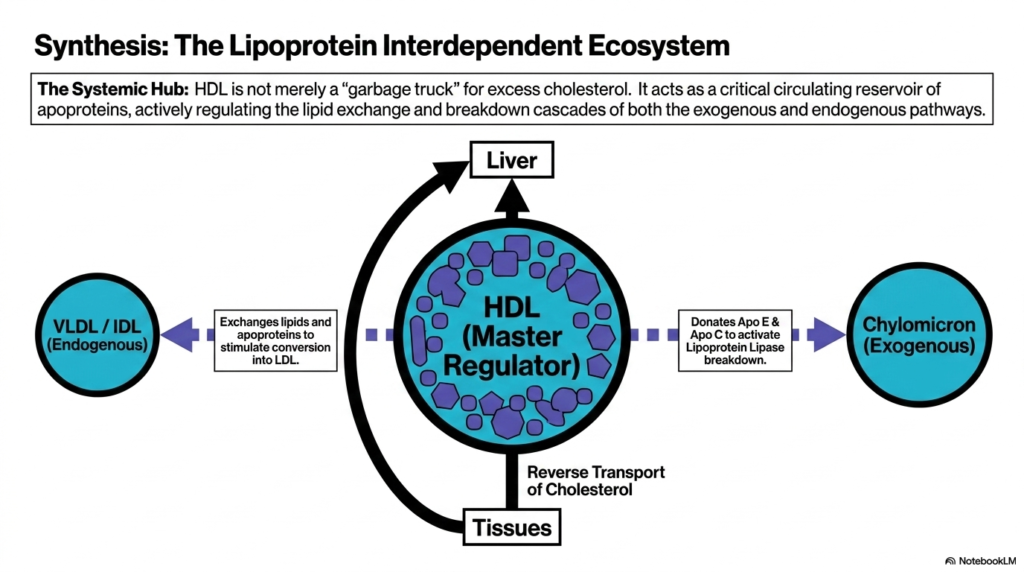
Throughout the study of lipoproteins, it is tempting to view each metabolic pathway as an entirely isolated biological event. However, human biochemistry is incredibly integrated. This final slide synthesizes the broader concepts of systemic lipid transport, clearly illustrating how all these distinct mechanisms and structural particles form a highly interdependent ecosystem. Rather than functioning independently in a vacuum, the different classes of lipoproteins constantly interact, effortlessly exchanging structural proteins and lipid cargo to gracefully maintain total systemic equilibrium across both the exogenous and endogenous pathways.
At the very center of this massive biological web sits the high-density particle, acting dependably as the ultimate systemic hub. It is crucial for medical students to realize that this high-density particle is not merely a cellular garbage truck meant only for reverse cholesterol transport. Instead, it functions beautifully as the master regulator of the entire lipid ecosystem. It serves as a massive circulating reservoir of vital apoproteins, actively dictating the metabolic pace and biochemical efficiency of all the other circulating pathways in the blood plasma.
For example, this master regulator continuously donates essential Apo E and Apo C proteins to newly synthesized intestinal chylomicrons, directly activating their enzymatic breakdown at various peripheral tissues. This intricate protein swapping ensures that peripheral tissues receive energy precisely when required. Simultaneously, it actively exchanges lipids and structural apoproteins with hepatic VLDL and IDL particles to dynamically stimulate their eventual conversion into dense LDL. Without this continuous, seamless biological cross-talk, the entire lipid delivery network would rapidly grind to a devastating halt.
Understanding this remarkably unified biological ecosystem is the ultimate goal for students of human biochemistry. By recognizing precisely how these distinct lipoproteins rely on one another to function efficiently, future clinicians can better appreciate the complex cascading effects of metabolic diseases. Pharmacological interventions frequently target these exact exchange pathways to safely correct dangerous lipid imbalances in clinical settings. A physiological defect in one specific particle or receptor will inevitably ripple throughout the entire interdependent system, profoundly altering the patient’s overall cardiovascular health.
Please read our Content Disclaimer Statement.
Check out our social media channels: