97. The Biochemistry of Digestive Processes
Every time a meal is consumed, the human body performs a miraculous feat of chemical engineering, breaking down complex macromolecules into usable cellular fuel. This article explores the precise molecular mechanics that make life possible. The core purpose of this slide deck is to provide college and medical students with a comprehensive, step-by-step understanding of the biochemical strategies that drive gastrointestinal food breakdown. It decodes the complex cellular machinery, ranging from extreme pH gradients to targeted enzymatic cascades.
Slide 1: The Foundation of Digestive Processes: Cellular Mechanisms of Food Breakdown
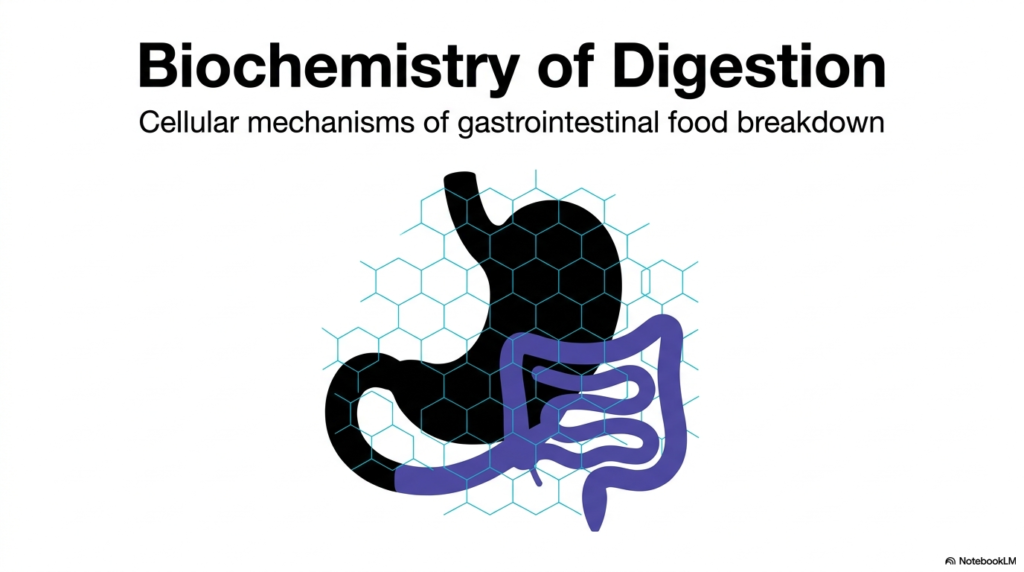
The journey of a meal through the gastrointestinal tract relies on a sophisticated series of biochemical reactions. Slide one introduces the overarching theme of these intricate mechanisms. The cellular mechanisms of gastrointestinal food breakdown represent a marvel of biological evolution. In these initial stages, one can observe how the body prepares to deconstruct macromolecules. The study of Digestive Processes is not merely about mechanical churning; it is fundamentally about the biochemical transformations that occur at the microscopic level. Understanding these initial concepts lays the groundwork for advanced medical and biochemical studies.
When observing the interconnected network depicted in the illustration, the stomach and intestines are highlighted against a cellular matrix. This visual metaphor perfectly encapsulates how Digestive Processes operate across both organ-wide systems and microscopic cellular environments. Every organ in the gastrointestinal tract contains specialized cells designed to secrete specific acids, enzymes, or protective mucosal layers. These highly coordinated cellular actions ensure that nutrients are extracted safely and efficiently without damaging the host tissue.
Furthermore, the honeycomb pattern symbolizes the structural and chemical integrity required to maintain these isolated environments. The foundational biochemistry of Digestive Processes requires extreme compartmentalization, where highly reactive enzymes and corrosive acids are carefully managed. These components must be kept in check until they reach their specific target destinations within the digestive tract. By examining the gastrointestinal system as a highly coordinated series of biochemical reactors, students can better appreciate the massive thermodynamic and kinetic hurdles the organism overcomes daily.
The complexity of these mechanisms cannot be understated. As the sequence progresses, the focus will shift to the specific cellular players and the distinct chemical challenges they resolve. For students preparing for clinical practice or advanced research, mastering the fundamental principles of these reactions is absolutely critical. This introductory visual captures the essence of the entire biochemical journey, beautifully illustrating the intersection of macroscopic anatomy and microscopic chemical mastery.
Slide 2: Navigating the Three Biochemical Challenges of Digestive Processes
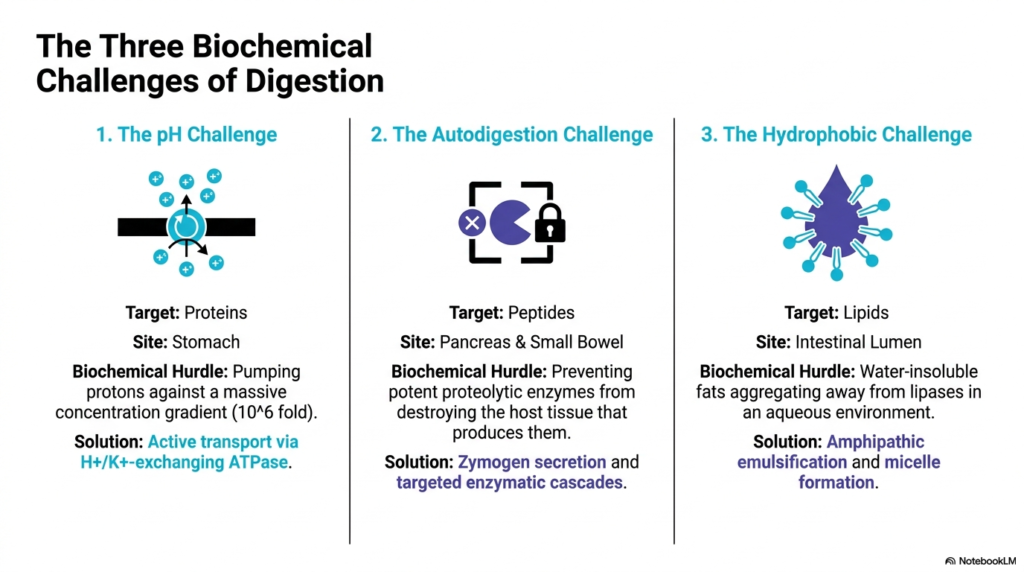
The human body must overcome three monumental biochemical hurdles to successfully extract nutrients from food. The first major hurdle in these Digestive Processes is the pH challenge, occurring primarily within the stomach. Here, the target molecules are large proteins that must be unraveled. The primary biochemical obstacle involves pumping protons against a massive concentration gradient, specifically a million-fold difference. To solve this, the body utilizes active transport mechanisms, specifically relying on the H+/K+-exchanging ATPase. This energy-intensive pump forcefully moves protons to create an exceptionally acidic environment, which is absolutely vital for subsequent protein degradation.
The second major hurdle involves the challenge of autodigestion. This is a critical regulatory step in all Digestive Processes, taking place within the pancreas and the small bowel. The targets here are peptides, but the danger lies in the biological tools used to break them down. The biochemical hurdle is preventing these incredibly potent proteolytic enzymes from destroying the very host tissues that produce them. The elegant solution to this dangerous problem involves zymogen secretion and targeted enzymatic cascades. By synthesizing enzymes in an inactive form, the pancreas safely transports these powerful molecules to the intestinal lumen before they activate.
The third and final obstacle is the hydrophobic challenge, which dictates the breakdown of dietary fats. Lipids present a unique physical chemistry problem within the aqueous environment of the intestinal lumen. The hurdle is that water-insoluble fats spontaneously aggregate away from lipases, severely limiting enzymatic access. To ensure these vital Digestive Processes continue uninterrupted, the gastrointestinal system deploys amphipathic emulsification and micelle formation. This solution drastically increases the surface area of the lipid droplets, allowing water-soluble enzymes to effectively interface with and cleave the hydrophobic fat molecules, ensuring complete nutrient absorption.
Understanding these three distinct challenges provides a crucial framework for studying gastrointestinal biochemistry. Each biological solution highlights a perfect marriage of thermodynamics, cellular transport, and enzymatic regulation. By mastering how the body addresses the pH, autodigestion, and hydrophobic hurdles, medical students gain profound insights into both normal physiology and the pathological conditions that arise when these systems fail.
Slide 3: Cellular Players Initiating Digestive Processes: Gastric Secretion
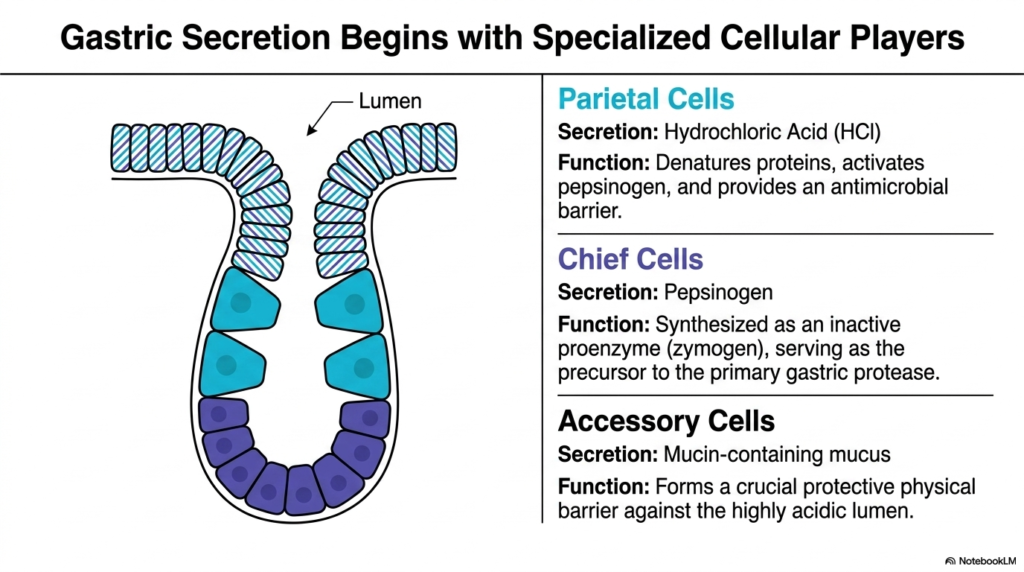
Gastric secretion relies on a highly specialized cast of cellular players located within the stomach lining. These specialized cells represent the vanguard of early Digestive Processes, establishing the harsh chemical environment required for food breakdown. The most prominent among these are the parietal cells, which are tasked with secreting hydrochloric acid. This powerful acid serves multiple critical functions. It rapidly denatures ingested proteins, unwinding their complex three-dimensional structures. Furthermore, it activates pepsinogen and provides a robust antimicrobial barrier, neutralizing potential pathogens that enter with the ingested meal.
Working closely alongside parietal cells are the chief cells, which play an equally important role in these initial Digestive Processes. Chief cells are responsible for secreting pepsinogen, which is synthesized as an inactive proenzyme, or zymogen. Producing pepsinogen in this dormant state is a crucial protective mechanism. It serves as the direct precursor to pepsin, the primary gastric protease responsible for cleaving peptide bonds. Only upon encountering the highly acidic environment created by the parietal cells does this zymogen convert into its active, protein-digesting form, ensuring digestion occurs safely within the lumen.
Finally, the gastric pit contains accessory cells that secrete a vital, mucin-containing mucus. This secretion is essential for the continuation of safe Digestive Processes. The heavily acidic lumen, while perfect for breaking down food, is simultaneously lethal to the stomach’s own cellular lining. The mucin forms a thick, crucial protective physical barrier against the hydrochloric acid and active proteases. Without this protective coating, the stomach would rapidly begin to digest itself, leading to severe ulceration and tissue damage.
Together, these three specialized cell types create a perfectly balanced microenvironment. The parietal cells provide the corrosive power, the chief cells deliver the enzymatic machinery, and the accessory cells offer indispensable physical protection. For students of biochemistry, understanding the distinct yet synergistic roles of these cells is fundamental to grasping how the stomach safely manages such extreme chemical reactions without sustaining catastrophic internal damage.
Slide 4: The Energetics of Digestive Processes: Active Formation of Hydrochloric Acid
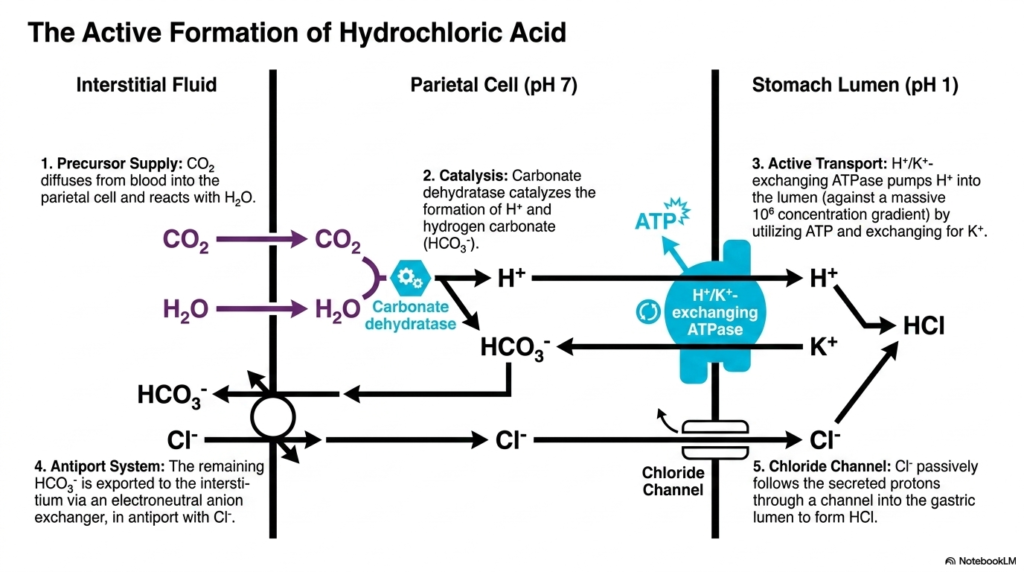
The generation of gastric acid is a masterpiece of cellular energetics and active transport. During these specific Digestive Processes, the parietal cell must move protons from an environment with a neutral pH of 7 into a stomach lumen with a highly acidic pH of 1. This requires pumping hydrogen ions against a massive, million-fold concentration gradient. The process begins with a precursor supply, where carbon dioxide diffuses from the interstitial fluid and blood into the parietal cell. Once inside, the carbon dioxide reacts with water, setting the stage for rapid acid production.
Following this initial diffusion, an essential catalytic step occurs. The enzyme carbonic anhydrase rapidly catalyzes the formation of both hydrogen ions and hydrogen carbonate from the newly mixed carbon dioxide and water. This reaction is a cornerstone of these highly regulated Digestive Processes. It ensures a steady intracellular supply of protons ready for export. The newly generated hydrogen carbonate is then shuttled out of the cell back into the interstitial fluid via an electroneutral anion exchanger. This antiport system continuously imports chloride ions while removing the bicarbonate byproduct, maintaining cellular equilibrium.
The actual movement of protons into the stomach lumen is executed by the H+/K+-exchanging ATPase. This remarkable membrane pump acts as the primary engine for these acidic Digestive Processes. By hydrolyzing ATP for energy, the pump actively forces hydrogen ions into the harsh lumen while simultaneously exchanging them for potassium ions. This energy-intensive step represents the ultimate biochemical hurdle in acidifying the stomach, showcasing the immense thermodynamic work required to prepare a meal for enzymatic degradation.
To finalize the formation of hydrochloric acid, the chloride ions that were previously imported via the antiport system must also enter the stomach. These ions passively follow the actively secreted protons through a dedicated chloride channel situated on the luminal membrane. Once both the hydrogen and chloride ions reach the gastric lumen, they combine to form the hydrochloric acid required for protein denaturation. This entire mechanism highlights the beautiful precision of cellular ion transport systems.
Slide 5: Physical and Enzymatic Roles in Digestive Processes: The Gastric Lumen
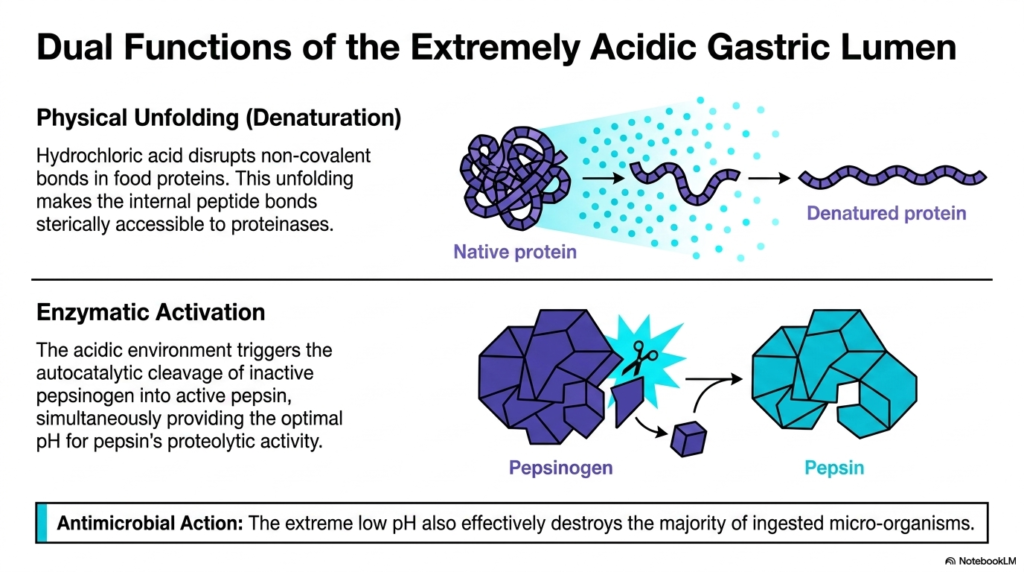
The extremely acidic environment of the gastric lumen serves dual, highly synergistic functions essential for breaking down macromolecules. The first major function in these specialized Digestive Processes is the physical unfolding, or denaturation, of dietary proteins. When intact native proteins enter the stomach, the harsh hydrochloric acid rapidly disrupts their delicate non-covalent bonds. This rapid chemical disruption forces the tightly folded proteins to unravel into long, denatured strands. This unfolding is absolutely critical because it makes the internal peptide bonds sterically accessible to specific proteinases that will eventually cleave them.
Beyond mere physical unfolding, the highly acidic environment is responsible for vital enzymatic activation. This represents a beautifully efficient mechanism within overall Digestive Processes. The extremely low pH directly triggers the autocatalytic cleavage of pepsinogen, a dormant zymogen. Upon exposure to the acid, a specific peptide segment is cleaved away, transforming the inactive molecule into active pepsin. Simultaneously, this acidic setting provides the exact optimal pH required for pepsin’s maximum proteolytic activity, allowing it to efficiently chop the newly denatured protein strands into smaller peptide fragments.
A secondary, but equally important, benefit of this extreme pH relates to immune protection rather than simple nutrient extraction. As these Digestive Processes unfold, the corrosive gastric acid also acts as a powerful antimicrobial agent. The incredibly low pH effectively destroys the vast majority of ingested micro-organisms that happen to travel down with the food. This chemical barrier prevents dangerous pathogens from reaching the highly absorptive and vulnerable surfaces of the small intestine.
The combination of protein denaturation, zymogen activation, and antimicrobial defense demonstrates the elegance of the gastric phase. By utilizing a single, energy-intensive chemical gradient, the stomach achieves three entirely distinct biological goals. Medical students must recognize how this specific biochemical compartment primes the complex dietary macromolecules for the subsequent, more delicate enzymatic stages that will follow in the small bowel.
Slide 6: Regulating Digestive Processes: Controlling Gastric Acid Secretion
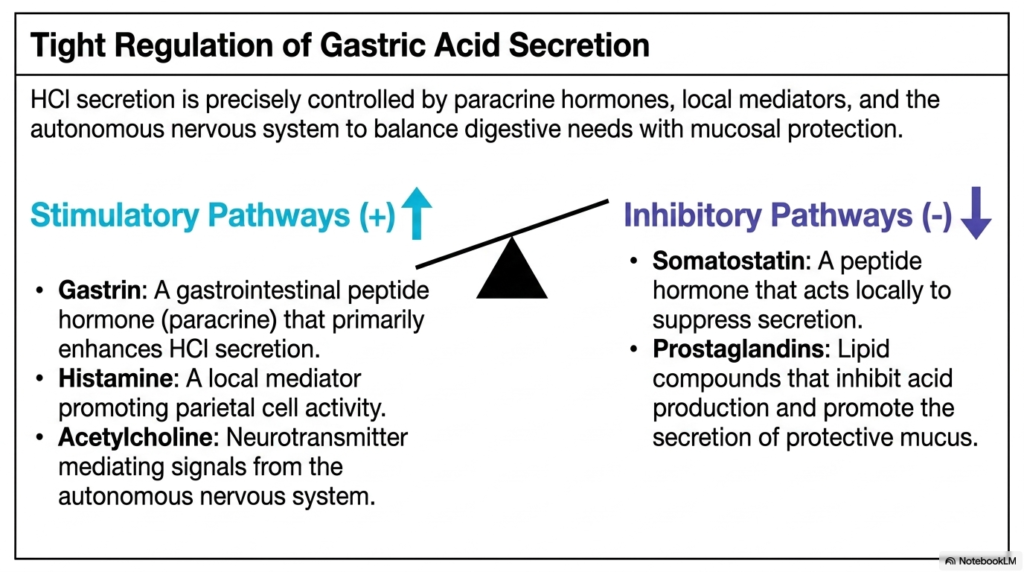
The production of hydrochloric acid is not a continuous, uncontrolled event; rather, it is precisely regulated by a network of signals. Maintaining the balance of these digestive processes is vital to ensure optimal digestive efficiency while strictly protecting the sensitive gastric mucosa. This tight regulation balances the immediate digestive needs against mucosal protection, relying heavily on paracrine hormones, local chemical mediators, and the autonomous nervous system. When food enters the system, a carefully orchestrated symphony of stimulatory and inhibitory pathways dictates exactly how much acid the parietal cells will release.
On the stimulatory side, three primary molecular messengers ramp up acid production to accelerate these necessary Digestive Processes. Gastrin, a gastrointestinal peptide hormone acting in a paracrine fashion, primarily enhances hydrochloric acid secretion. Additionally, histamine serves as a potent local mediator that strongly promotes parietal cell activity. Finally, acetylcholine acts as the crucial neurotransmitter mediating activating signals directly from the autonomous nervous system. Together, these three stimulatory pathways synergistically bind to the parietal cell receptors, triggering massive intracellular cascades that dramatically increase the active transport of protons into the stomach.
Conversely, the body must have mechanisms to halt these corrosive Digestive Processes once the stomach empties. This is where the inhibitory pathways take control. Somatostatin, a crucial peptide hormone, acts locally to effectively suppress the secretion of acid. Working in tandem with somatostatin are prostaglandins. These important lipid compounds not only powerfully inhibit acid production, but they also actively promote the secretion of protective mucus from accessory cells. This dual action ensures the stomach lining remains perfectly insulated from any residual acidity.
The delicate scale between stimulation and inhibition highlights the dynamic nature of gastrointestinal biochemistry. Any pharmacological disruption to these regulatory pathways, such as the overuse of certain anti-inflammatory drugs that inhibit prostaglandins, can quickly lead to severe pathological conditions like peptic ulcers. Grasping this regulatory balance is a cornerstone of modern gastroenterology and medical pharmacology.
Slide 7: Safety Mechanisms in Digestive Processes: The Zymogen Concept
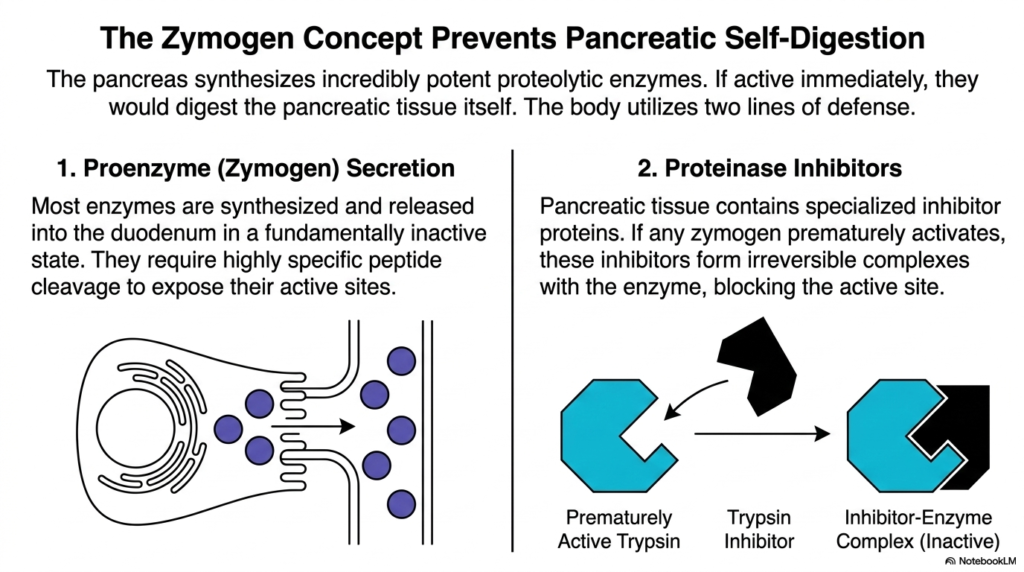
As the primary site of enzyme synthesis shifts to the pancreas, the biological risks increase exponentially. The pancreas synthesizes incredibly potent proteolytic enzymes that drive many critical Digestive Processes. However, if these enzymes were chemically active immediately upon synthesis, they would rapidly digest the pancreatic tissue itself, leading to catastrophic organ failure. To prevent this, the body brilliantly utilizes two distinct lines of biochemical defense. These protective strategies ensure that the enzymes become destructive only after they are safely deposited into the heavily fortified environment of the duodenum.
The first line of defense involves proenzyme, or zymogen, secretion. Most pancreatic enzymes required for these essential Digestive Processes are synthesized and subsequently released into the duodenum in a fundamentally inactive state. Structurally, these zymogens have an extra polypeptide segment that physically blocks their active catalytic site. They absolutely require highly specific, targeted peptide cleavage to undergo a conformational change. This precise cleavage permanently exposes their active sites, allowing them to bind to and hydrolyze their respective dietary substrates only when they are safely inside the intestinal lumen.
Despite the safety of zymogen secretion, molecular accidents can still happen. The second line of defense exists to catch any premature activation during these delicate Digestive Processes. Pancreatic tissue contains specialized, highly specific inhibitor proteins. If any zymogen, such as trypsinogen, prematurely activates into trypsin within the pancreas, these proteinase inhibitors immediately intervene. They quickly bind to the prematurely active trypsin, forming highly stable, irreversible complexes with the enzyme. This effectively blocks the active site and permanently disables the rogue enzyme before it can cause widespread tissue damage.
The combination of synthesizing dormant proenzymes and maintaining a localized fleet of specialized inhibitor proteins represents a foolproof biological failsafe. For students studying clinical biochemistry, understanding this dual-defense system is essential for comprehending diseases like acute pancreatitis, where these exact safety mechanisms tragically fail, and self-digestion rapidly ensues.
Slide 8: Amplifying Digestive Processes: The Enteric Activation Cascade
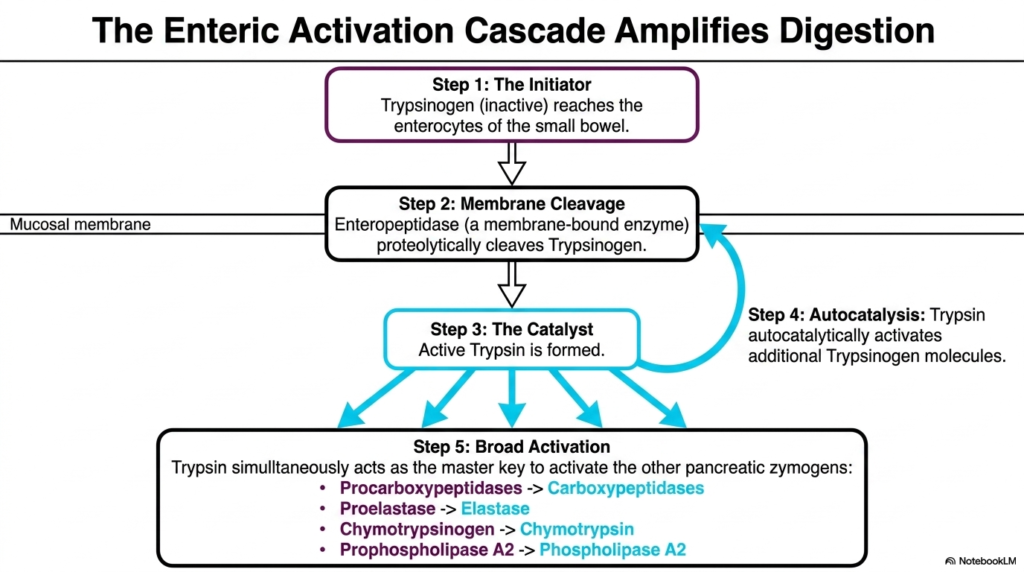
Once the inactive pancreatic enzymes safely reach the small bowel, they must be rapidly turned on. The enteric activation cascade is an explosive biochemical event that radically amplifies the efficiency of these downstream Digestive Processes. The entire sequence begins with a single initiator: trypsinogen. This inactive zymogen travels from the pancreas and finally reaches the enterocytes lining the mucosal membrane of the small bowel. Here, it encounters a highly specialized, membrane-bound enzyme called enteropeptidase, which stands ready to ignite the entire catalytic cascade.
Enteropeptidase acts as the vital biological trigger for these intestinal Digestive Processes. It performs a specific membrane cleavage, proteolytically cutting a small peptide sequence off the inactive trypsinogen molecule. This single, precise cut instantly transforms the dormant proenzyme into active trypsin, the master catalyst. Once active trypsin is formed, a brilliant autocatalytic loop begins. Trypsin has the remarkable ability to autocatalytically activate additional trypsinogen molecules. This creates a massive, localized exponential amplification, quickly generating a massive pool of active trypsin directly at the site of nutrient absorption.
Finally, this newly generated trypsin initiates broad activation across the entire spectrum of pancreatic zymogens. Acting as the undisputed master key of these essential Digestive Processes, trypsin simultaneously cleaves and activates multiple different proenzymes. It converts procarboxypeptidases into active carboxypeptidases, transforms proelastase into elastase, activates chymotrypsinogen into chymotrypsin, and triggers the conversion of prophospholipase A2 into phospholipase A2. This synchronized, massive activation ensures that a full arsenal of distinct protein- and lipid-degrading enzymes is deployed exactly when and where they are needed.
This cascading mechanism is a perfect example of biological efficiency and strict spatial control. By relying on a single, membrane-bound enzyme to start the chain reaction, the gastrointestinal system ensures that the massive amplification of proteolytic power occurs safely within the confines of the intestinal lumen, far from vulnerable pancreatic tissues.
Slide 9: Thermodynamics in Digestive Processes: The Hydrophobic Effect
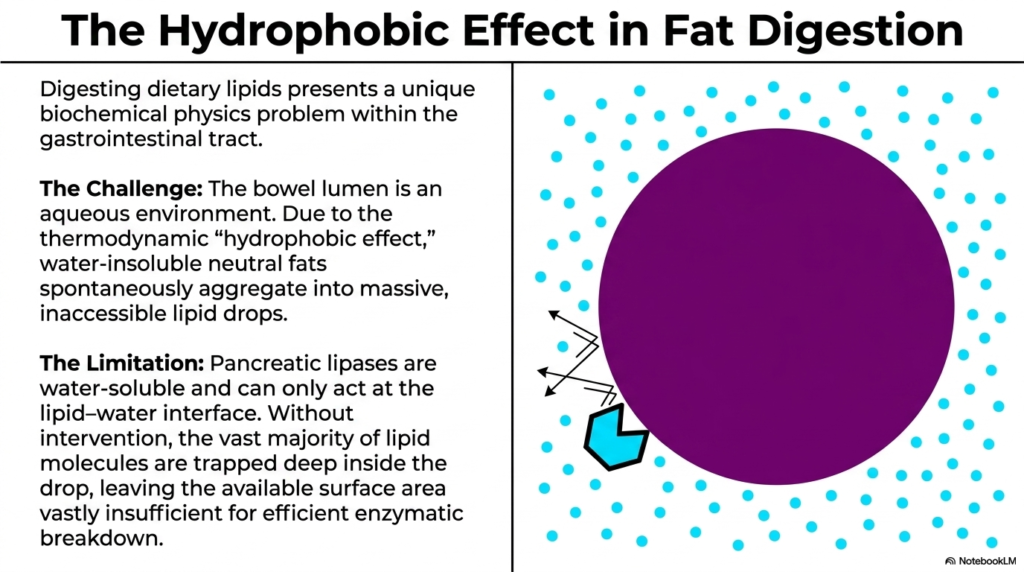
Digesting dietary lipids presents a unique and incredibly challenging biochemical physics problem within the gastrointestinal tract. Unlike proteins or carbohydrates, lipids introduce a severe hydrophobic challenge that threatens to stall essential Digestive Processes entirely. The fundamental issue is that the bowel lumen is an entirely aqueous, water-based environment. Due to the thermodynamic phenomenon known as the “hydrophobic effect,” water-insoluble neutral fats naturally and spontaneously aggregate away from water. They clump together to form massive, impenetrable lipid drops to minimize their thermodynamic exposure to the aqueous surroundings.
This massive aggregation creates a tremendous limitation for the enzymes responsible for these lipid-based Digestive Processes. Pancreatic lipases, the molecular machines tasked with breaking down these fats, are entirely water-soluble. Because of their chemical nature, they can only act at the precise lipid-water interface—the outer surface of the fat droplet. They cannot penetrate the deep hydrophobic core of the massive lipid aggregations. Consequently, without a powerful biological intervention, the vast majority of the target lipid molecules remain trapped and entirely shielded deep inside the massive drop.
This severe physical limitation leaves the available surface area vastly insufficient for efficient enzymatic breakdown. To maintain efficient Digestive Processes, the system must find a way to exponentially increase this lipid-water interface. The enzymes are highly potent, but their catalytic speed is entirely dependent on how much physical surface area they can access at any given moment. Overcoming this thermodynamic barrier requires a mechanical and chemical solution capable of tearing these massive hydrophobic aggregations apart and keeping them separated in a watery environment.
Understanding the hydrophobic effect highlights the intricate intersection of physical chemistry and human physiology. The sheer thermodynamic forces driving fat molecules together are incredibly strong. Students must appreciate this physical barrier to fully grasp why the liver and gallbladder must synthesize and secrete highly specialized detergent-like molecules. These subsequent chemical interventions are absolutely necessary to prepare lipids for absorption.
Slide 10: Optimizing Digestive Processes: Emulsification of Dietary Lipids
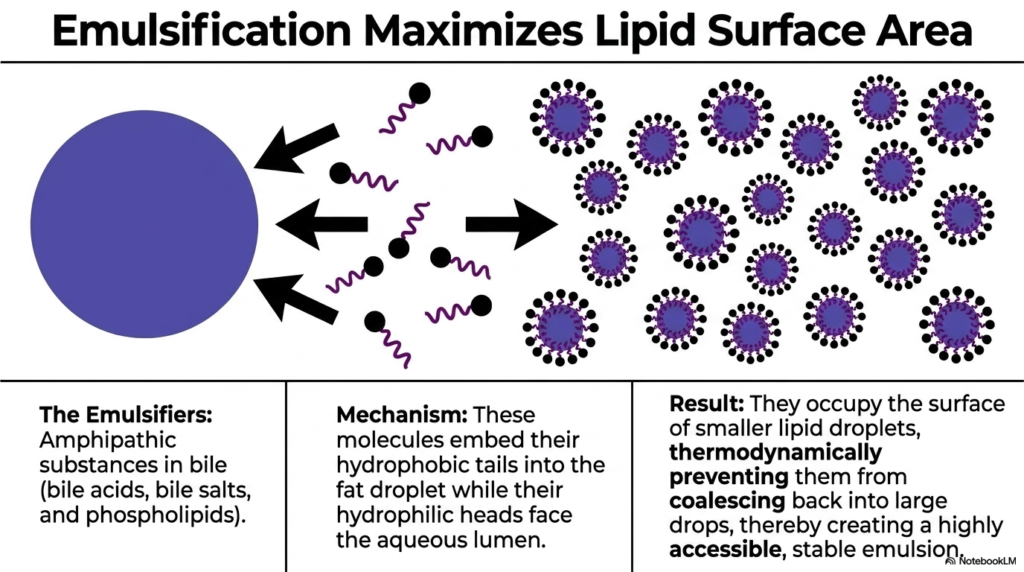
To solve the massive hydrophobic challenge, the gastrointestinal tract employs a brilliant strategy of emulsification. This highly specialized chemical intervention is absolutely critical for the continuation of lipid-based Digestive Processes. The primary agents of this process are the emulsifiers, specifically the amphipathic substances found in bile. These include bile acids, bile salts, and various phospholipids. These specialized molecules possess a dual chemical nature; they feature both a water-loving hydrophilic head and a fat-loving hydrophobic tail. This amphipathic structure is the exact key to breaking apart the massive fat aggregations.
The physical mechanism of emulsification actively reshapes the thermodynamic landscape of these complex Digestive Processes. Through mechanical mixing in the intestines, the large lipid drops are temporarily broken apart. Instantly, the amphipathic bile molecules rush in and embed their hydrophobic tails directly into the newly exposed fat droplets. Simultaneously, their charged, hydrophilic heads remain facing outward into the aqueous lumen. By coating the fat droplets in this manner, the bile salts create a chemical shield that completely changes the surface properties of the lipids.
The result of this molecular coating is nothing short of miraculous for efficient Digestive Processes. The emulsifiers successfully occupy the outer surface of much smaller lipid droplets, thermodynamically preventing them from coalescing back into large, inaccessible drops. Because the hydrophilic heads carry similar charges, they physically repel one another in the aqueous environment. This creates a highly accessible, highly stable emulsion composed of millions of tiny droplets, exponentially increasing the total surface area available for the water-soluble pancreatic lipases to attach and begin their catalytic work.
This sophisticated use of biological detergents demonstrates a perfect evolutionary adaptation. By utilizing bile salts derived from cholesterol, the body effortlessly overcomes the strict laws of thermodynamics that govern hydrophobic interactions. For medical students, understanding this emulsification step is crucial, as any pathology affecting the liver or biliary tree will immediately halt fat digestion, leading to severe nutritional deficiencies and clinical malabsorption.
Slide 11: Enzymatic Cleavage in Digestive Processes: Triacylglycerol Lipase Action
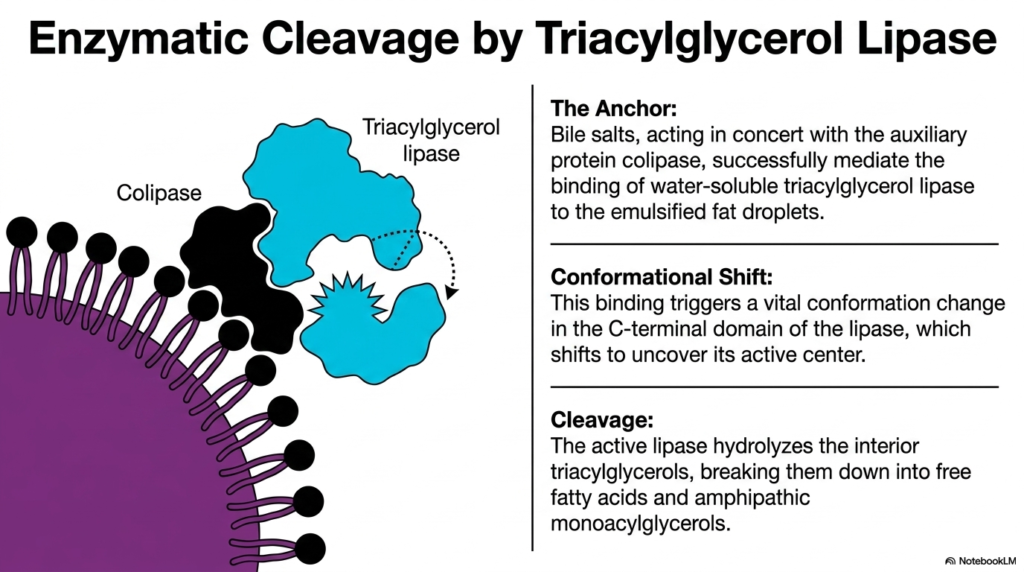
With the dietary fats successfully emulsified, the stage is set for the actual chemical digestion of the lipids. This crucial step in these lipid-focused Digestive Processes is executed by a specialized enzyme known as triacylglycerol lipase. However, because this lipase is water-soluble, it requires an anchor to effectively bind to the newly formed emulsified fat droplets. Bile salts, acting in perfect concert with an auxiliary protein known as colipase, successfully mediate this vital binding process. The colipase acts as a molecular bridge, physically connecting the lipase enzyme to the lipid surface.
Once the colipase successfully anchors the enzyme, a fascinating molecular event occurs to accelerate these Digestive Processes. This physical binding at the lipid-water interface triggers a vital conformational shift within the enzyme itself. Specifically, a structural change occurs in the C-terminal domain of the lipase. This specific domain physically shifts outward, effectively uncovering the enzyme’s internal active center. This conformational change is an elegant regulatory mechanism, ensuring that the highly potent active site is only fully exposed and operational when the enzyme is securely attached to its target substrate.
With the active center now fully exposed, rapid enzymatic cleavage drives the completion of these specific Digestive Processes. The highly active lipase rapidly hydrolyzes the interior triacylglycerols packed within the emulsified droplet. It systematically breaks these large lipid molecules down, cleaving the ester bonds to generate highly absorbable free fatty acids and amphipathic monoacylglycerols. This rapid chemical breakdown physically alters the composition of the emulsion droplet, transforming the complex dietary fats into their most fundamental, absorbable molecular building blocks.
The precise coordination between bile salts, colipase, and triacylglycerol lipase is a remarkable feat of biochemical engineering. Each molecular component plays an irreplaceable role in ensuring the efficient hydrolysis of dietary fats. Understanding this intricate protein-lipid interaction provides a deep appreciation for the complexities of human metabolism, highlighting how structural shifts in enzyme domains directly govern catalytic function and overall nutritional absorption.
Slide 12: Completing Lipid Digestive Processes: Micelle Formation and Resorption
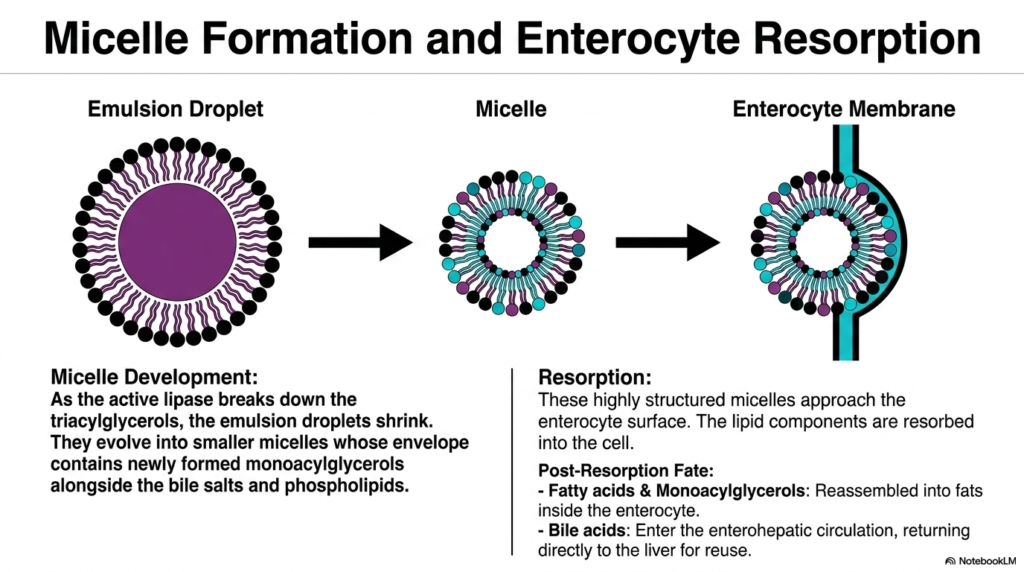
As the enzymatic cleavage of fats nears completion, the physical structure of the lipid droplets undergoes a final, drastic transformation. This marks the concluding phase of these specific intestinal Digestive Processes. As the active lipase continuously breaks down the large triacylglycerols, the original emulsion droplets rapidly begin to shrink. Through this continuous chemical reduction, they slowly evolve into much smaller, highly organized structures known as micelles. The envelope of these newly formed micelles primarily contains the newly generated monoacylglycerols, neatly arranged alongside the remaining bile salts and phospholipids.
These tiny, highly structured micelles are uniquely equipped to finalize these lipid-based Digestive Processes. Due to their incredibly small size and highly amphipathic exterior, they are entirely water-soluble. This allows them to effortlessly transit through the aqueous lumen and closely approach the unstirred water layer surrounding the enterocyte surface. Once they physically contact the enterocyte membrane, the highly concentrated lipid components within the micelle are rapidly resorbed directly into the intestinal cell, leaving the bile salts behind in the lumen.
Following this critical resorption step, the extracted molecules face different post-resorption fates, wrapping up this phase of the Digestive Processes. Once safely inside the enterocyte, the free fatty acids and monoacylglycerols are quickly reassembled back into complex fats and packaged into chylomicrons for transport through the lymphatic system. Meanwhile, the bile acids that were left behind continue down the intestine. They eventually enter the enterohepatic circulation, a highly efficient recycling system that returns them directly to the liver so they can be reused for future meals.
The evolution from a massive, impenetrable fat droplet to a microscopic, highly efficient micelle represents the pinnacle of gastrointestinal biochemistry. This entire sequence showcases how mechanical, chemical, and enzymatic forces seamlessly cooperate. For future medical professionals, understanding micelle formation and the enterohepatic circulation is fundamental for diagnosing and treating complex lipid malabsorption syndromes and various biliary tract diseases.
Slide 13: Summary of Digestive Processes: Three Biochemical Strategies
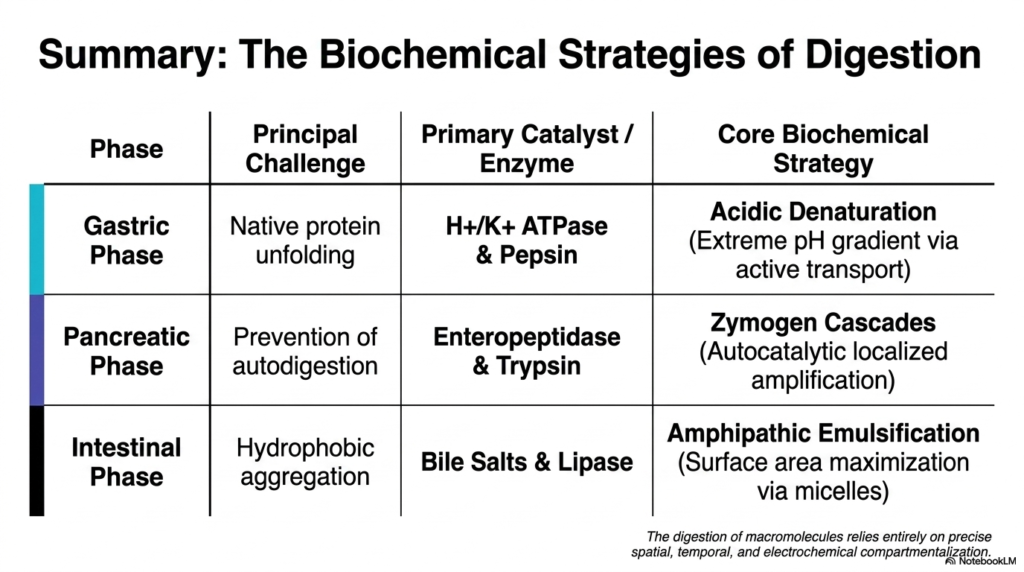
The vast complexity of breaking down food can be elegantly distilled into three overarching biochemical strategies. This final summary reinforces the grand architecture of these systemic Digestive Processes. The first phase, the gastric phase, addresses the principal challenge of native protein unfolding. It utilizes the powerful H+/K+ ATPase and the enzyme pepsin. The core biochemical strategy here is acidic denaturation, employing an extreme pH gradient generated via massive active transport mechanisms to physically unravel tightly packed proteins, preparing them for the next stages of enzymatic breakdown.
Moving into the pancreatic phase, the biological system shifts its focus to safety and amplification within these critical Digestive Processes. The principal challenge in this phase is the absolute prevention of organ autodigestion. Relying on enteropeptidase and the master catalyst trypsin, this stage employs the brilliant strategy of zymogen cascades. By utilizing autocatalytic, localized amplification only after the enzymes reach the safety of the intestinal lumen, the body successfully breaks down massive amounts of complex peptides without endangering the delicate tissues of the pancreas.
Finally, the intestinal phase addresses the difficult physical chemistry of dietary fats, completing the primary Digestive Processes. The main hurdle here is the hydrophobic aggregation of water-insoluble lipids. To overcome this, the body deploys bile salts and water-soluble lipases. The core biochemical strategy relies heavily on amphipathic emulsification. By aggressively maximizing the available surface area via the formation of tiny, water-soluble micelles, the system guarantees that fat molecules are efficiently hydrolyzed and smoothly absorbed into the enterocytes for cellular use.
Ultimately, the digestion of complex macromolecules relies entirely on precise spatial, temporal, and electrochemical compartmentalization. By dividing the labor into specialized acidic, pancreatic, and intestinal phases, the human gastrointestinal tract operates as a perfectly optimized sequence of chemical reactors. Mastering this interconnected summary provides college and medical students with a profound, integrated understanding of how human biology continuously defies entropy to sustain life through the intelligent extraction of metabolic fuel.
Please read our Content Disclaimer Statement.
Check out our social media channels: