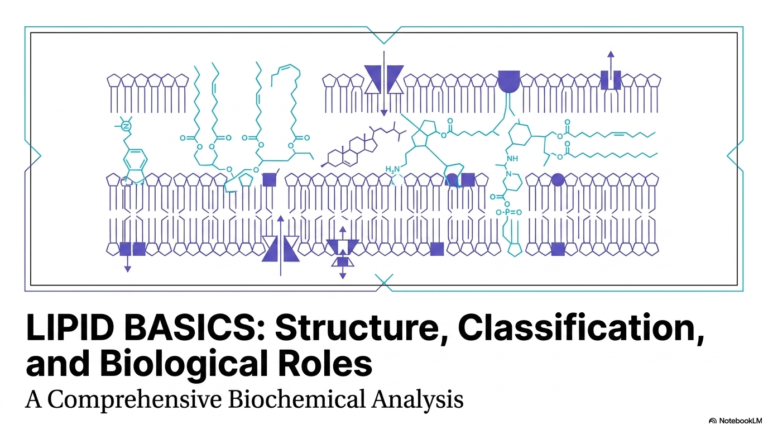
146. Hormone Hierarchy: Endocrine System Regulation and Feedback Loops
Imagine running a massive global corporation without a central management structure; chaos would follow immediately. In the human body, billions of cells must coordinate seamlessly to maintain life. The body achieves this remarkable balance through a sophisticated multi-tiered system of chemical messengers. This slide deck explores how master command centers in the brain govern peripheral glands, regulate metabolic triggers, and fine-tune physiological balance through precise feedback loops.
Slide 01: Overview of Biochemical Pathways in the Hormone Hierarchy
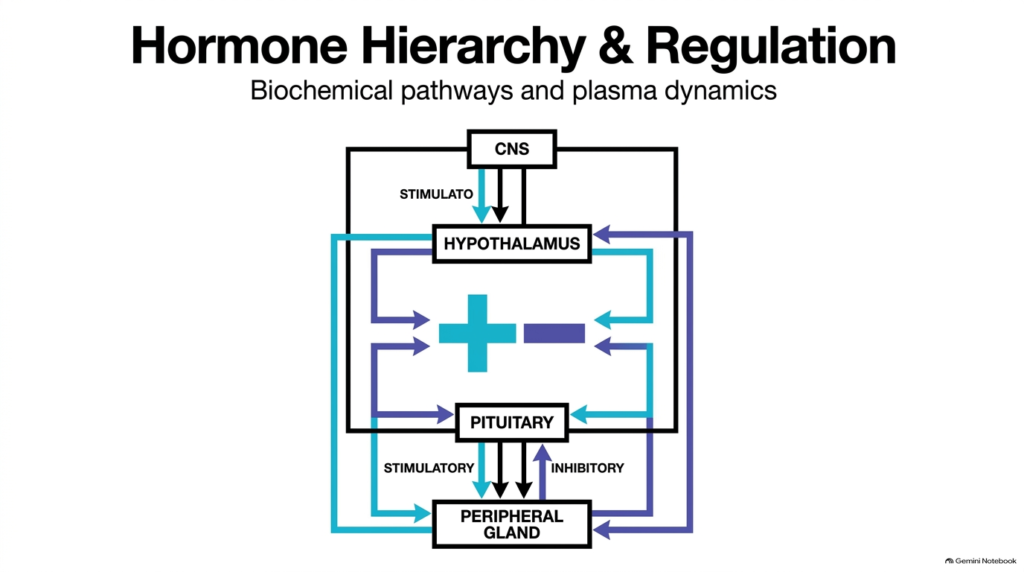
Endocrine regulation relies on structured pathways that connect central neural processing with peripheral target organs across the Hormone Hierarchy. The central nervous system receives external and internal stimuli and processes these signals to direct hypothalamic activity. The hypothalamus then communicates directly with the pituitary gland through specialized chemical messengers. In turn, the pituitary sends trophic signals to peripheral glands scattered throughout the body. This structural arrangement defines the classic neuroendocrine axis, establishing a clear line of command where upper nodes control lower nodes. Understanding this architectural design reveals how the Hormone Hierarchy transforms neural electrical impulses into widespread systemic adaptations.
Communication within this framework is bidirectional, utilizing both stimulatory and inhibitory pathways to achieve physiological equilibrium. While upper command centers send chemical signals down the chain, peripheral glandular products provide continuous feedback. High concentrations of peripheral hormones feed back to suppress both hypothalamic and pituitary output. Conversely, dropping hormone levels relieve this inhibition, prompting renewed upstream activation. By balancing positive activation with negative feedback, the Hormone Hierarchy prevents broad hormonal swings, maintaining stable plasma dynamics across diverse physiological states and ensuring cellular stability under fluctuating environmental conditions.
Slide 02: Synthesis Case Study of the Hormone Hierarchy
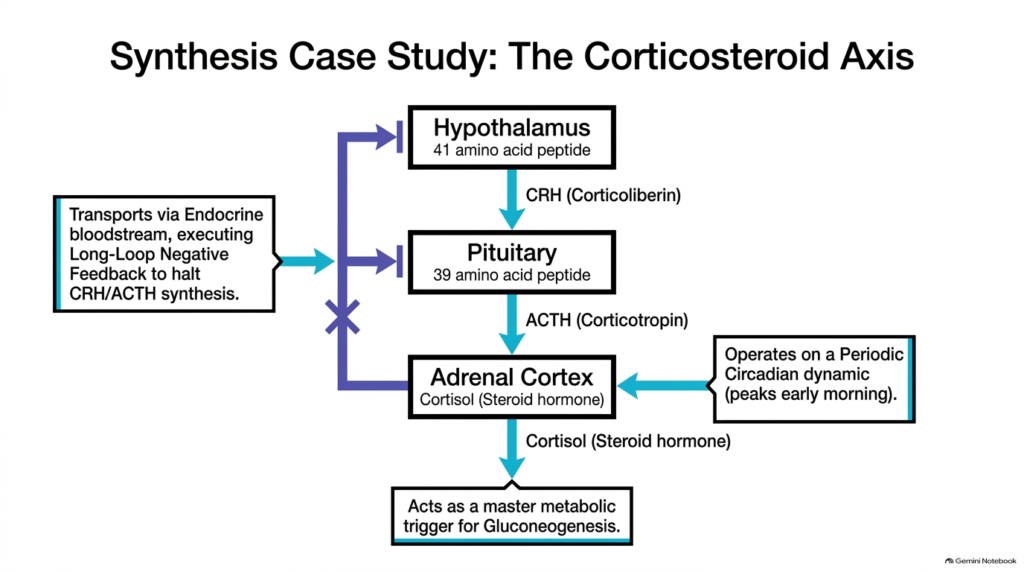
The corticosteroid axis is a classic physiological model that demonstrates the multi-tiered structure of the Hormone Hierarchy. At the top level, the hypothalamus releases corticoliberin, a peptide composed of forty-one amino acids. Corticoliberin travels through local blood vessels to stimulate the anterior pituitary gland. Upon stimulation, the pituitary releases corticotropin, a 39-amino-acid peptide, directly into the systemic circulation. Corticotropin then travels to the adrenal cortex and triggers cortisol synthesis. This step-by-step cascade illustrates how a higher-order neural command center exerts biochemical dominance over downstream glandular targets within the overall Hormone Hierarchy.
Cortisol acts as a primary metabolic regulator, stimulating gluconeogenesis in liver tissues to generate glucose when glycogen stores decline. Beyond its metabolic effects, cortisol executes critical long-loop negative feedback within the Hormone Hierarchy. As circulating cortisol levels rise, the steroid hormone travels back through the bloodstream to act directly on both the pituitary gland and the hypothalamus. Cortisol binding inhibits further corticotropin secretion. This self-limiting mechanism prevents excessive steroid production and stabilizes plasma concentrations according to strict circadian rhythms, ensuring that metabolic activation peaks in the early morning when cellular energy demands are highest.
Slide 03: Modes of Intercellular Communication in the Hormone Hierarchy
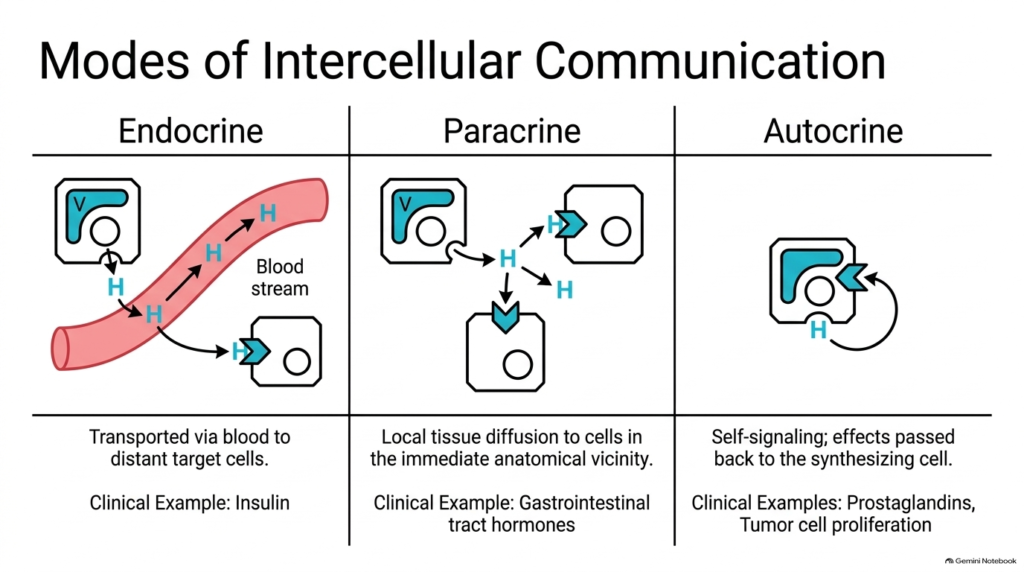
Chemical signaling occurs across varying anatomical distances, creating distinct functional tiers within the broader Hormone Hierarchy. Endocrine signaling is long-distance communication in which specialized glands secrete hormones into the bloodstream. These chemical messengers travel to distant target tissues that express specific receptors, as seen when pancreatic insulin regulates systemic energy use. In contrast, paracrine signaling operates over very short distances. Paracrine factors diffuse through local interstitial fluid to act on neighboring cells within the immediate anatomical area. Gastrointestinal hormones frequently utilize paracrine delivery to coordinate localized digestive activities without altering systemic plasma dynamics.
Autocrine signaling is a specialized localized mechanism in which a single cell secretes signaling molecules that bind to receptors on its own cell surface. Prostaglandins often act through autocrine loops to modulate local cellular responses, and tumor cells frequently hijack autocrine pathways to drive unregulated self-proliferation. Each mode of chemical transport fulfills a specific role in maintaining physiological order across the Hormone Hierarchy. While endocrine pathways govern organism-wide homeostasis through blood transport, local paracrine and autocrine mechanisms fine-tune immediate cellular microenvironments. Together, these complementary transport strategies ensure seamless integration across all levels of the Hormone Hierarchy.
Slide 04: The Duality of Insulin Signaling within the Hormone Hierarchy
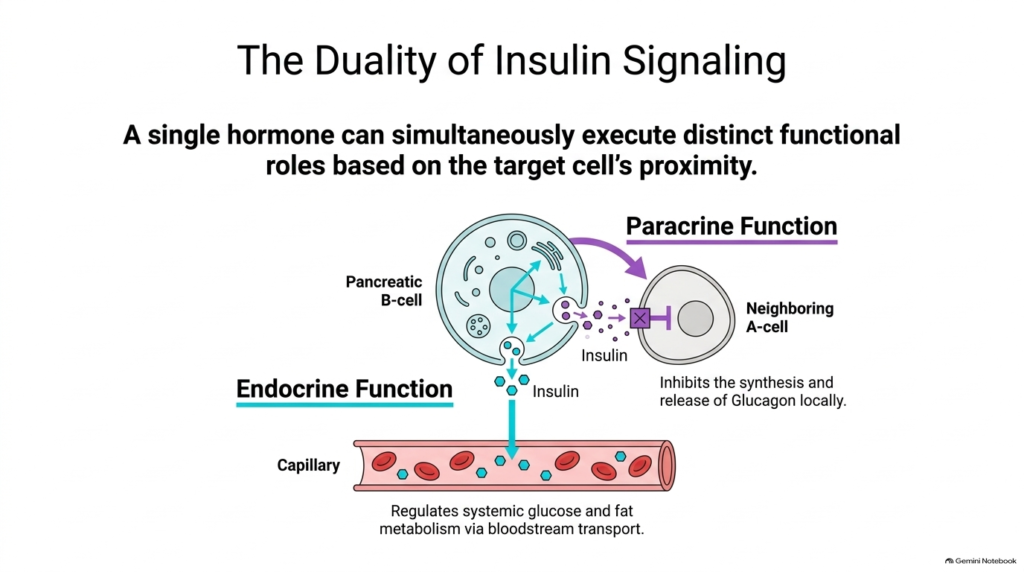
Insulin provides a compelling biological example of a single messenger executing dual signaling roles within the Hormone Hierarchy. Pancreatic beta cells synthesize and package insulin, releasing it into surrounding capillaries when nutrients rise. Once in the systemic bloodstream, insulin functions as a classic endocrine hormone, traveling to distant skeletal muscle and adipose tissues. There, it promotes glucose uptake and stimulates fatty acid storage, lowering blood sugar levels. This systemic action shows how a single peptide hormone operates at the macroscopic level of the Hormone Hierarchy to coordinate energy storage across multiple organ systems after a meal.
At the same time, insulin functions as a powerful paracrine regulator within the microscopic environment of the pancreatic islets. As beta cells release insulin into the local extracellular space, the hormone diffuses directly to adjacent alpha cells. By binding to alpha-cell surface receptors, insulin actively suppresses glucagon synthesis and secretion. This localized paracrine action prevents liver glycogen breakdown at the exact moment nutrient influx occurs. By combining long-range systemic transport with immediate local inhibition, insulin demonstrates the multi-layered functional flexibility inherent to messengers operating within the Hormone Hierarchy.
Slide 05: Micro-Scale Plasma Concentrations in the Hormone Hierarchy
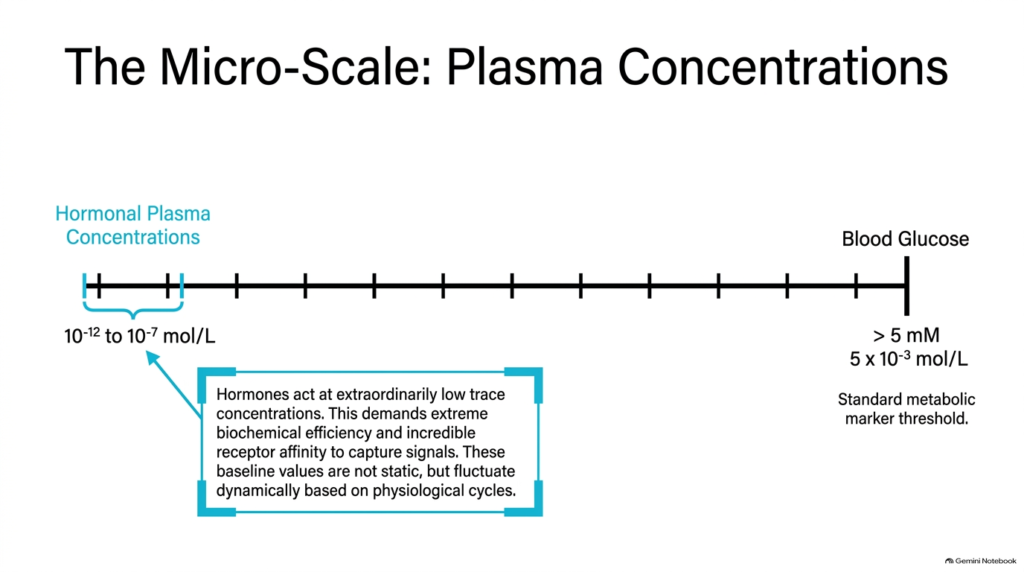
Hormones operate at strikingly minute concentrations in human plasma, illustrating the Hormone Hierarchy’s extreme chemical sensitivity. While standard metabolic substrate markers like blood glucose hover around five millimolar, circulating hormone levels remain in the picomolar to nanomolar range, spanning ten to the minus twelve to ten to the minus seven moles per liter. Operating at concentrations millions of times lower than primary energy substrates requires extraordinary biochemical efficiency. Target cell receptors must display exceptionally high binding affinity to capture these fleeting chemical signals from circulating blood and trigger robust downstream intracellular cascades.
This drastic concentration difference highlights the profound amplifier effect built into the Hormone Hierarchy. A minute quantity of a superior commanding hormone can trigger a massive downstream cellular response across entire tissues. Because baseline plasma values are never static, small fluctuations in these trace signaling molecules induce profound physiological adaptations. Organisms maintain tight analytical control over hormone synthesis and degradation rates to keep trace concentrations within optimal physiological ranges, safeguarding the precise homeostatic balance governed by the Hormone Hierarchy.
Slide 06: Temporal Archetypes of Plasma Dynamics in the Hormone Hierarchy
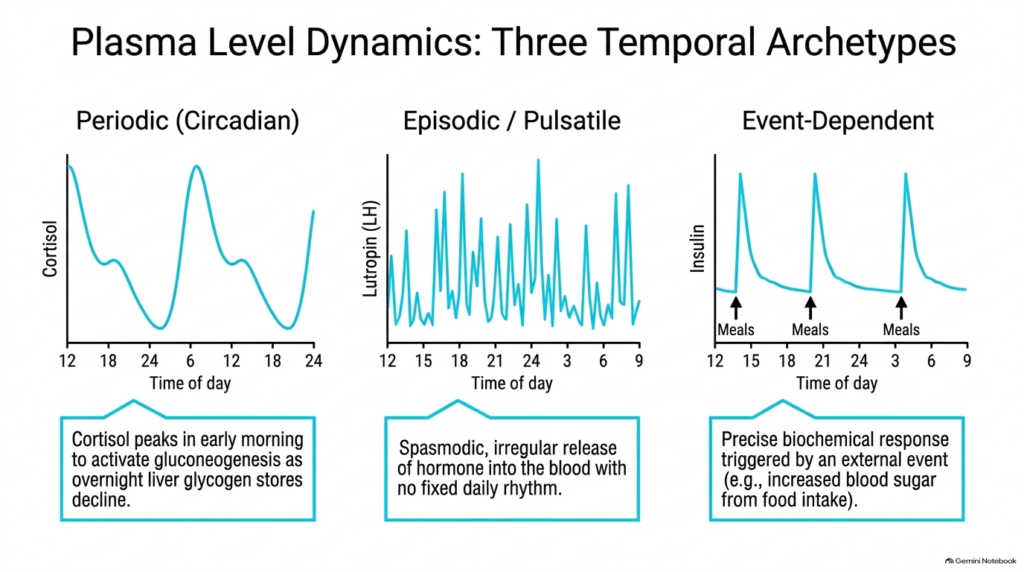
Hormone release is not continuous or static; instead, chemical secretion follows distinct temporal patterns within the Hormone Hierarchy. Periodic or circadian rhythms represent the first archetype, exemplified by plasma cortisol concentrations. Cortisol levels peak predictably in the early morning to stimulate hepatic gluconeogenesis as overnight liver glycogen stores become depleted, then gradually decline through the afternoon and evening. The second archetype features episodic or pulsatile dynamics, as seen with lutropin. Lutropin is released in spasmodic, irregular bursts without a rigid daily clock, preventing target receptor desensitization through intermittent stimulation.
The third temporal archetype involves event-dependent secretion, where hormone release responds directly to acute physiological changes. Insulin release illustrates this mechanism, spiking rapidly after meals when blood glucose levels surpass specific metabolic thresholds. Once glucose is cleared from circulation, insulin secretion rapidly declines. These three temporal patterns show how the Hormone Hierarchy adapts signaling rhythms to meet specific physiological needs. Whether following regular daily cycles, rapid pulsatile bursts, or immediate event triggers, dynamic plasma changes ensure precise timing across all signaling pathways controlled by the Hormone Hierarchy.
Slide 07: Closed-Loop Feedback Control within the Hormone Hierarchy
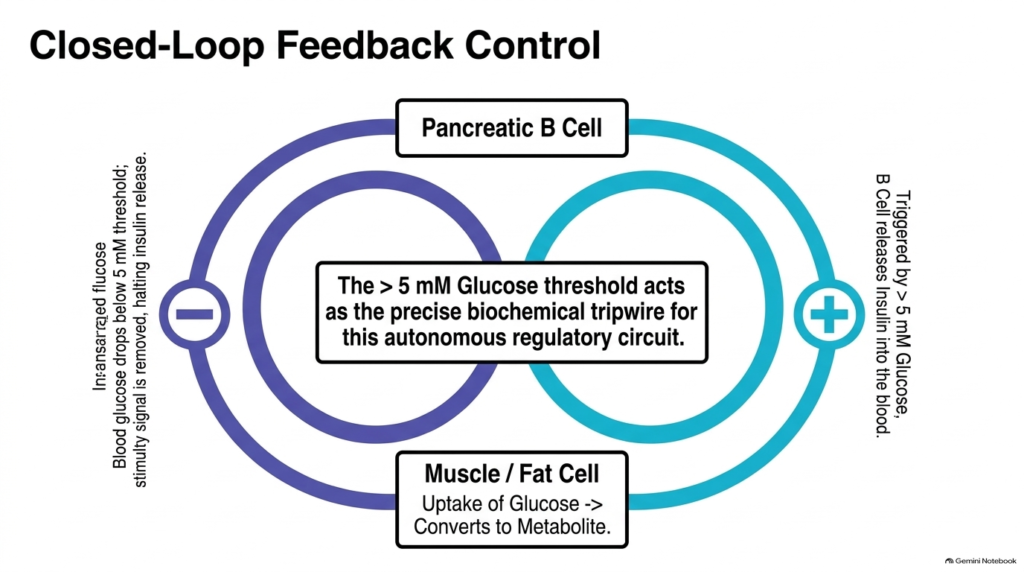
Simple autonomous circuits provide essential homeostatic stability at lower tiers of the Hormone Hierarchy. Pancreatic beta cells regulate blood glucose through a classic closed-loop feedback mechanism. When plasma glucose concentrations exceed the precise threshold of five millimolar, beta cells detect this metabolic trigger and secrete insulin into the bloodstream. Insulin binds to receptors on skeletal muscle and adipose cells, promoting rapid glucose uptake and metabolic conversion. As target tissues absorb glucose, circulating blood sugar levels drop below the initial activation tripwire, removing the stimulatory signal and halting further insulin release.
This self-regulating circuit operates independently without requiring direct neuroendocrine cascade intervention from upper command nodes within the Hormone Hierarchy. The metabolite itself serves as the primary feedback variable, establishing a direct relationship between nutrient availability and hormonal output. By continually adjusting secretion based on immediate substrate availability, closed-loop loops prevent dangerous metabolic spikes or crashes. Understanding these localized circuits clarifies how foundational feedback mechanisms maintain physiological balance alongside higher-tier regulatory controls governed by the Hormone Hierarchy.
Slide 08: General Structure of the Neuroendocrine Hormone Hierarchy
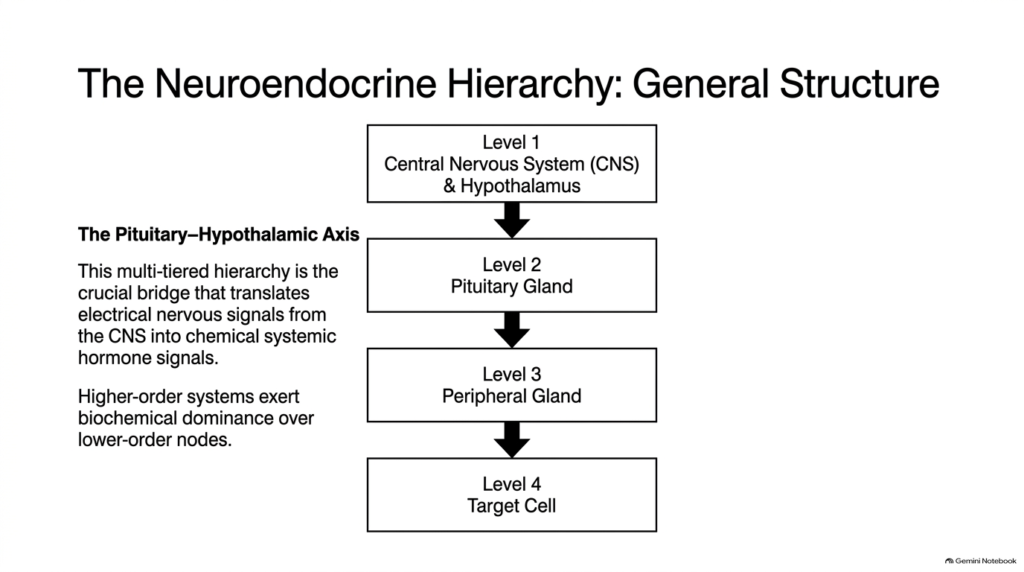
A multi-tiered architecture known as the neuroendocrine Hormone Hierarchy governs complex physiological processes. This structure consists of four sequential functional levels that bridge central neural commands with distant peripheral cellular targets. At Level One, the central nervous system and hypothalamus evaluate physiological inputs and synthesize initiating neurohormones. Level Two consists of the pituitary gland, which receives hypothalamic signals and secretes intermediate tropic hormones into systemic circulation. Level Three involves peripheral endocrine glands, which synthesize primary glandular hormones. Finally, Level Four represents specific target cells that execute final physiological responses.
This multi-tiered organization allows the central nervous system to exert dominant control over distant metabolic activities across the Hormone Hierarchy. Signal transmission flows sequentially from top to bottom, with higher-order centers amplifying initial neural signals into broad hormonal responses. By organizing chemical communication into structured functional levels, the body achieves remarkable precision in controlling complex physiological events. Each level acts as an administrative checkpoint, transforming higher-order command signals into targeted biochemical changes while preserving homeostatic balance across the entire Hormone Hierarchy.
Slide 09: Liberins and Statins as Master Switches in the Hormone Hierarchy
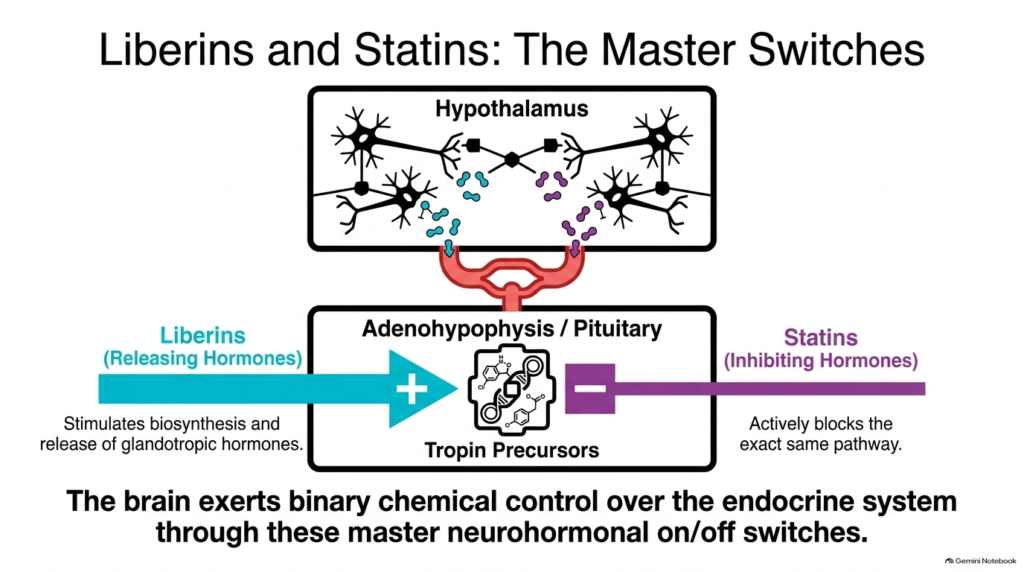
The hypothalamus uses master neurohormonal switches to direct signal transmission down the Hormone Hierarchy. Specialized neurosecretory neurons synthesize and release two opposing classes of regulatory factors directly into the hypophyseal portal system. Liberins, also known as releasing hormones, deliver positive stimulatory signals to the adenohypophysis, driving the biosynthesis and secretion of specific tropins. Conversely, statins, or inhibiting hormones, convey negative inhibitory signals that actively block tropin production. By balancing liberin acceleration against statin suppression, the brain maintains binary chemical control over anterior pituitary output.
This dual-control mechanism provides extreme sensitivity at the apex of the Hormone Hierarchy. Rather than relying solely on signal decay, the central nervous system actively turns off endocrine pathways using statin inhibition when rapid physiological shutdown is required. Small variations in the ratio of circulating liberins to statins dramatically alter pituitary tropin synthesis. This fine-tuned neurohumoral switch ensures that downstream glandular activation mirrors central neural processing, showing how top-level neurohormonal control dictates activity across the entire Hormone Hierarchy.
Slide 10: Tropins and Long-Loop Negative Feedback in the Hormone Hierarchy
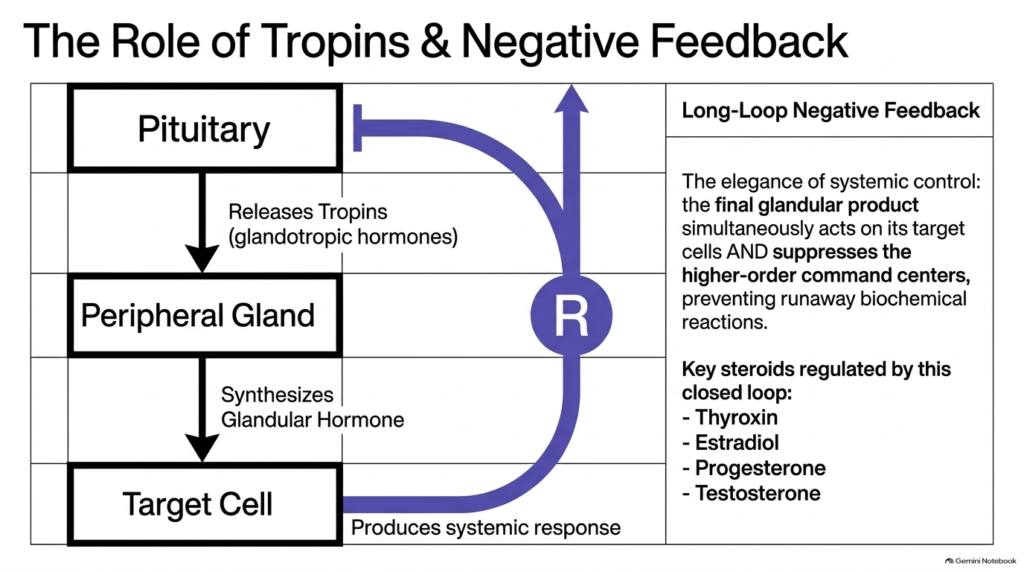
Pituitary tropins act as intermediate accelerometers, stimulating peripheral glands to synthesize primary glandular hormones within the Hormone Hierarchy. Upon receiving liberin signals, the anterior pituitary secretes glandotropic tropins into the blood, where they bind to specific receptors on target glands like the thyroid, adrenal cortex, or gonads. In response, peripheral glands release active steroid or peptide hormones, such as thyroxin, cortisol, estradiol, progesterone, or testosterone. These glandular hormones travel through systemic blood to trigger specific cellular responses while simultaneously regulating upstream signaling centers within the Hormone Hierarchy.
Long-loop negative feedback represents the ultimate stabilizing force within this regulatory network. As circulating glandular hormone concentrations rise, these final products travel back to bind receptors on both the pituitary gland and hypothalamus. This binding suppresses further secretion of upstream liberins and tropins, shutting off the initial stimulatory drive and preventing runaway biochemical reactions. By coupling top-down tropin stimulation with bottom-up negative feedback, the Hormone Hierarchy maintains tight, self-correcting control over key endocrine axes, preserving systemic homeostasis across diverse physiological conditions.
Please read our Content Disclaimer Statement.
Check out our social media channels: