125. Renal Acid-Base Balance: How Kidneys Regulate Blood pH and Cellular Homeostasis
Every single second, cellular metabolism produces acids that threaten the delicate pH of human blood. If plasma pH drops below 7.35, critical enzymes fail, and bodily functions rapidly shut down. While the lungs provide rapid ventilation responses, the kidneys do the heavy lifting for long-term physiological stability. This slide deck explores how renal tubule cells manage proton excretion, bicarbonate recovery, and urinary buffering. Through precise transport mechanisms and metabolic pathways, students will discover the biochemical foundations of systemic acid-base regulation.
Slide 01: Introduction to Renal Acid-Base Balance and Tubule Physiology
Maintaining renal acid-base balance is one of the most vital functions of human nephrons. Blood plasma must remain within a narrow, life-sustaining pH range between 7.35 and 7.45. Even small deviations disrupt enzyme structure, alter membrane potentials, and impair essential cellular signaling across every major organ system. While the lungs remove volatile carbon dioxide, the kidneys handle non-volatile metabolic acids through active transport mechanisms across specialized epithelial membranes.
Understanding Renal Acid-Base Balance requires focusing directly on the specialized biochemical pathways housed within renal tubule cells. These cells act as dynamic gates positioned between circulating blood plasma and forming urine. They continuously sense systemic acid loads, secrete excess hydrogen ions into the tubular fluid, and preserve precious bicarbonate buffers. This spatial separation allows the kidneys to process massive daily acid loads without compromising internal cellular integrity.
Ultimately, Renal Acid-Base Balance relies on precise enzymatic reactions and transport proteins working in perfect harmony. By converting metabolic waste products into transportable molecular forms, tubule cells prevent severe systemic acidosis. Students exploring renal physiology must appreciate this elegant cellular architecture, as it underpins clinical fluid management, renal pathology, and systemic electrolyte balance across diverse patient populations.
Slide 02: Managing the Daily Metabolic Acid Load in Renal Acid-Base Balance
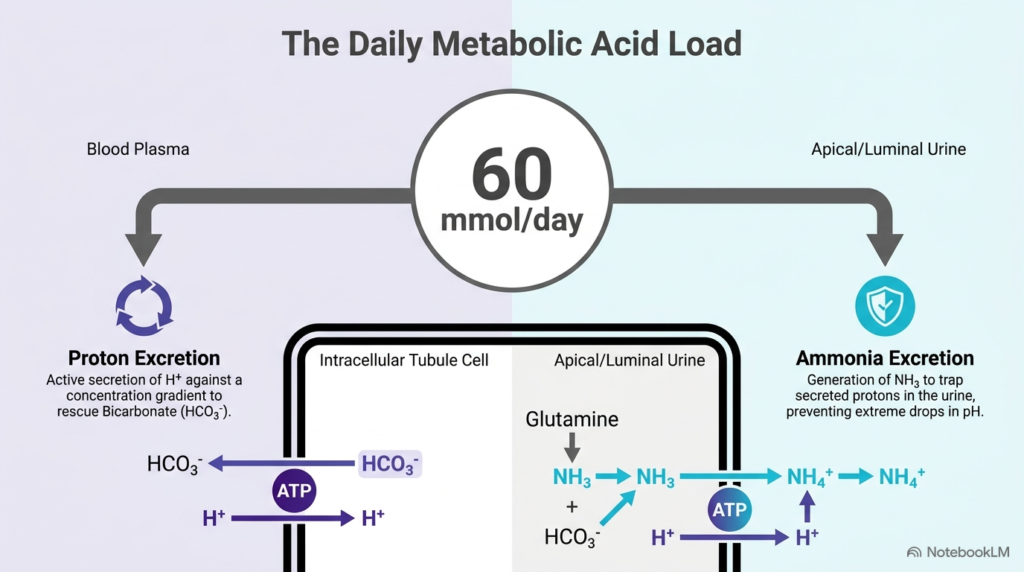
A typical human diet and routine cellular metabolism generate about 60 millimoles of non-volatile metabolic acid every day. To preserve Renal Acid-Base Balance, the kidneys must continuously excrete this substantial acid load into the forming urine. Simple passive excretion is insufficient because free hydrogen ions would quickly lower urinary pH to levels lethal to cells. Consequently, tubule cells employ two distinct biochemical strategies: active proton secretion and specialized ammonia excretion.
Proton secretion is the primary defense in maintaining systemic Renal Acid-Base Balance. Tubule cells utilize specialized transport proteins to pump hydrogen ions against steep concentration gradients into the tubular lumen. This active process not only eliminates free protons but also rescues filtered bicarbonate ions from permanent loss in the urine. Bicarbonate reabsorption effectively neutralizes incoming metabolic acids in systemic blood and maintains systemic buffer capacity.
Simultaneously, ammonia excretion plays a decisive buffering role in Renal Acid-Base Balance. Renal cells synthesize neutral ammonia gas from amino acid precursors like circulating glutamine. As ammonia diffuses into the acidic luminal fluid, it rapidly binds free hydrogen ions to form ammonium. This reaction traps protons within the urine, allowing the kidneys to clear large acid loads without causing excessive urinary acidification or internal cellular damage.
Slide 03: The Three Spatial Domains of Renal Acid-Base Balance
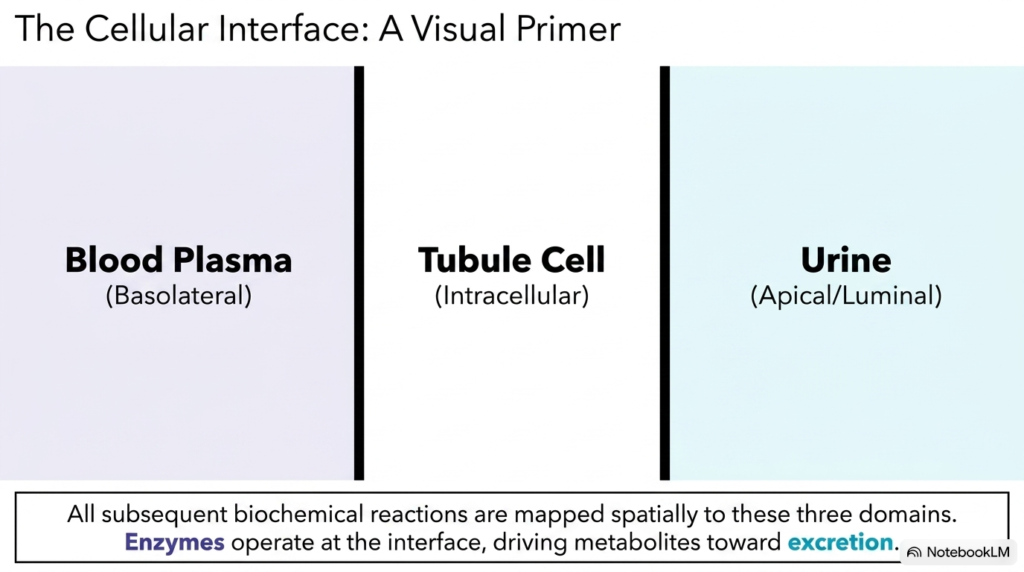
Biochemical reactions supporting Renal Acid-Base Balance occur across three distinct spatial compartments within renal tissue. The first domain is the basolateral blood plasma, which carries systemic nutrients, metabolic waste, and filtered blood buffers. The second domain is the intracellular tubule cell cytoplasm, where metabolic enzymes generate essential substrates. The third domain is the apical luminal urine, which receives secreted ions and carries waste products out of the human body.
Mapping these three domains is essential for understanding how Renal Acid-Base Balance functions at the precise molecular level. Polarized epithelial membranes separate the circulating blood from the tubular lumen, ensuring that transport proteins remain restricted to specific cell faces. Basolateral transporters exchange ions with systemic blood, while apical transporters interact directly with forming urine. This organized spatial arrangement prevents unwanted back-diffusion of toxic metabolic waste products.
Enzymes operating within these specialized compartments drive Renal Acid-Base Balance toward highly efficient acid excretion. By localizing specific transport pumps and catalytic proteins to either the apical or basolateral membrane, renal cells establish unidirectional movement of protons and bicarbonate. Students should view the tubule cell as a microscopic factory, transforming metabolic input into regulated chemical output to preserve systemic pH homeostasis under changing physiological conditions.
Slide 04: Intracellular Proton Generation in Renal Acid-Base Balance
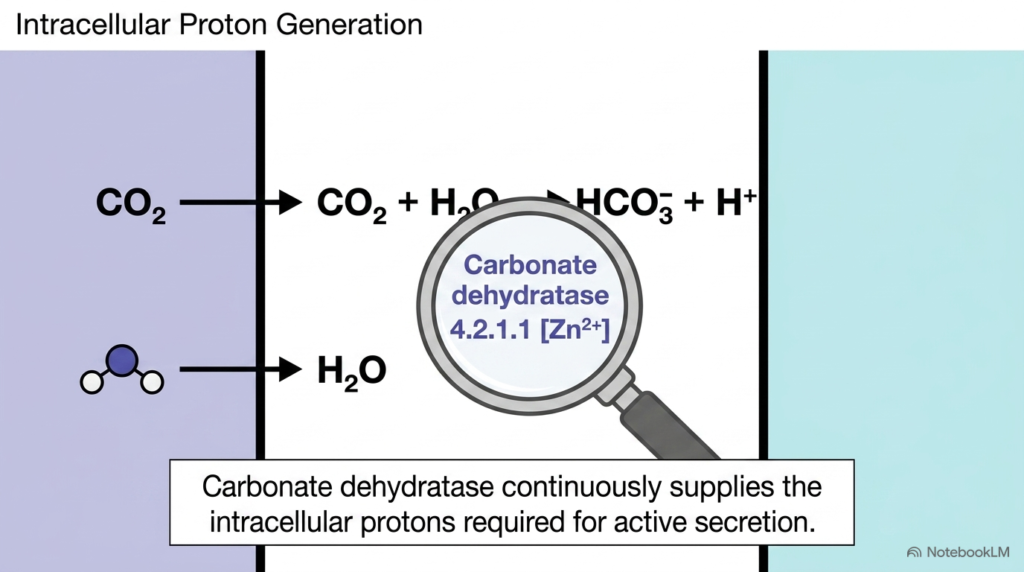
Inside the renal tubule cell, continuous intracellular proton generation is essential to sustain renal acid-base balance. Carbon dioxide diffuses freely from circulating blood plasma into the cytoplasm, where it combines with intracellular water molecules. This hydration reaction forms carbonic acid, which rapidly dissociates into a free hydrogen ion and a bicarbonate anion. This simple chemical sequence provides the steady stream of protons required for active luminal acid secretion.
The enzyme carbonate dehydratase, also known as carbonic anhydrase, drives this central biochemical process of Renal Acid-Base Balance. Containing a critical zinc ion cofactor, this enzyme accelerates the hydration of carbon dioxide by several orders of magnitude. Without carbonic anhydrase, proton production would proceed far too slowly to meet daily metabolic demands. Intracellular protons are immediately targeted for luminal transport, while newly synthesized bicarbonate enters systemic blood to bolster plasma buffer reserves.
Sustaining Renal Acid-Base Balance requires tight physiological coordination between intracellular enzyme activity and membrane transport proteins. Carbonic anhydrase operates continuously at the cellular interface, ensuring that proton supply matches systemic acid burden. By coupling carbon dioxide hydration directly to ion secretion, renal tubule cells maintain an uninterrupted capacity to excrete metabolic acid and reclaim vital blood plasma buffers during daily dietary shifts.
Slide 05: Secondary Active Transport Driving Renal Acid-Base Balance
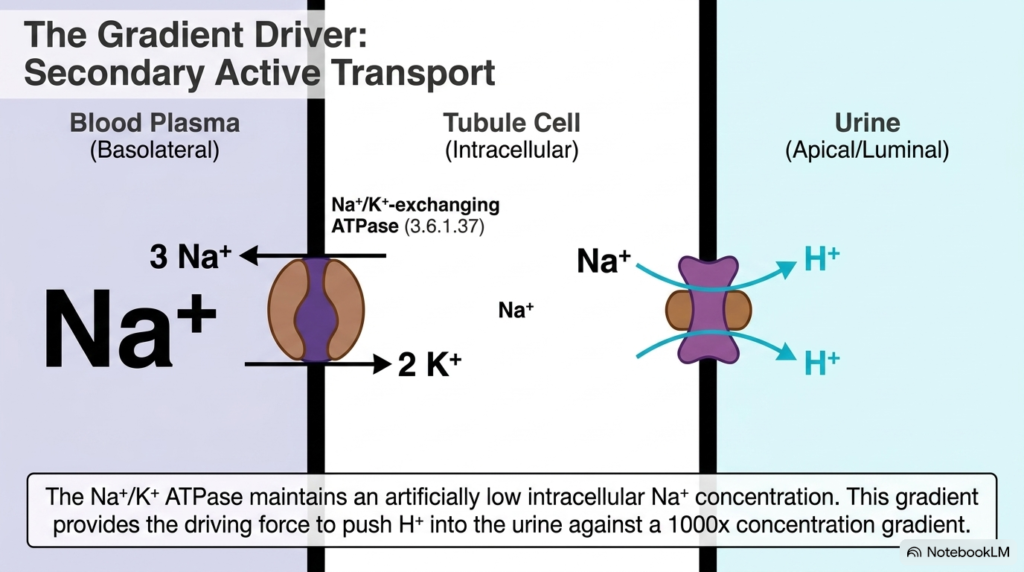
Pumping hydrogen ions into tubular fluid against a thousand-fold concentration gradient requires significant energy expenditure in Renal Acid-Base Balance. Renal tubule cells achieve this daunting task through secondary active transport mechanisms, leveraging sodium ion gradients established by primary ATP hydrolysis. The primary engine resides on the basolateral membrane, where sodium-potassium ATPase continuously pumps three sodium ions into the blood while moving two potassium ions into the cytoplasm.
This basolateral pumping action creates a steep electrochemical sodium gradient that fuels Renal Acid-Base Balance. Intracellular sodium levels drop significantly below the sodium concentration maintained in the tubular lumen. Apical transport proteins, such as the sodium-hydrogen antiporter, directly harness this inward sodium gradient. As sodium diffuses down its concentration gradient into the tubule cell, the antiporter forcibly ejects hydrogen ions out into the forming urine against severe gradients.
Through this elegant mechanism, Renal Acid-Base Balance couples sodium reabsorption directly to active proton elimination. Energy spent at the basolateral membrane indirectly powers apical transport without requiring direct ATP hydrolysis at the luminal border. This cooperative transport architecture allows renal tubule cells to clear enormous quantities of acid while simultaneously conserving essential extracellular sodium electrolytes needed for systemic blood volume regulation.
Slide 06: Bicarbonate Resorption and Recycling in Renal Acid-Base Balance
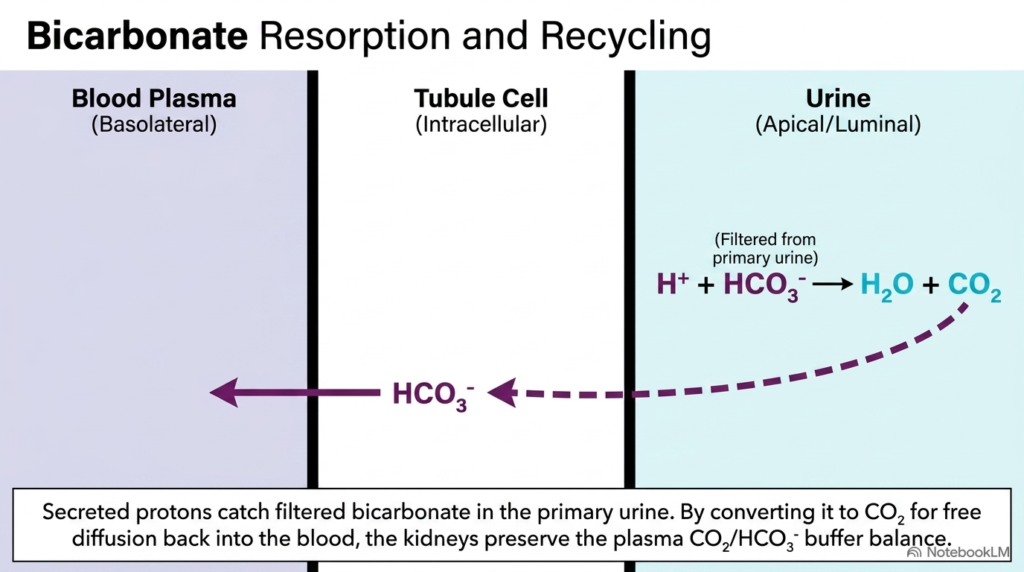
Filtered bicarbonate represents a major blood plasma buffer that must be fully reclaimed to preserve Renal Acid-Base Balance. Glomerular capillaries filter thousands of millimoles of bicarbonate daily into the primary urine. Because apical cell membranes are impermeable to charged bicarbonate ions, tubule cells cannot directly absorb them from the tubular lumen. Instead, the kidneys use a clever chemical recycling loop that relies on secreted hydrogen ions.
Secreted hydrogen ions combine directly with filtered bicarbonate in the tubular fluid, establishing a key step in Renal Acid-Base Balance. Luminal carbonic anhydrase rapidly converts this carbonic acid intermediate into water and carbon dioxide gas molecules. Unlike charged ions, uncharged carbon dioxide gas diffuses effortlessly across the apical membrane back into the tubule cell cytoplasm. Once inside, intracellular enzymes hydrate carbon dioxide back into bicarbonate and protons.
This recycling mechanism is fundamental to overall systemic Renal Acid-Base Balance. The regenerated bicarbonate anion exits the basolateral membrane into systemic blood plasma, while the regenerated proton returns to the lumen to catch another filtered bicarbonate ion. Through this continuous cycle, the kidneys reabsorb virtually all filtered bicarbonate without net loss of systemic buffering capacity or internal cellular disruption in healthy human individuals across lifetime physiological demands.
Slide 07: Physiological Limits of Free Protons in Renal Acid-Base Balance
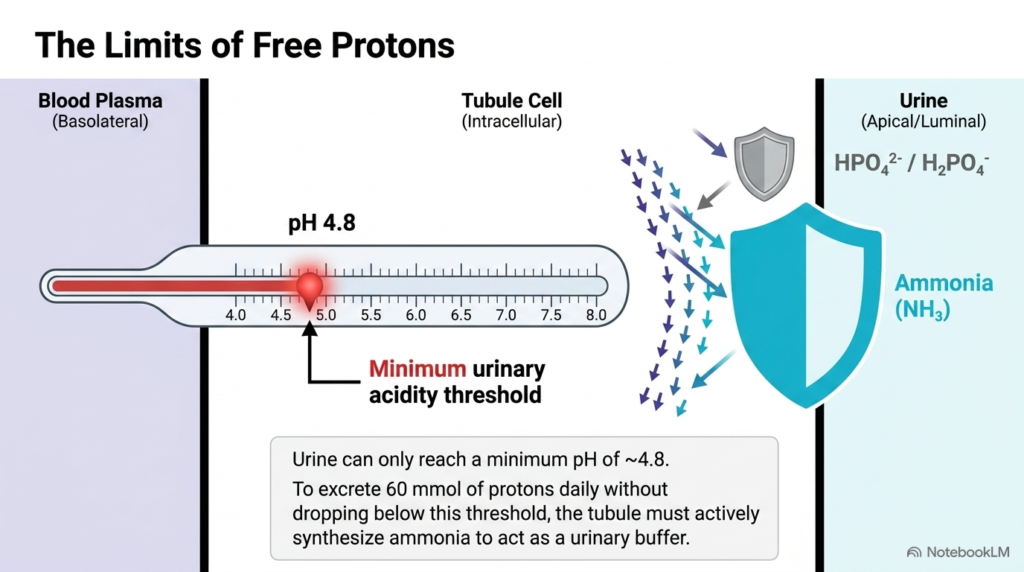
Renal tubule cells face a strict physiological limit when maintaining systemic Renal Acid-Base Balance. Active transport pumps on the apical membrane can secrete protons only until luminal urine reaches a minimum pH threshold of about 4.8. Below this steep gradient threshold, the proton concentration in urine becomes so high that active transport pumps can no longer overcome the electrochemical back-pressure.
If the human body relied solely on unbuffered proton excretion, Renal Acid-Base Balance would fail rapidly under normal conditions. Excreting the daily 60 millimoles of metabolic acid as free protons would require generating hundreds of liters of urine every single day. Because such massive fluid loss is physiologically impossible, the renal system must utilize urinary chemical buffers to bind free hydrogen ions within the tubular lumen during daily excretion cycles.
Filtered phosphate and synthesized ammonia provide the necessary buffering capacity for Renal Acid-Base Balance. Monohydrogen phosphate binds free protons to form dihydrogen phosphate, neutralizing acid without lowering luminal pH. However, ammonia synthesis represents the primary adaptable buffer system. By converting free protons into trapped ions, these buffers enable the excretion of massive acid loads while keeping urinary pH safely above the critical limit of 4.8.
Slide 08: Glutamine as the Primary Carrier in Renal Acid-Base Balance
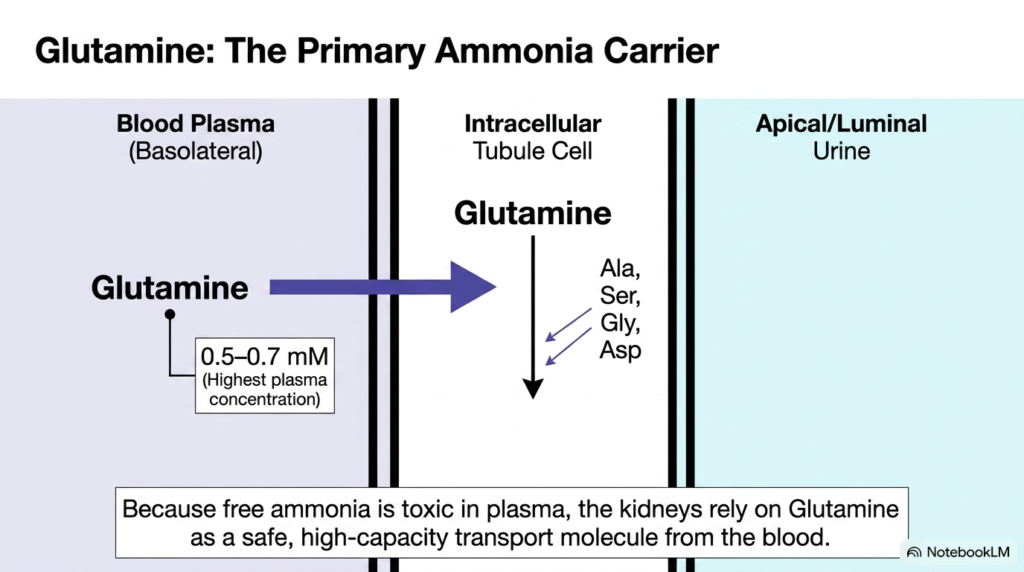
Ammonia is a powerful urinary buffer, but free ammonia gas is extremely toxic to brain cells and systemic tissues. To transport nitrogen safely through the vascular circulation, the liver packages metabolic waste into the non-toxic amino acid glutamine. Glutamine circulates at concentrations between 0.5 and 0.7 millimolar, making it the most abundant circulating amino acid carrier in human blood plasma.
Renal tubule cells import circulating glutamine across their basolateral membranes to support Renal Acid-Base Balance. Specialized amino acid transporters carry glutamine from blood plasma directly into the tubule cytoplasm. Once inside the renal cell, glutamine serves as a secure molecular reservoir for ammonia synthesis. This targeted delivery system prevents toxic free ammonia from accumulating in the systemic circulation while supplying tubule cells with vital metabolic precursors.
Using glutamine as an ammonia transport vehicle is a masterclass in Renal Acid-Base Balance. Renal cells can extract nitrogen on demand without exposing other organ systems to chemical damage. Once imported, glutamine undergoes enzymatic cleavage to yield both buffering ammonia molecules and carbon skeletons for energy production, aligning nitrogen metabolism with systemic acid elimination across varied nutritional states in health and disease.
Slide 09: Intracellular Enzymatic Cleavage in Renal Acid-Base Balance
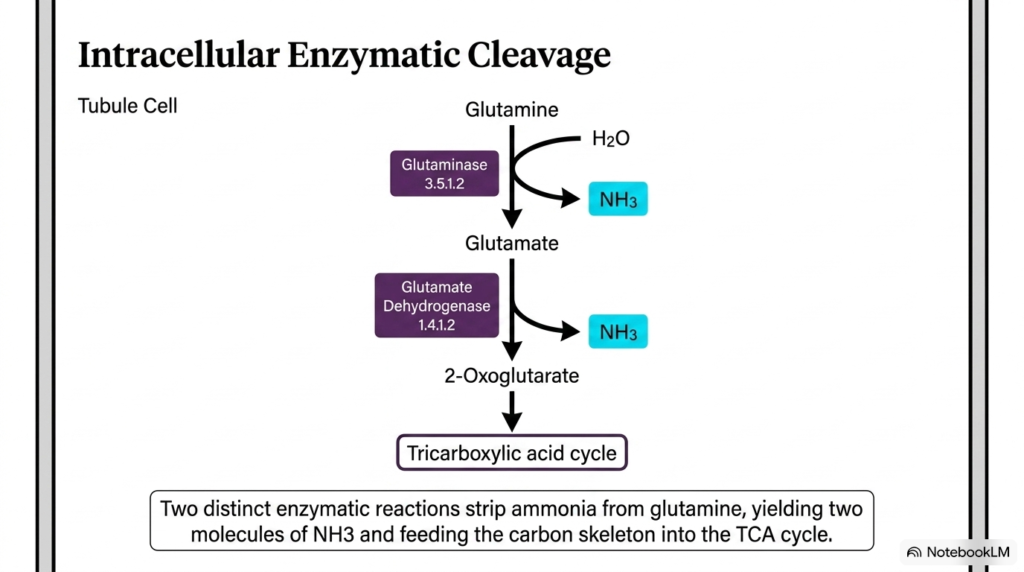
Inside the tubule cell mitochondria, two sequential enzymatic reactions unlock the essential buffering potential required for Renal Acid-Base Balance. First, the mitochondrial enzyme glutaminase hydrolyzes imported glutamine, producing one molecule of glutamate and releasing one molecule of free ammonia gas. This initial cleavage step successfully releases toxic nitrogen in a controlled manner while generating a secondary amino acid intermediate for further intracellular metabolic processing.
Next, glutamate dehydrogenase carries out the second critical cleavage step that supports renal acid-base balance. This mitochondrial enzyme oxidizes glutamate into 2-oxoglutarate, releasing a second molecule of free ammonia alongside reduced electron carriers like NADH. The resulting 2-oxoglutarate carbon skeleton enters the tricarboxylic acid cycle, where complete oxidation yields cellular ATP energy and newly synthesized bicarbonate ions that exit into systemic blood plasma to replenish buffer capacity.
These dual enzymatic steps are indispensable for maintaining overall Renal Acid-Base Balance. Extracting two ammonia molecules from a single glutamine precursor effectively doubles the total buffering capacity of renal tubule cells. By coupling nitrogen removal directly to energy production and new bicarbonate synthesis, tubule cells efficiently neutralize incoming metabolic acids while generating the metabolic energy needed to fuel active membrane transport mechanisms across renal epithelia.
Slide 10: The Ion Trap Mechanism in Renal Acid-Base Balance
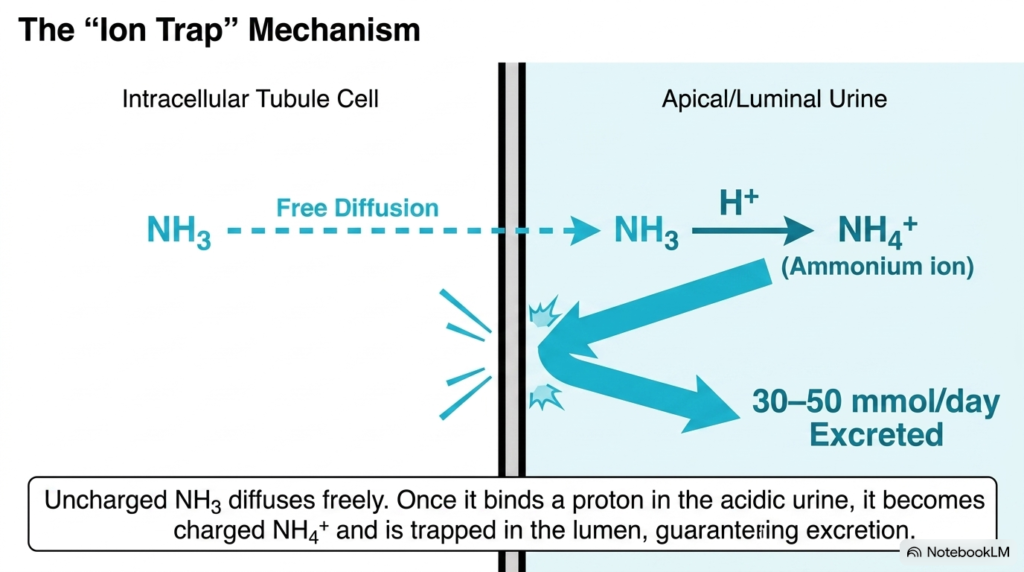
The final stage of urinary acid elimination relies on an elegant physical process central to Renal Acid-Base Balance: the ion trap mechanism. Uncharged ammonia gas produced inside tubule cells is highly lipid-soluble and diffuses freely across the apical membrane into the tubular lumen. Because the luminal fluid is acidic due to continuous active proton secretion, neutral ammonia rapidly encounters free hydrogen ions in the tubular fluid.
Upon binding a proton in the acidic lumen, neutral ammonia converts into the charged ammonium ion, reinforcing Renal Acid-Base Balance. Unlike uncharged ammonia gas, the charged ammonium ion cannot cross the hydrophobic lipid bilayer of the apical membrane to return to the cell. Trapped within the tubular fluid, ammonium ions are forced to flow down the nephron collecting duct system and exit the human body through routine urine excretion.
This ion trapping phenomenon drives the elimination of 30 to 50 millimoles of metabolic acid daily in Renal Acid-Base Balance. By continuously removing free hydrogen ions from solution, ammonium formation maintains a favorable concentration gradient for ongoing ammonia diffusion. This continuous chemical sink allows the kidneys to excrete substantial acid loads without exceeding the physiological urinary pH limit under routine physiological conditions in humans.
Slide 11: Clinical Adaptation to Acidosis in Renal Acid-Base Balance
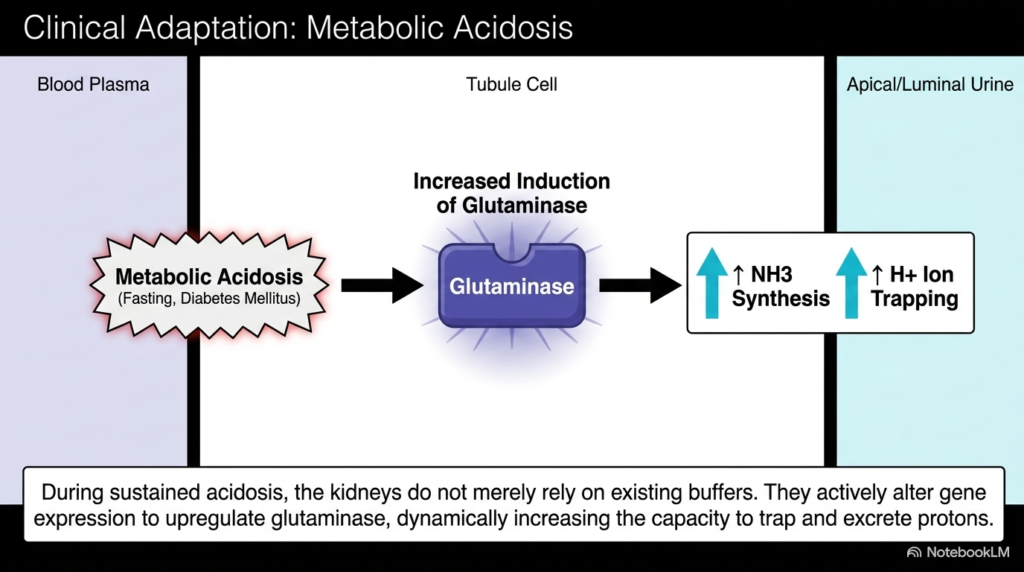
During chronic pathological conditions such as diabetic ketoacidosis or prolonged starvation fasting, Renal Acid-Base Balance undergoes profound physiological adaptation. Severe metabolic acidosis introduces massive surges of organic ketoacids into systemic circulation, threatening to overwhelm baseline renal buffer capacity. Rather than relying on static transport rates, the kidneys dynamically expand their functional enzymatic capacity to excrete excess protons into tubular fluid during systemic acid challenges.
To counteract severe acidosis and restore systemic Renal Acid-Base Balance, tubule cells actively alter gene expression to upregulate key metabolic enzymes. Signals from low systemic blood pH stimulate increased transcription and translation of renal glutaminase. Within hours to days, higher glutaminase enzyme concentrations dramatically accelerate intracellular glutamine cleavage, resulting in a substantial rise in total ammonia synthesis within renal tubule mitochondria across proximal tubule segments.
This inducible enzymatic response represents a vital clinical defense mechanism in Renal Acid-Base Balance. Increased ammonia production supplies abundant luminal buffers, enabling tubule cells to trap and excrete significantly larger quantities of hydrogen ions under high acid stress. Understanding this adaptive gene regulation helps clinicians evaluate how patients recover from severe metabolic acid-base disorders over extended clinical timeframes in intensive hospital environments across critical care medicine.
Slide 12: Comprehensive Mechanism Synthesis of Renal Acid-Base Balance
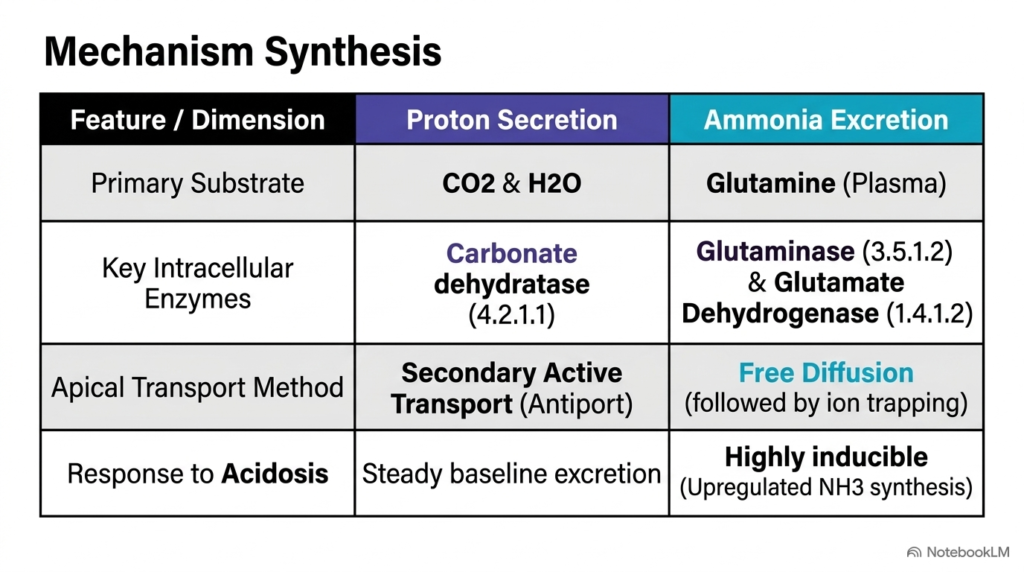
A complete understanding of Renal Acid-Base Balance requires synthesizing proton secretion and ammonia excretion into an integrated functional physiological model. Proton secretion utilizes carbon dioxide and water as primary substrates, relying on carbonic anhydrase to supply intracellular hydrogen ions. These protons undergo secondary active transport across the apical membrane, maintaining baseline acid clearance and preserving filtered bicarbonate buffers for systemic blood plasma across daily metabolic activity.
In contrast, ammonia excretion provides an inducible defense mechanism in renal acid-base balance. Derived from plasma glutamine, ammonia synthesis relies on mitochondrial glutaminase and glutamate dehydrogenase enzymes working in series. Uncharged ammonia gas diffuses passively into the lumen, where ion trapping converts it into charged ammonium. During metabolic acidosis, this pathway scales up dramatically through enzymatic induction, excreting heavy acid loads safely without disrupting internal cellular equilibrium.
Together, these complementary biochemical pathways sustain systemic Renal Acid-Base Balance across varying physiological states. Secondary active transport provides steady baseline proton elimination, while glutamine metabolism supplies adaptable urinary buffering capacity. Mastery of these dual mechanisms equips medical and biochemistry students with the foundational knowledge required to analyze complex renal physiology and clinical acid-base disorders accurately across modern clinical practice and scientific research.
Please read our Content Disclaimer Statement.
Check out our social media channels: