139. Brain Metabolism: Energy Pathways and Neurotransmitter Synthesis
Have you ever wondered why your head feels completely drained after hours of intense studying, even though you were just sitting still at a desk? The human brain is an energy powerhouse, constantly consuming resources to support basic thought and survival. This slide deck explores the fundamental biochemistry of brain metabolism. Across eleven visual slides, we will examine how the central nervous system generates ATP, relies on specific fuel sources, adapts during starvation, and carefully regulates vital neurotransmitters like glutamate and GABA.
Slide 1: Introduction to Brain Metabolism and Neural Energy
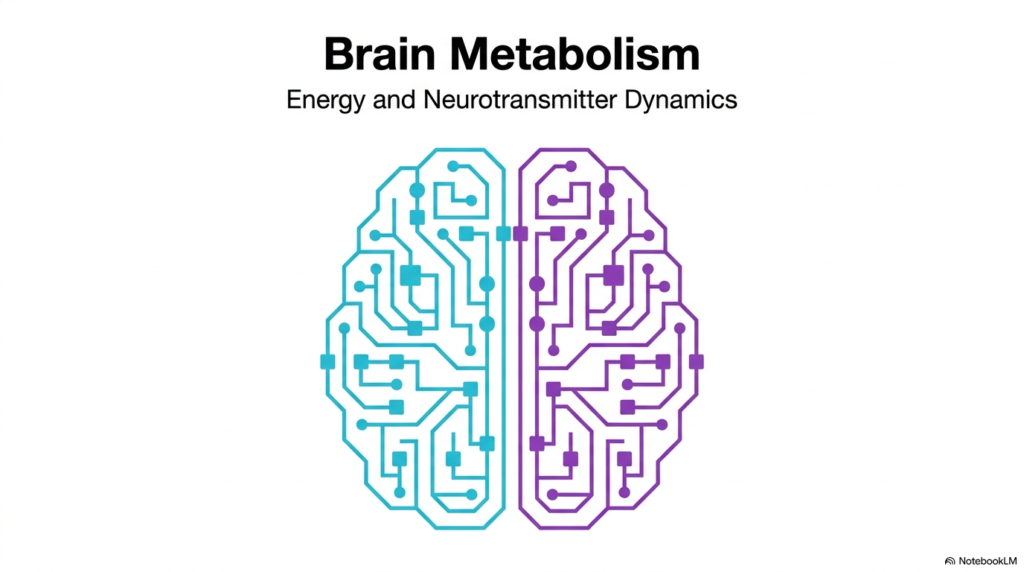
Welcome to our exploration of brain metabolism, the intricate biochemical engine that powers every thought, sensory perception, and motor action in the human body. The central nervous system requires a steady supply of cellular energy to maintain its complex physiological functions. This title slide introduces the core dual themes of neural bioenergetics: energy generation and neurotransmitter dynamics. Understanding brain metabolism requires looking at both how cells produce adenosine triphosphate (ATP) and how they recycle essential chemical messengers.
As we embark on this breakdown, notice how energy production and neuronal signaling are inextricably linked. The brain cannot separate its metabolic fuel intake from its functional output. Throughout this presentation, we will dissect the unique metabolic adaptations that allow neurons and glial cells to cooperate seamlessly. By examining brain metabolism through a molecular lens, students will gain a clear appreciation for how systemic physiology directly impacts central nervous system performance under both healthy and pathological conditions.
Ultimately, studying brain metabolism provides the foundation for understanding complex neurological disorders and clinical emergencies. When energy supply pathways fail, signaling is disrupted immediately. This slide sets the stage for analyzing how specific cellular pathways coordinate energy generation with neurotransmitter synthesis across the central nervous system to support optimal cognition. By understanding these foundational bioenergetic principles, students gain a comprehensive framework for exploring central nervous system function.
Slide 2: Disproportionate ATP Demands in Brain Metabolism
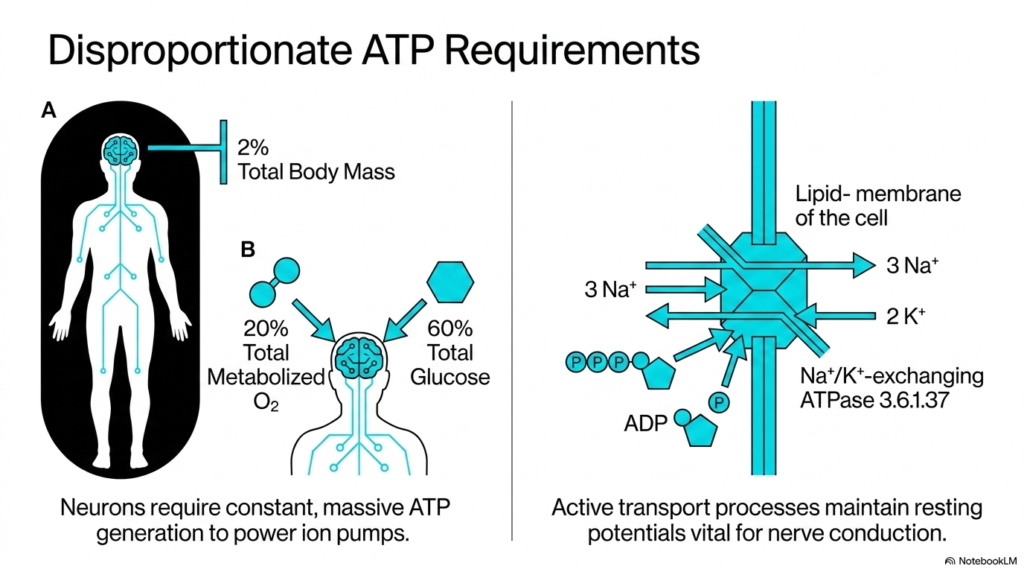
A defining characteristic of brain metabolism is its disproportionate consumption of body energy reserves relative to total tissue mass. Although the adult human brain accounts for only two percent of total body mass, it consumes roughly twenty percent of total oxidized oxygen and sixty percent of total circulating blood glucose. Why does this organ demand such an enormous energetic budget? The answer lies in the electrical nature of nerve cells, which must continuously transport ions against steep electrochemical gradients to remain functional.
To propagate action potentials, neurons rely heavily on active transport mechanisms, primarily the sodium-potassium ATPase pump (EC 3.6.1.37). This membrane-bound enzyme hydrolyzes ATP into ADP and inorganic phosphate to pump three sodium ions out of the cell for every two potassium ions pumped in. Resting membrane potentials and nerve signal conduction depend entirely on this continuous ion exchange. Consequently, brain metabolism is locked into massive, continuous ATP production simply to keep ion channels ready for electrical firing.
Without this continuous ATP expenditure, resting potentials collapse, rendering neurons incapable of sending signals. This high metabolic baseline explains why interrupting blood flow causes instant neurological deficits. Thus, brain metabolism prioritizes ion-gradient maintenance above all other metabolic tasks, ensuring neural circuits remain constantly primed for immediate electrical communication. Energy generation must continuously match ion flux to prevent neuronal exhaustion.
Slide 3: Glucose Dependence and Constraints in Brain Metabolism
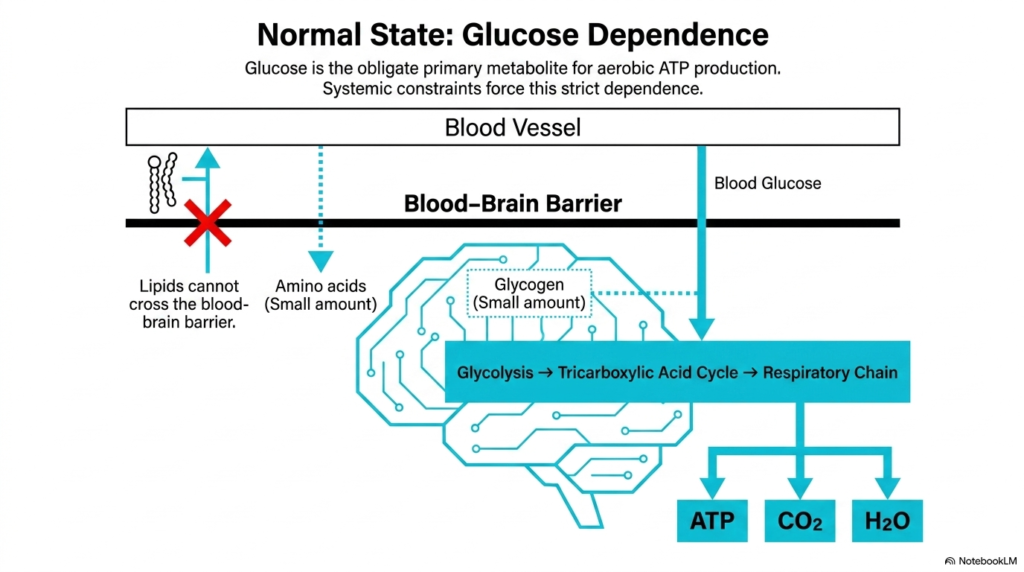
Under normal physiological conditions, brain metabolism obligately depends on blood glucose for aerobic ATP generation. Systemic anatomical constraints force this strict metabolic preference. The blood-brain barrier serves as a highly selective biological wall that prevents circulating lipids from entering neural tissue. Because fatty acids cannot cross this barrier to undergo beta-oxidation, and because neural tissue stores only minimal amounts of glycogen, the central nervous system cannot rely on fat stores for quick fuel. This strict reliance makes uninterrupted vascular flow paramount.
Instead, blood glucose crosses the blood-brain barrier via specialized transport proteins to feed directly into aerobic pathways. Once inside neural cells, glucose undergoes glycolysis, passes into the tricarboxylic acid cycle, and fuels the mitochondrial electron transport chain. This complete oxidative pathway yields abundant ATP, along with carbon dioxide and water. Because glycogen stores are minimal, any interruption of glucose delivery severely disrupts brain metabolism, leaving neurons vulnerable to rapid energetic failure.
This strict glucose requirement makes continuous blood perfusion essential for normal cognition. While other tissues can easily switch to fatty acid oxidation at rest, the brain must continuously process carbohydrates to sustain life-critical cellular processes and prevent catastrophic functional decline across neural networks. Without constant carbohydrate influx, central nervous functions rapidly decline.
Slide 4: Acute Metabolic Failures in Brain Metabolism
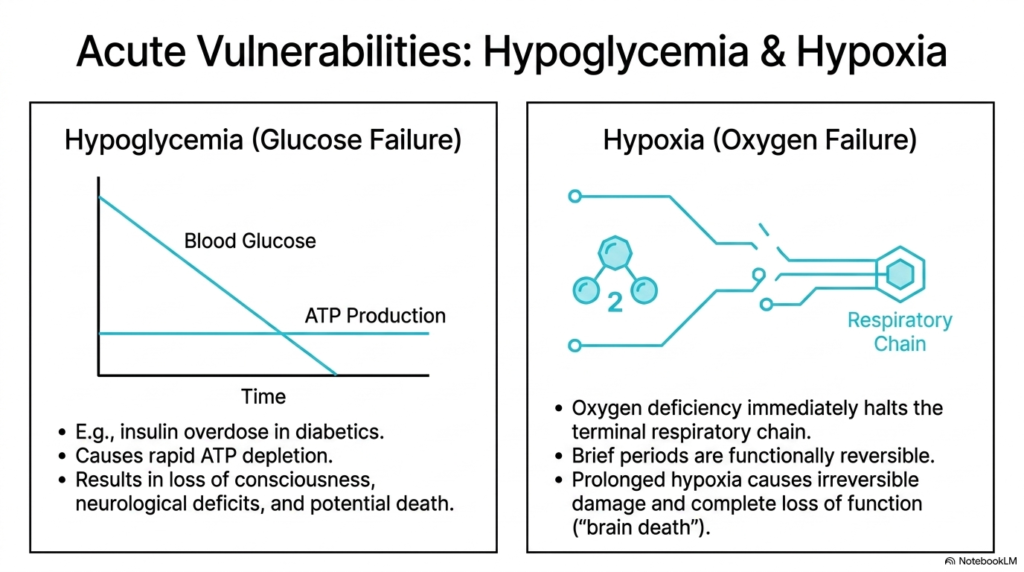
Because the brain relies so heavily on continuous fuel and oxygen, its metabolism remains highly vulnerable to sudden disruptions. Sudden drops in blood glucose swiftly incapacitate neural circuits. This slide highlights two acute pathological conditions: hypoglycemia and hypoxia. Hypoglycemia represents fuel failure, where circulating blood glucose levels drop precipitously due to events like an insulin overdose. As glucose supplies vanish, cellular ATP production crashes rapidly, leading to swift loss of consciousness, severe neurological impairment, and potential cell death if untreated.
Conversely, hypoxia represents oxidation failure. When oxygen supplies are cut off, the mitochondrial respiratory chain loses its terminal electron acceptor, halting oxidative phosphorylation instantly. While very brief periods of oxygen deprivation are functionally reversible, prolonged hypoxia leads to irreversible structural damage and total loss of function, clinically recognized as brain death. Both conditions illustrate why uncompromised brain metabolism is essential for immediate neurological survival. Oxygen dependency dictates that even brief ischemic events trigger immediate cellular stress pathways within mitochondria.
In clinical settings, rapid recognition of these failures is critical. Restoring glucose or oxygen delivery can restore brain metabolism if done within tight therapeutic timeframes, underscoring the fragility of neural bioenergetics under acute stress and the need for continuous systemic vascular support. Immediate therapeutic intervention is necessary to prevent permanent neurological deficits and preserve brain metabolism. Emergency medicine focuses heavily on preserving cerebral perfusion pressure to prevent catastrophic metabolic collapse.
Slide 5: Ketone Adaptation During Starvation in Brain Metabolism
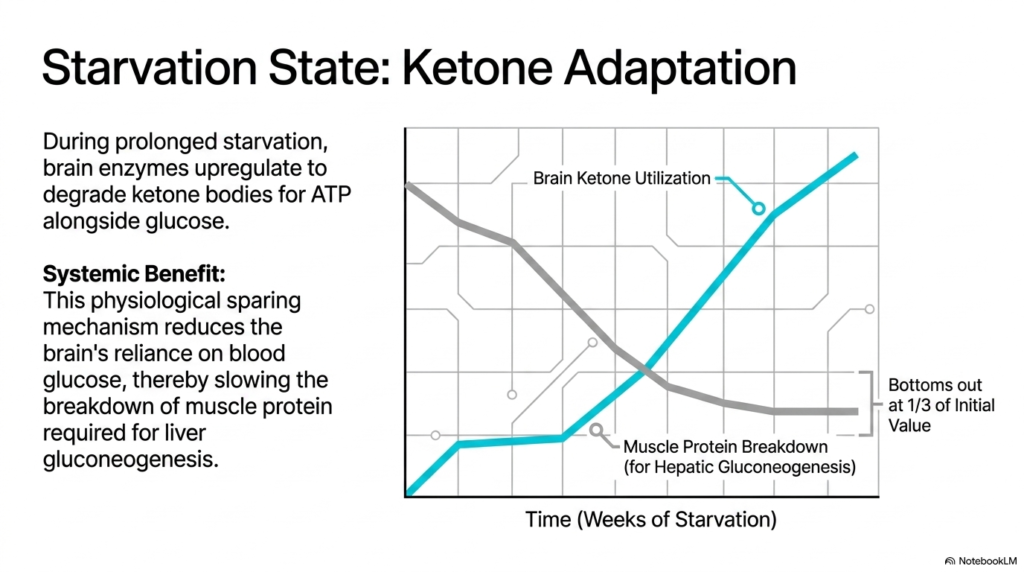
During prolonged fasting or starvation, brain metabolism demonstrates remarkable biochemical flexibility by adapting to alternative energy substrates. Ketone utilization helps keep critical cognitive centers active during food shortages. As blood glucose levels fall over several weeks, hepatic pathways produce ketone bodies like acetoacetate and beta-hydroxybutyrate. In response, neural tissues upregulate specific enzymes that break down ketone bodies to generate ATP alongside remaining glucose supplies. This metabolic shift is a vital survival strategy for the entire organism during prolonged starvation.
The systemic benefit of this adaptation is profound. By using ketone bodies, the brain significantly reduces its daily requirement for blood glucose. This physiological sparing mechanism decreases the need for hepatic gluconeogenesis, which relies on amino acids harvested from skeletal muscle breakdown. As a result, muscle protein degradation bottoms out to one-third of its initial rate, preserving body structure while keeping brain metabolism fully operational during extended nutrient deprivation.
This metabolic shift proves that neural tissue can pivot away from exclusive glucose consumption when survival demands it. By substituting ketones for glucose, the brain protects essential body mass while maintaining cognitive function, showcasing an extraordinary evolutionary defense mechanism against famine. Evolutionary mechanisms prioritize neural energy needs over preserving muscle tissue.
Slide 6: Substrate Comparison in Brain Metabolism
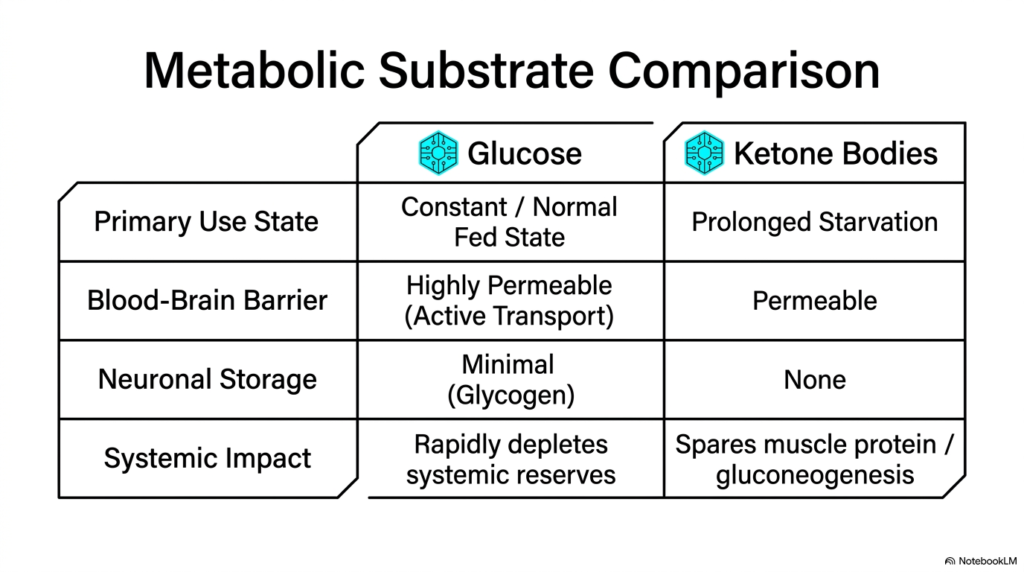
Comparing primary fuel substrates helps clarify the flexible strategy underlying brain metabolism under different physiological conditions. Continuous carbohydrate oxidation remains the primary pathway during fed states. In the fed or normal resting state, blood glucose acts as the exclusive substrate, crossing the blood-brain barrier rapidly via active transport proteins. Neurons store only minimal glycogen, meaning glucose utilization rapidly depletes systemic reserves if food intake ceases. Under these standard conditions, brain metabolism runs purely on continuous carbohydrate oxidation. Carbohydrate catabolism provides the rapid substrate flux required for intense synaptic activity.
In contrast, during prolonged starvation, ketone bodies become permeable alternative fuels that require no systemic glycogen reserves. By transitioning to ketone oxidation, brain metabolism spares skeletal muscle protein and reduces hepatic gluconeogenesis demands. While glucose remains the default primary metabolite for rapid ATP synthesis, ketone adaptation provides a crucial metabolic backup, protecting systemic protein stores during severe nutrient scarcity.
These differences show how substrate availability shapes central nervous system bioenergetics. Whether burning glucose or ketones, the brain maintains strict priority in energy distribution to ensure organ survival and preserve fundamental cognitive processing. Substrate flexibility safeguards central nervous system function across changing nutritional states, maintaining robust brain metabolism regardless of external dietary fluctuations. Dynamic fuel shifting highlights the central nervous system’s metabolic flexibility under severe stress.
Slide 7: Major Neurotransmitters in Brain Metabolism
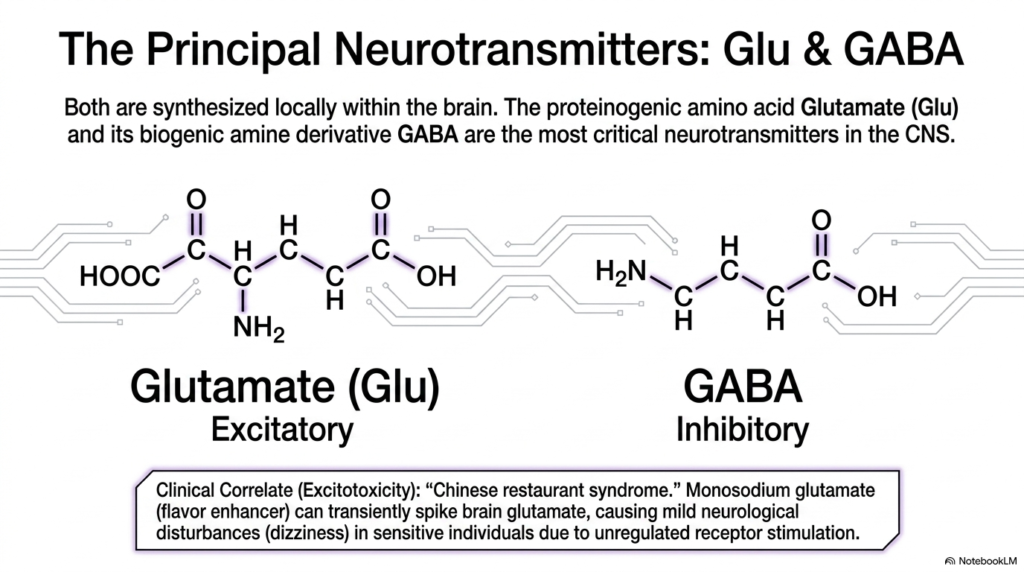
Beyond energy production, brain metabolism is intrinsically linked to the synthesis of essential chemical messengers. Local synthesis avoids dependence on peripheral amino acid fluctuations. Glutamate and gamma-aminobutyric acid (GABA) are the principal excitatory and inhibitory neurotransmitters in the central nervous system, respectively. Both compounds are synthesized locally within neural tissue. Glutamate is a proteinogenic amino acid that promotes signal transmission, whereas GABA is its biogenic amine derivative that dampens neuronal excitability across synapses. Local biosynthesis ensures a steady supply of neurotransmitters regardless of dietary protein intake.
Because neurotransmitters directly affect electrical signaling, brain metabolism must tightly regulate their extracellular concentration to prevent cellular toxicity. A prominent clinical correlate is excitotoxicity, sometimes linked to monosodium glutamate consumption in sensitive individuals. Unregulated glutamate accumulation can overstimulate postsynaptic receptors, triggering mild neurological symptoms such as dizziness. Thus, brain metabolism must pair energy production with rigorous chemical buffering to maintain neurological stability. Neuronal excitability must remain strictly controlled to avoid seizure activity and metabolic strain.
By synthesizing these opposing neurotransmitters locally, neural cells maintain precise control over circuit excitability. Effective brain metabolism ensures excitation and inhibition remain balanced across neural networks, protecting delicate brain architecture from overstimulation. Balancing excitation and inhibition prevents toxic neuronal overstimulation, ensuring that brain metabolism continues to support clear neural communication. Thus, amino acid metabolism directly underpins electrical balance across all functional brain regions.
Slide 8: The Glial Shuttle in Brain Metabolism
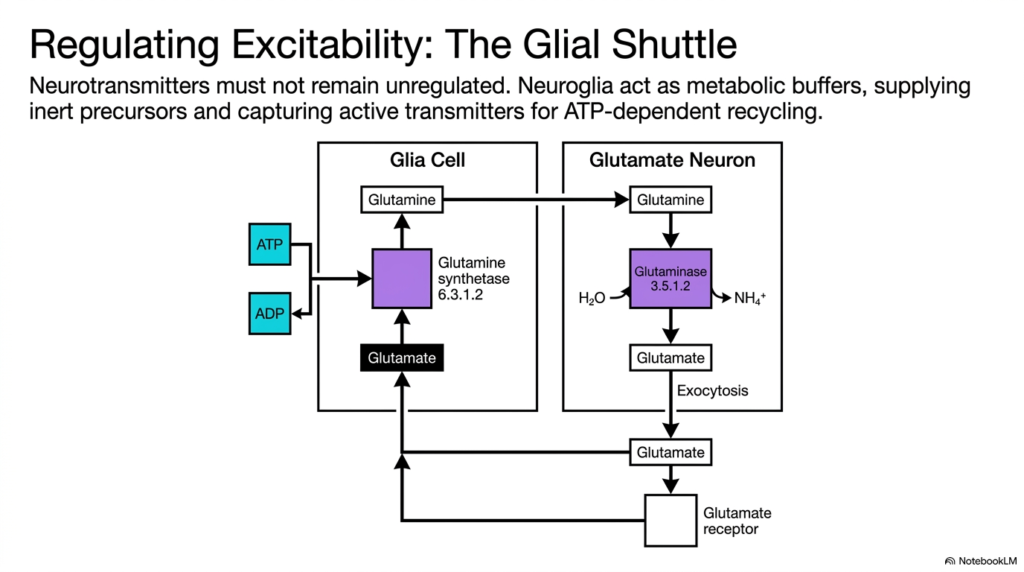
To prevent excitotoxicity, brain metabolism utilizes a specialized intercellular pathway known as the glial shuttle or glutamate-glutamine cycle. Glial cells surround synapses to maintain extracellular homeostasis. Neuroglia, particularly astrocytes, serve as vital metabolic buffers surrounding active synapses. Following neurotransmitter release, glial cells rapidly take up excess synaptic glutamate. Inside the glia, the enzyme glutamine synthetase (EC 6.3.1.2) uses ATP to combine glutamate with ammonium, converting it into inert, non-toxic glutamine. Astrocytes act as sentinel cells, rapidly removing neurotransmitters from synaptic clefts before they become toxic.
Glutamine is safely transported out of glial cells and shuttled back into glutamatergic neurons. Once inside the neuron, the enzyme glutaminase (EC 3.5.1.2) hydrolyzes glutamine back into active glutamate, releasing ammonium. The regenerated glutamate is repackaged into synaptic vesicles for future exocytosis. This ATP-dependent loop demonstrates how brain metabolism coordinates metabolic cooperation between glia and neurons to maintain continuous, safe neurotransmitter recycling. This intricate cell-to-cell trafficking system optimizes precursor availability while consuming minimal net cellular energy.
Without this active recycling mechanism, synaptic spaces would quickly flood with toxic levels of glutamate. The glial shuttle proves that brain metabolism relies heavily on non-neuronal support cells to maintain safe neuronal signaling and prevent catastrophic synaptic degradation. Astrocyte participation is essential for uninterrupted neuronal firing and maintaining overall brain metabolism. Efficient glial-neuronal cooperation ensures that high-frequency synaptic transmission can continue without interruption.
Slide 9: GABA Synthesis Pathways in Brain Metabolism
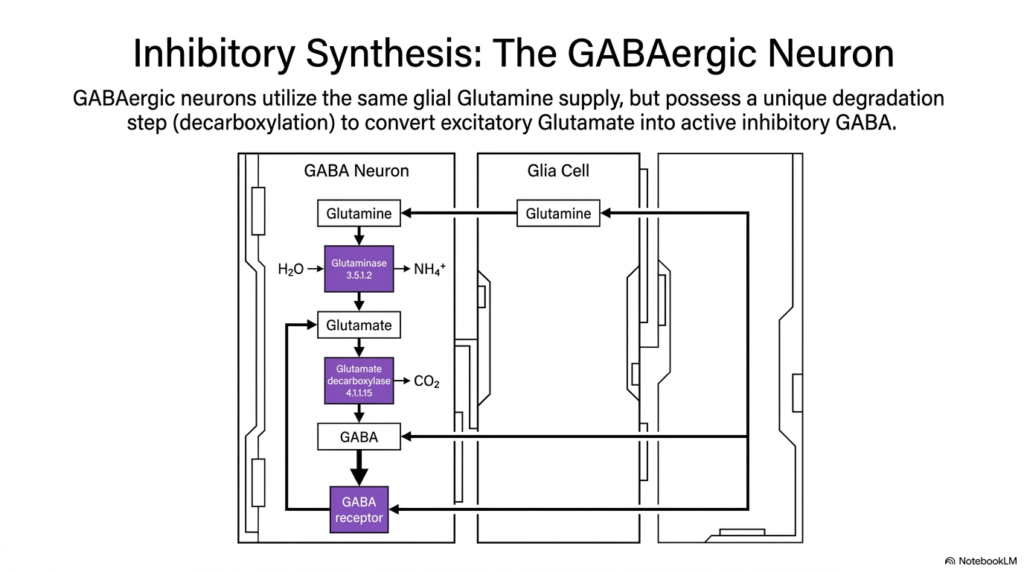
Inhibitory neurotransmission relies on similar intercellular precursor supplies, showcasing the unified design of brain metabolism. Shared enzymatic steps streamline neurotransmitter production across different cell types. GABAergic neurons import the same glial-derived glutamine that excitatory neurons use. Inside the GABAergic neuron, glutamine is first converted to glutamate by the enzyme glutaminase. However, rather than releasing glutamate directly, these specialized neurons possess a unique decarboxylation step that transforms excitatory glutamate into active inhibitory GABA. Specialized GABAergic neurons modulate overall network activity through targeted inhibitory signaling pathways.
Glutamate decarboxylase (EC 4.1.1.15) catalyzes this conversion by removing a carboxyl group as carbon dioxide. Once synthesized, GABA is stored and released into the synaptic cleft to activate GABA receptors on target cells. Afterward, surrounding glial cells collect excess GABA from the synapse. Through this pathway, brain metabolism seamlessly couples excitatory precursor recycling with inhibitory transmitter synthesis. Decarboxylation irrevocably shifts the molecule’s function from excitatory to inhibitory.
This elegant metabolic arrangement allows the brain to generate opposing neurotransmitters from a single shared pool of glutamine. Consequently, brain metabolism maintains circuit stability through shared precursor pathways, optimizing resource usage within complex neural networks. Inhibitory circuits depend on continuous glial delivery of glutamine precursors to sustain healthy brain metabolism. Maintaining this enzymatic balance prevents hyperexcitability and supports coordinated neural oscillations across cortical networks.
Slide 10: The GABA Shunt and Energy Integration in Brain Metabolism
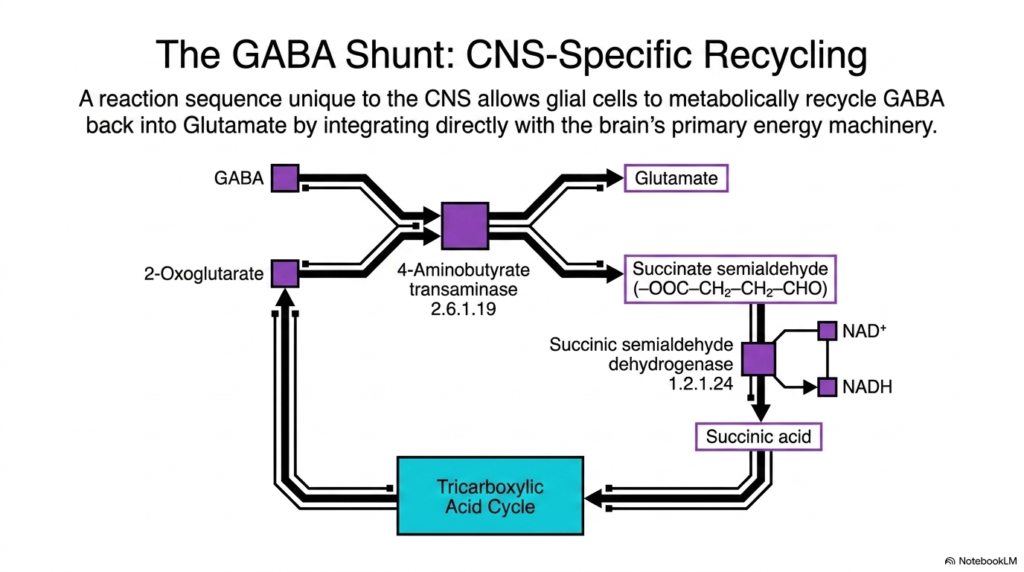
The GABA shunt is a unique metabolic sequence in central nervous system biochemistry that links neurotransmitter recycling directly to energy generation. Glial mitochondria actively participate in transmitter degradation and energy synthesis. Through this pathway, glial cells process recycled GABA and return its carbon backbone into central energy pathways. First, 4-aminobutyrate transaminase (EC 2.6.1.19) transfers an amino group from GABA to 2-oxoglutarate, producing glutamate and succinate semialdehyde. Transamination reactions bridge amino acid metabolism with carbohydrate oxidation inside glial mitochondria.
Next, succinic semialdehyde dehydrogenase (EC 1.2.1.24) oxidizes succinate semialdehyde using NAD+ to form succinic acid and NADH. The resulting succinic acid enters the tricarboxylic acid cycle directly, fueling aerobic ATP synthesis while regenerating 2-oxoglutarate. By channeling neurotransmitters into central mitochondrial pathways, brain metabolism cleanly merges signaling cleanup with cellular energy production, demonstrating incredible biochemical efficiency. Generating NADH during succinate semialdehyde oxidation contributes directly to electron transport chain activity.
This closed loop ensures that no valuable carbon skeletons are wasted during neurotransmitter turnover. Integrated pathways like the GABA shunt emphasize how brain metabolism harmonizes signaling dynamics with core bioenergetic machinery to maximize cellular efficiency. Structural integration connects neurotransmitter turnover directly to ATP production, ensuring that brain metabolism functions as a unified system. This elegant recycling bypass demonstrates how neurotransmitter degradation directly fuels aerobic cellular respiration.
Slide 11: Clinical Synthesis of Vulnerabilities in Brain Metabolism
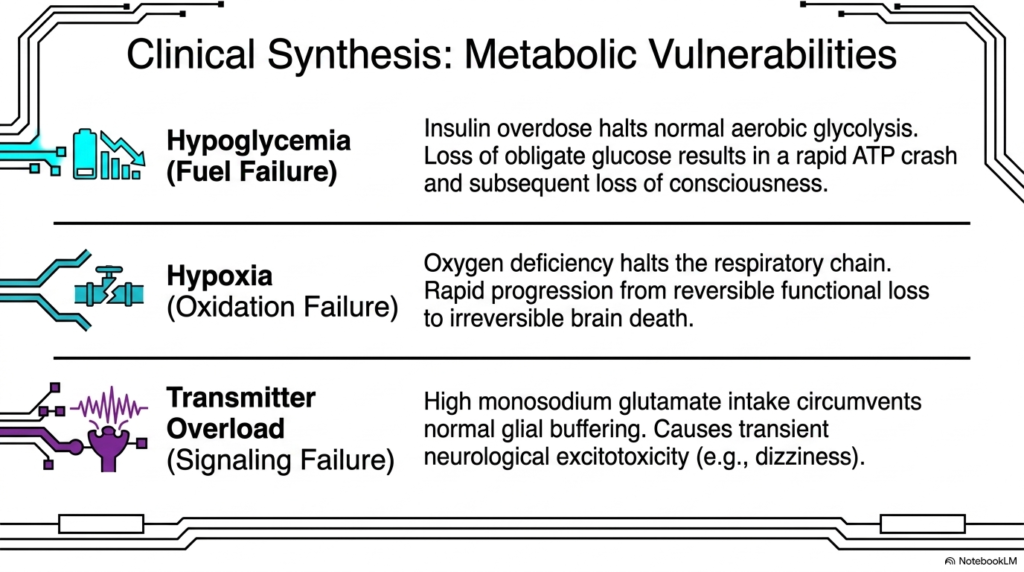
In this final clinical synthesis, we review the core physiological vulnerabilities that threaten normal brain metabolism. Clinical interventions target these specific pathways to restore metabolic balance. Metabolic failure in the central nervous system generally stems from loss of fuel supply, oxidation failure, or signaling dysregulation. Hypoglycemia reflects acute fuel failure, where an absence of blood glucose halts glycolysis, causing rapid ATP depletion and loss of consciousness. Systemic conditions that compromise nutrient delivery rapidly translate into acute neurological deficits.
Hypoxia represents oxidation failure, where oxygen deficiency stops the mitochondrial respiratory chain, rapidly progressing from functional loss to irreversible brain death. Finally, transmitter overload represents signaling failure, where excess glutamate circumvents glial buffering and causes excitotoxic stress. Understanding these metabolic bottlenecks underscores why uninterrupted brain metabolism is vital for maintaining life, health, and complex human cognition. Recognizing these specific biochemical failure modes allows clinicians to intervene before permanent tissue necrosis occurs.
By summarizing these failure modes, we see how tightly coupled energy production is to clinical survival. Protecting brain metabolism remains the primary objective in critical care neurology and emergency medical practice, guiding lifesaving interventions. Maintaining bioenergetic stability is essential for cellular resilience, ensuring that brain metabolism continues to support essential human faculties. Understanding these vulnerabilities provides essential insights for medical students and neuroscientists alike.
Please read our Content Disclaimer Statement.
Check out our social media channels: