143. Biochemistry of Lipid-Soluble Vitamins: A, D, E, and K
Have you ever wondered how tiny dietary molecules manage everything from vision in dim light to bone strength and blood clotting? Lipid-soluble vitamins are organic compounds that dissolve in fats and perform vital physiological roles across the human body. This comprehensive slide deck breaks down the biochemical structures, metabolic pathways, and clinical pathologies associated with these essential nutrients. By exploring how these molecules function at the molecular level, medical and science students can master the mechanisms underlying human metabolism and disease prevention.
Slide 1: Overview of Lipid-Soluble Vitamins
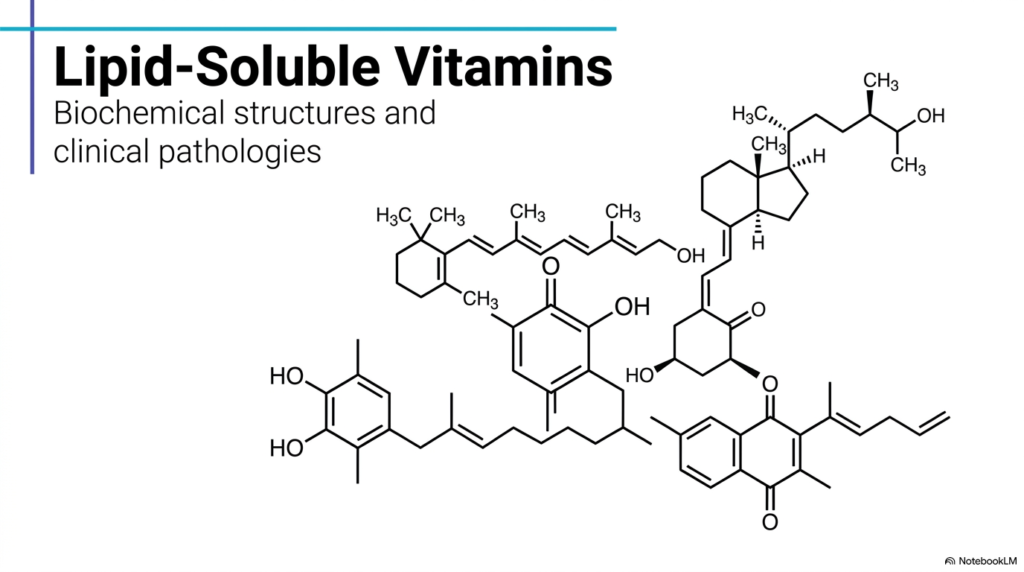
The opening slide introduces the foundational biochemistry and molecular architectures of lipid-soluble vitamins. These essential organic compounds differ fundamentally from water-soluble micronutrients because the human body absorbs, transports, and stores them alongside dietary fats. Unlike many water-soluble factors that wash out easily, lipid-soluble vitamins accumulate within cellular lipid bilayers and adipose tissue. This property allows the body to maintain functional reserves, but it also increases the risk of accumulation and toxicity. The slide illustrates the intricate molecular structures of these vital compounds, emphasizing their shared isoprenoid heritage.
Understanding the structural diversity of lipid-soluble vitamins provides critical insight into their distinct biological functions. Each class of these nonpolar molecules features hydrophobic hydrocarbon chains or fused ring systems tailored for specific intracellular tasks. For instance, conjugated double-bond networks facilitate light absorption, while extended isoprenoid side chains anchor molecules within biological membranes. Because humans cannot synthesize these carbon skeletons from scratch, dietary intake remains mandatory for survival.
Furthermore, studying lipid-soluble vitamins bridges fundamental organic chemistry and clinical medicine. When absorption mechanisms fail, or intake becomes unbalanced, systemic pathologies emerge rapidly. This introductory slide establishes a framework for analyzing how subtle variations in lipid solubility, transport dynamics, and molecular structures dictate essential human physiology. Medical students must appreciate how these structural motifs enable targeted interaction with nuclear receptors, membrane lipids, and specific enzymes throughout human tissues.
Slide 2: Dietary Supply and Homeostasis of Lipid-Soluble Vitamins
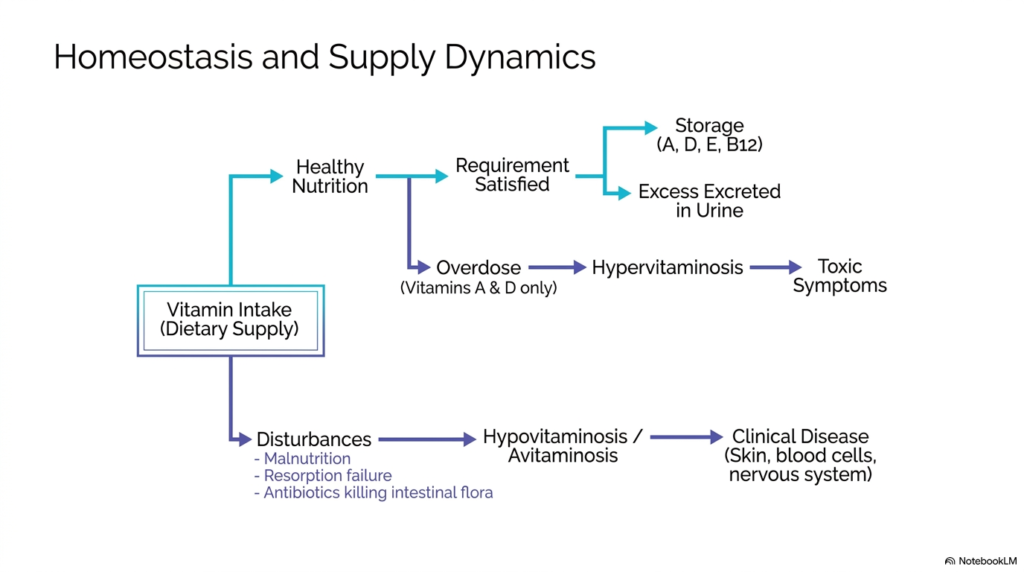
The second slide examines how dietary intake, intestinal absorption, and metabolic homeostasis regulate lipid-soluble vitamins in the human body. A balanced diet routinely satisfies daily metabolic requirements under normal physiological conditions. However, because lipid-soluble vitamins rely on lipid digestion and intestinal micelle formation, disruptions in biliary secretion or pancreatic function impair their systemic absorption. Consequently, conditions like chronic malnourishment, malabsorption syndromes, or unmonitored antibiotic use can disrupt normal nutrient levels and trigger clinical disease states.
Metabolic imbalances of lipid-soluble vitamins generally split into two distinct clinical conditions: hypovitaminosis and hypervitaminosis. Hypovitaminosis occurs when prolonged dietary deficiency or malabsorption exhausts tissue stores, leading to impaired cellular processes and overt deficiency diseases. Conversely, hypervitaminosis reflects toxic accumulation. Excess water-soluble nutrients are cleared readily through urinary excretion, but lipid-soluble vitamins reside in tissue fats and cell membranes. As a result, massive overdoses of vitamins A and D accumulate over time, overwhelming regulatory capacity and causing serious systemic toxicity.
Maintaining homeostasis requires a delicate balance between dietary consumption and metabolic clearance. Clinical treatments, including broad-spectrum antibiotics, can decimate intestinal microflora that normally synthesize key lipid-soluble vitamins like vitamin K. Healthcare professionals must evaluate these physiological pathways when diagnosing nutrient deficiencies or designing therapeutic regimens. Recognizing how absorption barriers and storage capacities dictate nutrient availability empowers students to anticipate, diagnose, and treat complex metabolic disorders effectively in clinical practice.
Slide 3: Isoprenoid Classification of Lipid-Soluble Vitamins
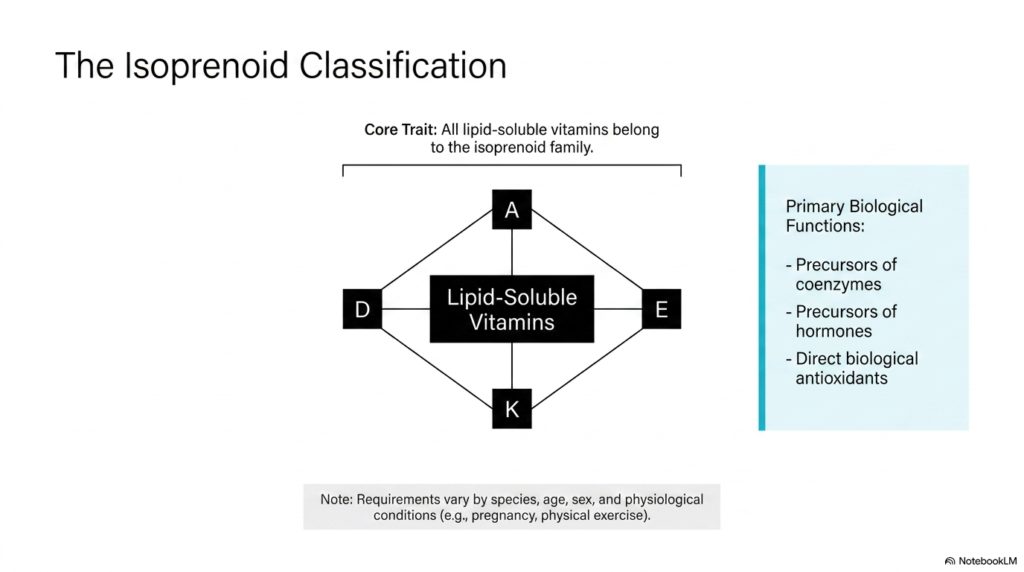
Slide three focuses on the unified biochemical classification that connects all lipid-soluble vitamins: their isoprenoid origin. Derived from repeating five-carbon isoprene units, lipid-soluble vitamins belong to a sprawling family of hydrophobic molecules synthesized predominantly by plants and microorganisms. Despite sharing this biochemical parentage, vitamins A, D, E, and K have evolved specialized structures to execute vastly different biological roles. This classification highlights how fundamental structural motifs dictate chemical reactivity and cellular target specificity.
The primary biological functions of lipid-soluble vitamins fall into three main categories within cellular physiology. First, certain members serve as essential precursors for vital coenzymes, enabling specific enzymatic transformations such as amino acid carboxylation. Second, certain lipid-soluble vitamins are converted into potent signaling molecules and steroid-like hormones that regulate gene expression and ion homeostasis. Third, hydrophobic vitamins operate directly as biological antioxidants, protecting vulnerable membrane components from oxidative degradation caused by reactive oxygen species.
Additionally, individual physiological requirements for lipid-soluble vitamins vary by species, age, biological sex, and life stage. Factors such as pregnancy, lactation, intense physical exercise, and aging alter metabolic demands and absorption efficiency. Medical students should recognize that isoprenoid structures provide the necessary lipid affinity to embed these molecules directly into cell membranes. This spatial localization enables lipid-soluble vitamins to interact efficiently with membrane-bound receptors, transport proteins, and lipid bilayers across diverse organ systems.
Slide 4: Vitamin A and Visual Signaling in Lipid-Soluble Vitamins
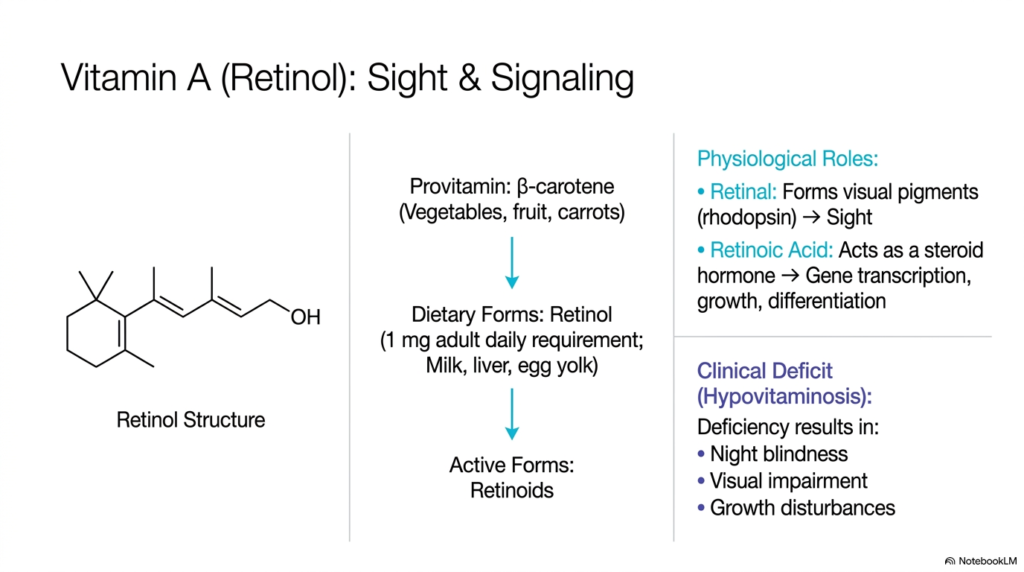
Slide four explores the biochemical pathways of vitamin A, a prominent member of the lipid-soluble vitamins family. Plant foods provide provitamin beta-carotene, which enzymes cleave into active dietary retinol. Dietary sources like liver, milk, and egg yolks supply preformed retinol directly to satisfy the daily requirement of approximately one milligram. Once inside the organism, retinol converts into active retinoids, predominantly retinal and retinoic acid. These metabolic derivatives drive essential physiological functions ranging from visual phototransduction to nuclear gene regulation.
The functional derivatives of lipid-soluble vitamins like vitamin A execute precise cellular duties. Retinal acts as the essential chromophore in rhodopsin, the visual pigment in retinal rod cells that mediates light perception. Meanwhile, retinoic acid operates like a classic steroid hormone. It binds intracellular receptors, translocates to the cell nucleus, and modulates gene transcription. Through this transcriptional control, retinoic acid directs tissue differentiation, embryonic development, and cell growth across epithelial tissues throughout the body.
Inadequate intake of lipid-soluble vitamins causes distinct clinical pathologies known as hypovitaminosis. Vitamin A deficiency initially presents as night blindness because rhodopsin regeneration is impaired in low light. Severe or prolonged deficiency progresses to xerophthalmia, permanent visual impairment, and structural damage to ocular tissues. Furthermore, compromised retinoic acid signaling leads to widespread growth disturbances and impaired epithelial integrity. Recognizing these biochemical mechanisms allows clinicians to connect molecular deficiencies directly to patient symptoms.
Slide 5: Vitamin D Metabolism and Calcium Balance in Lipid-Soluble Vitamins
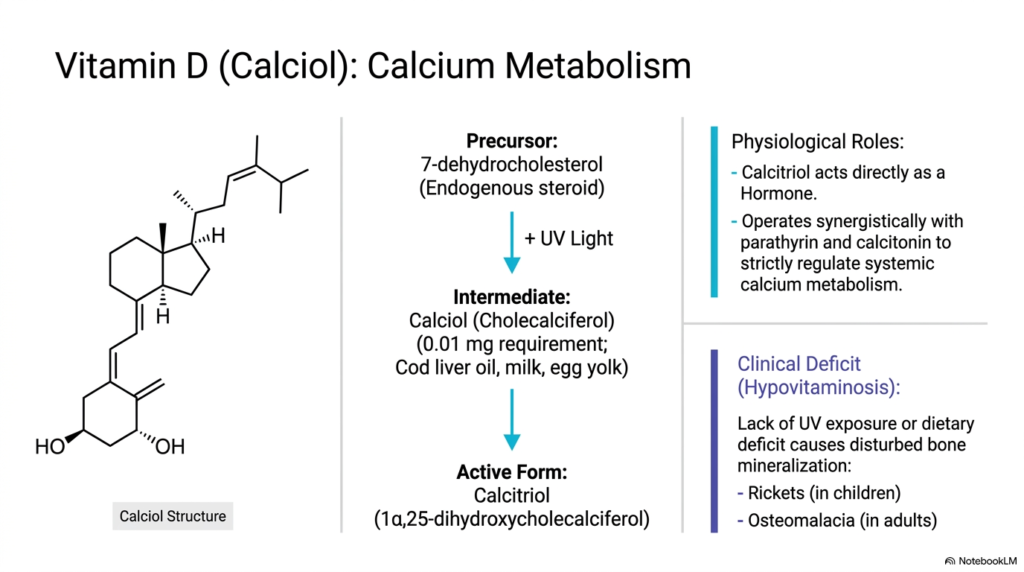
Slide five details vitamin D’s endocrine pathways, showing how lipid-soluble vitamins regulate mineral homeostasis and bone physiology. Endogenous synthesis begins in the skin, where ultraviolet radiation converts 7-dehydrocholesterol into calciol, also known as cholecalciferol. Alternatively, dietary sources such as cod liver oil, fatty fish, and eggs supply preformed calciol to fulfill daily requirements. Calciol undergoes sequential enzymatic hydroxylations in the liver and kidneys to yield calcitriol, the fully active hormonal form that orchestrates systemic calcium balance.
Calcitriol functions as a steroid hormone within the endocrine control network of lipid-soluble vitamins. Acting alongside parathyroid hormone and calcitonin, calcitriol enhances intestinal calcium absorption, reduces renal calcium excretion, and regulates bone remodeling. By promoting proper bone mineralization, calcitriol maintains serum calcium levels within the narrow range required for nerve conduction and muscle contraction. Without adequate activation of this lipid-soluble hormone, structural skeletal defects arise rapidly during growth and adult bone maintenance.
Deficiencies in lipid-soluble vitamins like vitamin D produce profound clinical disorders affecting bone tissue. Insufficient sunlight exposure or inadequate dietary intake causes rickets in growing children, characterized by soft, deformed bones and impaired growth plates. In adults, inadequate vitamin D causes osteomalacia, leading to unmineralized bone matrix, skeletal weakness, and bone pain. Medical students must master these metabolic conversions to appreciate how photochemical reactions, organ crosstalk, and hormonal regulation intersect to preserve skeletal integrity.
Slide 6: Vitamin E and Membrane Antioxidant Protection in Lipid-Soluble Vitamins
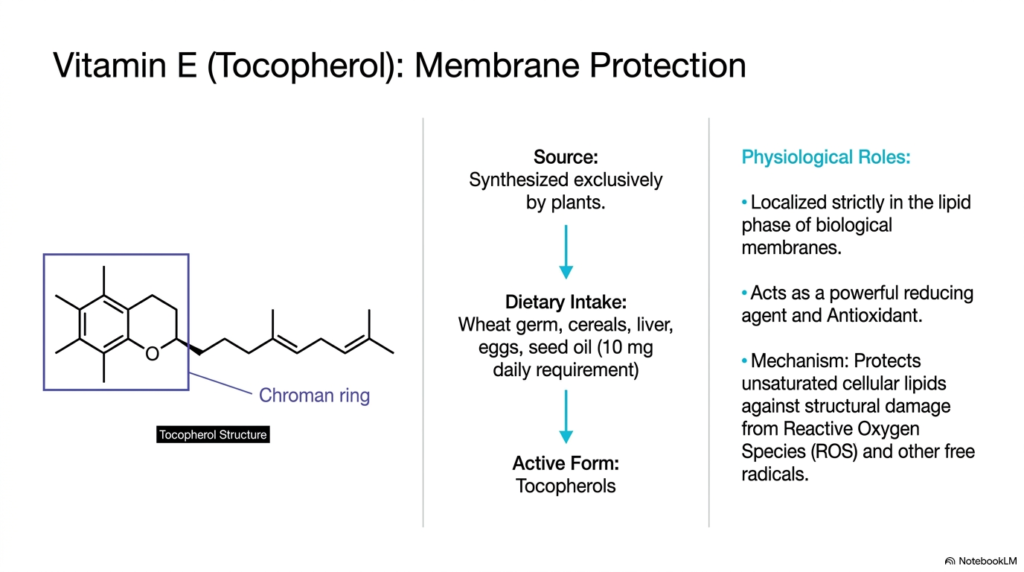
Slide six examines the molecular structure and protective role of vitamin E among lipid-soluble vitamins. Synthesized exclusively by plants, tocopherols feature a distinctive chroman ring attached to a long hydrophobic isoprenoid side chain. Dietary sources include wheat germ, vegetable seed oils, whole grains, and liver, and the daily requirement is about ten milligrams. This hydrophobic structure embeds tocopherol directly into the lipid bilayer of biological membranes, positioning the molecule perfectly to safeguard cell boundaries from oxidative damage.
As key guardians among lipid-soluble vitamins, tocopherols act as potent, lipid-phase antioxidants and reducing agents. Cellular respiration and metabolic processes continuously generate reactive oxygen species and free radicals, which attack polyunsaturated fatty acids in cell membranes. Tocopherol neutralizes these destructive radicals by donating a hydrogen atom from its chroman hydroxyl group, terminating lipid peroxidation chain reactions. By preventing oxidative membrane rupture, vitamin E preserves organelle integrity, erythrocyte stability, and normal cellular signaling pathways.
Understanding the protective mechanism of lipid-soluble vitamins highlights their vital role in cell survival. Without adequate antioxidant defense, free radicals damage membrane transport proteins and cellular lipids, accelerating cellular aging and tissue injury. While isolated vitamin E deficiency is rare, malabsorption conditions increase susceptibility to oxidative hemolysis and neuromuscular dysfunction. Students must appreciate how tocopherol’s chemical structure enables localized, lipid-phase radical scavenging to maintain cellular membrane integrity throughout human tissues.
Slide 7: Vitamin K and Blood Coagulation in Lipid-Soluble Vitamins
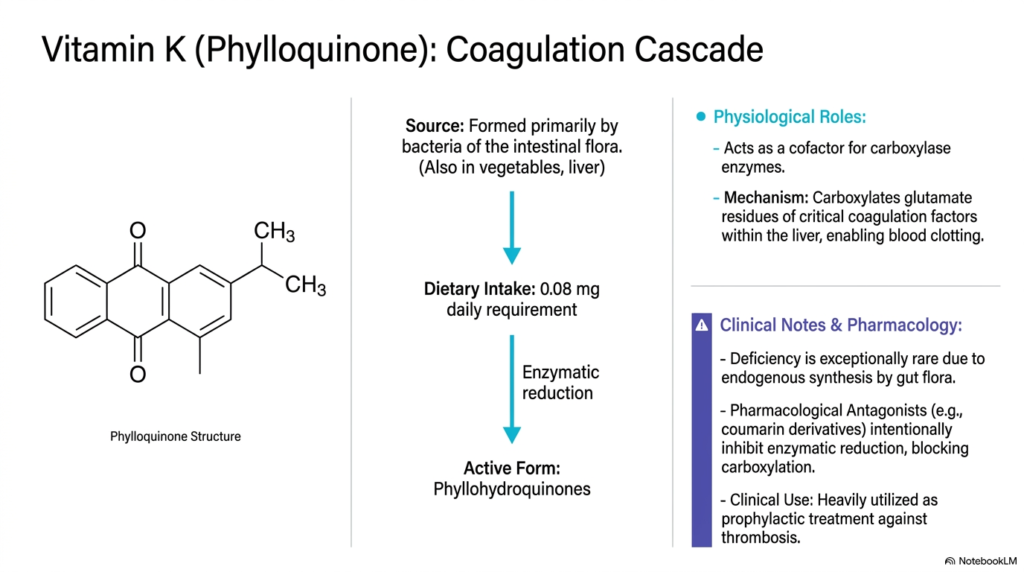
Slide seven highlights vitamin K’s biochemical role among the lipid-soluble vitamins. Intestinal bacteria synthesize much of the body’s phylloquinones, supplementing dietary sources like leafy green vegetables and liver. The daily requirement is remarkably small, around 0.08 milligrams, due to efficient bacterial production and enzymatic recycling. Inside liver cells, specific reductase enzymes reduce phylloquinone into phyllohydroquinone, the active form that functions as an essential cofactor for gamma-glutamyl carboxylase.
This enzymatic carboxylation shows how lipid-soluble vitamins directly support vital post-translational protein modifications. Active phylloquinone enables the addition of carboxyl groups to specific glutamate residues on nascent clotting factors, including prothrombin and factors VII, IX, and X. This gamma-carboxylation allows these coagulation proteins to bind calcium ions and adhere to phospholipid surfaces, driving the blood clotting cascade. Without this modification, the coagulation cascade fails, leading to severe hemorrhagic vulnerability.
Pharmacological manipulation of lipid-soluble vitamins is a cornerstone of cardiovascular medicine. Antagonist drugs, such as coumarin derivatives like warfarin, competitively inhibit the reductase enzymes that regenerate active phylloquinone. By blocking vitamin K recycling, these drugs prevent factor carboxylation, intentionally suppressing blood clotting to provide prophylactic treatment against thrombosis. Clinicians use this mechanism to prevent stroke and deep vein thrombosis, showing how biochemical targeting of vitamin pathways yields life-saving therapies.
Slide 8: Diagnostic Matrix of Lipid-Soluble Vitamins
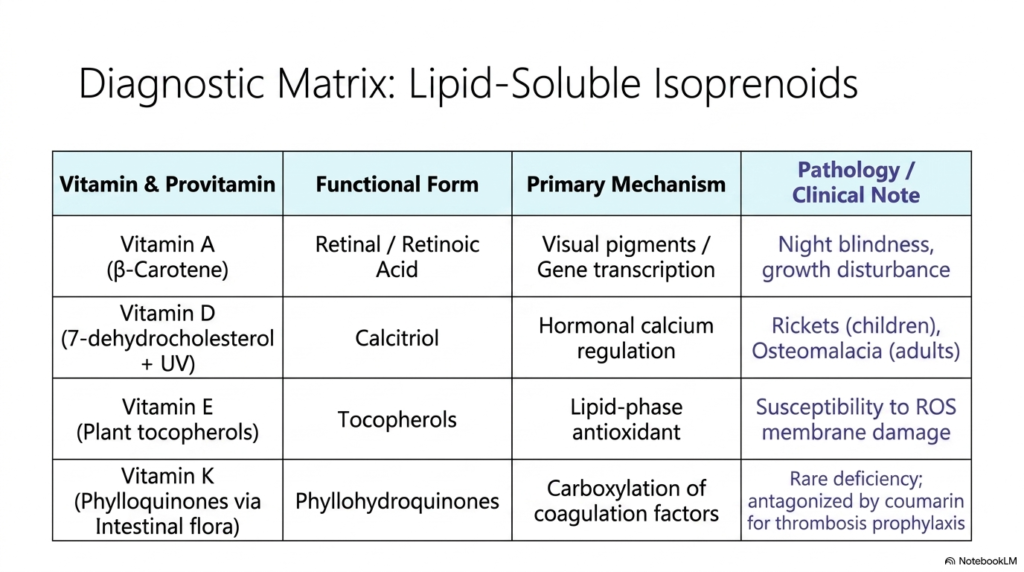
The final slide presents a comprehensive diagnostic matrix that synthesizes all four lipid-soluble vitamins for clinical reference. This comparative summary links each dietary precursor and provitamin to its functional derivative, primary biochemical mechanism, and associated clinical pathology. Vitamin A transitions from beta-carotene to retinal and retinoic acid, governing vision and gene transcription while preventing night blindness. Vitamin D converts from sterol precursors to active calcitriol, regulating calcium homeostasis and preventing rickets and osteomalacia in humans.
Similarly, the matrix details how remaining lipid-soluble vitamins maintain cellular protection and hemostasis. Plant-derived tocopherols act as antioxidants, shielding lipid membranes from oxidative damage by reactive oxygen species. Meanwhile, bacterial and dietary phylloquinones convert into reduced phyllohydroquinones, enabling glutamate carboxylation of liver clotting factors. Although vitamin K deficiency remains rare, coumarin derivatives provide vital pharmacological anticoagulation. Reviewing these side-by-side comparisons helps students consolidate essential biochemical knowledge for clinical diagnostics.
Mastering this integrated diagnostic framework prepares medical students to evaluate complex nutritional and metabolic disorders. By correlating molecular structures with functional roles and deficiency pathologies, future clinicians can rapidly identify subtle signs of nutrient imbalance. Whether diagnosing malabsorption syndromes, evaluating drug interactions, or preventing hypervitaminosis, a thorough understanding of lipid-soluble vitamins serves as an indispensable tool in modern medical practice. This matrix summarizes the essential biochemical principles required for academic and clinical excellence.
Please read our Content Disclaimer Statement.
Check out our social media channels: