142. Biochemical Principles of Minerals and Trace Elements
Every heartbeat, nerve impulse, and metabolic pathway depends on microscopic spark plugs working silently inside human cells. While organic molecules like proteins and carbohydrates capture the spotlight, inorganic ions quietly drive life’s most fundamental chemical reactions. This slide deck breaks down the essential biochemistry of inorganic nutrients, exploring how macroelements and microelements regulate cellular equilibrium, structural integrity, and metabolic pathways. College and medical students will discover how these foundational chemical building blocks sustain human health and how minor disruptions lead to severe clinical pathologies.
Slide 1: Overview of Minerals and Trace Elements in Human Biochemistry

Human biochemistry depends heavily on a constant supply of essential inorganic nutrients to maintain living structures. The fundamental study of Minerals and Trace Elements reveals how simple individual elements orchestrate life at the molecular level. In human biological systems, water functions as the central universal solvent, surrounding a vast interconnected network of metallic and non-metallic ions. These inorganic species do not merely float passively in solution. Instead, Minerals and Trace Elements create tightly regulated ionic microenvironments that actively stabilize biological membranes and facilitate key enzymatic reactions.
Without these foundational inorganic chemicals, complex cellular proteins and metabolic pathways would rapidly collapse. Human cellular machinery requires precise concentrations of dissolved ions to establish vital bioelectric charges across cell membranes and maintain fluid balance between physiological compartments. Furthermore, Minerals and Trace Elements serve as non-negotiable architectural anchors that allow enzyme proteins to fold correctly and bind target substrates efficiently.
From simple solvent water molecules to intricate ion networks, inorganic chemistry provides the baseline matrix for all human metabolic processes. Students of medicine and biochemistry must recognize that human life operates within this delicate matrix of dissolved elements. By understanding these elementary components, future clinicians can better appreciate how physiological systems regulate internal homeostasis and prevent biochemical failure during metabolic stress. Understanding how Minerals and Trace Elements operate at this microscopic level equips healthcare professionals to diagnose complex metabolic disorders accurately.
Slide 2: Water as the Universal Solvent for Minerals and Trace Elements

Water is the indispensable matrix for all biochemical reactions, providing the liquid environment life needs to exist. Within human physiology, Minerals and Trace Elements rely entirely on water to perform their essential transport and regulatory functions. Water exhibits a high dielectric constant and functions as a universal solvent, coolant, and transport medium. To maintain homeostasis, a typical adult requires two to three liters of water daily to balance routine physiological losses.
The human body acquires this vital liquid through three distinct input streams each day. Direct fluid intake from beverages contributes about 1,200 grams, while water trapped in solid food matrices provides roughly 900 grams. Additionally, cellular respiration generates about 300 grams of metabolic water as a byproduct of the electron transport chain. Without water acting as a solvent, aqueous solvation shells could not form around dissolved ions.
Consequently, the biological activity of Minerals and Trace Elements depends directly on proper fluid balance across cellular compartments. Solvated ions migrate through aqueous channels to generate electrical gradients and facilitate enzyme catalysis across membranes. Understanding this close relationship between fluid intake and ion mobility is crucial for assessing kidney function, cellular hydration status, and systemic osmotic balance. Ultimately, water and dissolved Minerals and Trace Elements work in tandem to sustain metabolic health.
Slide 3: Classification Thresholds of Minerals and Trace Elements
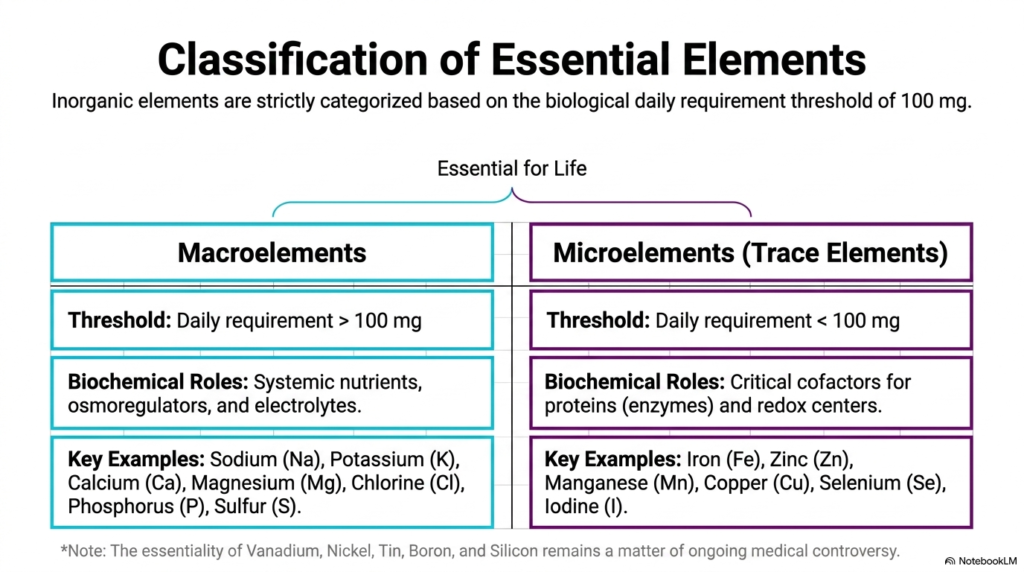
Inorganic nutrients are categorized systematically based on their quantitative daily requirement in human nutrition. In the study of Minerals and Trace Elements, a strict threshold of one hundred milligrams per day divides essential elements into macroelements and microelements. Macroelements are required in amounts exceeding one hundred milligrams daily. These abundant elements function as systemic structural nutrients, osmoregulators, and primary electrolytes that maintain fluid balance across cell membranes. Key macroelements include sodium, potassium, calcium, magnesium, chlorine, phosphorus, and sulfur.
Conversely, microelements are required in daily quantities below the 100-milligram threshold. Often called trace elements, these nutrients serve as indispensable catalytic centers for enzymes and structural protein complexes. Major microelements include iron, zinc, manganese, copper, selenium, and iodine. Within the domain of Minerals and Trace Elements, these micro-nutrients drive vital catalytic processes despite their low abundance.
The essentiality of certain elements like vanadium, nickel, tin, boron, and silicon remains a topic of ongoing medical discussion. Nevertheless, the quantitative boundary between macro and micro categories provides a clear framework for evaluating biological demand. Both classes within Minerals and Trace Elements are vital for survival, as a deficit in either category disrupts cellular metabolism. Medical students must master this classification scheme to understand how dietary intake relates to physiological demands.
Slide 4: Metallic Electrolytes as Macroelements in Minerals and Trace Elements
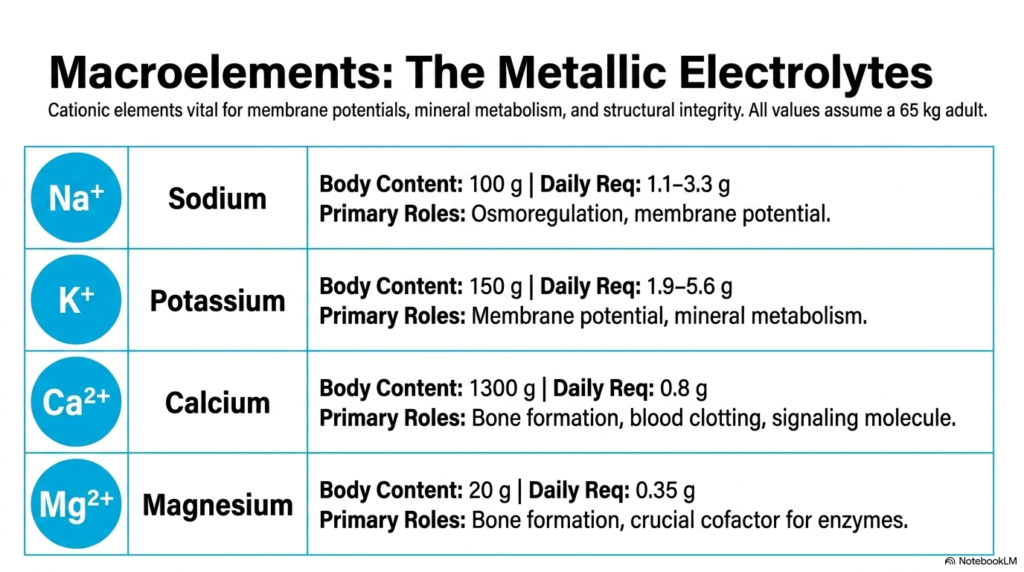
Metallic macroelements represent the predominant cationic electrolytes in human physiology, supporting cell excitability and tissue structure. A detailed examination of Minerals and Trace Elements highlights sodium, potassium, calcium, and magnesium as primary metallic cations. In a standard sixty-five-kilogram adult, sodium accounts for one hundred grams of total body content with a daily requirement of one point one to three point three grams. Sodium governs extracellular osmoregulation and maintains resting membrane potentials across cell tissues.
Potassium is the primary intracellular cation, with a body content of 150 grams and a daily requirement of 1.9 to 5.6 grams. It works alongside sodium to maintain bioelectric membrane potentials and mineral metabolism within cellular fluids. Calcium is the most abundant mineral in the body, totaling 1,300 grams, with a daily requirement of 0.8 grams. Calcium drives bone matrix formation, blood coagulation cascades, and intracellular second messenger signaling pathways.
Magnesium totals twenty grams in the body, with a daily requirement of 0.35 grams. It acts as a structural component in bone tissue and serves as an obligate cofactor for hundreds of enzymatic reactions involving ATP. Together, these cationic Minerals and Trace Elements establish the electrochemical gradients that enable nerve impulse transmission and muscle contraction. Medical students should appreciate how tightly regulated these metallic cations are, as subtle shifts in serum concentrations disrupt bodily function. Ultimately, balanced levels of Minerals and Trace Elements safeguard cardiovascular stability and neuromuscular tone.
Slide 5: Non-Metallic Macroelements in Minerals and Trace Elements
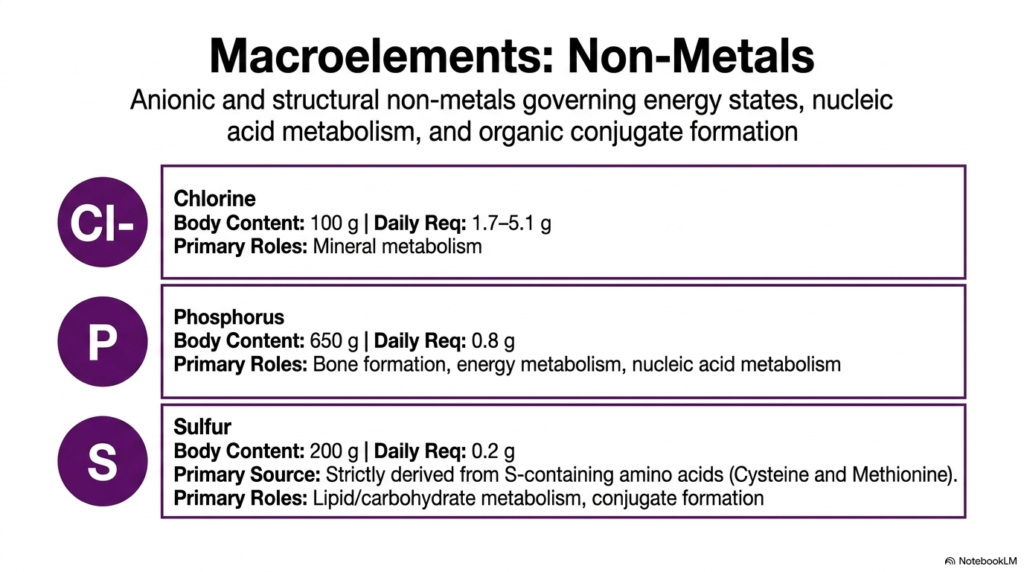
Non-metallic macroelements form anionic species and structural linkages essential for energy transfer, genetic storage, and metabolic conjugation. Within the broader framework of Minerals and Trace Elements, chlorine, phosphorus, and sulfur perform foundational non-metallic roles. Chlorine exists as the primary extracellular anion, with a total body content of 100 grams and a daily requirement of 1.7 to 5.1 grams. It collaborates with sodium to maintain osmotic pressure and proper acid-base equilibrium.
Phosphorus is a major structural and energetic reservoir, totaling 650 grams in the human body, with a daily requirement of 0.8 grams. It is indispensable for bone mineralization, nucleic acid backbone synthesis in DNA and RNA, and energy transfer via adenosine triphosphate. Sulfur accounts for 200 grams of total body weight, with a daily requirement of 0.2 grams.
Unlike other inorganic ions, sulfur is derived strictly from sulfur-containing amino acids such as cysteine and methionine. Sulfur forms disulfide bridges that stabilize protein tertiary structures and participates actively in lipid and carbohydrate conjugate formation. These non-metallic Minerals and trace elements show how inorganic elements integrate directly into organic molecules to drive cellular biochemistry. Understanding these non-metallic Minerals and trace elements helps students grasp how energy production and cellular architecture are maintained in human tissues.
Slide 6: Key Transition Metals as Microelements in Minerals and Trace Elements
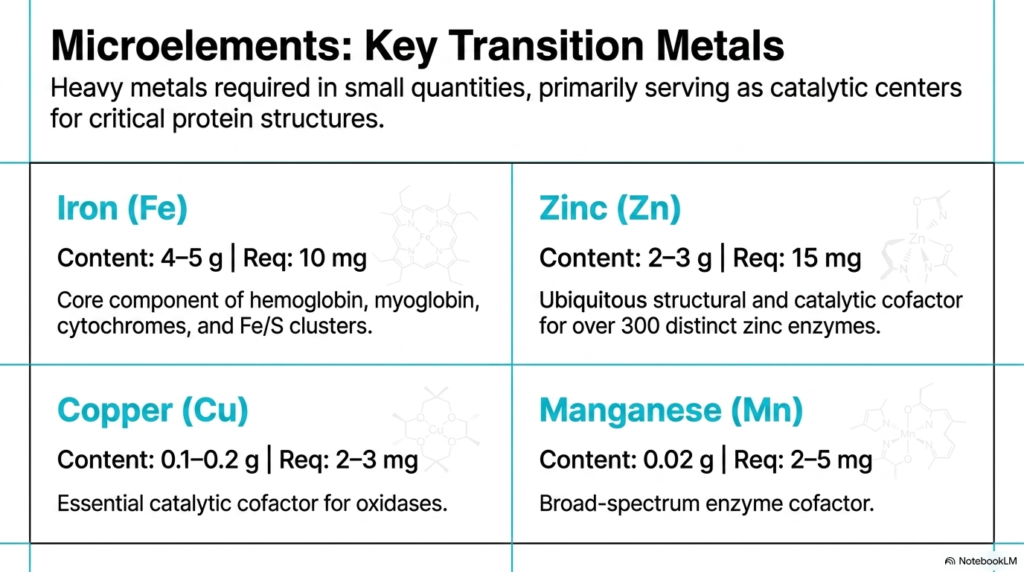
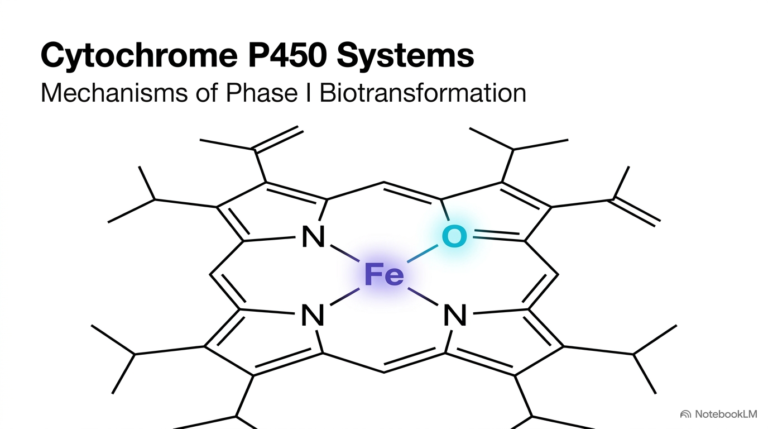
Transition metals required in minute quantities serve as essential catalytic centers for critical protein structures throughout human biology. When studying microelements in minerals and trace elements, iron, zinc, copper, and manganese emerge as core heavy-metal catalysts. Iron is present at four to five grams in the adult body, with a daily requirement of ten milligrams. It acts as the functional core of hemoglobin, myoglobin, cytochromes, and iron-sulfur clusters vital for cellular electron transport.
Zinc totals two to three grams in the body and requires fifteen milligrams daily. It serves as a ubiquitous structural and catalytic cofactor for over 300 distinct zinc enzymes that regulate gene expression and metabolism. Copper exists in smaller amounts, between 0.1 and 0.2 grams, and requires 2 to 3 milligrams daily. Copper is an essential cofactor for cytochrome c oxidase and other key oxidases.
Manganese accounts for 0.2 grams in body tissue, with a daily requirement of 2 to 5 milligrams, and functions as a broad-spectrum enzyme cofactor. These transition metals in the field of Minerals and Trace Elements possess unique redox states that permit electron transfer during biochemical cycles. Medical students must recognize that the catalytic capacity of these microelements depends on maintaining proper protein coordination environments. Without these metal cofactors, life-sustaining enzymatic cascades would stall completely, illustrating why Minerals and Trace Elements are fundamental to molecular survival.
Slide 7: Specialized Microelements in Essential Minerals and Trace Elements

Specialized trace elements drive highly targeted physiological and endocrine pathways despite being present in remarkably tiny quantities. In the spectrum of Minerals and Trace Elements, cobalt, molybdenum, selenium, iodine, and fluorine execute unique regulatory functions. Cobalt makes up less than 0.01 grams of body mass and is required only in trace amounts as the central metallic atom of vitamin B12. Molybdenum totals 0.02 grams, with a daily requirement of 0.15 to 0.5 milligrams, and functions as a cofactor for redox enzymes.
Selenium requires 0.05 to 0.2 milligrams daily, serving as an essential component of selenoproteins like glutathione peroxidase that neutralize oxidative stress. Iodine totals 0.03 grams, requiring 0.15 milligrams daily for direct incorporation into thyroid hormones like thyroxine. Fluorine requires 0.0015 to 0.004 milligrams daily.
Although fluorine is non-essential for baseline cellular survival, it promotes healthy bone and dental enamel formation by forming fluorapatite. Each of these specialized Minerals and Trace Elements targets specific biochemical pathways to maintain systemic homeostasis. Students should note how endocrine and metabolic systems depend on these precise micronutrients. A clear grasp of these specialized Minerals and Trace Elements prepares clinicians to identify rare metabolic deficiencies and endocrine disorders effectively.
Slide 8: Functional Synthesis Paradigms for Minerals and Trace Elements
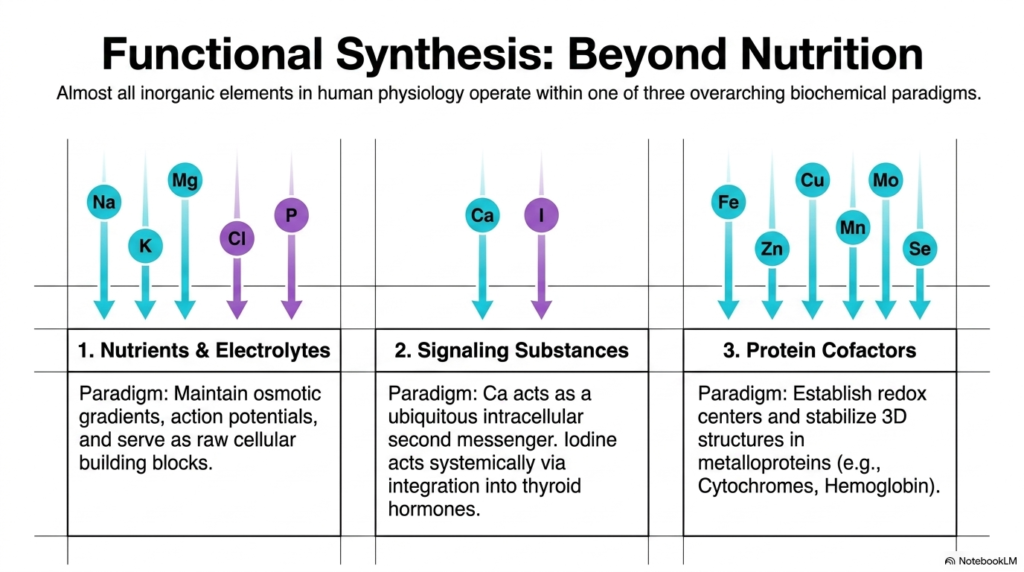
Almost all inorganic elements in human physiology operate within three overarching functional paradigms. Examining these unified paradigms clarifies how Minerals and Trace Elements execute their diverse biological roles across organ systems. The first paradigm encompasses nutrients and electrolytes, including sodium, potassium, magnesium, chlorine, and phosphorus. These elements maintain osmotic gradients, generate action potentials across excitable membranes, and serve as raw building blocks for cellular structures.
The second paradigm involves signaling substances, exemplified by calcium and iodine. Calcium acts as a ubiquitous intracellular second messenger that triggers muscle contraction, enzyme activation, and exocytosis, while iodine acts systemically through thyroid hormone integration to regulate basal metabolic rate. The third paradigm comprises protein cofactors, including iron, zinc, copper, manganese, molybdenum, and selenium. These elements establish redox centers and stabilize three-dimensional structures within metalloproteins such as cytochromes and hemoglobin, enabling efficient electron transport and oxygen carriage.
By grouping Minerals and Trace Elements into these three functional paradigms, students can synthesize complex physiological data into a coherent biochemical framework. Rather than memorizing isolated elemental facts, learners can analyze how inorganic elements regulate systemic homeostasis. Mastering these three functional categories of Minerals and trace elements gives medical students a robust conceptual foundation for understanding physiology, pharmacology, and clinical pathology.
Slide 9: Systemic Storage Depots for Minerals and Trace Elements

The human body actively stores specific inorganic elements to buffer against variable dietary intake over time. Endocrine hormones heavily regulate these systemic storage depots to preserve optimal circulating concentrations of Minerals and Trace Elements. The skeletal system serves as the primary calcium reservoir, depositing the mineral as crystalline hydroxyapatite within the bone matrix. When serum calcium levels drop, endocrine signals induce bone resorption to release calcium back into the bloodstream.
The thyroid gland functions as a specialized iodine depot, keeping the element bound within thyroglobulin protein structures until thyroid hormone synthesis is required. The liver, spleen, and bone marrow act as the primary storage organs for iron, sequestering the metal inside ferritin complexes and insoluble hemosiderin aggregates. Furthermore, the liver serves as the main general storage depot for a wide variety of trace elements.
These active storage mechanisms ensure that transient nutritional deficits do not immediately disrupt critical cellular processes. By sequestering potentially toxic free metal ions into inert storage complexes, the body protects delicate cellular components from oxidative damage. Understanding these storage strategies for Minerals and Trace Elements helps students comprehend metabolic reserve capacity and endocrine feedback loops. Consequently, evaluating mineral and trace element storage reserves is a fundamental aspect of clinical diagnostics and nutritional assessment.
Slide 10: Intestinal Resorption Dynamics of Minerals and Trace Elements
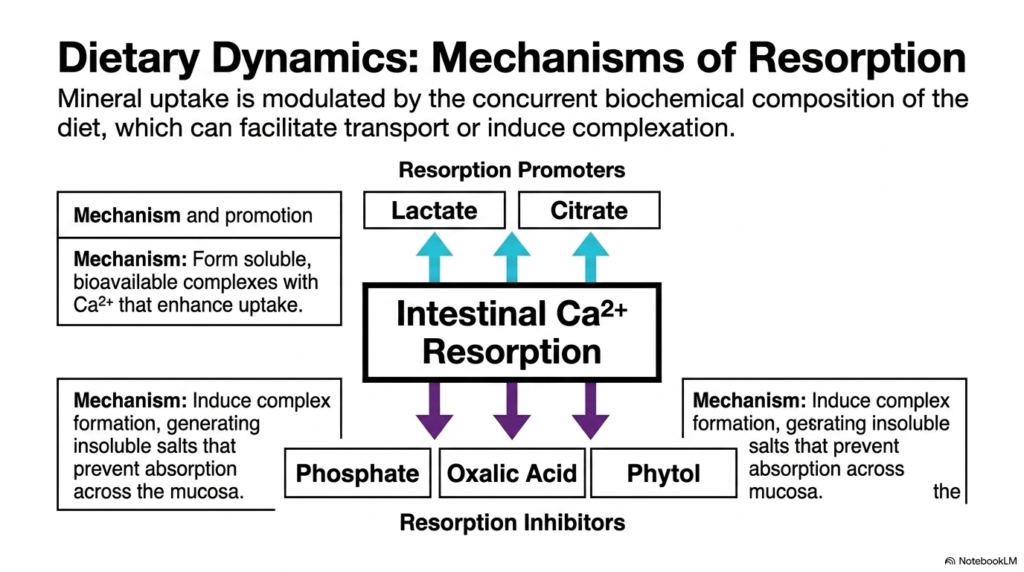
Mineral uptake across the intestinal mucosa is dynamically modulated by the concurrent biochemical composition of ingested food. When analyzing the bioavailability of Minerals and Trace Elements, dietary components can either facilitate membrane transport or induce insoluble complexation. Intestinal calcium resorption serves as a classic model for these competitive resorption mechanisms within the gastrointestinal tract, illustrating how dietary matrix interactions govern ion absorption.
Resorption promoters like lactate and citrate form soluble, highly bioavailable complexes with calcium ions that significantly enhance epithelial uptake across the enterocyte brush border. Conversely, dietary inhibitors like phosphate, oxalic acid, and phytol interfere with absorption by forming insoluble calcium salts. These precipitate out of solution, preventing effective transport across the mucosal barrier into systemic circulation. These insoluble complexes also pass through the gastrointestinal tract unabsorbed.
Similar competitive dynamics govern the absorption of other inorganic ions, demonstrating that total dietary content does not equal bioavailable dose. Medical students must recognize that the nutritional impact of Minerals and Trace Elements depends heavily on food pairing and gastrointestinal pH. Understanding these intestinal dynamics allows future physicians to provide sound nutritional advice and manage malabsorption syndromes effectively. Ultimately, optimizing the gastrointestinal uptake of Minerals and Trace Elements requires evaluating both dietary promoters and inhibitors simultaneously in clinical practice.
Slide 11: Clinical Pathology and Deficiencies of Minerals and Trace Elements
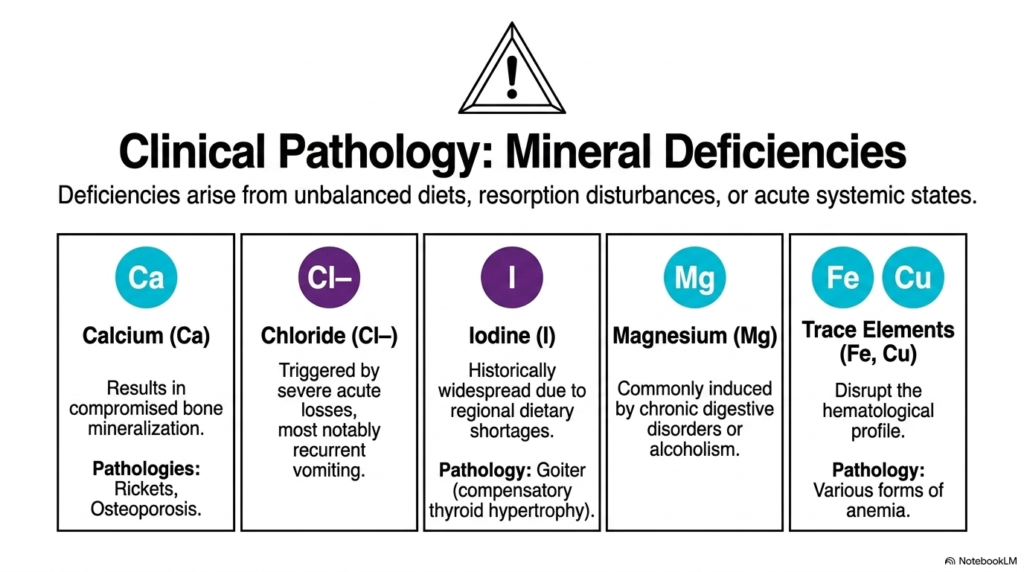
Inorganic nutrient deficiencies arise from unbalanced diets, malabsorption disorders, or acute systemic fluid losses. When supplies of Minerals and Trace Elements fall below physiological thresholds, distinct clinical pathologies develop across multiple organ systems. Calcium deficiency severely compromises bone mineralization, leading to rickets in developing children and osteoporosis in aging adults. Chloride depletion typically results from acute fluid losses, such as severe recurrent vomiting, disrupting systemic acid-base balance and gastric acid production.
Iodine deficiency was historically widespread due to regional soil shortages, triggering goiter through compensatory thyroid tissue hypertrophy in response to elevated thyroid-stimulating hormone levels. Chronic digestive disorders and alcoholism frequently induce magnesium deficiency, leading to neuromuscular hyperexcitability, cardiac dysrhythmias, and impaired ATP metabolism. Furthermore, deficiencies in essential trace transition metals like iron and copper disrupt hematological profiles, causing various forms of microcytic, hypochromic anemia.
These pathological conditions underscore the non-negotiable requirement for adequate daily intake of Minerals and Trace Elements. When ion concentrations drop, enzymatic pathways stall and tissues throughout the body deteriorate. Medical students must learn to connect specific clinical symptoms with underlying elemental deficits. Recognizing these characteristic signs enables prompt therapeutic intervention, restoring balanced levels of Minerals and Trace Elements before irreversible tissue damage occurs.
Slide 12: Physiological Variables Influencing Daily Requirements for Minerals and Trace Elements
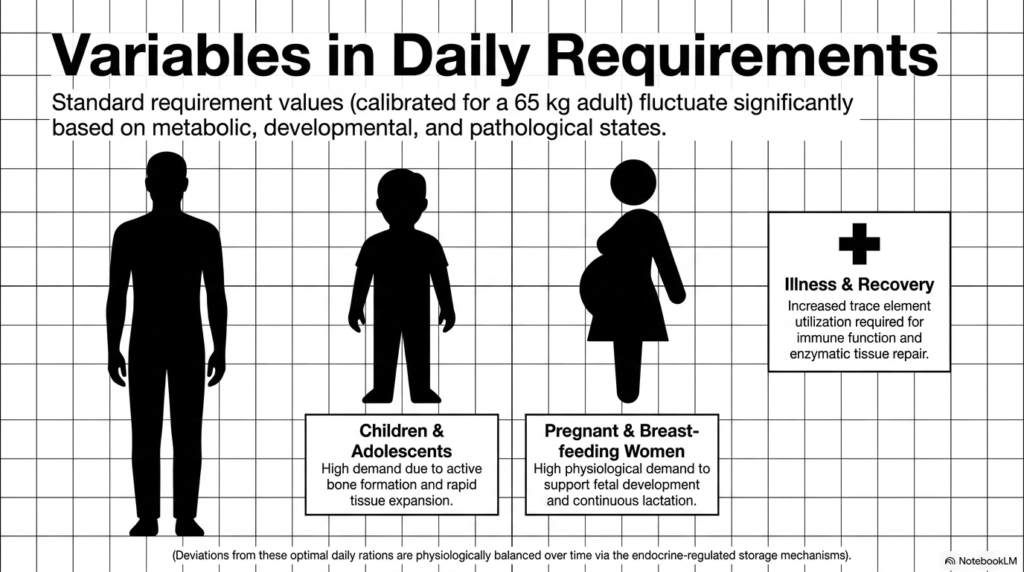
Standard daily requirement values for inorganic nutrients are typically calibrated for a healthy sixty-five-kilogram adult, but these baseline figures fluctuate significantly under varying physiological conditions. Metabolic demand for Minerals and Trace Elements changes dynamically across different developmental stages, life events, and health states throughout human lifespan. Children and adolescents have higher requirements because of active bone matrix formation, mineral deposition, and rapid soft-tissue expansion.
Pregnant and breastfeeding women experience substantially increased physiological demand for inorganic nutrients to support fetal skeletal growth, neural tube development, and continuous milk production. These populations require careful dietary oversight to prevent maternal or fetal deficits during critical developmental periods. Furthermore, acute illness, surgery, and tissue recovery markedly increase the utilization of trace elements needed for immune cell proliferation, wound healing, and enzymatic tissue repair mechanisms.
During these demanding physiological states, endocrine-regulated storage mechanisms buffer short-term deficits, but sustained demand requires increased dietary intake. Understanding how individual physiological variables alter elemental requirements is essential for tailoring clinical nutrition plans. Medical students must recognize that standard baseline guidelines for Minerals and Trace Elements are starting points, not fixed universal constants. By accounting for age, reproductive status, and disease states, clinicians can accurately optimize dietary intake of Minerals and Trace Elements for every patient.
Please read our Content Disclaimer Statement.
Check out our social media channels: